
Where There’s a Will..
By: Ken Marotte, Citrus County Historical Society
The Last Will and Testament documents of past residents provide a window into the beliefs, customs and assets of the people who built Citrus County. The status of women, in particular, evolved over time from mere appendages of their husbands to become independent and equal citizens. Some Wills were banal while others are truly inspirational.
Control from the Grave
Typical Wills from the 1800’s and early 1900’s were written by men who designated how their assets were going to be handled long after their death. In many cases, husbands made provisions for their widow’s upkeep and living arrangements. Widows were allowed to remain in the family homestead and use the home’s furniture and utensils but were forbidden from selling or disposing any of the departed husband’s assets without court approval. Once the widow died, the husband’s Will stipulated how the remaining assets were to be disbursed. In addition to use of the family residence, widows were usually granted a stipend from a trust established by the husband before his demise. Some common provisions imposed on the widow included that she would continue to raise any minor children in a manner that the husband would approve and that she would not remarry. All support would end once a woman remarried and she would lose any future claims to the remaining estate assets.
Some statements from historical Wills highlight the control that some husbands exerted from the grave:
“Should she marry again after my death then then…the real estate and personal property shall be become the property of my adopted son.”
“My wife…shall have twenty-five dollars per month and all other royalties paid under a certain lease on said lands…and so long as she shall live and remain unmarried after my death. In the event that my said wife [name withheld] should after my demise, marry again, as she has promised me not to do so…” then the royalties would be paid to his sister.
Society In Transition
The changing roles in society began to be reflected in Wills after the 1920’s. A local rancher designated that his widow should receive his entire homestead, furniture, wagon and harness, two mules named “Sallie” and “Jane” and about fifty head of cattle with a “D H” brand. She was free to use and dispose of the assets as she saw fit.
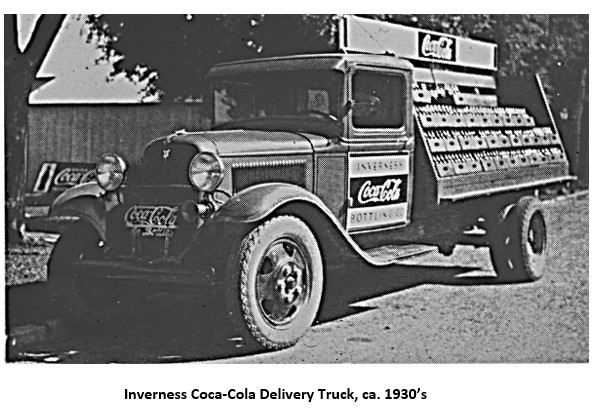
When local Coca-Cola bottler William T Baxley suffered a fatal heart attack in 1931 while visiting his daughter near Lake City, his wife Pearl Baxley inherited all of his possessions with reservation or stipulations. Mrs. Baxley was an astute business woman who recognized the potential value of the soda franchise and took steps to expand and modernize operations. Under her guidance, a new Coca-Cola plant was opened on Apopka Avenue in 1932 which enabled the family business to increase production while ensuring the sanitary condition of the final product. Pearl Baxley purchased the adjacent lot where the remains of the abandoned Avalon Theatre were located. She demolished the old theatre and constructed an annex that dwarfed the original factory in 1960. When she retired in the 1980’s, Baxley sold the property to Citrus County.
Legion Beach, Crystal River
On June 20, 1907 Lida Overcasher married Fred T. Martin in Canton, OH. Lida had no children at the time but was the favorite aunt of her niece, Bertina Overcasher, who lived with Lida’s parents. Bertina was the only daughter of Lida’s brother Harry, who was a vaudeville performer and frequently spent months on the road with his wife. Mr. Martin, however, had three children from a previous marriage.
The couple had moved to Crystal River by 1920 where they opened a hotel. Their business was successful and the Martin’s were enjoying a comfortable life until tragedy struck. Fred Martin passed away in 1930 at the age of 71. The Martin’s did not have any children as the result of their marriage. His Will stipulated that his wife Lida Overcasher Martin would inherit all of his possessions, including the real estate, upon his death. Each of his three children received a one-time payment of $500 and would only inherit Martin’s property if Lida Martin preceded him in death. Since she was still alive in 1930, all of the property was given free and clear to Lida Martin and her step-children were left with no apparent claim to the property.
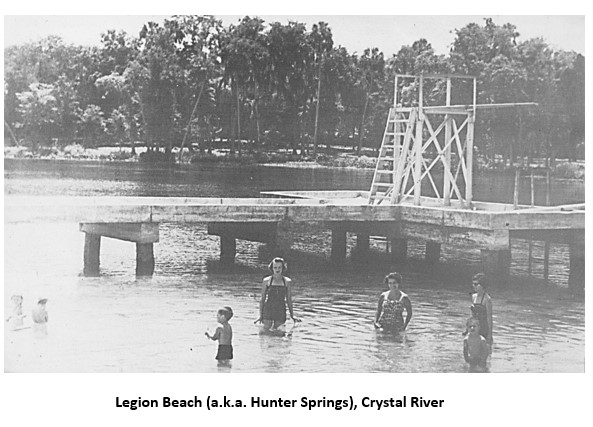
Lida Martin sold a piece of waterfront property to the Town of Crystal River in 1938. The Town paid $145.33 for the land, but there were some restrictions. The Town could only use the plot for recreational purposes, could not transfer or sell to another entity, and could construct a locker house on the land. Access was to be free for any member of the white race. If any restriction was violated then the land would revert to Lida Martin or her descendants.
In 1947 the Town transferred the land back to Lida Martin and she leased the property to the local American Legion post. Martin retained ownership of the property and executed a 99-year lease with the organization. The annual rent was $1 and carried essentially the same restrictions as were listed in the 1938 deed. If any of the restrictions were not observed, Mrs. Martin could immediately re-assert her claim to the property and remove the tenant.
Lida Martin eventually suffered from poor health and moved back to Ohio to be closer to her niece Bertina. Mrs. Martin passed away in November 1962 at age 86. She left only one living relative, her niece Bertina Overcasher Guiley. Bertina passed away in 1966 and her husband Milton Guiley died in 1981. The couple had no children. While there are no direct descendants alive today, there are a number of distant cousins who are probably unaware of the story of Legion Beach.
It Matters Where I’m Buried
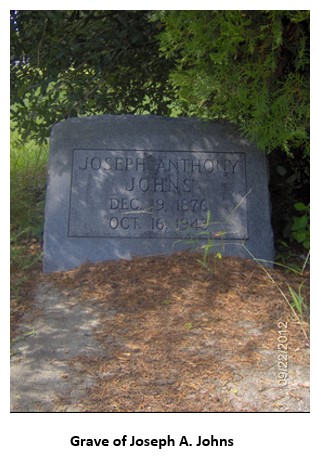
Joseph A Johns passed away in 1942. His Will gave specific property to his widow and a significant amount of timberland to his son. His other children were also remembered through equal shares of his remaining properties. The first provision in his Will, however, dealt with the manner of his funeral and final resting place. He requested that “…my body be buried in a Christian-like manner, suitable to my circumstances in life, provided I am placed in a concrete vault and the vault built so that it is flush with the ground or above the ground.” As you can see from the grave site, Joseph John’s final resting place observed the provisions of his Will.
A Premonition
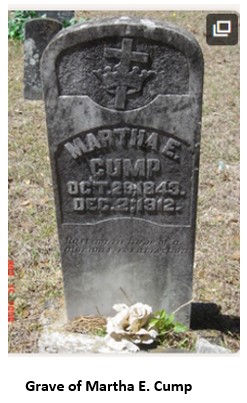
Martha E. Cump of Floral City was the mother of four grown children. She decided at age 69 to construct a Will to ensure that her affairs are settled in a manner that was equitable to her offspring. She further directed that all of her wearing apparel be forwarded to her sister so she might get use from the clothes. Mrs. Cump noted that she was “…now about to undergo a surgical operation from the effects of which I have no assurance of recovery.” Her concern was unfortunately warranted and she was buried a few months later in the Hills of Rest cemetery.
The Rich and Famous
A number of prominent people resided elsewhere but had real estate holdings in Citrus County. In those cases their Wills had to be also filed in our county in addition to their home state. Percy A. Rockefeller, nephew of oil baron John D. Rockefeller, owned land in Citrus County and his Will had to be filed here to complete the probate process.
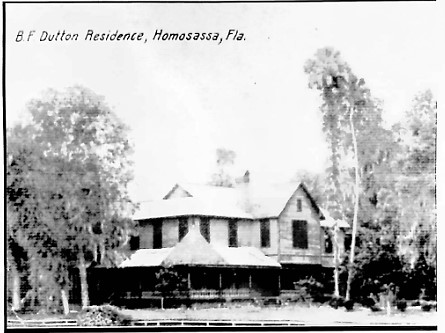
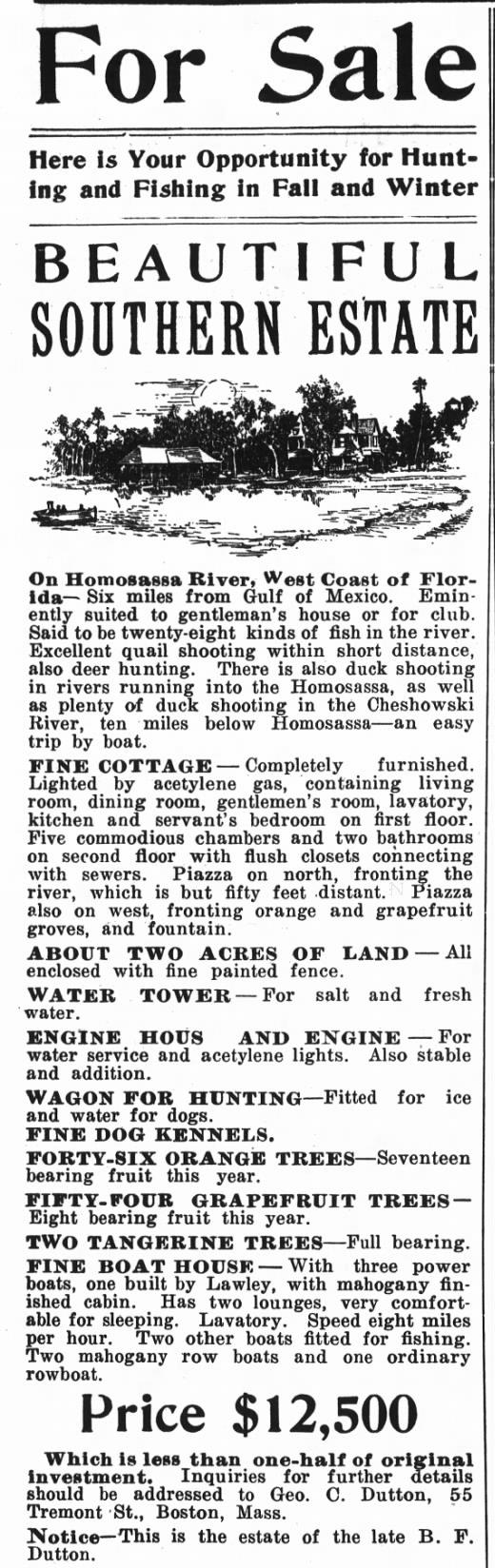
Benjamin F. Dutton, original owner of the Riverside Inn, passed away in 1915 and his extensive property was offered for sale in newspapers across the county.
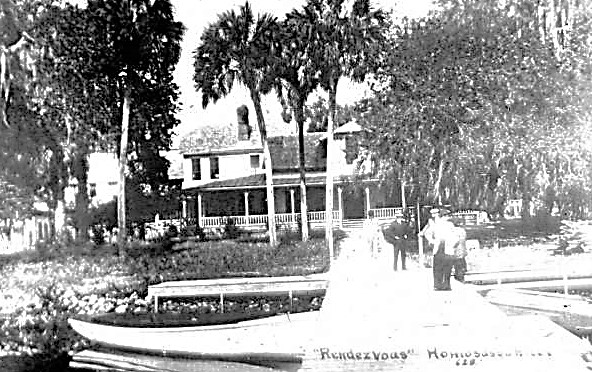
Dutton’s business partner, Samuel S. Houghton, also had a winter lodge in Homosassa that he named the “Rendezvous”. Houghton purchased land from John Hall in 1891 for $7000 (about $228,000 in 2022 dollars). No expense was spared on building the immense mansion and grounds that arose on the that site. The “cottage” could comfortably accommodate 30 people. A boat house and wharf was constructed at today’s equivalent cost of $60,000. A new beach was created for an outlay of $105,000 in today’s equivalent dollars. By 1893, Houghton had spent approximately $100,000 – the equivalent of $3,250,000 in 2022 dollars – in constructing his family’s vacation home.
Unfortunately, S.S. Houghton would not live long enough to fully enjoy the fruits of his labor. After suffering ill health for three years, he suffered a paralytic stoke in July, 1893 and passed away at the age of 68. While the family continued to make their Homosassa trips, his widow Mary Houghton decided to offer the private residence for sale in 1894.
Accuracy is Important
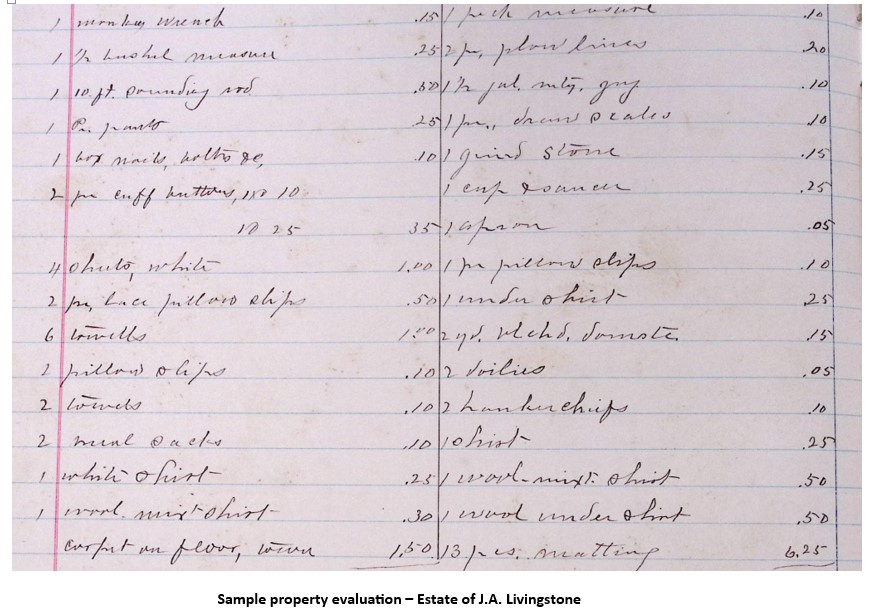
An inventory and assessment of the deceased possessions is an important part of the probate process. The court will usually appoint an executor or other disinterested party to complete the inventory. Most Wills contain a general overview of the estate’s contents and general evaluation. Some people take their responsibility very seriously and their report to the court reflects their diligence. Such was the case for the men assigned to inventory and value all of the effects for the recently departed J.A. Livingstone. They went through the entire house and no item was too small to escape the keen eyes of the estimators. They counted the number of undershirts, pillow cases, handkerchiefs, and loose buttons in addition to the larger pieces in the estate.
The Final Word
A.P.K. Stafford’s final words were the most inspirational – “This life is only the beginning of another. You will miss me but I shall be with you and meet and welcome you on the other shore. But you have your work to do here, do it bravely and do not mourn for me for I shall not be dead. I shall only bid you “good evening” in order to be able to say “good morning” to you when we meet on the other shore”.
Grave site pictures courtesy of Find-A-Grave.