
Was Homosassa Grover Cleveland’s Winter White House?

The Legend of Grover Cleveland
Did the Former President Design the Layout of Homosassa?
Did Cleveland Really Cast His Fishing Line in Homosassa?
by Kenneth Marotte
If you ask most Citrus County residents, they’ll tell you with certainty that former President Grover Cleveland played a huge role in the history of Homosassa. Many locals will cruise down the Homosassa River and point in the general location of the old Rendezvous Inn and state “That’s where Grover Cleveland owned a camp and used to fish every winter”. His relationship with Homosassa was so strong apparently that a major road – Grover Cleveland Boulevard – was named for him in the 1920s.
Newspaper stories of the day ostensibly support their understanding. Some samples:
“Grover Cleveland, while president and thereafter, was a frequent visitor, attracted by the marvelous fishing. He and his friends built a fishing lodge, which still stands. Cleveland and a small group of friends planned and laid out the old town of Homosassa, near the river mouth”. Tampa Bay Times, July 1, 1945
“The Rendezvous [was] …made nationally known as headquarters of the late Grover Cleveland and the late Joe Jefferson on many fishing expeditions to this part of Florida”. Tampa Tribune. December 11, 1926
“The ride through the hammock lands over the Grover Cleveland Boulevard to the Rendezvous of our Buffalo President, Grover Cleveland, for whom the highway is named and where he spent many happy days, is one long to be remembered. Grover loved to fish, and in the waters of the Homosassa he found the enjoyment satisfied.” Tallahassee Democrat, January 21, 1928
“Grover Cleveland was…an enthusiastic fisherman who came to Homosassa, Fla every year with Joe Jefferson, the famous actor. The two fished in Florida waters for a month or two then returned to their work”. Tampa Bay Times, February 16, 1941
“The Rendezvous Inn at Homosassa was originally built by the late John Jacob Astor…on several occasions, Grover Cleveland was his guest. The Florida West Coast Development company has the original plans of Grover Cleveland, who visioned the city that would someday transform this ideal setting of Homosassa into a thriving metropolis.” Tampa Bay Times, February 16, 1926
Who was Grover Cleveland?
After some initial setbacks, Cleveland enjoyed a meteoric rise in politics. He took office as Mayor of Buffalo (NY) in 1882. He successfully ran for Governor of New York State later that year. He was elected President of the United States just two years later in 1884. Most students can recall that he was the only President to serve two non-consecutive terms. He lost the election of 1888 to Benjamin Harrison but returned to win the office back from Harrison in 1892.
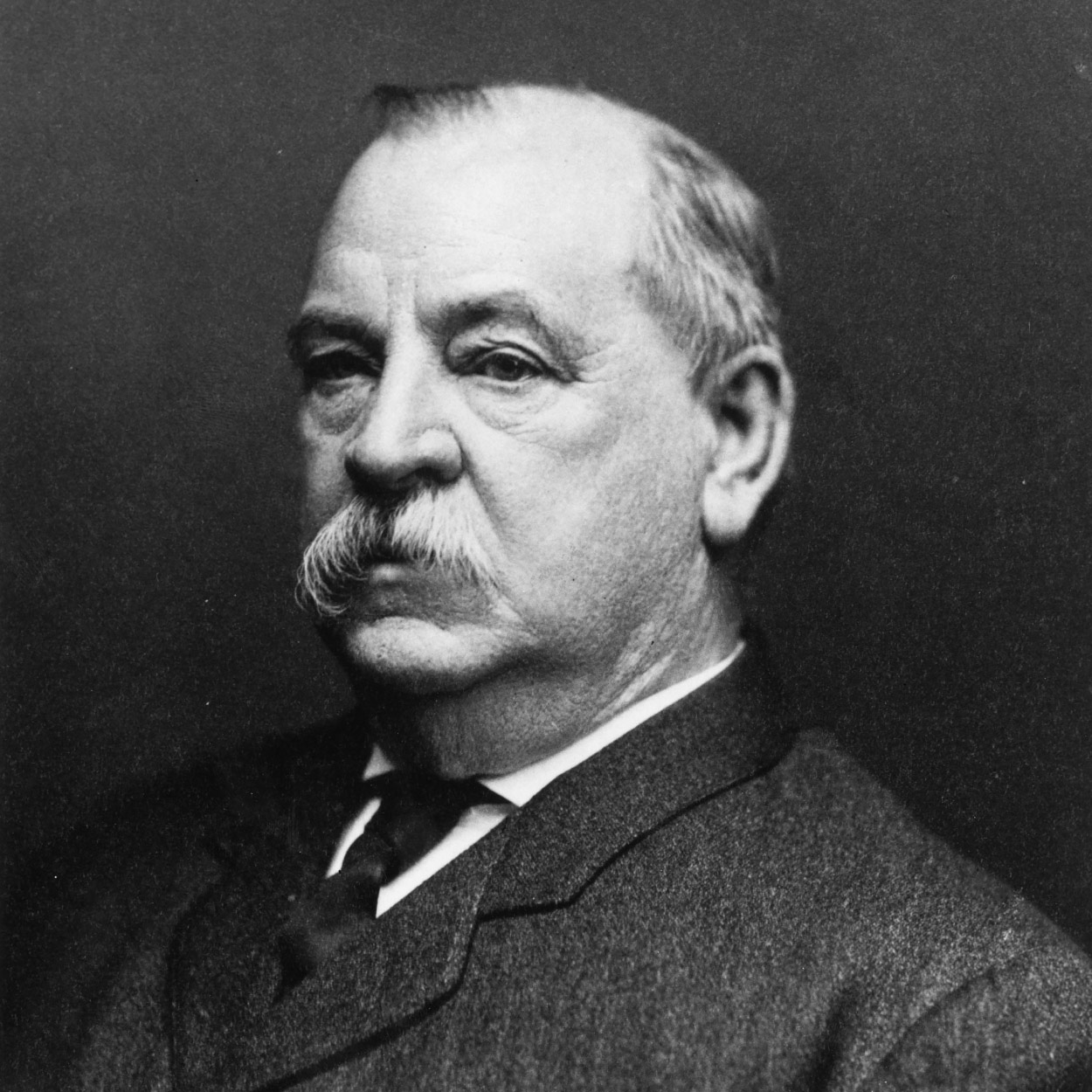
Hunting and fishing were almost as important to Cleveland as politics. He frequently went on sporting expeditions all over the country. He penned a book and magazine articles on fishing after his Presidency was over. He even went fishing on his honeymoon and lived to tell the story.
Contemporary newspaper articles and Cleveland’s Presidential papers recorded many fishing trips to Western Massachusetts, New York, New Jersey, Maryland, Minnesota, and Jacksonville FL. He had properties in Tamworth NH (“Intermont”) and Buzzards Bay MA (“Gray Gables”) that were used extensively for fishing. There’s ample documentation that he frequently fished on the East Coast of Florida and purchased property for a winter home in Stuart FL before his death in 1908.
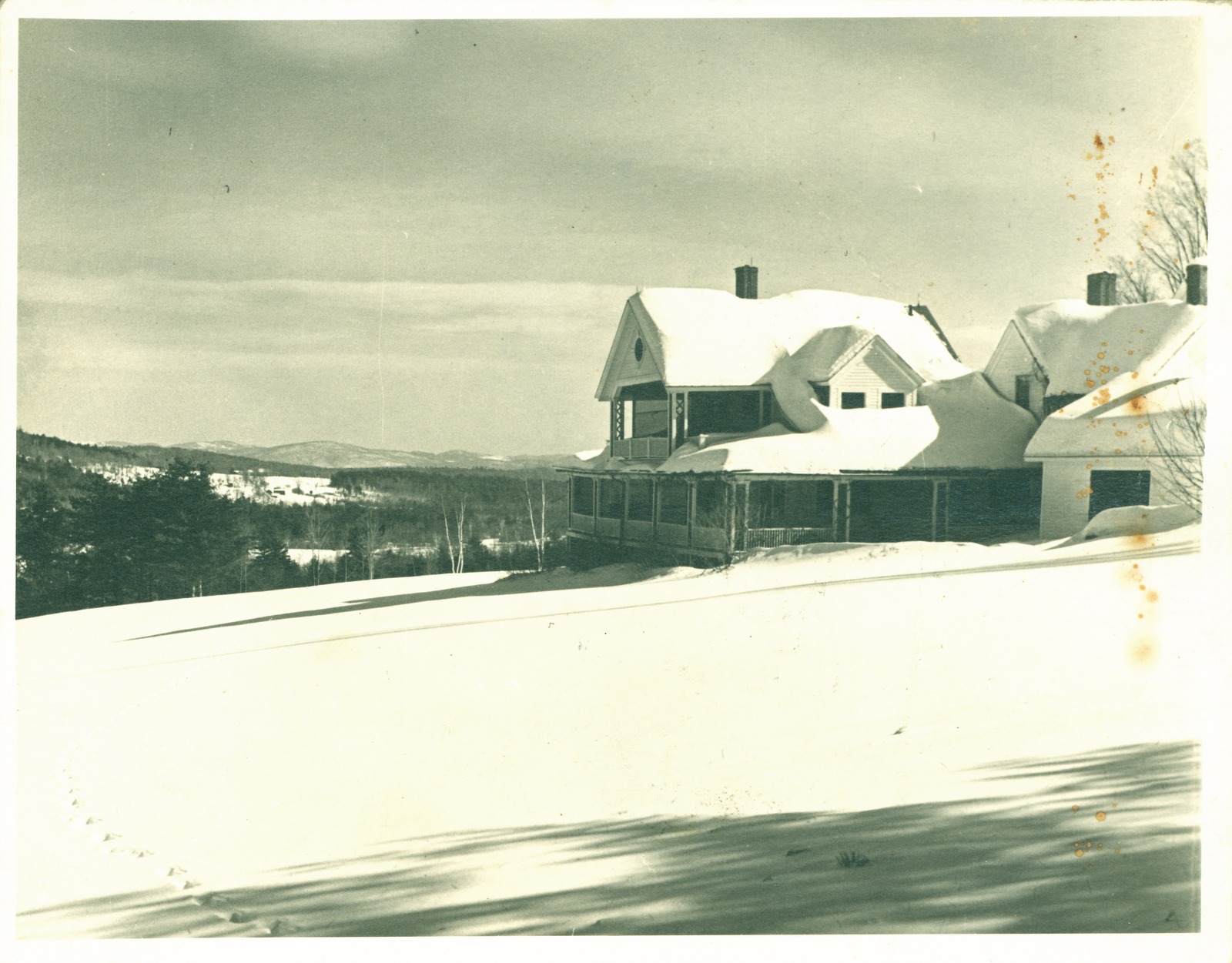
Intermont at Tamworth, NH (Courtesy of the State of New Jersey Division of Environmental Protection, the Grover Cleveland Birthplace Historic Site, Caldwell, New Jersey.)
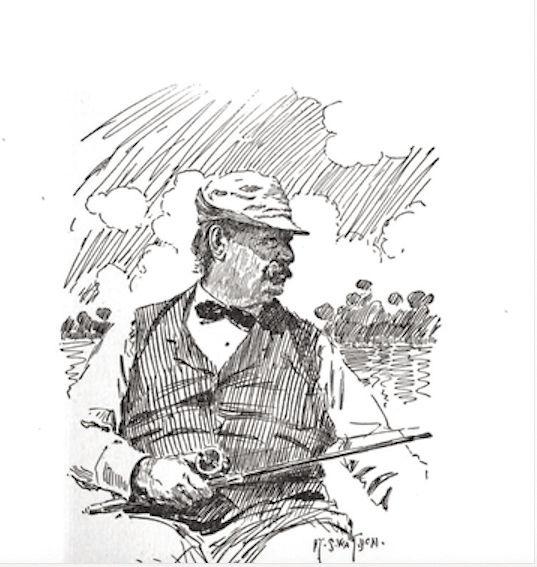
A sketch from “Fishing and Shooting Sketches,” written in 1901 by President Grover Cleveland. (COURTESY OF CONWAY HISTORICAL SOCIETY)
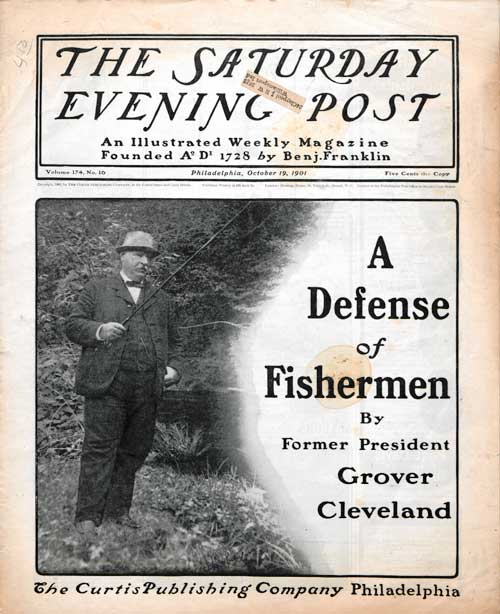
From the Saturday Evening Post, “A Defense of Fisherman” by former President Grover Cleveland
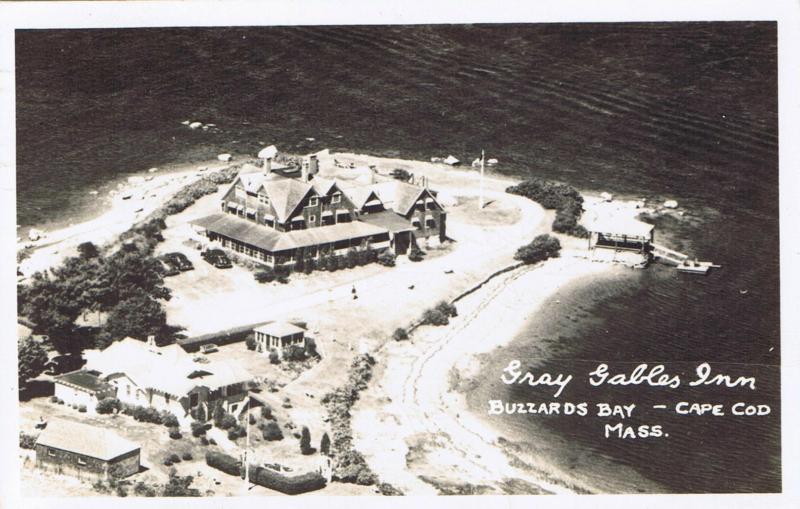
Gray Gables at Buzzard’s Bay, MA
The Presidency during the time of Grover Cleveland
Grover Cleveland’s presidential papers are stored in the Library of Congress. Important matters of state, political strategy, and mundane daily affairs are archived in this resource. Despite Cleveland’s campaign against the “spoils system”, he was under siege by throngs of office-seekers and others urging a particular viewpoint.
People felt that they had a more familiar connection to the sitting President. There were hundreds of personal requests and messages. Some examples include a young orphan woman who wanted money to get started in life, or to be given a job offer if no money was forthcoming; a morphine addict who was trying to kick his habit but needed money for treatments; a fanatical supporter who warned that the Republicans were scheming to either poison or shoot him; and a young fan who carried a torch during one of the President’s campaign rallies.
One person sent an elk’s head directly to the President. Maybe he wanted to make Cleveland “an offer he couldn’t refuse”.
His Presidential papers also show that he was offered hundreds of invitations to partake in hunting and fishing trips. Fishing clubs asked him to join. Hotel and lodge proprietors sent pamphlets and invites for accommodations at their establishments.
This was also a time where Presidential names (and his family) were frequently highlighted in advisements to create the impression that he somehow endorsed their products – regardless of whether the President had agreed to allow them to use his name or not.

The country was enthralled when Cleveland’s first daughter was born in 1891. Newspapers were full of stories about “Baby Ruth”. According to the Curtiss Candy Company, they honored Ruth’s enduring popularity by naming a candy bar after her in 1920-21, many years after her premature death in 1904. (Although many claim this was a subterfuge to capitalize on the popularity of a certain popular baseball player without paying him any royalties.) The main takeaway is that President’s Cleveland’s name was fair game for marketing products and services – and many companies took advantage of this free endorsement.
Newspapers during the time of Grover Cleveland
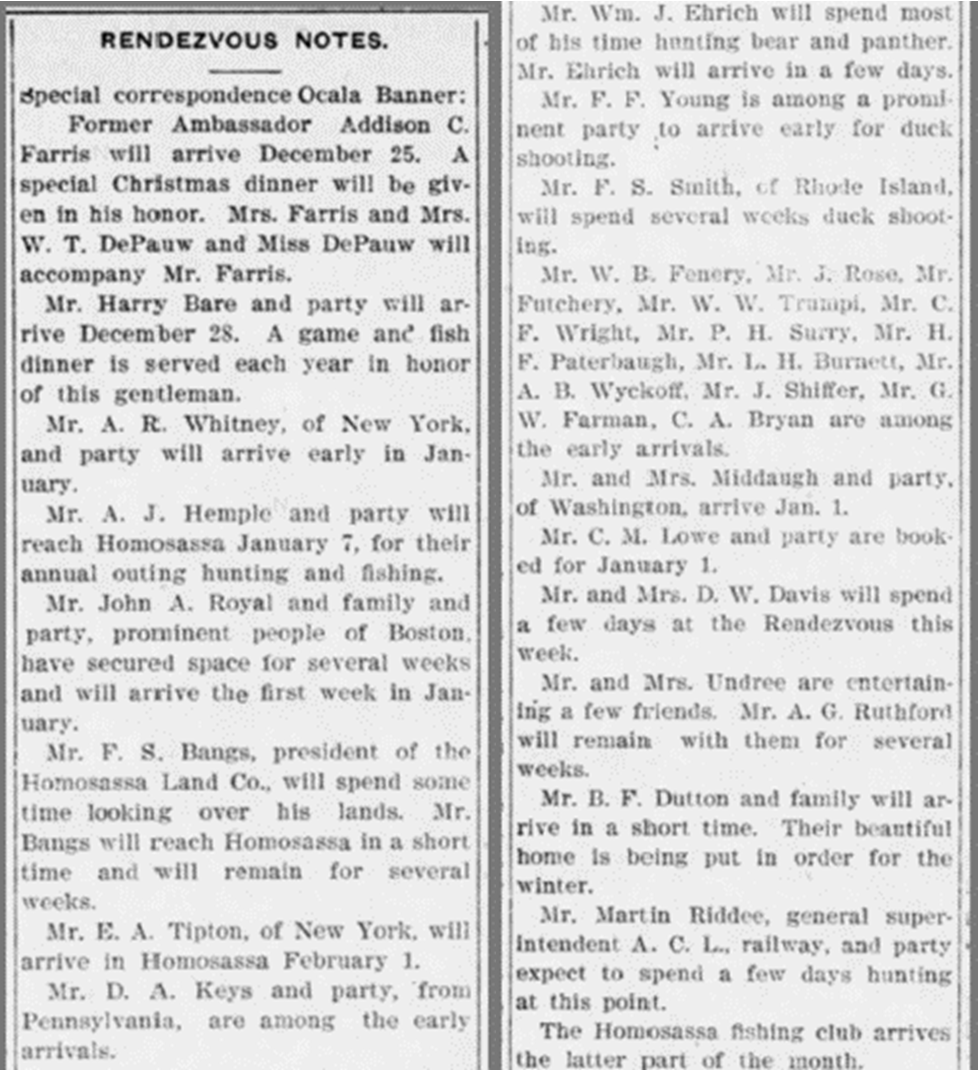
National and local newspapers pried into the personal lives of citizens for a good story. Articles of that time period seem intrusive to today’s readers. Local reporters were dispatched every day to hotels and railroad stations to inquire about the comings and goings of local citizens and celebrities.
Local columns reported on birthdays, out-of-town visitors, and details of accidents and crimes.
News of people’s medical maladies, operations, conditions, and prospects for recovery were outlined in detail in that pre-HIPAA world!
President Cleveland’s name has been associated with the Rendezvous lodge. That resort was the subject of frequent updates and columns in the local newspaper. The student of history can conclude that it was impossible to escape the notice of the local newspapers – especially if the visitor was the President of the United States. Click through the images below to see some typical articles regarding guests and accommodations at the Rendezvous in Homosassa in 1906:
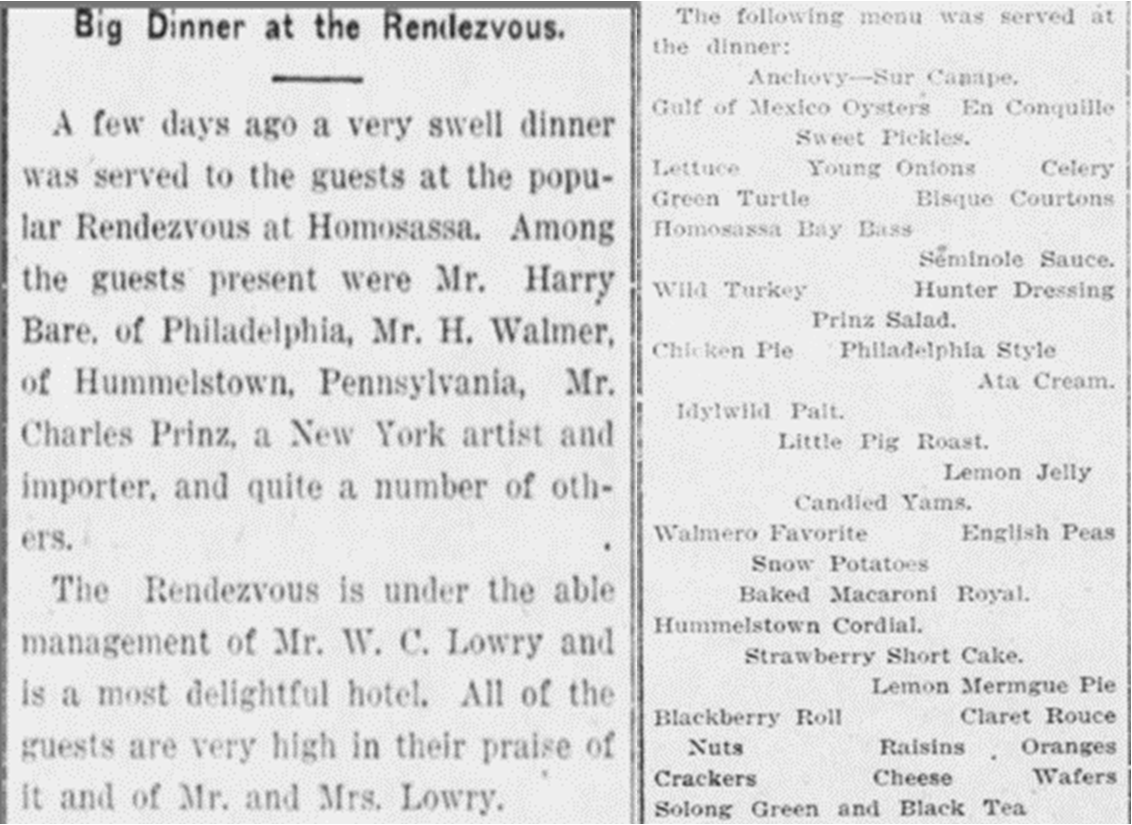
Homosassa during the time of Grover Cleveland
The village was still part of Hernando County when Cleveland first ascended to office. There were at least two major attempts to develop Homosassa as a homesteading destination during Cleveland’s time: The Homosassa Land Company and the Homosassa Company. The most successful Homosassa development effort would be undertaken by the Florida West Coast Development Co in the mid-1920’s.
The Homosassa Company and Homosassa Land Company placed large advertisements in the New York newspapers in the 1880’s and 1890’s. The ads included a list of prominent men who were investors or had ties to Homosassa.
At a time when Grover Cleveland’s name was freely appropriated, it is noteworthy that neither of these companies listed Cleveland as a partner or visitor to Homosassa. As a matter of fact, there are no newspaper articles or advertisements linking Cleveland to Homosassa during the period of 1875-1924. The first “Cleveland visited Homosassa” articles appeared in 1925, coincidentally at the same time when the Florida West Coast Development Company launched their impressive marketing campaign to sell Homosassa land to Northern investors.
Grover Cleveland’s Papers
I expended a great amount of time reviewing Grover Cleveland’s presidential papers while researching this topic. It became clear that telling the story of Cleveland in Homosassa would be like assembling a jigsaw puzzle with many missing pieces.
President Cleveland’s papers are stored in the Library of Congress (LOC). Unlike today’s world, presidential papers during that time were not fastidiously collected and stored. Most of the communications that Cleveland received during his terms were retained by his Personal Secretaries. Copies of outgoing letters were not usually saved. Up until 1912, there was no designated repository for his papers – they were literally stored in boxes in the attics of his widow (Francis Folsom Cleveland), his Personal Secretaries, his former employers (such as the law firm of Bangs and Stetson) and a variety of other locations.
When Frances Preston (the remarried Mrs. Cleveland) decided to authorize an official biography of her deceased husband, she forwarded the boxes of official and personal papers from her attic to the selected biographer, Professor Robert McElroy of Princeton University. She had formerly donated many boxes of papers to the Conway (NH) Historical Society and they were forwarded to McElroy as well.
Since she recognized that Cleveland’s outgoing messages were never retained, Mrs. Preston identified his most frequent correspondents and sent personal requests asking them to forward any Cleveland-related documents to McElroy. Advertisements were published in the newspapers in some of America’s largest cities soliciting donations of any papers related to Cleveland.
The results of the collection campaign were mixed. About 1,500 additional documents were received as a result of the advertisements. Some respondents replied that they had framed any autographed letters from President Cleveland years ago and considered them to be family heirlooms and they would not be turning those letters over to anyone. Others responded that they would check in their attics and basements and would reply to Mrs. Preston if they found anything pertinent.
In the final analysis, there were over a hundred boxes of original papers available and they represented a substantial portion of the Cleveland presidency. McElroy was able to complete his biography using those source documents. Once the book (Grover Cleveland, the Man and the Statesman; An Authorized Biography) was completed, the papers were donated to the Library of Congress (LOC) for future scholastic research.
The papers were sorted and classified by LOC staff. There is a mix of official presidential topics, mundane household bills and invoices, check registers and personal communications from luminaries and ordinary Americans alike. Some (but not all) of the documents were captured on microfilm. Some (but not all) of the microfilmed papers were included in an Index Guide and made available to researchers online. A static Index Guide to the documents was created in 1965 and does not include any documents that have since been obtained or microfilmed.
The official repository of Grover Cleveland papers is demonstrably incomplete and the Index Guide is not current. Researchers have to recognize that there may be other papers from Grover Cleveland still lying in some dusty garret or attic that might affect our understanding of his life and times.
As a postscript, on July 16, 2018, New Hampshire’s WMUR-TV reported that thirteen more boxes of Cleveland’s presidential papers were found in a dark corner of the Conway Historical Society’s attic. Those boxes were sent to the LOC to be stored with all of the others. There is no estimate regarding when the documents will be scanned and made available to researchers.
Grover Cleveland and His Law Partners – Bangs and Stetson
Bangs and Stetson was one of the most visible law firms in America in the latter part of the nineteenth century. It was formed by the partnership of Charles W Bangs, Francis S Bangs, Francis Lynde Stetson, Charles Edward Tracy, and Charles MacVeagh. Stetson had ingratiated himself with Cleveland in 1883 and served as an important member of the President’s inner circle during his administration. He quietly reviewed and interviewed prospective officeholders and offered his opinions to the President. Cleveland sometimes used Stetson as a “back channel” to deliver messages.
After Cleveland’s first term, Stetson prevailed upon the former President to join their firm. Cleveland functioned as a competent lawyer during his four-year hiatus. He resigned his position as a consequence of being re-elected to the White House in 1892.
Francis S Bangs was a major property holder in what is today considered “Old Homosassa” during 1887 -1910. He was the President of the Homosassa Land Company. Local newspapers reported that Bangs had several trips to Homosassa to fish and view his land holdings.
There is some speculation that Cleveland either owned land or visited Homosassa as a consequence of his relationship with either Bangs or Stetson. A review of the land deed records in the Citrus County Museum archives yields no property ownership records for former President Cleveland. There are many official records entries involving Francis S Bangs, as expected. While Bangs did engage in some land transactions with a “Hayward Stetson”, that individual is not related to Francis L Stetson (Cleveland’s confidant).
An extensive review of Cleveland’s papers leads to the conclusion that the former President’s relationship with Francis S Bangs was very formal and was mostly related to Cleveland’s employment with the law firm. There are only 11 letters on file in the LOC and none of them mention fishing or visiting Homosassa.
Francis Lynde Stetson had a more robust roster of communications due to his political connection with the Cleveland administration. There are 110 letters and telegrams on file in the LOC. I have reviewed each of them and none mention fishing or visiting Homosassa. The two men seemed to have a falling out in 1896. Between May 1896 and March 1906, there is only one communication in the archives and that was a condolence letter to Cleveland upon the death of “Baby Ruth” Cleveland in 1904.
There are no contemporary newspaper articles regarding Francis L Stetson owning land or traveling to Homosassa.
Are the Grover Cleveland legends true? The case for a “Possible” Verdict.
There is no doubt that President Cleveland loved to fish and traveled far across the country to pursue this pastime. A Buffalo newspaper deemed him to be “the most famous fisherman in the United States” in 1897. The plentiful bounty of fish in the Homosassa River was the subject of newspaper articles that were repeated across the country by wire services. The Homosassa Company and Homosassa Land Company had posted large advertisements in the New York newspapers as part of their marketing strategy. It’s likely that Cleveland would have some knowledge about Homosassa based on his interests and the widespread publicity for the village.
Since some of Cleveland’s communications have not been obtained by LOC, cataloged, and made available for scholarly review, there is always a possibility that a dated, verified letter from Cleveland or a contemporary newspaper article exists that supports the case for his involvement with Homosassa. The recent discovery of Cleveland’s papers in New Hampshire bolsters this hope.
I am aware that there is an undated photograph of an unidentified man fishing in a boat on the Homosassa River who appears to have a resemblance to Cleveland. Image recognition scanning does not verify the identity of the mystery fisherman. Perhaps more information about the date, origin, and other people in the boat could help the argument for a Grover Cleveland sighting.
Are the Grover Cleveland legends true? The case for a “Highly Improbable” Verdict.
The burden of proof rests with the person or group who asserts that an event occurred.
Exactly when did Grover Cleveland visit Homosassa? Where did he stay? Who chronicled his trip? What documentation (journal entries, deeds, contemporary newspapers, pictures, verified letters, etc.) validate the legend?
I could find no evidence that supports the newspaper accounts and local legends cited at the beginning of this study. As mentioned above, those stories coincide with the marketing efforts of the Florida West Coast Development Company. According to the newspapers.com repository, there are no contemporary newspaper reports of Grover Cleveland visiting the Homosassa area during the period 1875-1924.
While the Citrus County newspapers of that timeframe have not been scanned by the Citrus County Historical Society yet, the Ocala and Tampa newspapers provided ample coverage of events in Homosassa at that time. I’ve provided examples demonstrating the level of detail that those newspapers reported. It seems illogical that the 300-pound President could sneak into Homosassa ninja-like for weeks/months and not attract the notice of a single local newspaper editor.
Hotel proprietors and fishing clubs issued hundreds of invitations to Cleveland during his tenure. None of those invitations were received from the proprietors of the Homosassa Inn, Rendezvous or any other Homosassa resort according to the LOC archives. I also checked for communications from Citrus County officials of that period. There are no letters on file in the LOC archives from our local businessmen or politicians.
I reviewed the LOC archives for memos from the officers of the Homosassa Company, Homosassa Land Company and the Ocala and Silver Springs Company (that corporation had assumed the resources of the Homosassa Company). There were no invitations or Homosassa-related letters to Cleveland from anyone related to those companies. Their advertisements never mentioned any association with Grover Cleveland. At a time when marketing teams freely invoked the President’s name, none of those companies claimed his endorsement or involvement. There is no evidence that Grover Cleveland played any part in the design and layout of Homosassa.
Robert McElroy’s Grover Cleveland, the Man and the Statesman: An Authorized Biography cites Cleveland’s many fishing trips to Stuart FL, Buzzards Bay, New Jersey, New Hampshire, etc. There is no mention of Homosassa in that book.
When Grover Cleveland passed away in 1908, the newspapers and county commissioners in Stuart FL published profuse expressions of regret for the man who had become their neighbor and fishing friend. In contrast, the Citrus County BoCC minutes for that period do not mention Cleveland’s death at all. His obituary was carried on Page 2 in the Ocala newspaper. It would be a reasonable assumption that the life of a man who allegedly played such an important role in Citrus County and the village of Homosassa would have celebrated and remembered.
In Conclusion
My research leads me to believe that the legend of Grover Cleveland in Homosassa is probably the result of an ambitious marketing plan executed by the Florida West Coast Development Company in the 1920’s. Their stories have been repeated and expanded over the years so the legend has continued to grow and become accepted as an immutable truth.
At this point, I have seen no credible evidence that Cleveland ever visited Homosassa. I’ve seen no evidence that he served as a Founding Father or Architect of that village. Unless new resources are made available in the future containing original documents with proof to the contrary, I am opining that the Legend of Grover Cleveland in Homosassa cannot be verified and is probably not true.