
The Voyage of Crystal River’s Fearless Sailors
By Ken Marotte, Citrus County Historical Society
Just sit right back and you’ll hear a tale,
A tale of a fateful trip
That started from this tropic port
Aboard this tiny ship
Chicago Snowbirds
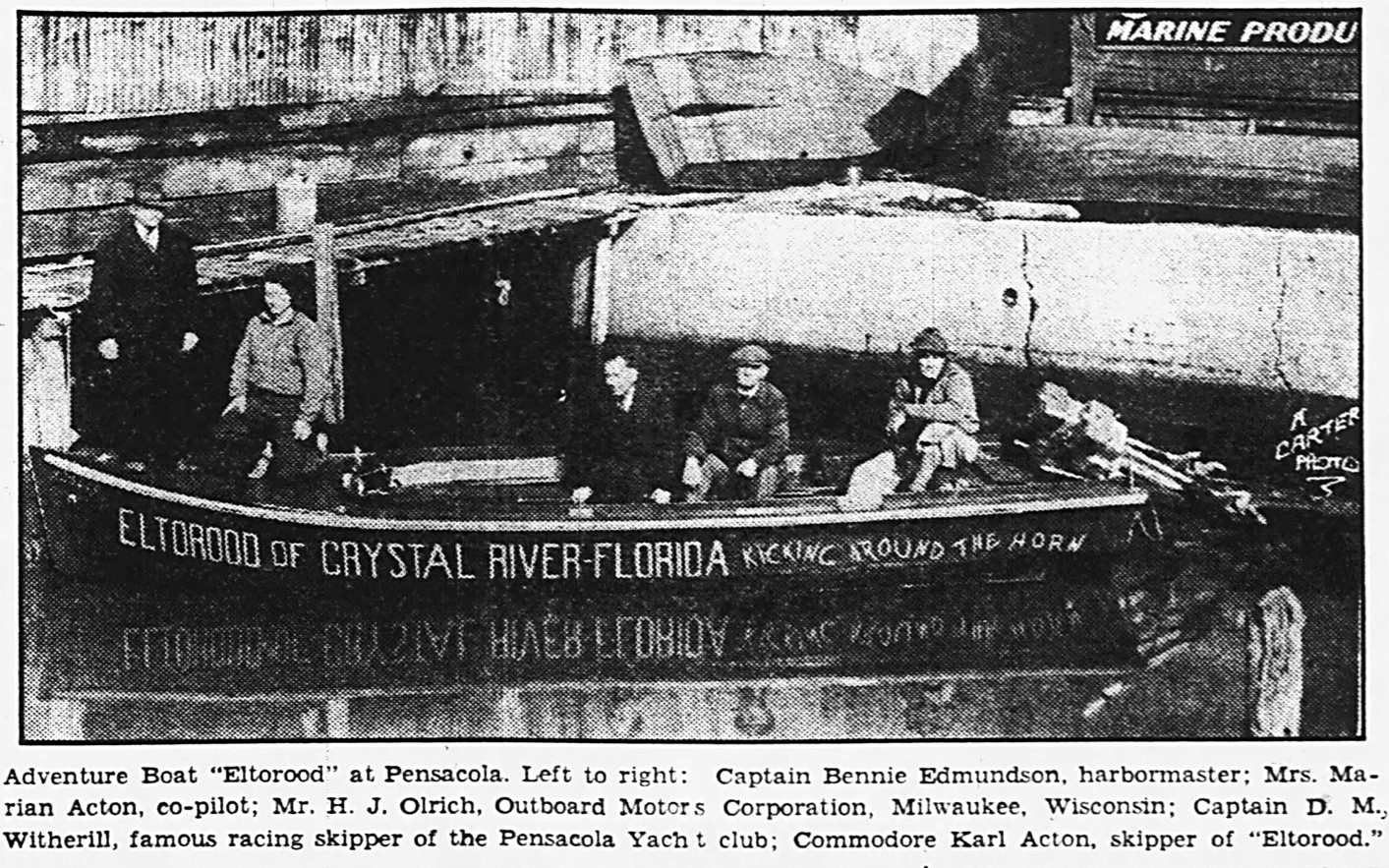
The 1920’s were a time of explosive growth in Citrus County. Coastal communities such as Homosassa and Crystal River provided a welcome break from winter-weary visitors from the frozen North. Karl and Marian Acton visited relatives in 1928 and bought property in Crystal River the following year. They were passionate about powerboating and enjoyed Florida’s year-round access to the sea. Mr. Acton was a Commodore in the National Outboard Association and became an evangelist for the boating experiences that Crystal River had to offer.
A Bold Proposal
Acton became involved in the local community and wanted to publicize the virtues of his winter hideaway. He approached the Crystal River Town Council with a bold proposal in 1935. If they would underwrite the cost of a small craft, Acton and his wife would journey 20,000 miles around Cape Horn with the words “Eltorood of Crystal River Florida” prominently displayed on both sides. He must have had outstanding powers of persuasion because the Town agreed to cover the cost of the vessel. Council members awarded the construction project to Melvin Wells and Hardwoods, Inc of Homosassa contributed the lumber.
The couple planned to depart from Crystal River, travel up the coast of the Gulf of Mexico toward Alabama, Mississippi and Texas, then hug the eastern coastline of South America, venture though Cape Horn into the Pacific Ocean, up the western coastline of South America, traverse the Panama Canal and reverse their Gulf journey until they reached the Mississippi River. Once they reached the mouth of the Mississippi, they planned to motor up the river as far as Michigan.
The choice of vessel was unusual given the trip that was being planned. The “Eltorood” was an 18-foot open skiff with only a tarp on the bow to repel any oncoming waves. The boat was powered by two small outboard “kicker” motors. Meals would be prepared using a gasoline stove. During inclement weather or nighttime, the Acton’s planned to slip into a nearby cove or port and use the tarp as covering for the night.
The Acton’s were not the only passengers. They took along “Madame Queen”, their talented English Setter. Acton reported that she was “… a stunt dog that steers a motorboat with precision, under given commands…” Perhaps the Setter could take a turn piloting the boat if the couple became fatigued.
A Two-Year Tour
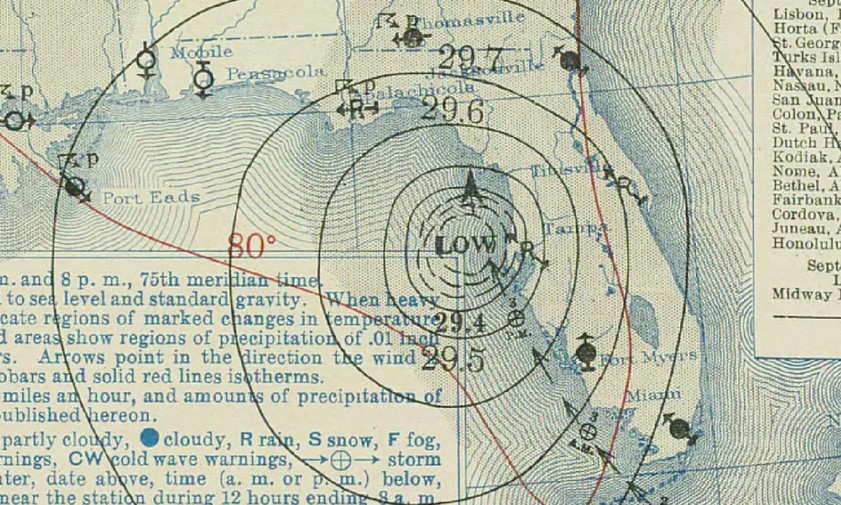
On August 29, 1935, three passengers set sail that day for a two-year tour. Their timing could not have been worse. Known as the “1935 Labor Day Storm”, the strongest Atlantic hurricane to ever make landfall approached Florida. It was the first designated Category 5 hurricane to ever touch the United States. The storm hit the Florida Keys on September 2 with peak winds of 200 mph and moved up Florida’s Gulf coast. The couple had to scramble for their lives and find shelter immediately before they could continue their journey.
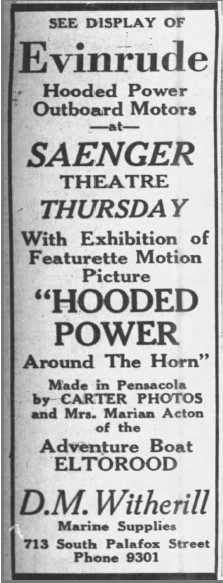
The boat arrived in the St. Marks/Tallahassee area by late November, 1935. They pulled into Pensacola FL in February, 1936 and used the occasion to hire a professional photographer who would create a movie journaling their progress. Crowds met the couple at the dock and everyone was invited to join the filming of the motion picture. Acton was able to enlist the financial support of Sherwin-Williams Paint, Evinrude Motors, the Pensacola Jaycees and a number of local businesses to cover the cost of the production. He promised that the movie would have a national audience and create positive publicity for the area’s merchants.
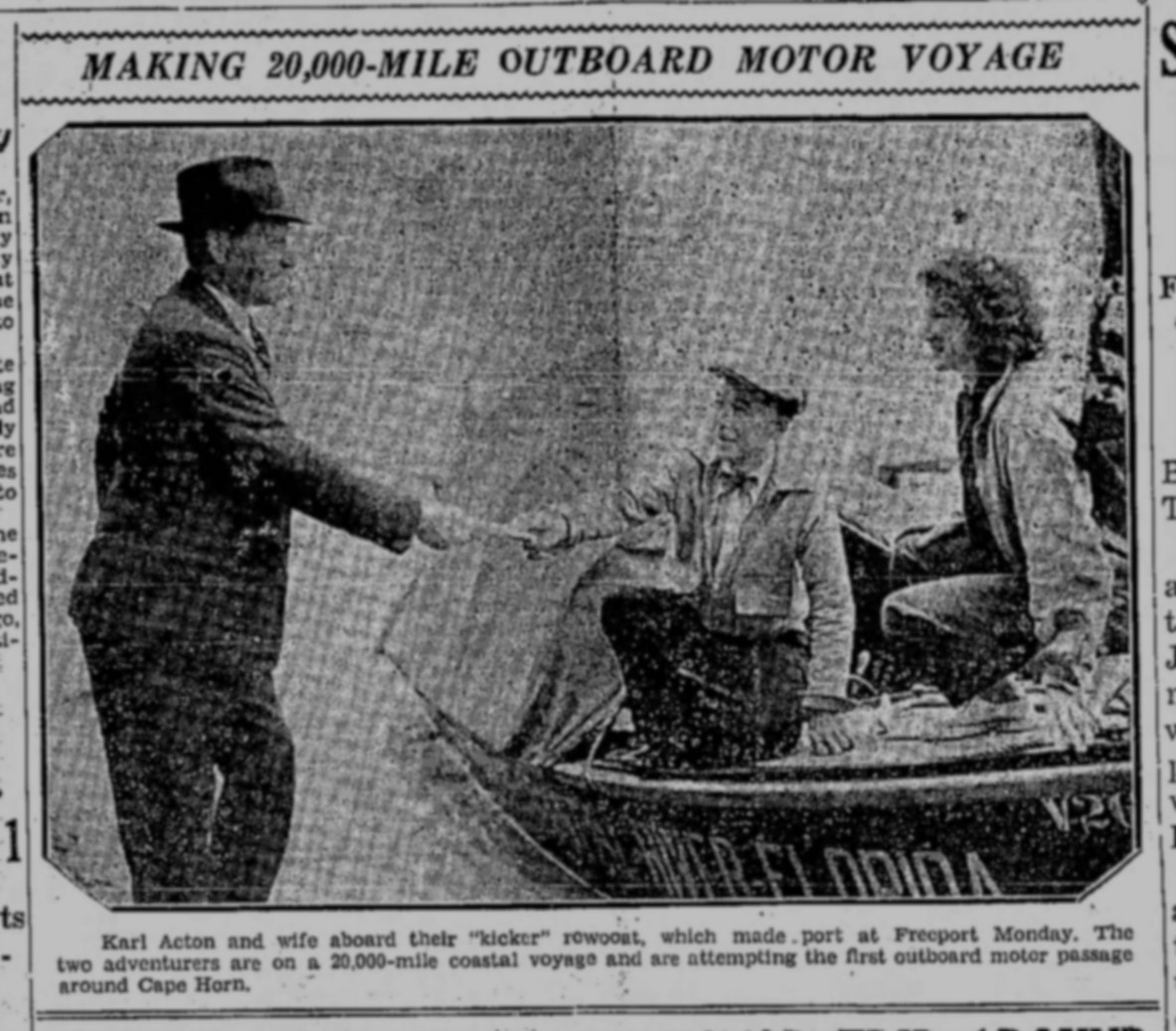
Biloxi MS was next on the list of ports. Mayor Louis Braun met the Eltorood at the docks and more filming of the trips took place. Billed as a great advertising opportunity for the city, the crew filmed the Mayor and the local yacht club as well as hotels and attractions in the area. The crew landed at Freeport TX on August 20, 1935 after traveling more than 2,000 miles. More crowds flocked to meet the couple who dared to undertake such an exciting trip.
End of the Line
After leaving Freeport, the couple continued on their way down the Texas coast when disaster struck. We don’t know if their small motors overheated, their gasoline stove exploded, or the dog piloted the boat onto some rocks. The Eltorood caught fire and sunk. Fortunately, the crew escaped with only minor burns and were rescued by a passing boat. Acton did not approach the Crystal River council for a replacement boat but swore to continue the journey once they had recuperated. The couple never resumed that trip.
Epilogue
In the final analysis, it was probably fortunate that the small boat sunk near a well populated and friendly port. The Acton’s were relying on being able to find food and fuel during their frequent coastal stops, and it is unlikely that there would have been facilities to meet their needs once they left the waters of the United States. In addition, the area of Cape Horn is known as one of the most dangerous places to navigate in the world. Many larger ships had sunk in the past due to the continual gale-force winds, 50-foot-high waves and occasional icebergs. Facing those conditions in an underpowered small open boat would have undoubtedly led to a life-threatening situation for the Acton’s. When the weather started getting rough, the tiny ship would be tossed and in spite of courage of the fearless crew, the Eltorood would be lost.