
The Rise and Fall of Francis “Cowboy” Williams
By Ken Marotte, Citrus County Historical Society
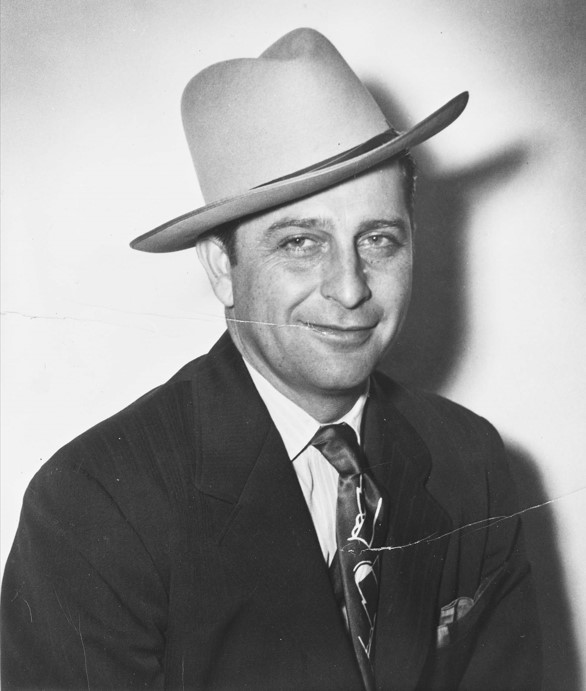
Francis “Cowboy” Williams was once known as “Mr. Citrus County”. He instinctively understood how to relate to the people in the County which made him a beloved local hero. He developed a reputation as a popular orator and became a well-known speaker across the state. As the young Mayor of Inverness, and later Citrus County Clerk of Court, people agreed that he had a bright future at the State level. Williams was on a path that would have brought him to the pinnacle of power – until an investigation by a rival politician brought those dreams crashing down to earth.
Early Life
Francis Willard Williams was born in Georgia in 1914. His family later moved to Dogtown Road in Quincy FL (near Tallahassee) where he spent most of his formative years. He met and became engaged to Virginia Schultz of Inverness in 1937. The Schultz family was well connected in Citrus County and the list of attendees at Virginia’s engagement party reads like a “Who’s Who” of Inverness society. They were married the same year and moved to several different locations in Florida. They relocated to his wife’s hometown in the early 1940’s.
Answering The call
When WW2 broke out, Williams joined the Army Air Force and served in Labrador, Iceland, Greenland and the British Isles. He served as a gunner on B-24 Liberator heavy bomber. He won the Air Medal for his accomplishments during multiple combat missions. After the war was over, he became dedicated to supporting veteran’s organizations and was appointed as the Citrus County Service officer for the Veterans Administration.
Master of Local Politics
In 1946, Williams opened a laundry business in downtown Inverness. Citizens would no longer have to send their clothes to Ocala or Tampa – a service that Inverness had not seen in years. This customer-facing retail business gave him access to many people in the county. His ebullient personality and his wife’s local connections led Cowboy to seriously consider public service. He announced that he was running for Mayor of Inverness in 1947. He swept unopposed into office at the age of 33 that year.
From that point onward, Cowboy Williams became a fixture at local events for the next 20 years. He was a pallbearer at innumerable funerals. He was elected head of the PTA and Commander of American Legion Post 77. He was instrumental in the placement of a World War 2 monument in downtown Inverness and entertained as master of ceremonies at the dedication. He enjoyed countless benefit chicken pilau dinners. Williams was elevated to a high post at the local Masonic lodge. His seemingly boundless energy extended to his Methodist church where he was Superintendent of Sunday school, Assistant Citrus County Civil Defense Director and Assistant Inverness Fire Chief.
In February, 1950 Francis “Cowboy” Williams announced that he was planning to unseat incumbent L.C. Yeomans as the Florida State Representative for Citrus County. His charisma and powerful speeches carried the day and he was elected to the State legislature.

Answering The call – Again
There was one complication in Cowboy’s plan to join the legislature. The Korean War commenced in 1950 and Williams’ reserve unit was activated for duty once again. He was elevated to the rank of Sergeant 1st Class (SFC) and assigned as platoon leader of B Company Florida’s 747th Amphibious Tank and Tractor Battalion on the West Coast. Newspaper reports state that he was a task master and his loud voice could be heard throughout the entire base while marching his troops.
He negotiated an agreement with the Army that would allow him a special 60 day leave so he could attend the Florida legislative sessions and then return to his unit. Williams joked that he had to wear his uniform to the legislative meetings since he had lost so much weight that his “civvies” would no longer fit him.
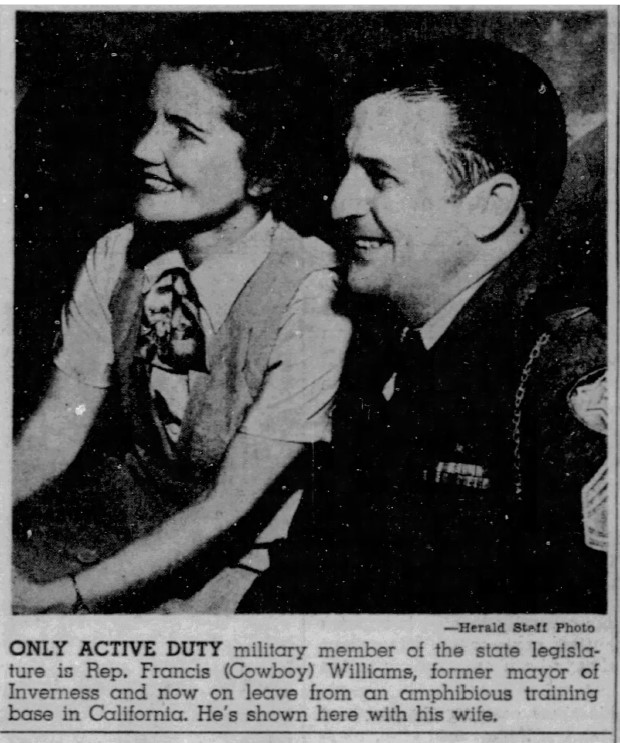
One his major goals during the legislative session was to enable 18-year-olds to vote in Florida elections. Cowboy noted that he was leading a group of 250 teenagers in his company who were willing to die for their country and their risks and sacrifices should be recognized. He argued “I’m training to go overseas with them. I won’t come back with all of them because some of them are going to give their lives for you…yet they’re asked to die on something on which they cannot even vote”.
Mr. Citrus County
After his return from military service, Williams decided to run for the Citrus County Clerk seat. After a hotly contested race, he defeated his opponent by almost 300 votes. Cowboy announced that his wife would serve as Deputy County Clerk.
Williams continued to ingratiate himself into the good graces of the community. In addition to his other veteran and church related activities, he was a judge at the County Fair and various school contests across the county.
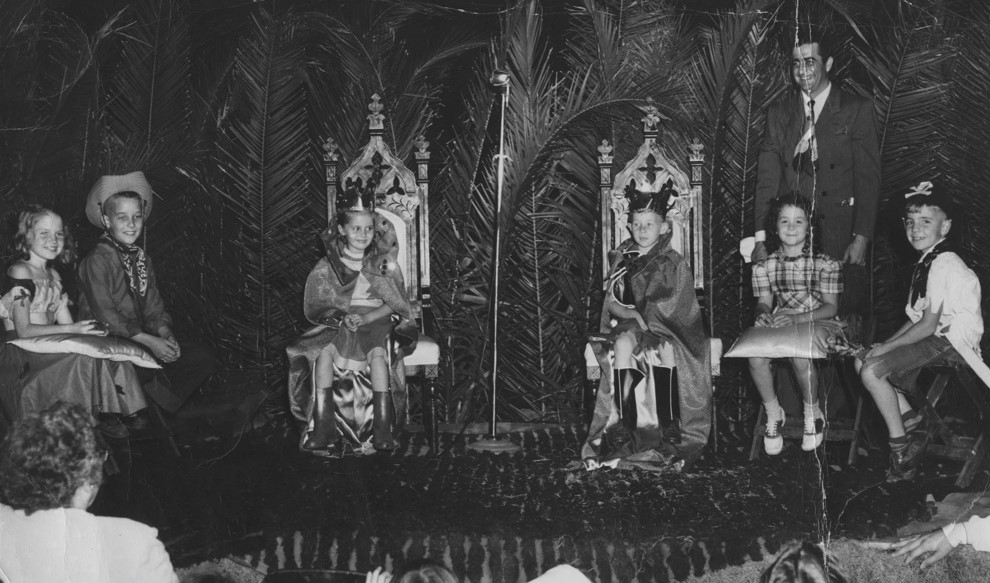

More importantly, Cowboy had honed his skills as an accomplished orator. He was in demand across the State as a speaker on Americanism, traditional values, patriotism and Anti-Communism. It seemed he was traveling to every city in Florida and impressing audiences with his powerful presentation. There was serious talk about Francis “Cowboy” Williams running for statewide office – perhaps a run for Governor.
Ominous Clouds in Tallahassee
The Democratic Party had a lock on Florida’s elections since Reconstruction. The voters had not chosen a Republican governor since 1877. A rift within the Democratic party opened the door for a Republican Claude R. Kirk, Jr to become governor in 1967. He had national ambitions and saw himself as a potential Vice-Presidential candidate in 1968. He initiated a “War on Crime and Corruption” in Florida to increase his visibility.
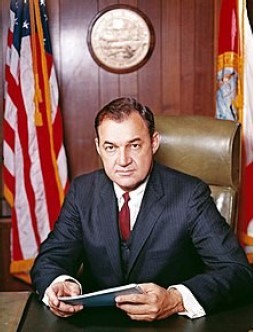
He engaged his friend George Wackenhut’s security company to root out corruption across the state. Wackenhut agents fanned out across Florida as soon as Kirk was inaugurated. After some highly visible successes in other counties, the Wackenhut agents descended upon Citrus County in May, 1967. They immediately started to review public records to determine if there were any hints of corruption. The results of their audit would change Citrus County politics for years to come.
Where is Cowboy?
A few weeks after the Wackenhut auditors arrived in Inverness, the staff at the County Clerk’s office walked into an empty office on Monday June 5, 1967. They found a short cryptic note on the typewriter. Clerk of Court “Cowboy” Williams and his wife had chosen to go away on an unexpected trip and would be back at an undetermined time. The letter included on some operational instructions to keep the office going in their absence.
Efforts to contact the Williams were unsuccessful. It was out of character for the couple to quietly slip away, especially since detailed accounts of their past vacations were typically published in the local newspapers. The public soon found out that the Williams had closed their local bank accounts and transferred or sold their Citrus County properties to friends and relatives. Cowboy was scheduled for a speaking engagement that week and neither showed up nor contacted the organizers to cancel. Rumors ran wild that they had escaped to South America ahead of the investigation.
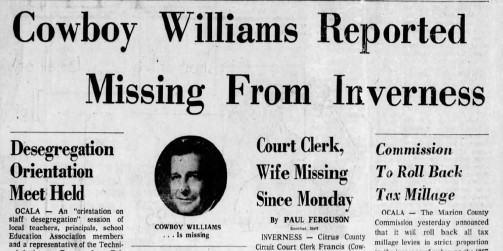
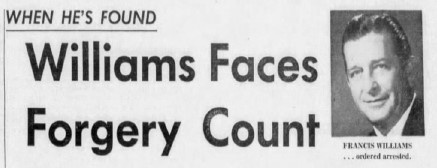
The reason for Cowboy’s absence soon became apparent. He was being charged with multiple counts of forgery and a warrant was issued for his arrest. The FBI was called upon to help find the fugitive clerk. Governor Kirk removed Williams as Clerk of Court on June 20 and replaced him with a St. Petersburg man.
The couple would remain at large until mid-August when Cowboy was arrested at the Tampa airport and brought to Sumter County for trial. He revealed that they had not absconded from the United States but had spent their time in Oregon on vacation.
Felony Charges…
As the investigation progressed, prosecutors determined that Cowboy Williams had forged the names of other Citrus County officials on checks and also converted monies belonging to the county to his own use. They eventually charged him with 31 felony counts for embezzlement and forgery. Mrs. Williams was charged with 16 felonies as a co-conspirator. A number of misdemeanor charges were also levied but would be handled in a separate case.
Everyone expected a long and dramatic trial. Citizens were surprised when Cowboy Williams plead guilty to the 31 felony counts. As part of his plea deal, the charges against his wife were dropped. He agreed to repay the county approximately $9,000 or spend 2 years at hard labor and he was to be placed on probation for almost 8 years. He also agreed to repay any discrepancies that State auditors uncovered in the future. Williams extracted an agreement from the prosecutor that he could serve his probation time in Oregon.
Governor Kirk was outraged. He expected to put Williams behind prison bars and publicly attacked the judge for such a lenient sentence. He called the sentence “…the greatest miscarriage of some kind of justice”. He demanded, and received, the judge’s justification for the decision. The sentence was final, but Governor Kirk was not finished with Cowboy Williams.
… and Misdemeanor Charges
Prosecutors had determined that there were 38 petit larceny charges that did not rise to the level of felonies. A separate trial, to be held in the Citrus County courthouse, would consider those misdemeanor counts. The trial began in October 1967 and it became apparent that there would be problems obtaining an impartial jury. As more Citrus County citizens were empaneled, the prosecutor heard potential jurors say that they would not vote to find the popular former Clerk guilty of anything. He watched as many of the dismissed jurors stopped to shake Cowboy’s hand or pat him on the shoulder as they left the courtroom.
The prosecutor asked for a change of venue but that request was denied. The exasperated official surprised the packed courtroom when he decided to enter a “nolle prosequi” motion, which he meant that he declined to prosecute the case.
Cowboy Williams sobbed at the defendant’s bench. His wife, seated in the front row, started to openly cry. A flood of supporters congratulated Cowboy about the outcome. The nightmare was finally over for Williams and Citrus County – or was it?
The Governor’s Revenge
Governor Kirk had one more gambit to play. He had ordered the State auditors to dig deeper into the former Clerk’s financial records to determine if they could charge Williams with more felony counts. Upon further review, they alleged that they uncovered another $56,000 in criminal activities (including interest). A new prosecutor argued that Williams was required to immediately repay this amount – equivalent to over $500,000 in 2023 dollars – or face the original 2-year jail sentence. They were sure that Williams would not be able to raise that amount of money in such a short time.
Williams hired a local lawyer to review the detailed charges. He even made a surprise visit to Inverness to quietly contest the amount of the additional fines. The total was eventually reduced to $40,000. Williams was able to pay the additional fines by raiding his pension fund and selling some properties. Accordingly, the matter was finally closed.
Cowboy Rides off into the Sunset
Governor Kirk’s “War on Corruption” eventually led to the dismissal of the majority of the sitting Citrus Board of County Commissioners.
The Democratic Party eventually healed their rift and Republican Governor Kirk was defeated in 1970. It was determined that he had engaged Wackenhut before obtaining formal legislative approval and was personally responsible for invoices totaling almost $200,000 from the security company.
Francis “Cowboy” Williams returned to Oregon where he had established a laundry business. By 1980 he had moved to the Miami area and was living close by his mother. After she died, the couple relocated to DeFuniak Springs in Walton County. He passed away on February 3, 1999 at the age of 84.