The Pheils of Floral City
By: Ken Marotte, Citrus County Historical Society
If you’ve ever flown on an airliner then you’ve followed in the footsteps of a former Citrus County man who made national headlines by becoming the world’s first passenger on a scheduled commercial flight. This is the story of the multi-talented Pheil family of Floral City.
Floral City Tragedy
Daniel W. Pheil was born in Franklin County, Pennsylvania in 1838. He married Amelia Cump, a local girl, and they eventually had four sons. By 1883, the couple decided to move to Florida to improve their health. Daniel suffered from “consumption” (known today as tuberculosis) while Amelia reportedly had rheumatism and the warmer climate was prescribed as a way to alleviate their pain and suffering. Unfortunately, Amelia Pheil’s condition continued to degrade and she passed away in August 1884. Her grieving husband wanted to visit her grave frequently so he buried her high on a hill near his home in Floral City. Today that graveyard is still actively used and is known as the “Hills of Rest”. Amelia Cump Pheil was the first person to be interred there. Her widowed husband Daniel joined her in 1899.

Wizards with Wood
Their sons became famous for their woodworking talents. In addition to the mundane work of constructing caskets and cabinets, John C. Pheil earned the reputation as a master craftsman. When the Citrus County Clerk and Commissioners required additional furniture, they commissioned John C. Pheil to fill the order.
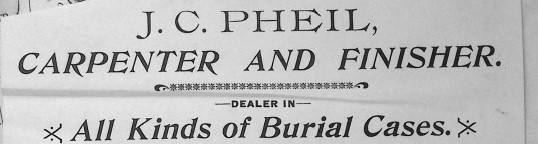
J.C. Pheil was appointed Citrus County’s Commissioner for the South Florida Fair and was in charge of assembling the best wares that the county had to offer. He worked on a special piece that he put on display in a Ft. Myers hotel lobby in advance of the fair. The table was made from 22 different kinds of wood, including expensive Cuban mahogany, and assembled from 1,517 separate pieces of wood. The table top had pieces of wood assembled in the shape of three watch chains and a watch with intricate cogs. Pheil used a modular approach and the entire table could be disassembled into five sections – and later reassembled – within minutes. He used sixteen coats of the finest piano finish to complete his masterpiece.
Inventor Thomas Edison was a part-time resident of Ft. Myers and had heard about Pheil’s artwork from friends. He went to the hotel lobby to see for himself and was immediately taken with the beauty of the table. Edison offered Pheil $150 (the equivalent of $5,400 in 2024 dollars) and presented the table to his wife as a present. The table reportedly remains on display today in the Thomas Edison Museum.
Pheil continued to build innovative cabinets and tables that won awards in fairs across the State of Florida.
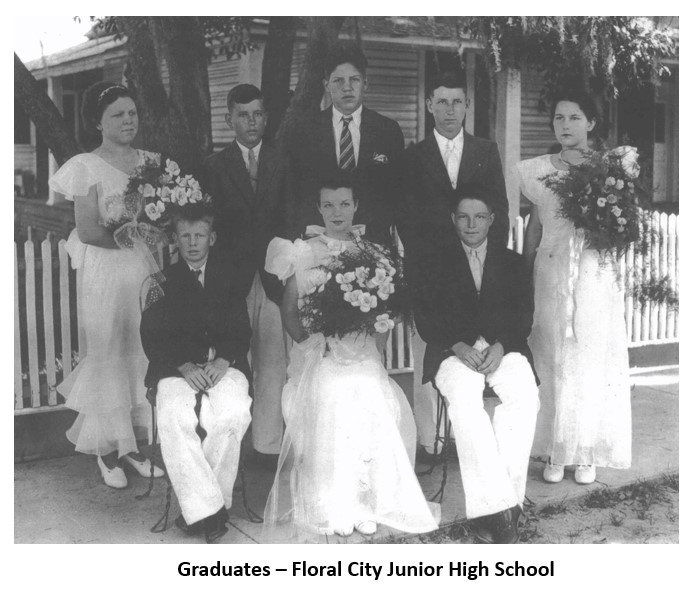
In addition to his artistic endeavors, J.C. Pheil also was charged with building a new Floral City school in 1906. It was later designated as the Floral City Junior High School and provided many happy days for the students on their path to Citrus High School.

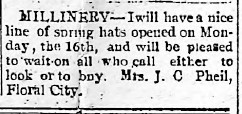
J.C. Pheil opened a real estate agency in Inverness as a secondary business and his wife ran a millinery store in Floral City
Protecting the Family Pastries
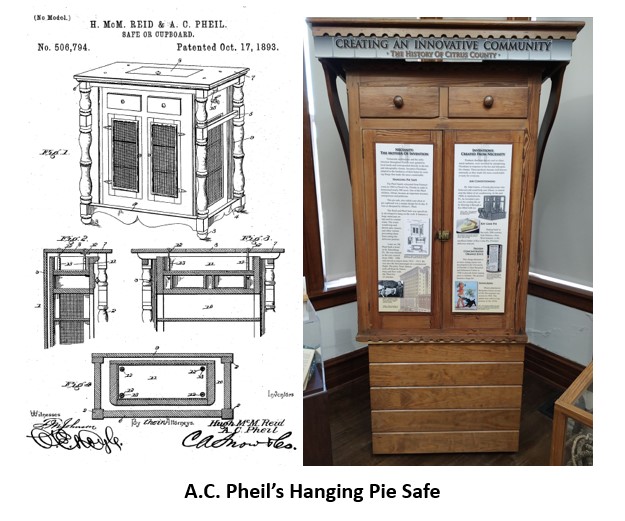
His brother Abram C. Pheil left Citrus County for greater heights to the South, but not before creating an innovative approach to a common problem. After baking a pie, cake or other pastry, the cook commonly placed the dessert on a windowsill to cool. The tasty treat would attract insects, birds, rodents and passing family members to have a sample of the sweet before it was ready to be served. A.C. Pheil worked with Hugh McMillan Reid to patent a hanging pie safe that addressed this problem. Suspended from the ceiling with ropes or chains, it was safe from rodents and insects on the ground. It was lined with fine mesh screens all around end enclosed with a sturdy wood cabinet. The baker could place the dessert on one of the shelves, close the door and be assured that it would be safe from flying insects or birds. Depending on the determination of the family members, a lock could be added to repel their attacks.
J.C. Pheil put the pie safe on display in Ft. Myers in 1903 and offered it to customers for the 2024 equivalent of $300 – $900 depending on options.
A model of Pheil’s hanging pie safe can be viewed at the Old Courthouse Heritage Museum in Inverness.
Mr. Mayor
A.C. Pheil set out for St. Petersburg to make his fortune. He purchased the St. Petersburg Novelty Works and attached lumberyard. He expanded operations into the mahogany forests of Cuba and set up a processing mill there. Some of the mahogany from his lumbermill was used in his brother’s specialty projects. Pheil joined the local Knights of Pythias lodge and rose to the office of President. He became involved in the fight for improving the city’s public schools and the implementation of a kindergarten program. He was a hands-on owner which led to mutilation of some fingers when using the mill’s planing tool. When fires broke out near his mill, he jumped into action and started fighting the flames before the local fire department arrived on scene.
He had ingratiated himself with community leaders in St. Petersburg and was urged to run for City Council in 1904. He easily won election and was re-elected in 1906. His popularity led to Pheil’s service as the city’s eleventh mayor in 1912. His main achievements revolved around the installation of water and sanitary pipes in the city and improvement of the roads.
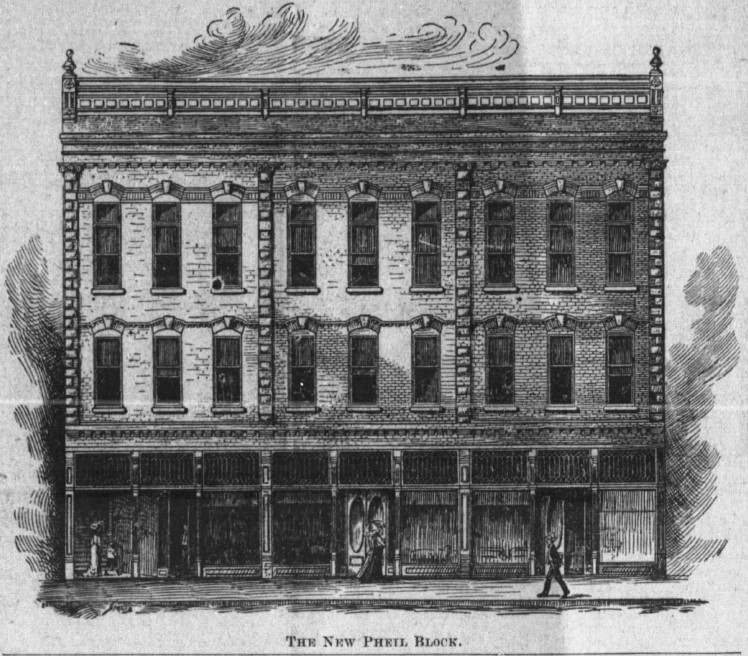
On a personal level, Pheil invested in real estate both in St. Petersburg and Citrus County. He constructed the multi-level Pheil Block that housed a number of professional businesses. He purchased property in Inverness that was later determined to contain a rich vein of phosphate. He reportedly profited handsomely by leasing to one of the phosphate mining companies. He envisioned building a skyscraper hotel in the center of the city. However, it was not completed by the time of his death and sat vacant for many years. It was finally demolished in 2016 to make way for new developments.
Mr. Mayor Flies into History
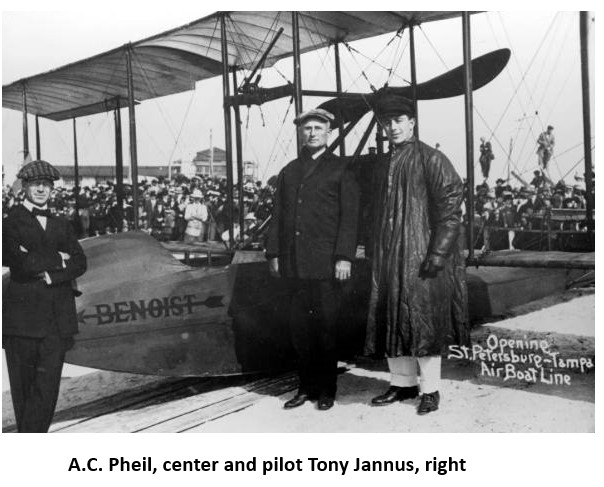
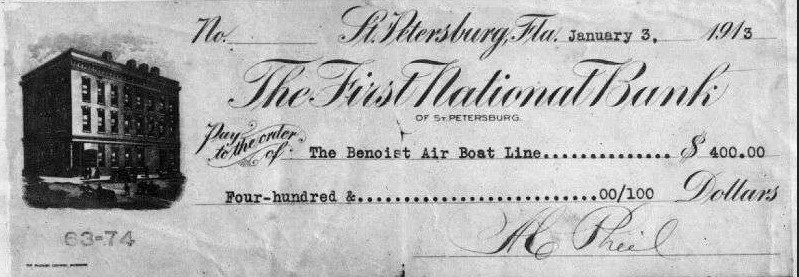
A.C. Pheil heard that a new flying service was going to connect St. Petersburg and Tampa in 1914. A trip between the cities overland was 70 miles. A steam packet could make the 22 mile cross-bay journey in 3 hours as long as the waves and weather cooperated. The Benoist Air Boat Line promised regular service between the cities in 23 minutes. Pheil was a determined bidder in the auction for the first passenger ticket. When the offers were finalized, Pheil had the winning bid of $400 ($12,500 in 2024 dollars) and was ready to start his journey.
While today’s commuters can travel across the Frankland, Gandy or Courtney Campbell bridges in minutes, the idea of completing this trip in 22 minutes was unbelievable to people in those times. On the appointed day, thousands of people lined the shores of Tampa Bay on the St. Peterburg side to witness the takeoff. Movie cameras were waiting on the Tampa side as well as thousands more excited spectators. There were some anxious moments as local marine authorities argued that the vehicle was a boat and passengers needed to wear life preservers and observe all of the other marine regulations. Undoubtedly, they were from the government and were there to help.
After sorting out all of the regulatory questions, the time drew near. At 10am on New Years Day 1914, the Benoist flying boat (piloted by Tony Jannus) lifted off from the water and climbed to an altitude of 50 feet. The plane landed on schedule at exactly 10:20am. A.C. Pheil waved to the waiting crowds as he left the small plane. He planned to address some private business in Tampa and return to the dock in time for the 11am return flight. As the deadline approached, Pheil was no where to be found. He finally strolled back a few minutes before 11am (probably delayed by TSA inspections) and he was ready to return.
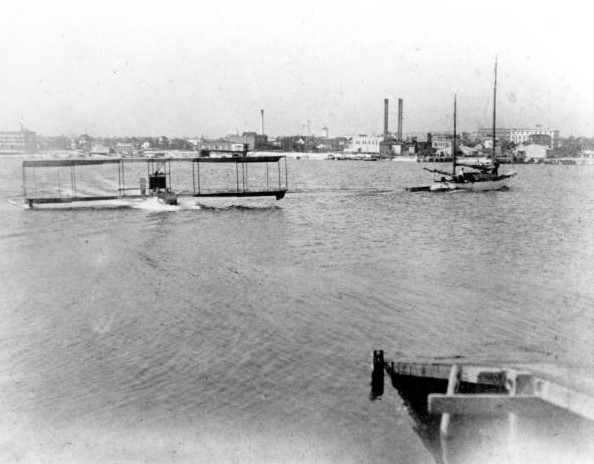
Pheil was asked how he liked the flight. He replied “It was just dandy”. News of his flight was carried across the county. The New York Times carried the story on the front page.
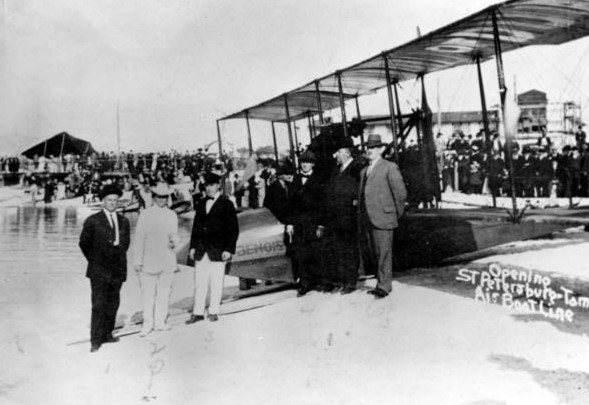
The second passenger to make the trip was Miss Mae Peabody, a visitor from Iowa. When Jannus expressed some concerns about the adverse weather conditions that day, Miss Peabody protested and said that she wouldn’t miss the trip even if it was dangerous. The pilot cautiously agree and Peabody was thrilled with her flight.
The Benoist Air Boat Line continued to make regular flights for the next few months. The regular cost was $5 per ticket. However, there was a 200-pound weight limit and passengers had to pay 5 cents per pound for any overages.
Pheil’s fame as the first passenger on a regular commercial flight continues to ripple into today’s world. The heads of 15 major airlines met at the US House of Representatives in 1995 to celebrate reaching the mark of 10 billion airline passengers. Pheil’s living descendants were invited as guests of honor in remembrance of A.C. Pheil’s role.
The Final Curtain
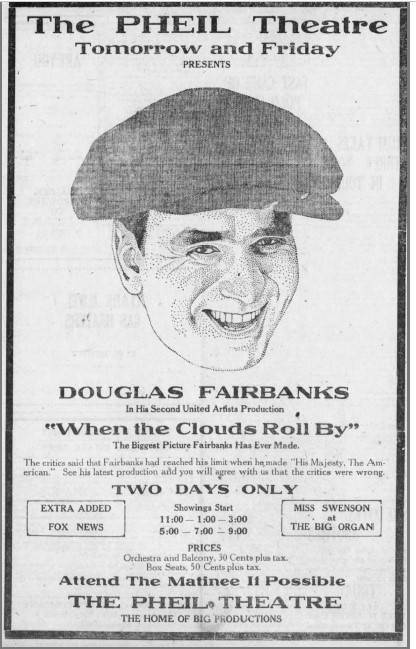
What does a man do after patenting a new device, running a lumber business, serving as Mayor and garnering worldwide fame as the person who dared to be first airline passenger? Of course, A.C. Pheil opened a movie house in St. Petersburg. Aptly named the “Pheil Theatre”, he presented first-run silent movies to the people in his community. Sadly, even the best entertainers have to eventually “Exit, stage left”. On November 1, 1922 A.C. Pheil passed away after a long and illustrious career.