
The Myth of the Cooter Pond Railroad – Revisited
By: Ken Marotte, Citrus County Historical Society
Visitors repeatedly ask about the story of old railroad cars submerged below the waters of Cooter Pond. It’s time to revisit the legend in the light of recently discovered information.
The Railroad Comes to Inverness
Thousands of visitors tour the Old Courthouse Heritage Museum every year. They’re pleasantly surprised by the quantity and quality of the exhibits that are packed into the “Gem of Citrus County History”. Many of our tourists are from the UK where train spotting and railroad history is a national passion. Our docents are frequently asked about the history of railroads in Inverness and the legend of boxcars submerged beneath Cooter Pond. Some background information about our railroads of bygone years is in order.
The Silver Springs, Ocala and Gulf Railroad (SSO&G) was the first railroad to enter Citrus County on October 27, 1887. Progress was slow until the discovery of phosphate accelerated the need for a railroad that reached the new town of Inverness. Magnate Henry Plant purchased the SSO&G in January 1893. His goal was to eventually provide a continuous line on Florida’s West Coast and the acquisition was a part of that grand scheme. The holdings of the Plant System were eventually consolidated into the Atlantic Coast Line (ACL). Through additional construction and acquisitions, the main ACL line extended from Richmond VA to Tampa FL. As an aside, the cement markers along the Withlacoochee State Trail – on the former track bed of the ACL railroad – read “R” and a number, which indicates the number of miles from the former ACL’s main terminal in Richmond.
A rival railroad, the South Florida Line, competed for the Inverness route in 1891. The South Florida line ran parallel to the SSO&G rails and the two lines sometimes intersected, which resulted in several lawsuits and restraining orders. The South Florida had laborers working seven days a week to reach Inverness. The Seaboard Air Line Railroad (SAL), was established in 1900. The conglomerate assembled almost twenty shorter lines (including the South Florida Line) into a giant system that competed with the ACL.
Both railroads opened depots in Inverness. We are fortunate that both the ACL and SAL depots have been refurbished and have been repurposed in Inverness today.
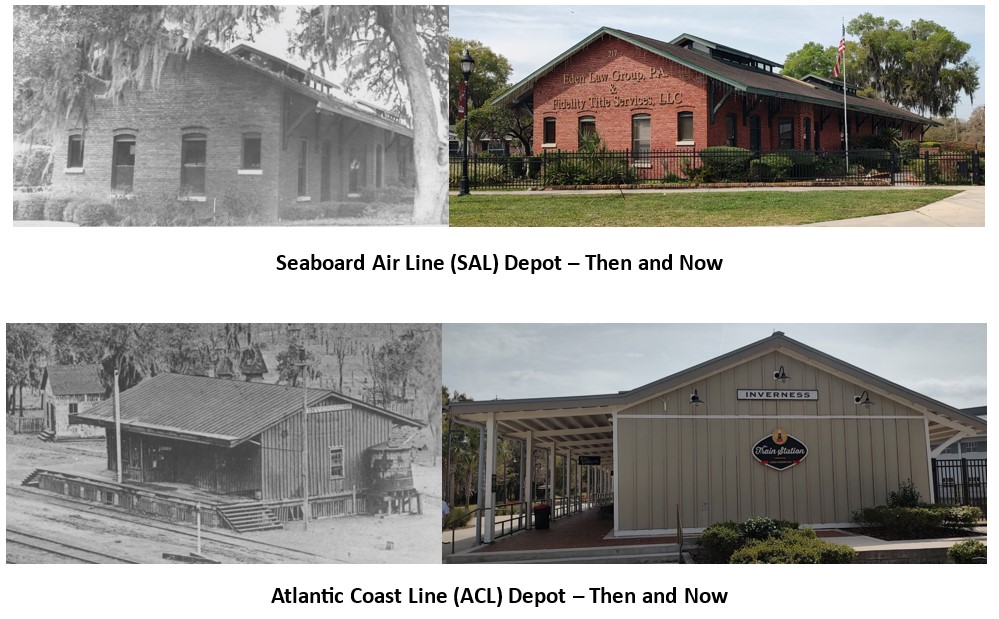
The two competitors merged in 1967 to form the Seaboard Coast Line. The company was reconstituted as part of the CSX in 1980. CSX sold a large part of the former ACL right of way to the State of Florida in 1989. The old railroad became part of the Withlacoochee State Trail and is enjoyed by walkers, runners and bicyclists today.
The Legend of the Cooter Pond Railcars
In a previous article, I explored the legend of the Cooter Pond railroad cars and the validity of the myth. To recap: Stories arose in the 1980’s about a past railroad derailment that resulted in several railroad cars being left on the bottom of Cooter Pond. Local citizens recounted how they saw families venturing into the water to remove sides of beef and other edible merchandise from the overturned cars. Others remembered seeing a boxcar full of new automobiles being left at the bottom of the pond. Some old-time Citrus residents recalled wading near the site of the boxcars and pulling up random automotive and railroad-related items with their feet. Finally, a local man developed a large waterborne metal detector and he claimed to have found a large magnetic anomaly off the eastern bank of the pond in 1983.
Tracing the origin of the story was difficult because no one could pin down the approximate date of the event. Most of those quoted in the newspaper stories remember the train being derailed in the 1930’s, others recalled the incident occurring in the 1940’s, while others claimed the event happened in the 1960’s. Today’s successor railroad company had no records of such an important event in the past. The search was complicated by the fact that the SAL and ACL had merged years ago and the fate of their early records is unknown.
Since the railroads were the lifeblood of passenger and freight transportation at the time, I was disappointed that I couldn’t find any prominent headlines or pictures about the mishap in the local and regional newspapers. There were no remarks about the accident in the Board of County Commissioner minutes. Given the potential 40-year time period, finding the origin of the myth would be like looking for the proverbial needle in the haystack. I concluded that the lack of hard evidence cast doubt on the story of the Cooter Pond railroad. Clearly something happened in the past that caused so many people to remember this event but the details were unclear.
While researching information for another article, I happened to find that “silver needle”. The Citrus County Chronicle from March 15, 1934 carried a short update about ACL railroad cars being derailed on page 7. Sixteen cars had turned over due to a broken rail near Jut’s restaurant and filling station. The issue was quickly repaired and the line was reopened to traffic. Long-time Citrus County resident Robert Croft confirmed that Jut’s popular diner was located near the south side of Cooter Pond (where Route 44 East branches toward Sumter County).
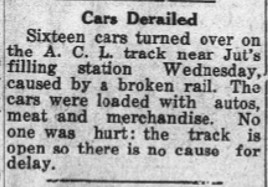
The story seems to match many of the details in the myth of the sunken Cooter Pond railroad cars. Does this solve the mystery? Notice that the article doesn’t state that any of the boxcars tipped into the water nor does it indicate that railcars were left in Cooter Pond. Given the brevity of the update and the lack of any followup in the subsequent editions of the Chronicle, the matter seemed like a minor event with few lasting effects.
The local weather and water levels in local lakes and ponds in 1934 were uncannily similar to the conditions we’ve experienced in 2024, exactly 90 years later. There was a drought in the winter of 1933 that carried into early 1934. Welcome relief came for farmers in the guise of unusual rain showers in February. Crops were saved and the water levels started to improve but were still below normal. Since today’s Withlacoochee State Trail follows the exact route of the old ACL line, we should be able to determine if the water levels were high enough in 1934 so that a toppled boxcar could be submerged in the Pond. I walked to the approximate location of the derailment last week and took pictures of the terrain.


The location of the railroad track would have been at least 30 feet from the edge of the Pond’s high-water line and the wintertime water level is at least 150 feet from the estimated location of the old rail track. Even given a running head start, not even “those Duke boys” in their 1969 Dodge Charger could propel their vehicle from the railroad track to the edge of the water. A 40-foot boxcar would have even more difficulty reaching the Pond.
Would the ACL have abandoned railroad cars if they had reached the water? Depending on the configuration, a boxcar in 1934 would cost between $51,000 and $81,000 each in today’s dollars. If all sixteen cars were left in the water, the ACL would have incurred a loss between $816,000 and $1,300,000. The new automobiles and other merchandise being carried in the boxcars would have increased the amount of the loss substantially. It was in the ACL’s best interest to get the boxcars back on the track so they could remain in service. Derailments were an expected occurrence so railway companies had cranes in their maintenance departments that could accomplish this feat.
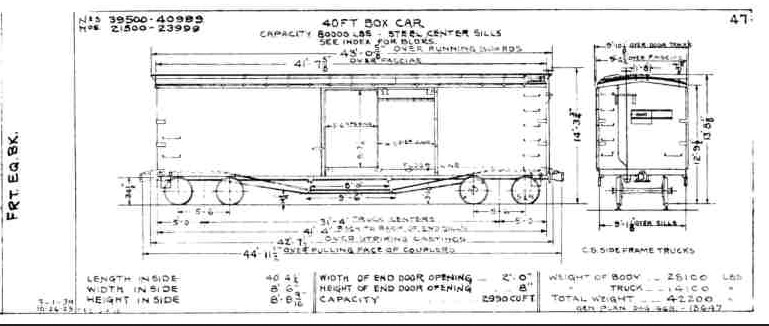
If the boxcars had reached the water and were abandoned, could they have remained submerged and undetected for years? To recap: the depth of Cooter Pond is reported to be about 12 feet. The standard railroad 40-foot boxcar of the time was 9 ½ feet wide and 14 feet high. This means that any boxcar that fell into the pond would be clearly visible at all times unless it landed in a perfectly flat position on the bottom of the pond. During times of drought, such as experienced during 1934, 1957 or 2023, the water level of the Pond would have dropped by over 4 feet – which means that even a boxcar lying perfectly flat would have been visible from the surface.
Did local residents pilfer meat from the toppled railcars and bring home to their families? The derailment took place during the depths of the Great Depression and there were stories of hungry people breaking into railroad cars to steal food across the country in 1934. The railroads employed a troop of Detectives that patrolled the tracks and meted harsh punishment to anyone trespassing or stealing from the rail line. It’s reasonable to believe that some Inverness residents may have seized the opportunity to take advantage of a toppled railroad car next to the track. However, Cooter Pond at that time was notoriously polluted since it was the recipient of solid waste from the Courthouse, County Jail and the shops in downtown Inverness. Anyone wading into the waters of the Pond and eating the meat found floating there would have suffered disastrous consequences.
Is the story about a submerged Cooter Pond railroad boxcar true or just an interesting myth? We’re waiting for future generations of SCUBA divers to scour the depths of Cooter Pond to discover any evidence of an antique railcar. Until then, only the turtles know the true story, and they’re STILL not talking.