
The Most Famous Engineer in the World Adopts Inverness
By: Ken Marotte, Citrus County Historical Society
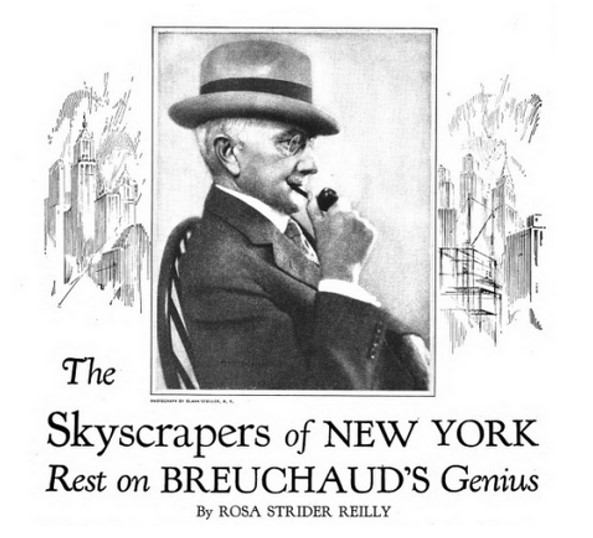
The construction of iconic skyscrapers in the New York City skyline would not have been possible without the inventions of this engineering genius. He helped build a reservoir and aqueduct that brought water to thirsty New York City residents. He raised prize bulls that sold for a record amount. He was head of a company that produced a sophisticated early computing device to direct naval gunfire during World War I. He later turned his attention to his adopted city of Inverness, where he was a civic leader and built an impressive mansion that still stands today. This is the story of Jules Breuchaud – lawman, engineer, architect, inventor – and President of the Inverness Company.
Early Life
Jules P. Breuchaud was born in New York City in 1857. His childhood was happy until tragedy struck when his father died unexpectedly. His mother remarried an engineer who was associated with the growing railroad industry. The family moved to Montana when his step-father secured a position with the Northern Pacific Railroad, which was building a cross-continental track across the northern swath of the county. Young Jules developed a knack for his step-father’s profession and managed to secure a position as an associate engineer on a part of the immense construction project. Jules settled in Billings Montana and became the county treasurer as well as a Deputy Sheriff.
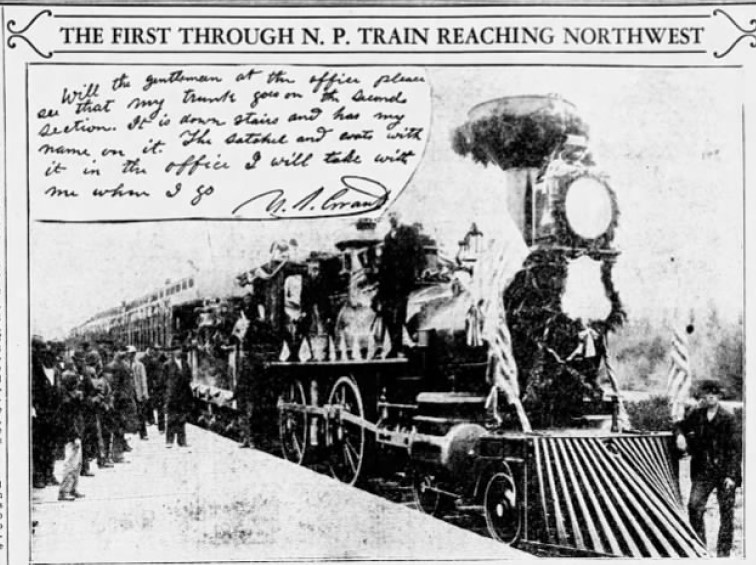
An entourage of national and international dignitaries set out from Minnesota on the Northern Pacific in 1883. A huge ceremony was planned when the two ends of the line were connected and the driving of a golden spike would memorialize the event. Four locomotives pulling forty luxury railroad cars full of Senators, foreign Ambassadors and Cabinet members visited villages along the way on their trip westward. When they came to Breuchaud’s town, railroad owners requested that a local official step forward to welcome the guest of honor – former President Ulysses S Grant – and provide a brief tour of Billings for the old General. Breuchaud approached the car and told Grant that he was the Deputy Sheriff and would be honored to lead a personal tour. Grant stepped onto Breuchaud’s wagon and they rode down the only street in the village. After viewing the few houses, Breuchaud then drove the former President up to the local “Boot Hill” cemetery, so named because all of the occupants “died with their boots on”. The visit lasted only an hour but gave increased Breuchaud visibility as a result of the trip’s national newspaper coverage.
Constructing the New Croton Dam
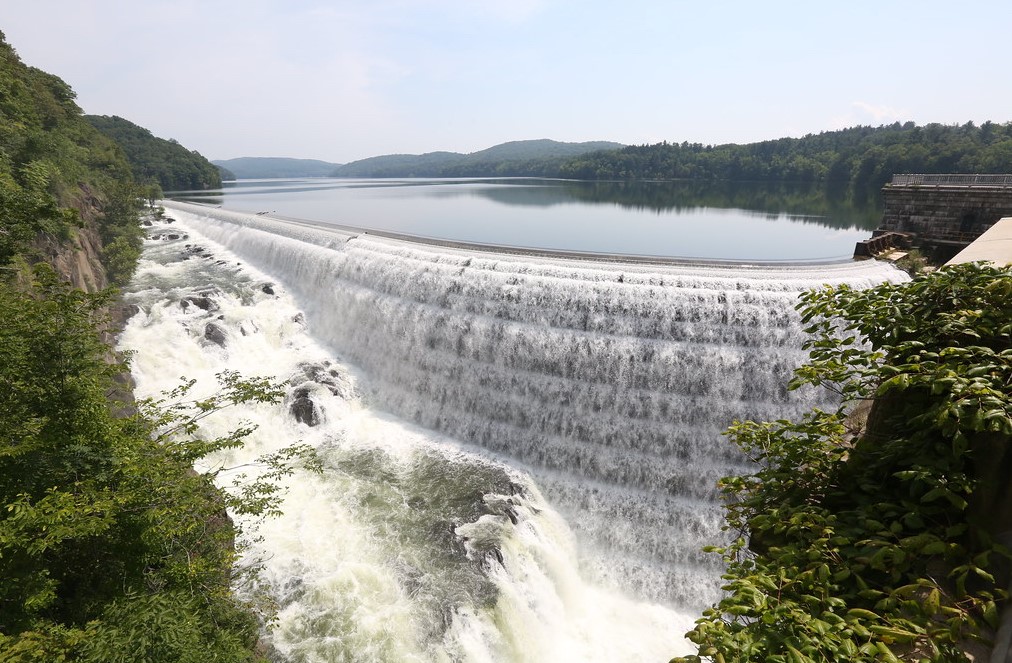
Breuchaud returned to the East after his railroad engagement was completed. His arrival was timely because New York City’s population was growing beyond the city infrastructure’s capacity (a familiar story that is repeated time and time again in history). In particular, there was insufficient supply of drinking water and a crisis would develop if not addressed soon. Breuchaud was hired as a consulting engineering on one of the projects to dam the Croton River in upstate New York and build an aqueduct to bring water to the city. The project would take 14 years and add 34,000,000,000 gallons to the water supply. At the time, it was the largest masonry dam in the World. A major problem with the dam was detected as the completion date loomed and significant leaks were affecting the retention of water in the reservoir. Breuchaud was put on charge of resolving the issues (which involved rebuilding substantial portions of the dam). During that period the masons walked off the job as part of a labor strike and the military had to be called to maintain order. The dam was eventually completed and became a major component of the New York City waterworks system. Breuchaud was celebrated for his role in completing the New Croton Dam and aqueduct through the Catskill Mountains.
A Revolutionary Invention
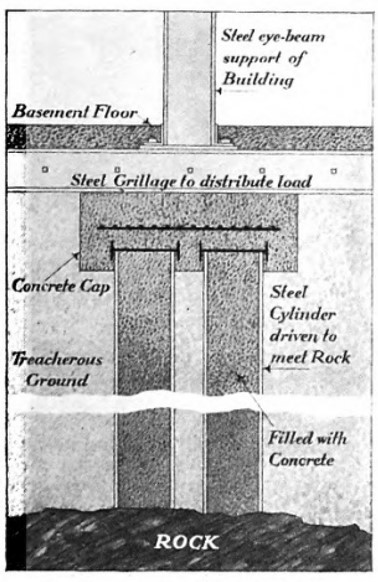
Breuchaud had noted that the height of buildings in New York City was limited due to the unique geology of the area. There was a “treacherous ground” of loose sand and water between the ground level and the bedrock that limited the ability of pilings to provide a solid footing for the buildings. Breuchaud developed a method of underpinning that alleviated this situation and resulted in a more stable foundation for future buildings. This meant that greater weight could be borne by the pilings and greater building heights were now possible. Breuchaud formally patented his idea and his method became the underpinning for almost all ultra-tall buildings in America and across the globe. This invention brought worldwide renown for Breuchaud and made him a very wealthy man. In a very real sense, the skyline of New York City would not exist today without the genius of Jules Breuchaud’s ideas.
A Fateful Visit to Inverness
Breuchaud was a true “workaholic” who seldom took a vacation. His wife urged him to take a family trip to Florida in the 1920’s. A biographer (Rosa Strider Reilly) noted that they chose to tour the West Coast of Florida and came to “…a simple little town not far from Tampa. There he established himself and his home among plain, simple people. There in Inverness, on the shores of Lake Tsala Apopka, he found a village which had been in existence for years. And there he determined to make beautiful homes possible for the man of moderate means.”
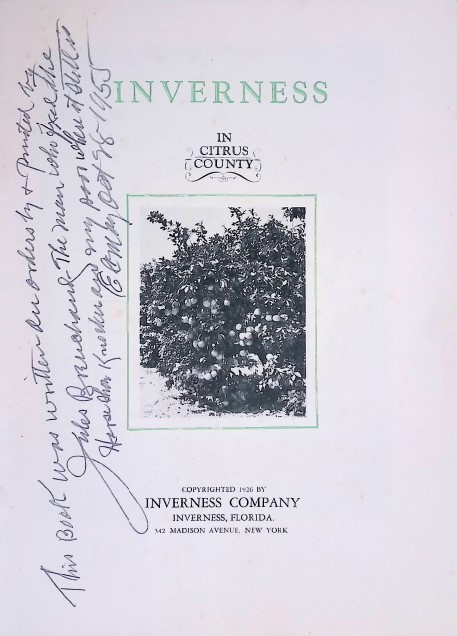
Breuchaud formed the Inverness Company in 1925. He assumed the role of President while local leaders joined the Board of Directors. J.K. Kelley of Inverness was Vice-President. They purchased land known as Prichard Island Grove and started a development they named “Indian Hills”. Houses were priced at today’s equivalent of $70K – $177K in today’s values and included the cost of the land. Their 1926 promotional brochure highlighted the area’s “aeroplane landing field” and temperate climate. A companion farming community was called Orange Hills and offered larger lots for those inclined toward agricultural pursuits.
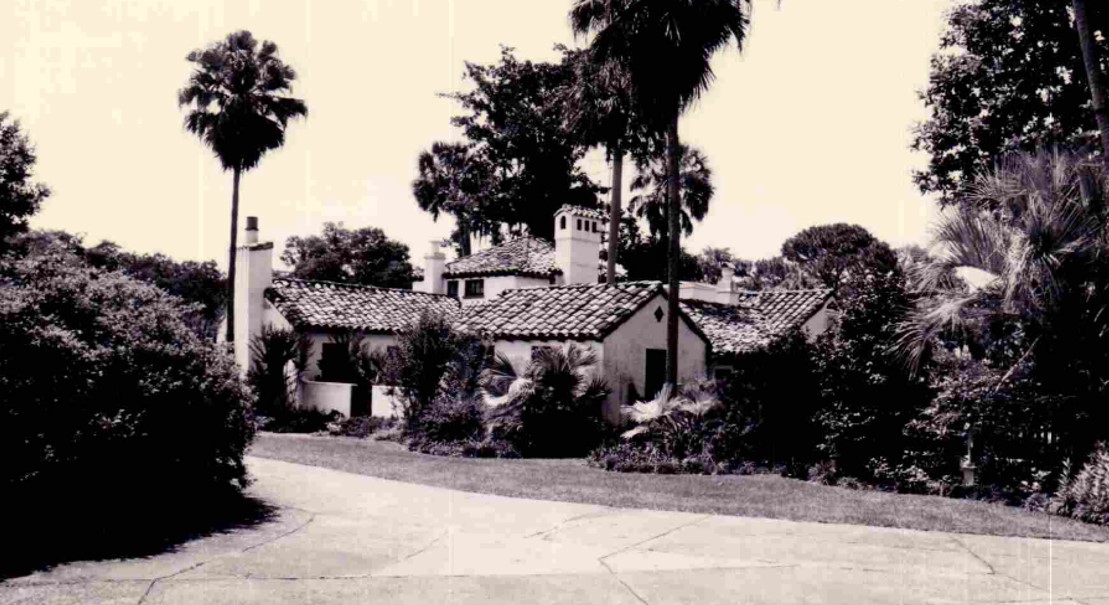
He was not just an out-of-town investor. Breuchaud constructed one of the most impressive mansions in the area that still retains its glory today. It features 5 bedrooms and 5 bathrooms in a floorplan of 5,000 square feet. There are swirling staircases, a separate groundskeepers house and an impressive view of the lake. Breuchaud took every opportunity to visit his new estate and divided his time between New York and Inverness.
Civic Leader
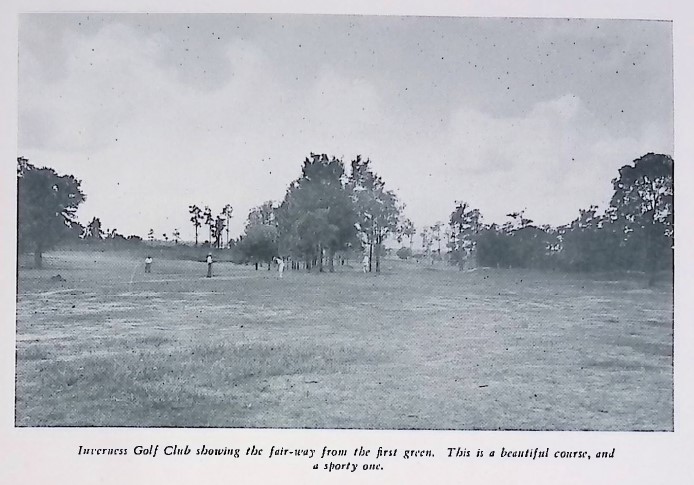
Development of his adopted community was very important to Breuchaud. He donated land to create a city park in the center of town. A nine-hole golf course was created by the Inverness Company with plans to expand to 18 holes.
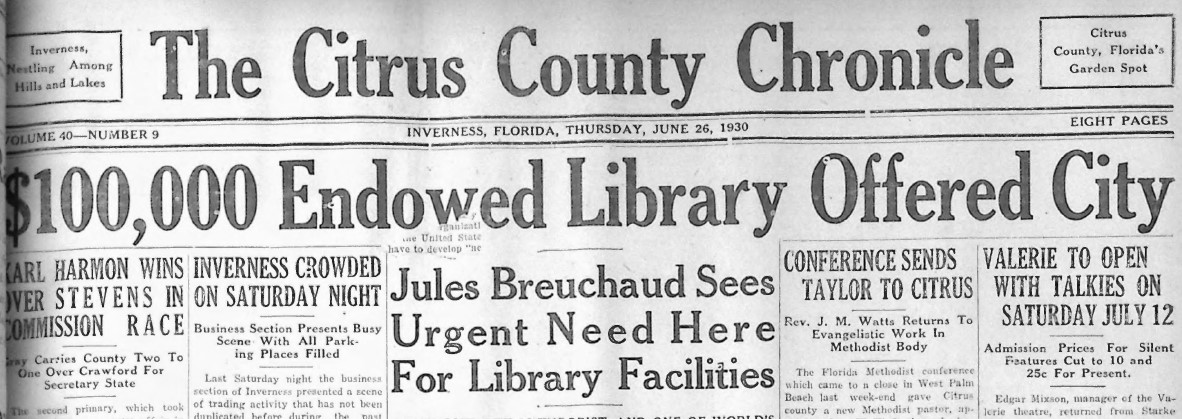
Recognizing that the community needed a cultural center, he offered to donate $100K (today’s equivalent of $17 million dollars) for the creation of a library for the citizens. He asked for a matching contribution of $50K from the City and County. While the offer was publicly accepted by local leaders, the County was in the depths of the Great Depression and was struggling for its financial life. It would be impossible for the citizens to meet the matching fund provision. He agreed to support a scaled-down library that was within the budget of the County and City.
Breuchaud noted that vast expanses of land in Inverness had been stripped clean due to previous turpentine ventures. His Inverness Company came up with a project to plant thousands of pine trees to replenish and protect the land. He recounted: “I determined to do what I could to develop a spot where men and women, tired of cold winters and unceasing work, could come and build their homes…and it is for the workers that I have tried to develop this community”.
Final Chapter
Jules Breuchaud returned to New York after experiencing ill health in 1933. He required daily medical attention and was not able to return to his Inverness home. He passed away on December 28, 1934. In addition to his accomplishments as an engineer, his obituary noted that his company had completed subway construction in New York and Philadelphia, he served as head of the Decarie Incinerator Corporation, president of the Ford Instrument Company (which manufactured tactical weapons systems for the US Navy) and publisher of the Richmond VA Times-Dispatch.