
The Homosassa Dodgers?
By Ken Marotte, Citrus County Historical Society
This is the little-known story of how Homosassa won (and lost) a contract to host a Major League Baseball team.
The Dissatisfied Dodgers
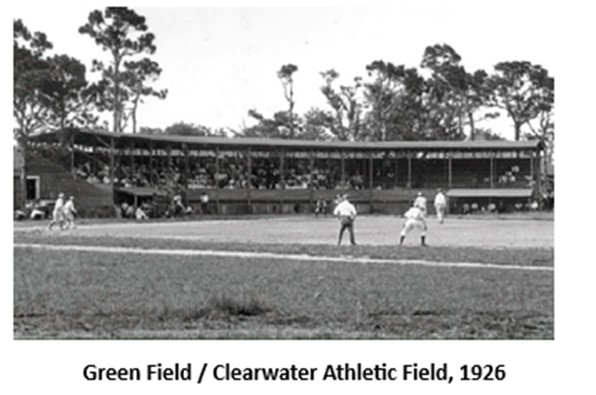
Florida had already been established as an ideal Spring training location for many baseball teams by 1926. The players and coaches looked forward to exchanging the harsh wind and snow of the North for the balmy breezes, golf courses and palm trees of Florida. The Brooklyn Dodgers, led by their President/Manager Wilbert “Uncle Robbie” Robinson, set up camp as usual at the Green Field / Clearwater Athletic Field. The Clearwater baseball facilities were adequate, but the hotel and living accommodations were sorely lacking when compared to other teams, such as their cross-town rival Yankees. One sports writer joked:
“Two years ago, this reporter, benighted in Clearwater, blundered into the Brooklyn Dodgers hotel and asked for a room with a bath…and when he came back today the room clerk was still hysterical. ‘Har, har, har”, cried the room clerk, ‘here’s the guy who wanted the room with a bath”
Westbrook Pegler, New York Times, March 10, 1926, via newspapers.com
“Uncle Robbie” Robinson
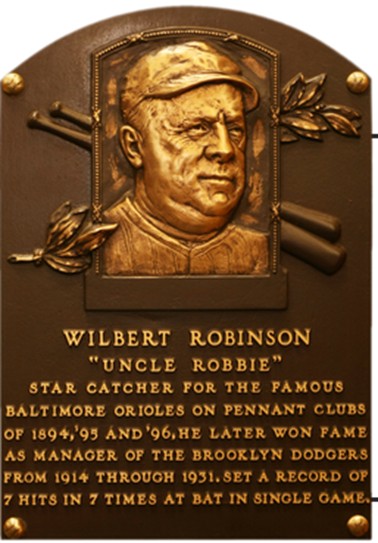
Wilbert “Uncle Robbie” Robinson was a baseball legend and beloved Dodger Manager who was respected by his players and fans alike. As a player, he once hit 7-for-7 in a single game – a major league record that stood for many years. He also holds a special place in the hearts of Florida baseball fans.
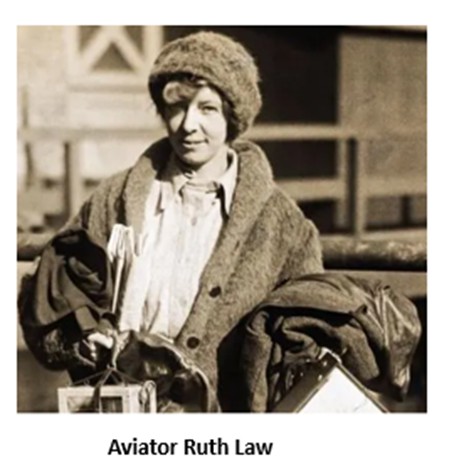
Ruth Law was a pioneering woman pilot who purchased her first airplane from Orville Wright. In 1915, the Dodgers invited her to drop a baseball from over 500 feet in the air as part of a Spring Training advertising promotion. Robinson, the team Manager and a former catcher, volunteered to snatch the ball before it hit the ground. Reportedly, Law discovered that she had forgotten to bring a baseball before takeoff, but then noticed a large Florida grapefruit in the cockpit and decided to use that for the show. (Or Dodger prankster Casey Stengel had replaced the baseball with a grapefruit. You could look it up). The grapefruit hurtled toward Robinson’s outstretched mitt – and promptly smashed and exploded all over his body. He was momentarily blinded by the grapefruit juice and started screaming that he was going to die, much to the amusement of his teammates. Legend has it that this is the origin of the term “Grapefruit League” for the Florida Spring Training games.
A Hard-Luck Team
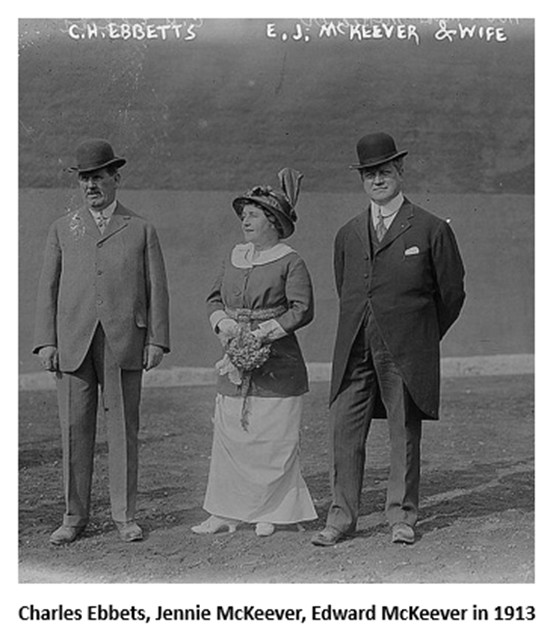
The Dodgers run of misfortune was legendary in 1925. Their owner, Charles Ebbets, had passed away at the conclusion of 1925 Spring Training season. His successor, Ed McKeever, contracted pneumonia at Ebbets’ funeral and was dead within a week. Robinson was designated as team President as well as Manager. His players looked to “Uncle Robbie” for some good news to motivate them.
Courtesy : www.baseball-fever.com (Public domain)
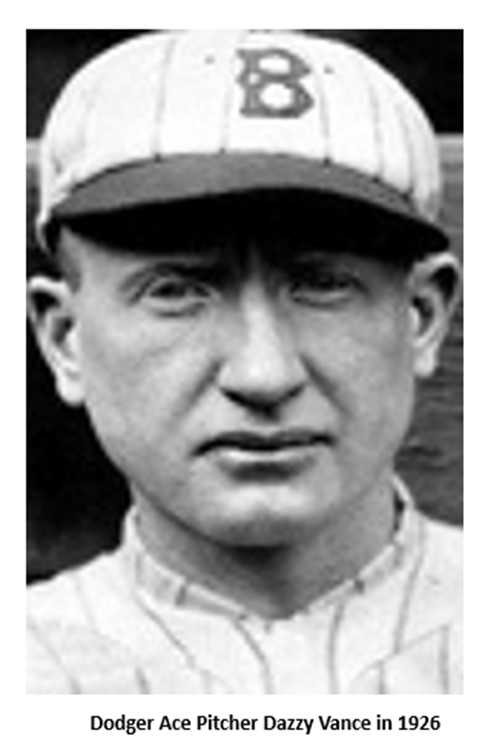
Robinson’s roster for the 1926 season did not look promising. In spite of ace pitcher Dazzy Vance’s 22-9 record in 1925, the team had a terrible 68-85 record that year and had ended the season in 6th place (of 8 teams). Sportswriters shook their heads and predicted similar doom and gloom for the Dodgers in 1926.
Major League Baseball Comes to Homosassa
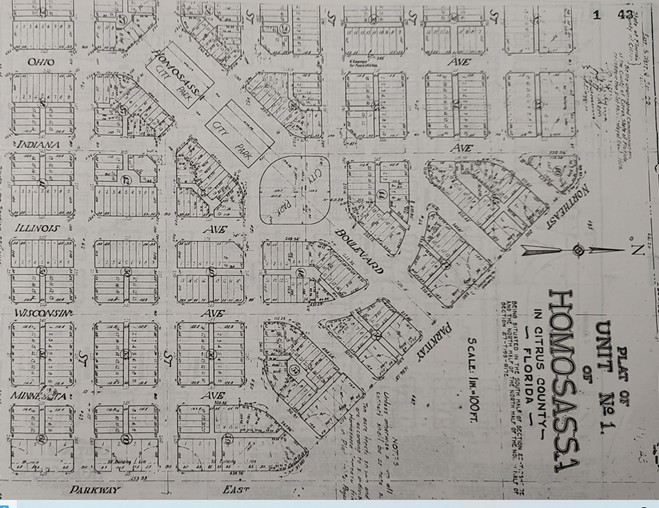
The leaders of the Florida West Coast Development Company sensed an opportunity. They hired the popular former Brooklyn Dodger pitcher (and the late Charles Ebbets son-in-law) Leon Cadora to design a baseball field in their new Homosassa development. Cadora was worshiped by the Brooklyn fans for his 26-inning complete game against the Boston Braves in 1920. He later joked that “…if Uncle Robbie had tried to take me out of the game, I think I would have strangled him”.
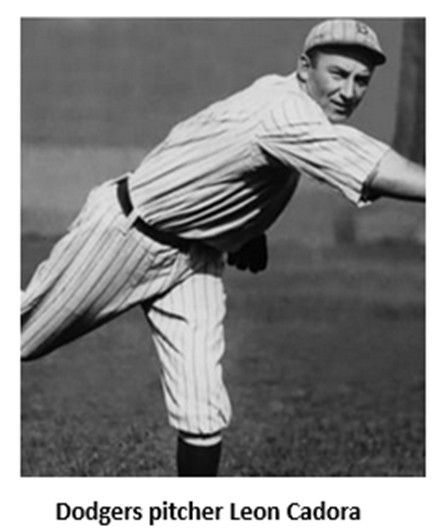
Cadora contacted his old manager and convinced him to travel to the new development in Homosassa and view their plans for a new ball park, hotel and extensive accommodations. Robinson was sold – literally. He bought property in Homosassa and foresaw the brand-new ballfield and hotels as the boost his team needed.
Florida law at that time forbade baseball games, movies and other entertainment on Sunday. On Sunday March 7, 1926, Robinson took the “off day” opportunity to load the Brooklyn Dodgers team onto buses so they could check out their possible new Spring Training home in Citrus County. While some like Dazzy Vance purchased property, the other players were interested but decided to defer any purchases until the deal was formalized.
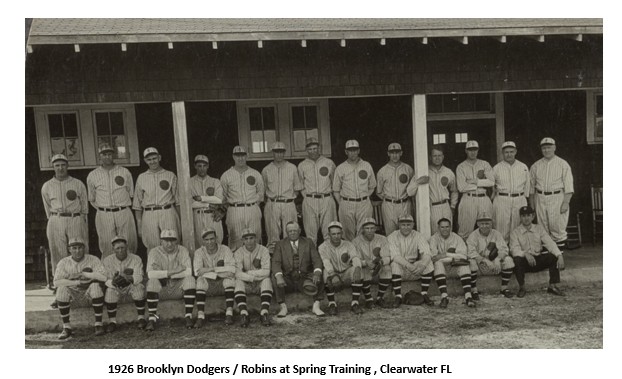
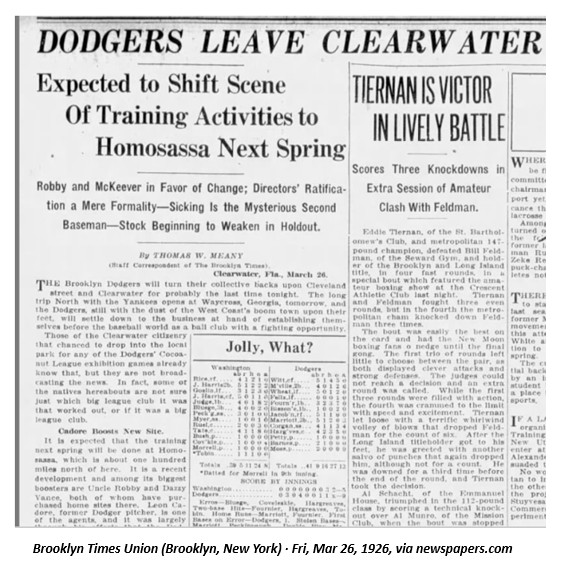
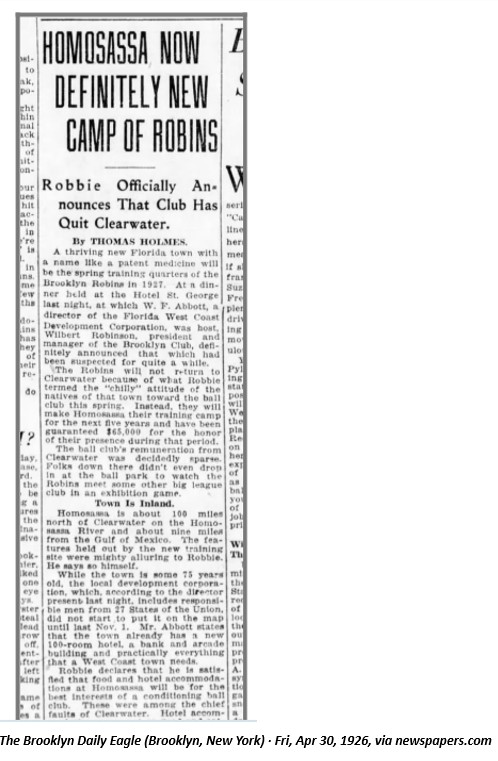
On March 26, 1926, the Dodgers announced to the world that they were planning to sign a contract with the Homosassa developers and were moving their Spring Training activities to Citrus County. Needless to say, Clearwater officials adopted a stoic stance and prepared to accept the inevitable. 1926 was to be the Dodgers last year in Pinellas county and the new Homosassa facilities were planned to be ready in time for the 1927 Spring Training season.
Homosassa Bobbles the Ball
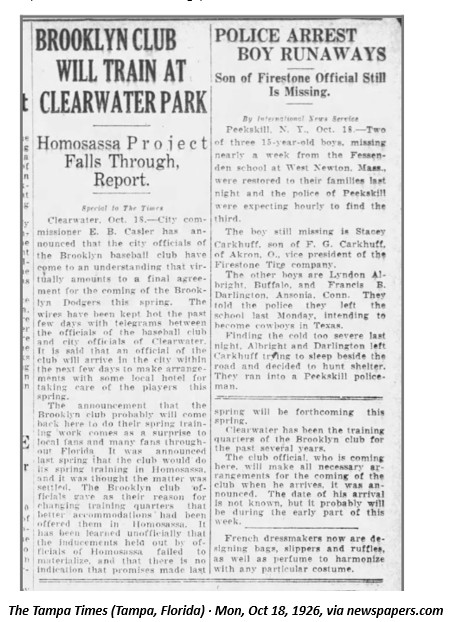
Unfortunately, Bruce Hoover and the Florida West Coast Development company ran into financial difficulties. When Dodger management toured Homosassa to check progress in October 1926, they found that most of the promised facilities had not been completed and many had not been started yet. Since the Homosassa developers could not meet the terms of their contact with the Dodgers by opening day of 1927 Spring Training, the team elected to remain in Clearwater. The Pinellas officials breathed a sigh of relief and promised the team better living quarters and entertainment facilities.
What Could Have Been
For a brief moment in time, Homosassa was going to become the future site of “Dodgertown” – entertaining the likes of the New York Yankees, Boston Red Sox and many other major league teams during the Springtime. Sportswriters and fans would have traveled to the new community and told their friends and families about the hidden gem on the Gulf Coast. However, ambitious promises did not meet the expectations of actual delivery, so the “Homosassa Dodgers” are just a distant memory of what could have been in Citrus County history.
Ken Marotte writes for the Citrus County Historical Society. He can be reached via email at kenmarottejr@gmail.com if you have any comments, questions or suggestions. Contact him if you’d like to participate in the ongoing CCHS Oral History Project.