
The Great Polio Epidemic
By: Ken Marotte, Citrus County Historical Society
This disease has been around for thousands of years. It reared its head across the globe during the early part of the 20th century and was responsible for substantial loss of life and lasting side effects for the survivors. It wasn’t the Spanish Flu – this is the story of the great Polio epidemic and its impacts on Citrus County.
The Return of an Old Foe
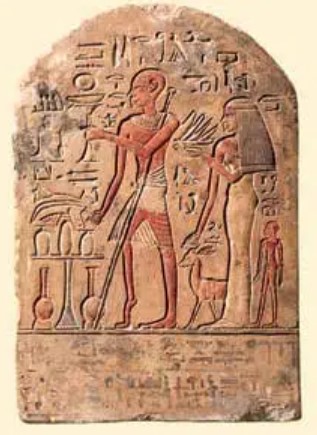
Polio, or poliomyelitis, can be a debilitating disease that affects only humans. It usually attacks children under eighteen. Most cases are asymptomatic but some people undergo crippling nerve damage or death in extreme cases. Archeologists have uncovered frescoes in Egypt that appear to depict individuals suffering from poliomyelitis. There have been outbreaks throughout recorded history but the most concerning occurrence for Americans began over one hundred years ago and still impacts some people today. For example, scientists believe that there were probably about 236,000 polio cases in 1952, with 59,000 symptomatic cases and 3,000 fatalities in America.
Polio Comes to the Forefront
There were isolated stories about polio and various treatment methods prior to 1920. A young Franklin D Roosevelt had conducted an unsuccessful campaign for Vice President in the election of 1920. He decided to take his family for a vacation on the small Canadian island of Campobello in 1921. He was 39 years old and anticipating his next move in his career. As the early days of his vacation wore on, Franklin started to experience chills, fevers, paralysis and numbness in the lower part of his body. Simply touching his body left him in excruciating pain. Doctors were called to his bedside and gave him the bad news. While it was unusual for a man of his age, he had been stricken with “infantile paralysis” or polio and the outlook for his recovery was not good. He suffered through periods of delirium and almost died during the early days of his ordeal. He eventually recovered but required the use of a wheelchair or crutches for the rest of his life.
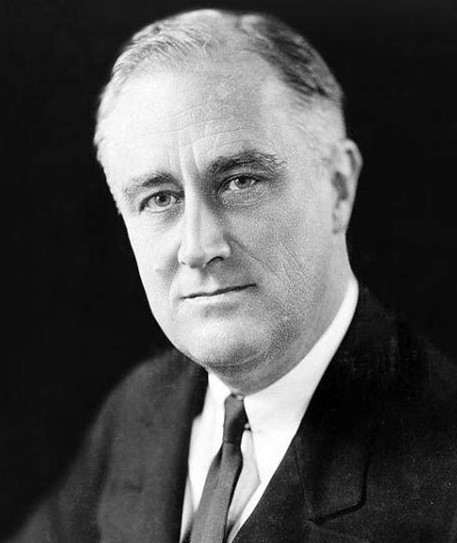
Roosevelt eventually recovered some of his former strength at a spa in Warm Springs GA. He propelled himself back into the political arena. He remained highly visible at the Democratic Party conventions and was elected Governor of New York in 1929. His infirmity was hidden from the public most times but eventually his polio battle became apparent. In spite of his infirmity, we was elected President of the United States in 1932.
Creation of the March of Dimes
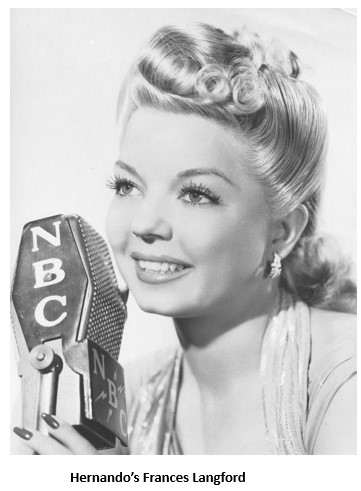
Finding a way to prevent and treat polio became one of Roosevelt’s key initiatives. Annual “Presidents Birthday” events were held as fundraisers to collect donations for polio research. Rather than rely on a few large donors, campaign leaders opted for a novel approach that asked millions of people to make small donations. A nationwide radio event, dubbed “The March of Dimes”, was held in 1940 and included a number of popular actors and singing stars. Citrus County native Frances Langford was a featured performer. This “crowdfunding” event asked people if they could spare even a dime to fight this crippling disease. Over the next few days, the White House was buried under bundles of envelopes mostly containing dimes and other small change
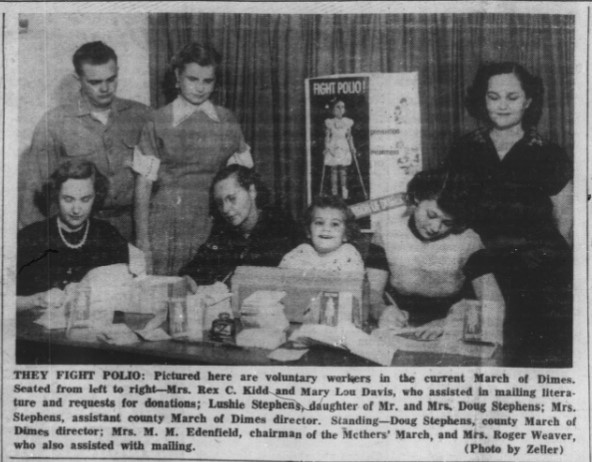
The “March of Dimes” became an annual campaign. Citrus County residents held local fundraisers and donated generously to the appeal. Even while they were still recovering from the Great Depression, Citrus County donated thousands of dollars over the years for this worthy cause.
Worse than the Disease
The cause of polio was unknown and this led to wild speculation regarding the how to prevent and treat the disease. Doctors noticed that the reported cases seemed to drop dramatically during the wintertime and spike during the summer. Individual researchers published cures that were eagerly adopted by a desperate public. Some areas adopted quarantines, shut down public drinking fountains and closed public swimming pools that seemed to have some association with transmission. After an outbreak in Florida, Georgia officials temporarily banned travelers from the Sunshine State.
A sampling of supposed solutions shows that some of the cures may have been worse than the disease. One doctor thought that polio thrived in soil and could be combated by subjecting patients to intense doses of radiant light. Another solution involved spraying youngsters with a solution of picric acid. This approach was used by many communities across the South. Picric acid was primarily used in weapons production during that period. The compound is so unstable and explosive that anyone finding picric acid in antique first-aid kits today is advised to contact their local bomb disposal unit.
Blood transfusions were also touted as a treatment method. Some practitioners advised injecting blood from patients who had recovered from prior polio infections, while others claimed that direction transfusion from healthy people would clear the malady.
A doctor in Kansas reported success using a curare treatment. As an avid reader of National Geographic articles in my youth, I remember that native hunters in South America would use curare as a poison on their arrow and spear tips. There was no indication whether or not the doctor used a blowgun to administer this questionable cure.
Another doctor reported success by crushing the nerves in legs damaged by polio and forcing the patient’s body to regenerate new nerves that were free from infection. The medical establishment did not find this approach to be feasible.
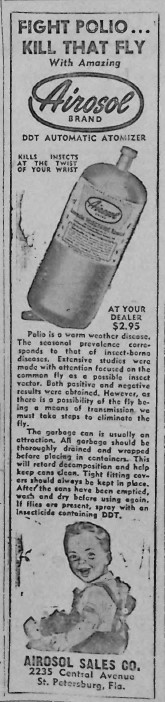
One of the more damaging approaches to the environment involved the use of insecticides. Some researchers felt that the rise in cases during the summertime coincided with the increased swarms of insects during that season. Their solution was to use a miracle insecticide known as DDT to kill the offending insects. Advertisements appeared in the Citrus County Chronicle for a product urged customers to “Fight Polio…Kill That Fly” using their Airosol DDT Automatic Atomizer product. At the request of the National Infantile Paralysis Association, the US Navy dispatched four airplanes filled with DDT and treated over 16,000 acres in the Miami area with the insecticide.
March of Dimes Poster Child
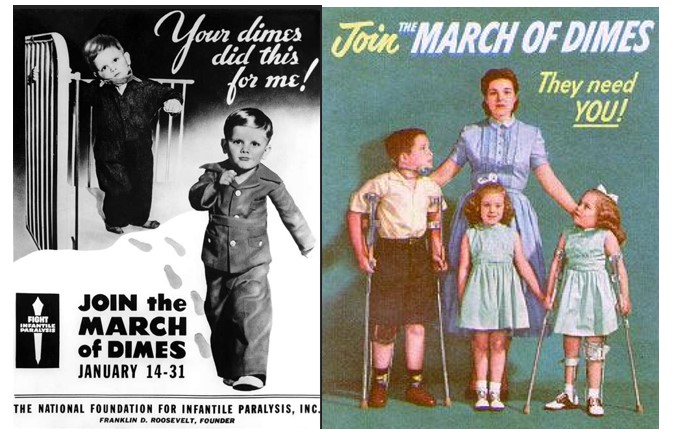
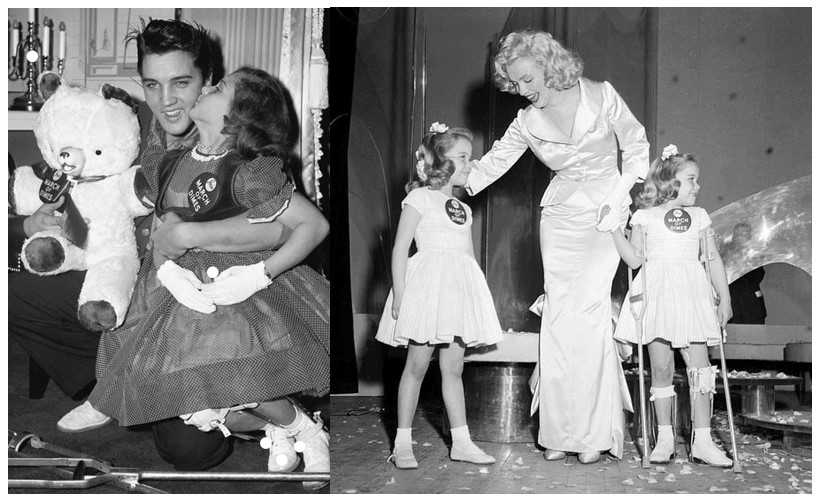
One of the most successful marketing programs for the March of Dimes involved the use of pictures of young polio victims on annual posters. Every year, new children would be selected to appear with their braces and canes to graphically demonstrate the effect of the disease. The children were flown across the country for personal appearances where they were welcomed as celebrities. Many of them had pictures taken with President Roosevelt. Other luminaries, including Elvis Presley and Marilyn Monroe, lent their talents to the campaigns.
Citrus County’s Poster Child
While the Tampa area didn’t have an official Poster Child, regional newspapers followed the journey of a Floral City boy through the stages of his polio treatment. Young Tommy Smith was stricken with polio at 11 months old. [The patient’s name, while published in period Tampa newspapers, has been changed to respect his privacy]. His parents rushed their baby to the Tampa Hospital, which didn’t have a specific polio ward at that time. The nurses used a recommended technique called “passive motion” and application of hot packs to stimulate the nerves in his legs. Tommy was transferred to Crippled Children’s Hospital in St. Petersburg. However, he was too small to undergo their “muscle reeducation” procedure so he was sent home to Floral City.
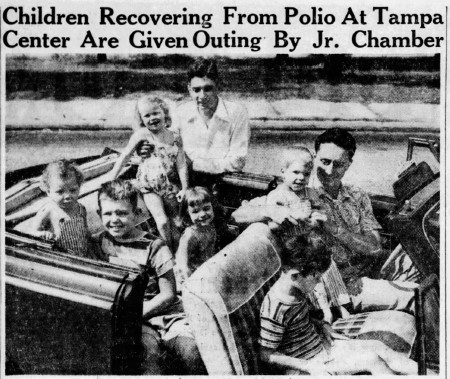
Tommy was admitted to Tampa Hospital for an unrelated anemia issue in December, 1947. During their examination, doctors found that Tommy had started to teach himself how to haltingly take a few steps. They decided to admit him to the Tampa Hospital’s new polio ward for more intensive physical therapy. The doctors taught Tommy how to use different leg muscles to improve his gait. An expensive operation was necessary to keep his bones and tendons growing at the same pace. Using a brace, he was able to walk. Further treatment using a new “walking bath” would enable Tommy to complete his treatment program. These expensive devices allowed patients to gradually gain better control of their muscles in a buoyant environment. He would be able to change positions to work different groups of muscles. His story was part of the public appeal for donations to support the purchase of the new baths as part of the 1949 local March of Dimes drive.
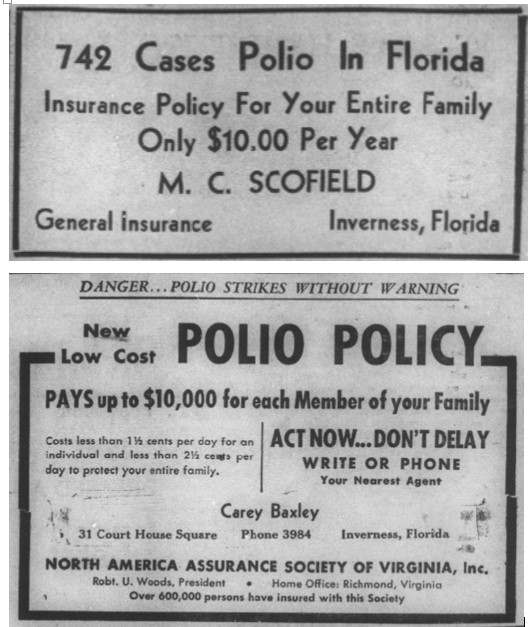
Some local businesses offered insurance policies to residents to cover expenses in the event that expensive polio treatments would be needed by their family members.
Polio Vaccine Comes to Citrus County
After years of research and laboratory testing, Dr. Jonas Salk announced that a vaccine that prevented polio had been developed and was ready for widespread testing in 1953. Clinical trials involving almost 1.5 million children were successfully concluded the following year. A nationwide inoculation program was readied for distribution in 1955. Since supplies were limited, Citrus County made plans that identified 258 first and second-grade children who would be offered the initial dose of the vaccine in April 1955. A second dose was administered in June 1955. All 1,900 students were offered the vaccine in 1956.
While there was initial enthusiasm from anxious parents for the first vaccine dose, most students did not receive the second dose that had been recommended by State Health officials. Officials warned that belief in community protection (“all of the other kids have been innoculated, so my kids will be safe”) was not an effective approach for prevention of the disease.
A new oral vaccine was made available in the early 1960’s that was more palatable for hesitant parents. New polio infections dropped dramatically as the vaccine coverage rates increased.

Polio Today
We know that polio is caused by a highly communicable virus that is spread through personal contact, such as sharing food, drinks or droplets from sneezes. Contaminated water is also a transmission medium. It has been practically eliminated in the industrial world but still is present in some underdeveloped countries. It is easy to take the elimination of this malady for granted today, but it’s good to reflect on a time when parents prayed for a miracle cure that would spare their children.