
The First Citrus County Commissioners
By: Ken Marotte, Citrus County Historical Society
The creation of Citrus County in 1887 required a unique team of leaders to establish a brand-new local government. Along the way, they had to contend with untangling the finances of the former Hernando County, disgruntled citizens, lunatics, levying fair taxes, blazing roads through the wilderness, gun control, rampaging pigs, and extending support to orphans and paupers.
Breaking Up is Hard To Do
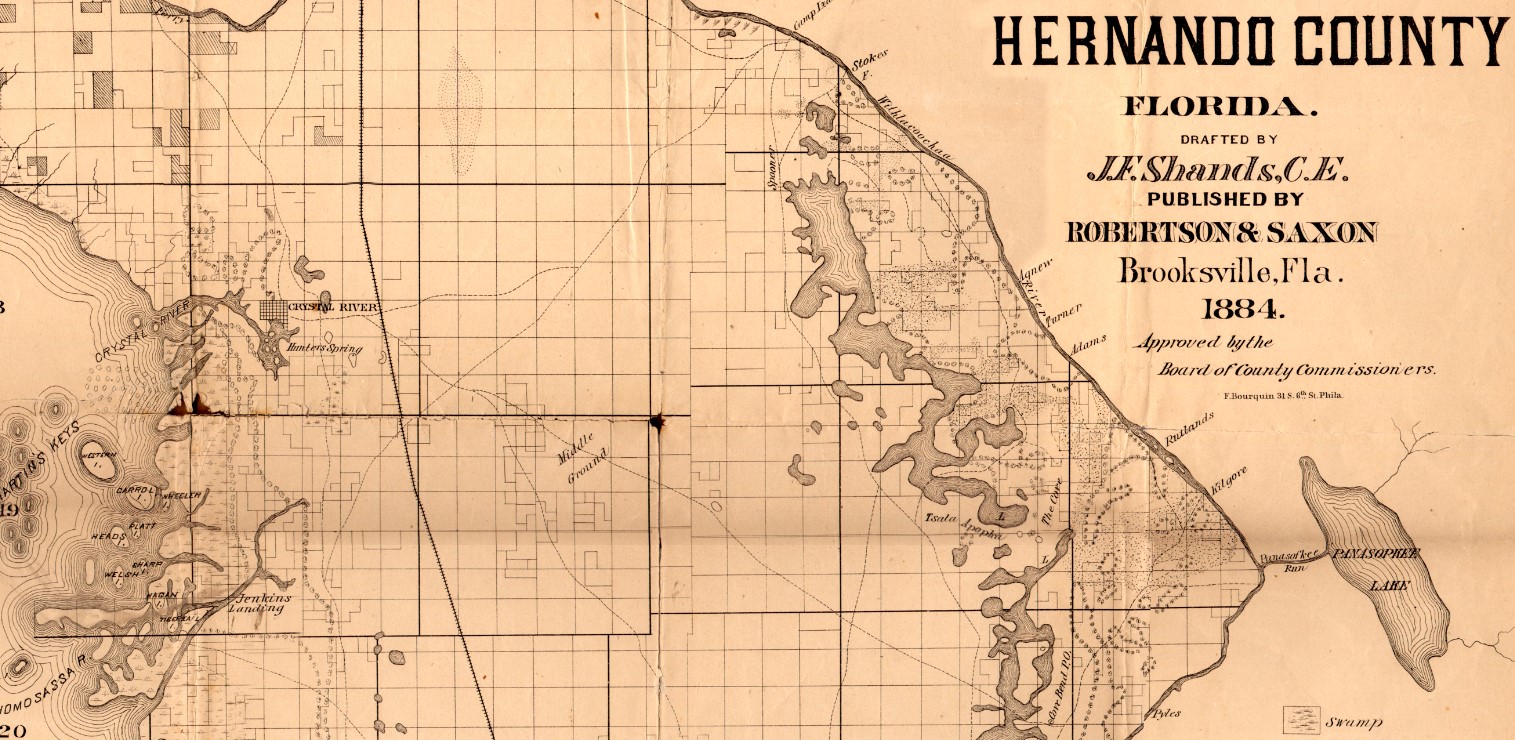
Formed in 1843, Hernando County included much of the land in Central Florida. As more people moved into the area, smaller counties were eventually carved from the larger Hernando county. By 1886 Hernando County included all of present-day Citrus and Pasco counties. The county seat of Brooksville, while centrally located, still required an inconvenient trip for people in the northern and southern sections of the county. They convinced the Florida state legislature to divide Hernando County into three separate entities (Citrus, a smaller Hernando, and Pasco). On June 2, 1887, Citrus County was officially created.
The citizens of Citrus had to build their new county with no infrastructure or official leadership. They were forced to replicate all of the government functions that were formerly handled in Brooksville. They needed a courthouse where they could conduct business, a taxing and funding structure, designation of a sheriff, judges and jail, and elected county officials. After provisional county officials were designated, the matter of dividing the assets and liabilities of the former Hernando County among the three new counties had to be addressed.
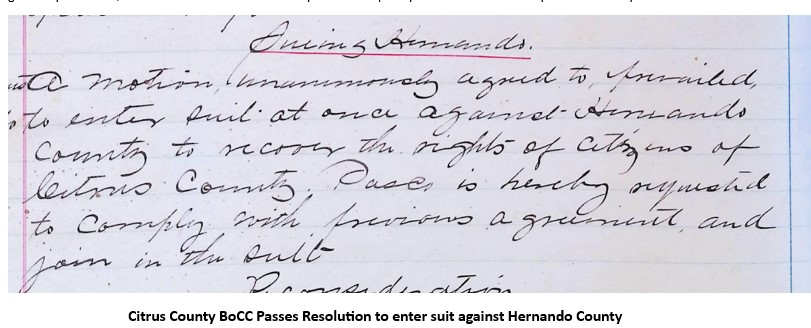
The initial roster of Commissioners (BoCC) and other officials included James M. Baker (chairman), P.J. Peacher, O.P. Keller, J.T Landrum and C.C. Carroll who comprised the first Board of County Commissioners. Other appointments included W.C. Zimmerman – Clerk of Court; J.C. Priest – Sheriff; William Brooks – Tax Assessor; A.D. Tompkins – Tax Collector; Nick Barco – Treasurer; and J.W. Allen – County Surveyor. (Allen’s original surveying tools still exist and are on display at the Old Courthouse Heritage Museum).
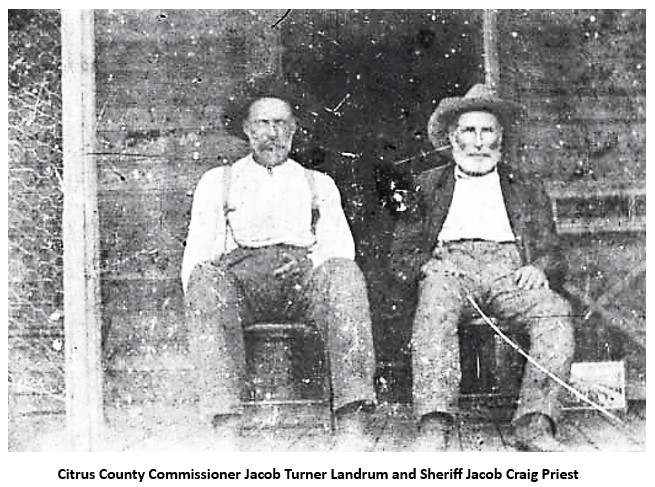
The Commissioners from the three counties began meeting to discuss dividing government assets on August 16, 1887. A detailed review of the tax records and current funds on hand required several sessions to complete. Some residents were in arrears on taxes while others had remitted their levies prior to the deadline. Other Citrus County citizens claimed that they were unaware of the new county assignments and continued to pay their tax bills to Hernando County during the next year. While the meetings were generally amicable, the division of resources didn’t proceed as quickly as the Citrus BoCC expected and they voted to sue Hernando County to obtain their tax revenue. This action encouraged the prompt resolution of outstanding issues.
Building a New County
The village of Mannfield was designated as the interim county seat. A future series of elections would decide the permanent location of the County Seat. It would take six ballots and several years before the final determination was made. In the meanwhile, the BoCC agreed to rent the house of C.W. Mouffatt as their interim courthouse. The BoCC found that they had to provision the new government with everything that was handled by the former Hernando County. Furniture for the judge, jury and courtroom was purchased. The Commissioner’s room was also provisioned with tables and chairs. Special books for recording official deeds, wills and judicial decisions were procured. A safe weighing over 2,000 pounds was ordered from a company in Cincinnati. Even paper and pencils had to be obtained to start their new venture.
After Inverness was finally selected as the new County Seat, a suitable building was envisioned by the BoCC. For the time being, they rented a house and store room in Inverness owned by James Gaffney. Some furniture remained in storage at Mouffatt’s house during the interim.
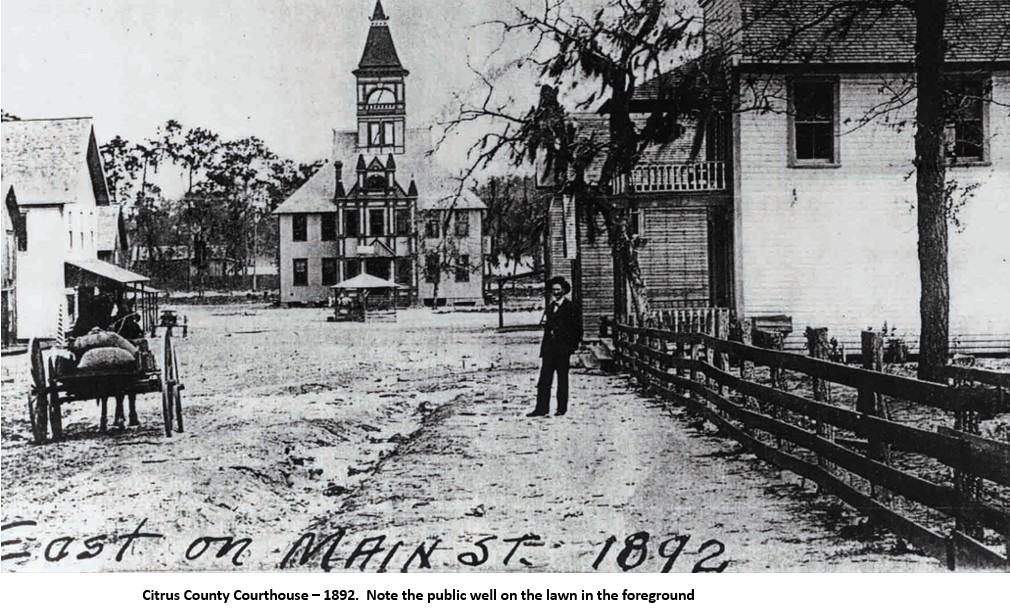
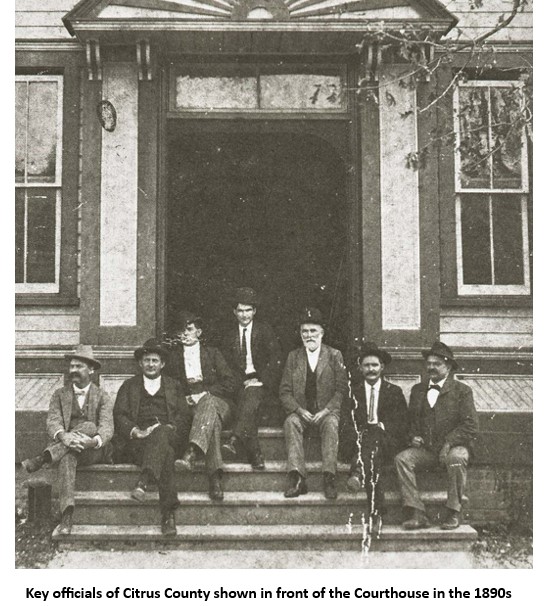
The contract for a new permanent courthouse was awarded to R.B. McGlothin in 1891. The BoCC agreed to cover the cost of records and furniture storage while the new building was constructed. There were significant cost and scheduling overruns, so the exasperated BoCC told McGlothin that he would be responsible for the storage charges until the building was completed. A 4×4 public well, lined with cedar lumber, was dug on the courthouse lawn. The building was occupied from 1892 to 1913 when a larger courthouse was built.
Angry Villagers
The BoCC estimated that they would need about $11,000 to fund the government during the first year. In an age before administrative service charges, license fees and traffic tickets, this meant that property taxes must be levied to fund county operations. The tax assessor estimated the value of each property and the financial support due from the owner. In the absence of a formal Board of Review, the BoCC was besieged with owners requesting “tax equalization”. The packed sessions would consume many days to cover the entire docket of appeals. At one meeting, almost twenty phosphate companies and railroad representatives attended to complain about their evaluations. Individual citizens also attended these marathon meetings to appeal for reduced tax bills. In some cases, their requests were successful, but many left the meetings with a large tax bill. The original county expense budgets were conservative estimates because the BoCC did not know how much money would be obtained from Hernando County nor did they have an accurate budget from the school department. While no one likes to pay taxes, the tax bills became more palatable as more budgetary clarity was obtained.
Wild Hogs
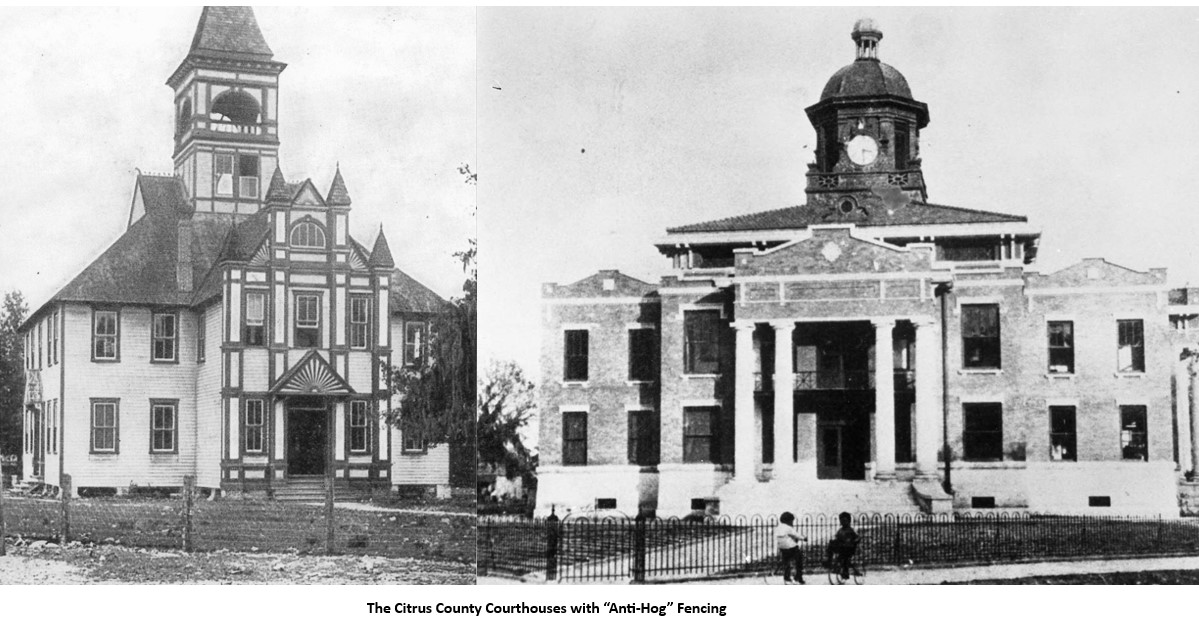
Citrus County was an “open range” county at that time. This meant that livestock could roam at will and owners had no obligation to control their animals. The courthouse in Mannfield became home to roving band of hogs who decided to make a home under the structure. The BoCC couldn’t stand the stench, especially in Summertime, and authorized the construction of a makeshift fence to keep the pigs away from the building. A similar fate befell the Inverness versions of the courthouse. The swine caused so much damage that a sturdy fence was eventually erected around the buildings. The fencing remained in place until the “open range” practice was regulated in the early 1950’s.
Orphans, Widows, Lunatics and Paupers
The citizens of Citrus County were generous and watched out for welfare of their neighbors. A group of citizens could petition the BoCC to provide relief to those less fortunate. Upon receiving the petition, one of the officials would personally inquire into the circumstances of the person. In many cases, a monthly stipend of three dollars would be allocated to the applicant. In other cases, the request was denied if the person owned property or had some other means of support, such as a family member. One person’s request for placement on the pauper role was withdrawn when Nic Barco stepped forward and offered to help the pauper himself.
There were other citizens who were deemed to be “lunatics” and could not take care of themselves. If someone offered to have the disturbed person live with them, then they would be granted a stipend from the county. In other cases, the person would be turned over to the protective custody of the Sheriff.
Gun Control
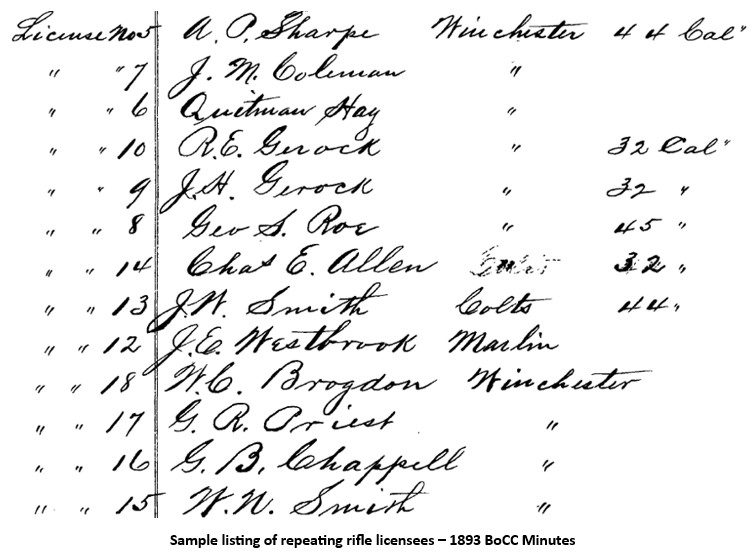
The Florida State legislature passed a law regulating “Winchesters and other repeating rifles” in 1893. The BoCC was charged with collecting a license fee from each owner of such rifle and ensuring that a one-hundred-dollar bond was in place. While large caliber Winchesters were that main target, hunters with .22 caliber rifles were also included. The list of owners and the type of rifle they registered was published in the BoCC minutes. In later years the controls were extended to include pistols and the licensing requirements were more stringent. For example, the BoCC eventually ordered the applicant to appear before the Commissioners and justify the reason for owning the firearm. References from three other citizens were also required. The BoCC could approve or deny each request without explanation.
Blazing New Roads and Bridges
There were only a few main roads in Citrus County in 1887. The main population centers were not connected and travel between the different parts of the county was difficult. The BoCC announced that they would entertain petitions from citizens for new roads and bridges. Since most of the proposed roads would need to cut through wilderness areas, the BoCC appointed “blazers” to find the best path between communities. Once the blazers had completed their work, the public (especially owners of private property that would be impacted by the roads) were invited to discuss the merits of the new road at Commission meetings. Upon approval, the project would be offered for a public bidding process. The county offered the labor of jailed prisoners starting in 1894 as long as the builder agreed to feed and guard the prisoners while they worked on the roadways. It’s interesting to think that many of the roads that we travel upon every day follow the path laid out by the “blazers” over 100 years ago.
Conclusion
The leaders of Citrus County were faced with building a government from scratch in 1887. Many of the items which we take for granted as part of today’s government processes had to be planned, funded and constructed. The early BoCC faced unique challenges during the first ten years and were able to overcome any obstacle that they encountered. We owe a debt of gratitude to the foresighted leaders who helps build today’s Citrus County.
Ken Marotte writes for the Citrus County Historical Society. He can be reached via email at kenmarottejr@gmail.com if you have any comments, questions or suggestions.