
The Fight for Fort Island Gulf Beach
By: Ken Marotte, Citrus County Historical Society
Fort Island Gulf Beach has weathered many storms since opening in 1973. The Citrus County Chronicle recently reported on the successful effort to reopen the popular attraction after the devastating hurricane season of 2024. Beachgoers may not remember the battle that the community waged to create the beach that we all enjoy today. This is the story of the how the county’s citizens joined together to fight for the construction of our outpost on the Gulf – a battle that went all the way to the White House.
Origins of Fort Island
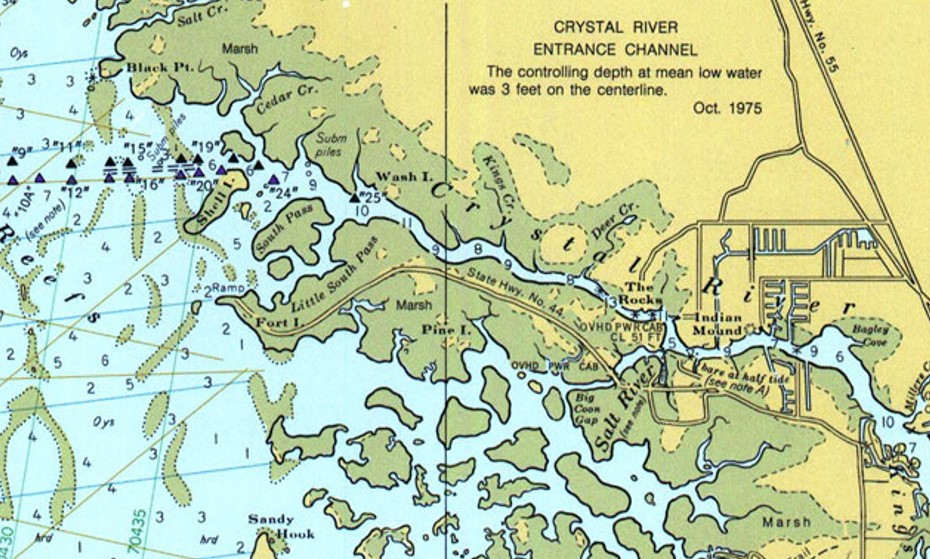
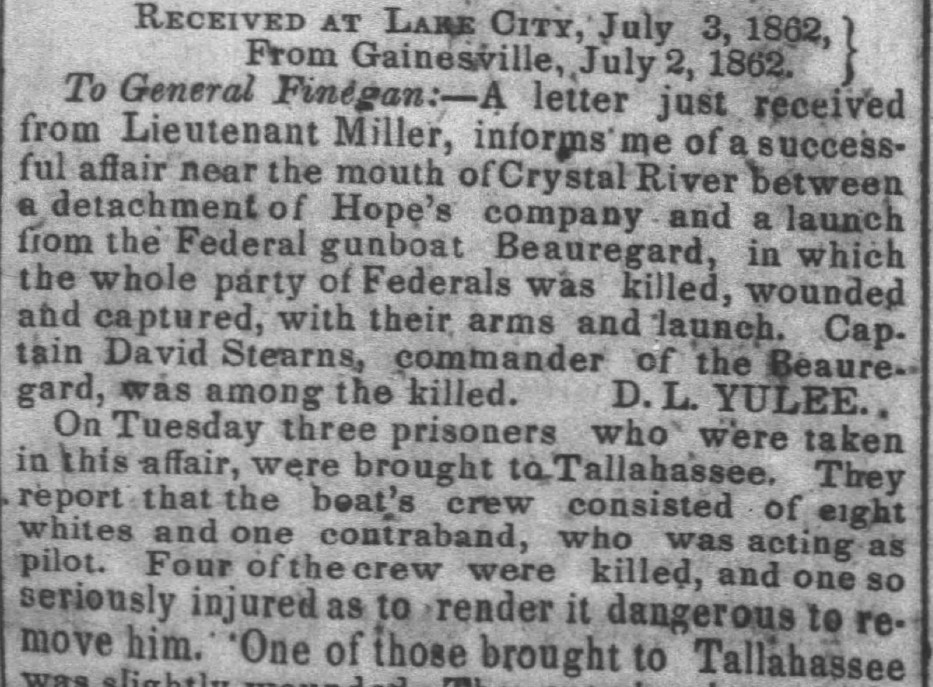
There are at least two legends about the name “Fort Island” and both of those stories tie the area to the Civil War. One of the tales was widely reported in newspapers on both sides of the conflict. The Union ship Beauregard was stationed off the coast of Crystal River. Her crew was assigned the task of intercepting blockade runners in June 1862. The mouth of Crystal River was narrow and the shoreline was close to the channel, which meant that the deep draft Union ship could not approach the town. The crew of a Confederate sloop pretended to be in distress in shallow water. The Master of the Beauregard dispatched a small contingent in a rowboat to capture the Rebel ship. He was unaware that Confederate soldiers laid in wait on the shores of Shell Island and the site of today’s Fort Island. Four Union troops were killed in the blistering fire that opened from the land-based forces. Reports of the successful ambush were carried throughout the South while Union newspapers first attributed the casualties to a lightning strike.
The other legend, which is not well documented, held that there was a fort on the location there that was staffed by women and children. The Yankee sailors refused to fire on the fort since it wouldn’t be honorable to endanger the frail occupants. The fort saved Crystal River from incursion by the Union forces during the early stages of the War.
The reader can decide for themselves which of these stories rings true.
Need for a Gulf Beach
Some of Citrus County’s most foresighted business and political leaders knew that our area was at a competitive disadvantage when trying to attract tourists. While the county was renowned for sport fishing, many visitors expected warm inviting beaches and were disappointed when they found that they had to drive to Pinellas County for the closest sandy saltwater beaches.
Early plans for a Gulfside beach in Citrus County were discussed in the 1950’s. Given the topography of the area, it would require a massive undertaking to bring the idea to fruition. The first step would be convincing the local citizens to support the creation of a road and new beach at taxpayer expense. State and Federal grants would need to be obtained to share the cost. Numerous governmental regulations would need to be observed and agencies would have to be convinced that the effort was both cost-effective and compliant with varying mandates. Fortunately for Citrus County, leaders such as businessman George Dyer and Commissioners Ralph Rooks, Major Bellamy and Clyde Bird led the charge to move the project forward.
All Roads Lead to Fort Island
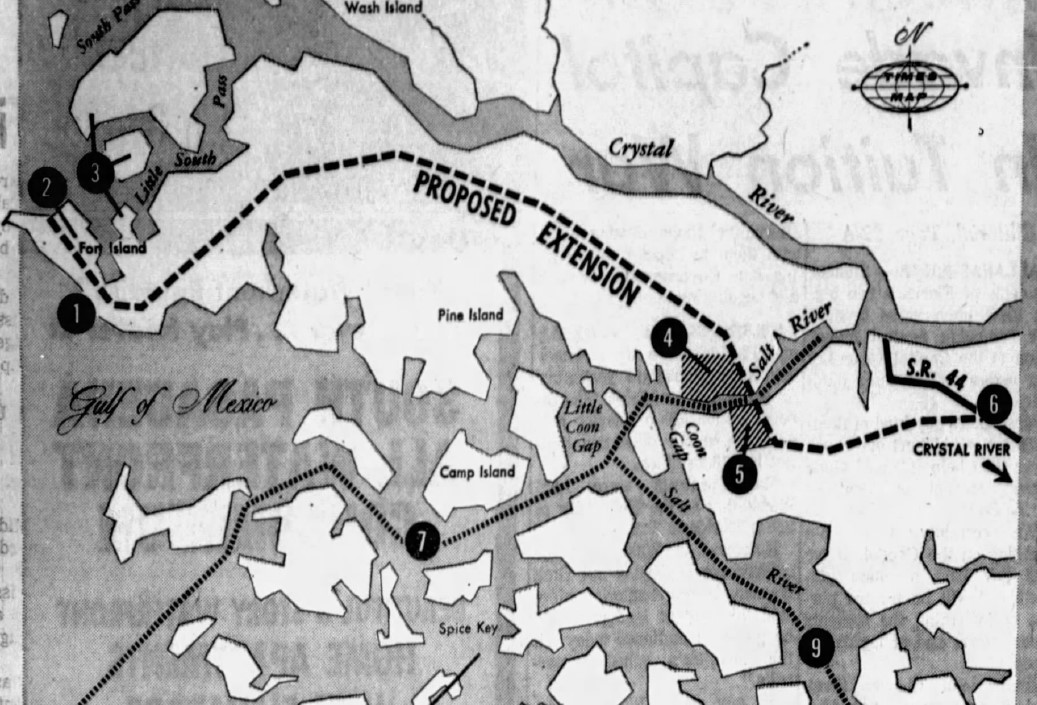
Fort Island was owned by the Williams family and they donated 1,000 feet of waterfront and road right of way for the creation of a boat ramp and beach. While the Fort Island location looked promising, there were no roads between Route 44 and the proposed site. The first order of business was to build a new road to connect beach to the highway. A furious debate ensued in the county between the advocates and opponents of the effort. Developer Norvell Bryant was the leader of the opposition but his forces were narrowly defeated when the Commissioners decided to move forward by a 3-2 vote in February 1967.
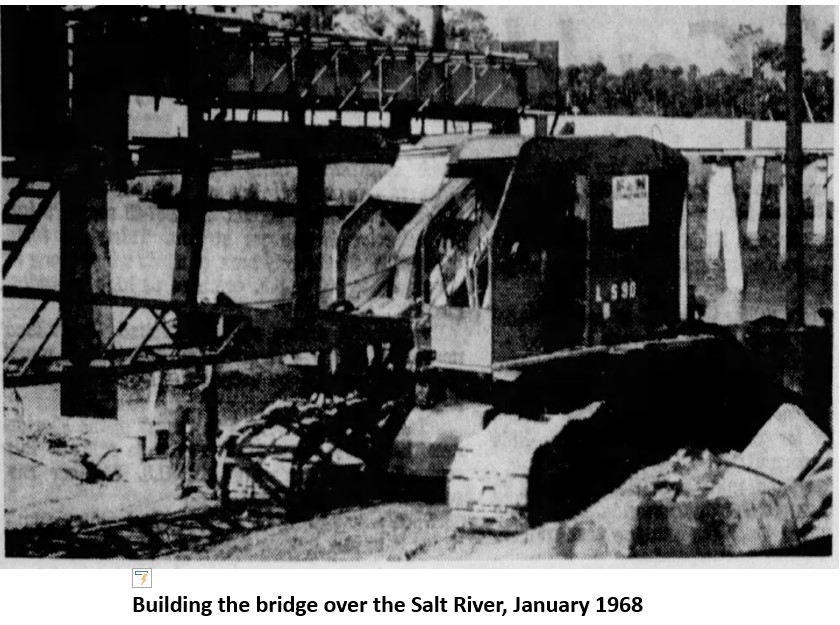
The first step was building a road through the marshy land. The Brown and Root Construction company was awarded a $561,000 contract to complete the roadway. They expected to use 305,000 yards of fill to raise the roadbed above the swamp. A bridge over the Salt River had to be built. Since they were digging fill from the surrounding marshland, it would sometimes take three weeks for the soil to dry out before it could be used to build the road. As is the case with many construction projects, the road project was completed in 1968 with an overrun of almost $100,000.
Dealing with State and Federal Agencies
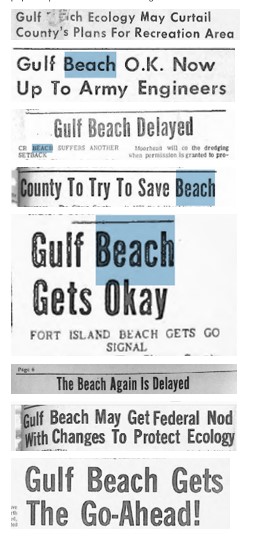
The County was relying on grants from both Federal and State government to complete the project. While government funds were necessary, those grants came with strict rules regarding how the beach and ramp was to be constructed. It seemed like each agency had their own requirements that leaders had to observe. As soon as one hurdle was overcome, invariably another agency approval was needed with a different set of rules.
The entire Citrus County community sprung into action to support the project. The Board of County Commissioners and attorneys spent so much time traveling to Tallahassee and Washington DC that they voted to suspend usual budgetary approvals for each trip and approved a blanket “do whatever is needed” approach to traveling for the beach project.
The area’s Congressional delegation interceded at the Federal level and even argued their case at the Nixon White House. Objections by the US Department of Interior and the Army Corps of Engineers were overcome through relentless political pressure. The Army Corps grudgingly gave approval but prophetically stated that there was not enough sand in the water that could be dredged to create the beach.
Finally In Motion
After clearing all of the regulatory and funding hurdles, work on the beach began in earnest. The project plan called for a phased development. The first phase called for the dredging and creation of a 900-foot sandy beach with limited sanitary amenities. Later phases would include a parking lot, picnic tables and permanent sanitary facilities. The final phase provided for landscaping and a boardwalk.
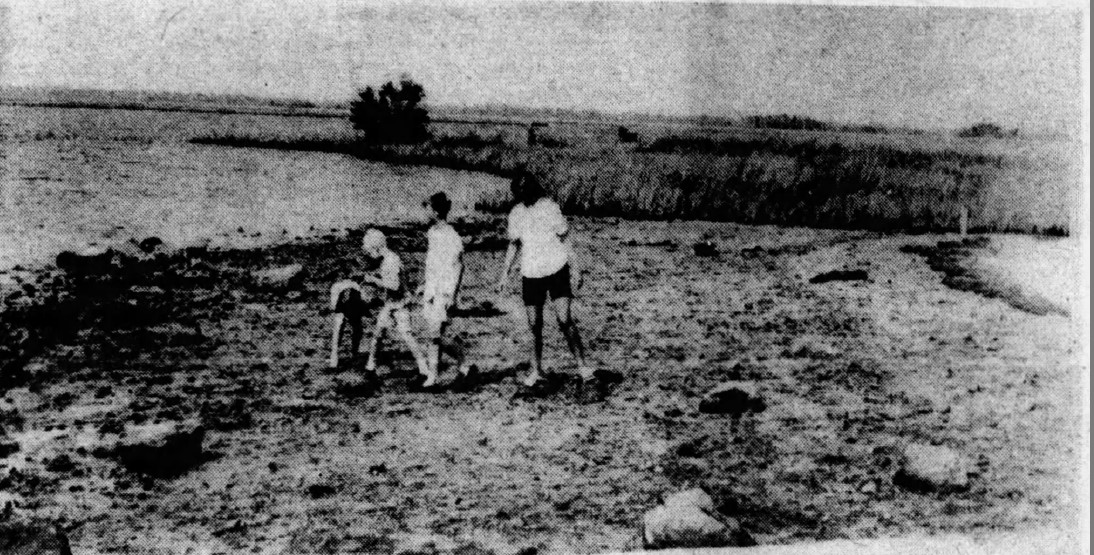
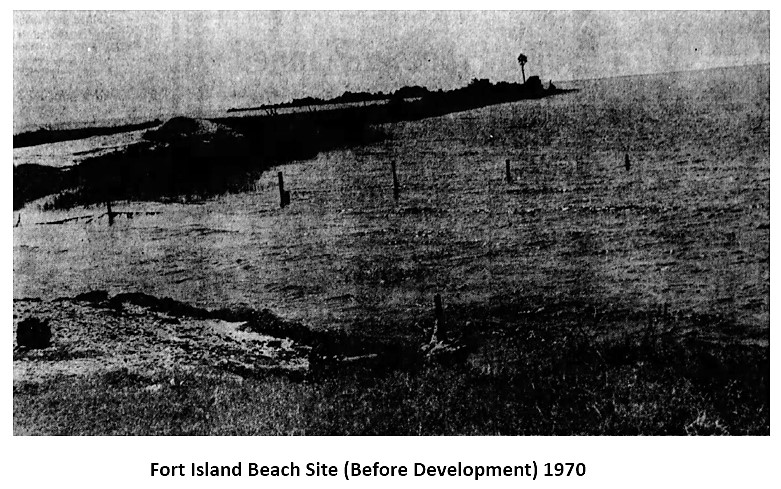
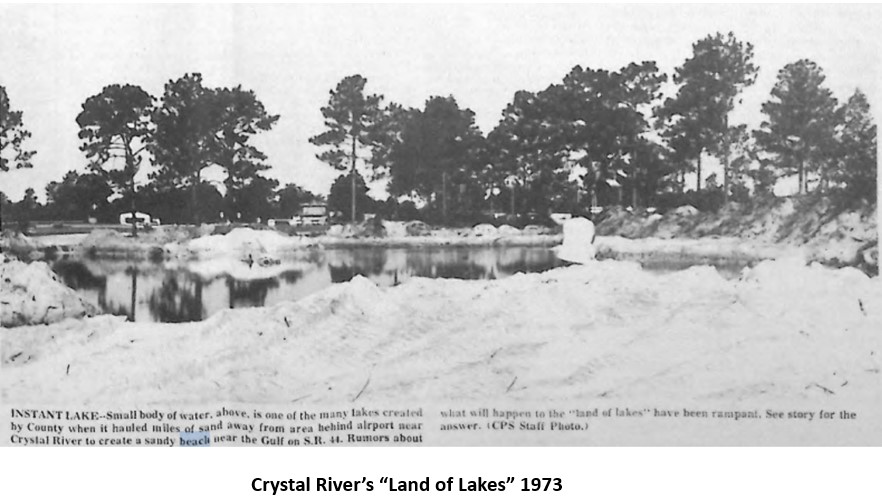
Dredging sand for the beach was a major component of the first phase. The Army Corps of Engineers thought that not enough sand would be available at the site to fill the beach. As it turned out they were correct. In addition to one of the dredging boats catching fire, the operation encountered more difficulties. When the dredging contractor reported they has exhausted the available sand, the Citrus County Roads Dept had to unexpectedly jump into action. To meet July 1973 project deadlines, they had to scoop and haul sand from various locations in western Citrus County. They completed their assignment, but it took 16 days of round-the-clock shifts to haul move the required beach sand. Their excavation left holes in the Crystal River area that filled with water and was jokingly called “The Land of Lakes” by locals.
Phased Opening
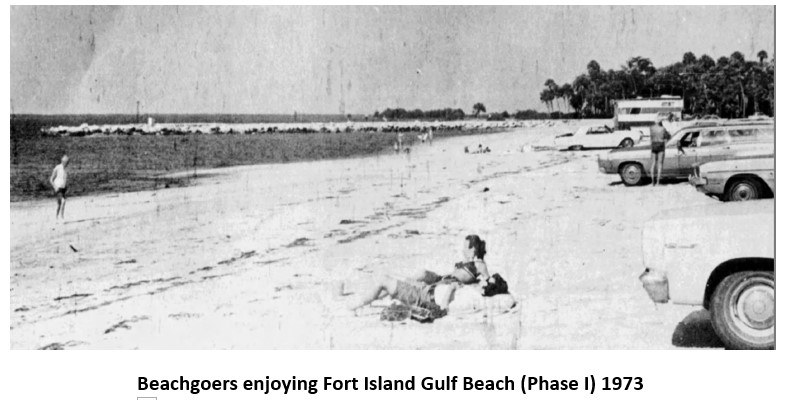
The Phase I version of the Fort Island Gulf Beach was opened in July, 1973. This meant that the beach was open but there were no amenities except for some portable sanitary facilities. In spite of the spartan conditions, the news traveled about the new beach. Local citizens and visitors alike flocked to the only Gulf beach in the county. In the absence of a parking lot, Fort Island resembled the famous Daytona Beach with automobiles parked near the beachgoers.
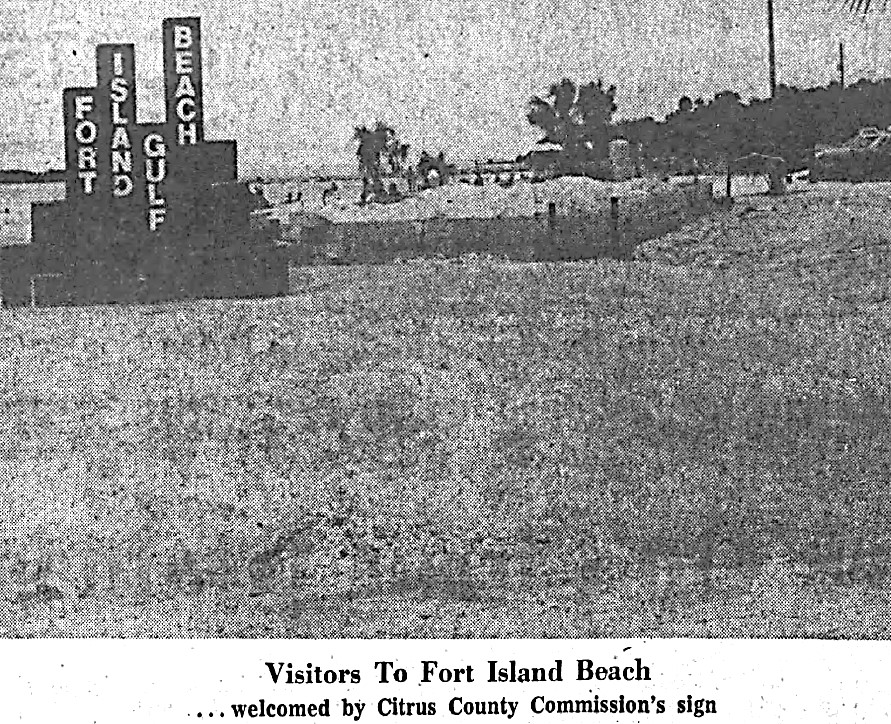
County officials raced to complete the Phase II modifications by the Summer of 1974. The revisions included a bathhouse with showers, installation of a septic tank, building picnic facilities and sidewalks between the various areas. The State agencies approved the use of salt water for operation of the septic tank and showers, while a bottled fresh water system would be used as a temporary solution until a permanent water line could be installed. A new sign was placed at the entrance proudly welcoming visitors to Citrus County’s Gulf beach.
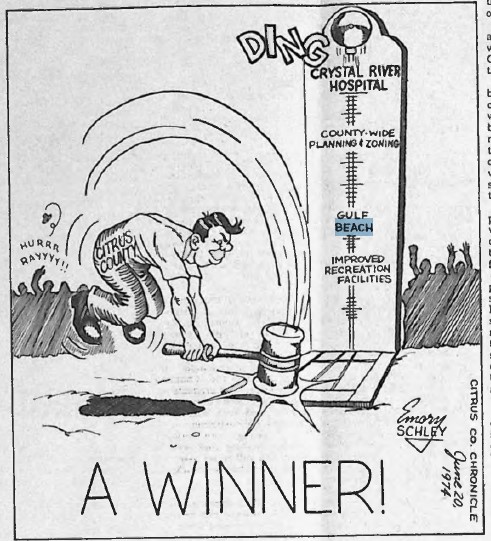
A formal dedication ceremony was held in June 1974. Even the people who had originally opposed the project were impressed by the new facility. The area became a tourist destination and encouraged visitors to consider spending their entire vacations relaxing on the beach and exploring the other treasures of Citrus County.
Epilogue
Envisioning a Gulf beach in Citrus County and eventually turning that dream into reality took a community-wide effort. The project was stalled, rejected and delayed many times over the years but the community never gave up. Each hurdle was met and overcome with a persistent optimism. When you visit the Fort Island Gulf beach, take some time to remember that anything is possible when we work together to get it done.
Ken Marotte writes for the Citrus County Historical Society. He can be reached via email at kenmarottejr@gmail.com if you have any comments, questions or suggestions Contact him if you’d like to participate in the ongoing CCHS Oral History Project.