
The Development of Citrus Springs
By : Ken Marotte, Citrus County Historical Society
Located in the northern part of Citrus County off Route 41, the Citrus Springs community welcomes residents with an impressive water fountain and beautifully manicured landscapes. How did the visionaries who created this village grow from building hospitals and housing for the US Navy in World War II into one of the predominant developers in Florida?

The Mackle Family
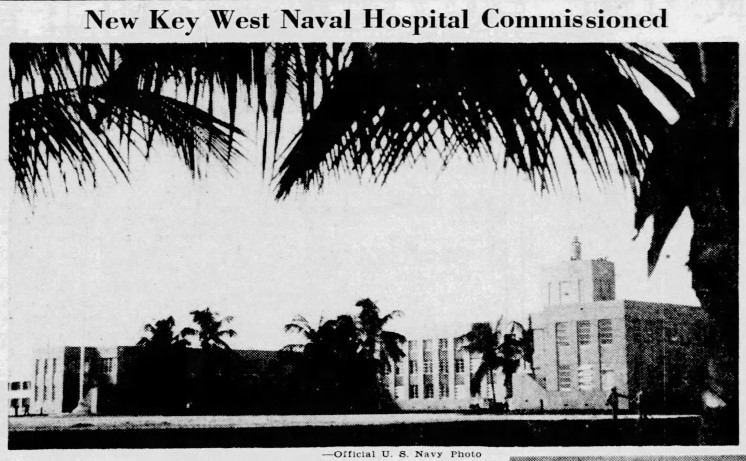
Originally growing up in Jacksonville, the three Mackle brothers moved to the Miami area prior to WWII. When that conflict arose, there was an urgent need for contractors to construct the hospitals, housing and airfields that would be needed by America’s military. Frank, Elliot and Robert Mackle formed a company to meet the call. One of their most notable achievements was the construction of a new hospital in Key West for the US Navy. They also had contracts for work in Georgia and other parts of Florida. After the war was over, the nation faced a severe housing shortage in the face of a growing demand from the returning GI’s and their families. The Mackles saw an opportunity and planned several housing developments on the East coast of Florida, specifically in the Miami area.

The Mackles turned their attention to Volusia County and developed the Deltona community in 1962. They saw great opportunity in Florida’s West Coast and opened Marco Island in 1964. They developed a “planned community” model that they would apply repeatedly throughout Florida. In 1966, they decided to expand into Citrus County. They stood ready to purchase about 12,000 acres in Lecanto – about 3 miles East of Crystal River and 6 miles West of Hernando. Negotiations were on the final stages of being concluded when an unexpected complication brought those plans to a halt.
Stymied by Mineral Rights Contracts
It had been rumored that the West Coast of Florida held oil deposits. Some of the phosphate prospectors actually drilled for oil in the 1901-1910 period but did not find any commercially viable quantities. Large oil companies, such as Standard Oil, Hunt Oil, and Mobile contracted with landowners in the 1940’s for the rights to mine/drill for resources on their lands. The agreement would be formalized in a deed and filed in the County Clerk’s office. Mobile-Socony secured a number of these options contracts in the mid-1960’s.
Under the terms of a typical mineral rights contract, the oil company would pay a landowner about 50 cents per acre for the exclusive right to explore, drill and exploit oil, gas and other resources. The landowner would get an additional royalty if the desired minerals were extracted from their property. The duration of the leases was time-bound, ranging from one to five years. The agreement could be extended by mutual consent of the company and landowner after the expiration of the lease. This arrangement suited ranchers who held large expenses of land and would not be inconvenienced by exploration activities. On the other hand, an active mineral rights contract would not be acceptable to builders and residents of small community lots.
The land that the Mackle Brothers had sought for their new Citrus County development had previously been covered by a mineral contract. They approached the Oklahoma company that held the leases to see if they could buy out their contracts. The company wanted $1MM (approximately $10MM in 2023 dollars) and the Mackles decided to look elsewhere to build their next community. They purchased vacant land in the Western part of Hernando County and named their new development Spring Hill. Spring Hill formally opened in 1967 and was extremely popular with people from the Northern states.
Birth of Citrus Springs
By June 1969, most of the active mineral rights leases in Citrus County had expired. The Mackle Brothers decided to purchase 15,000 acres on unused land formerly owned by the Camp Phosphate company. They secured and option to purchase another 12,000 acres later that year.
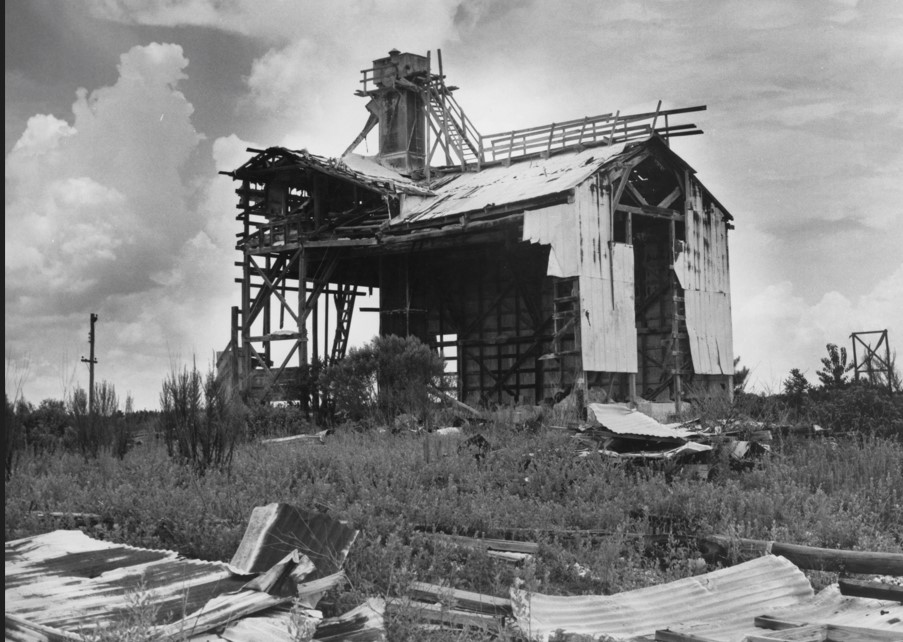
In October 1969, Mackle’s Deltona Company presented the plat for the first phase of Citrus Springs to the BoCC and won their approval. Acknowledging the potential impact on Citrus County schools, they promised to allocate 12 acres for an elementary school, 12 acres for a middle school, and 35 acres to house a high school. All school-related land was to be provided to the county for no charge. Their goal was to ensure that no home in the new development would be more than 2 miles from a school. The company envisioned an eventual population of about 70,000 people.
The Mackles stated that there would be room for two 18-hole golf courses; 107 acres for schools; 15 acres for a hospital site; and 25 church sites. Land for the churches would be provided free of charge. Frank Mackle remarked that “we’ve never been so warmly received. You’ve shown that you’re great neighbors, and we hope to bring more into this county more than we take out”.
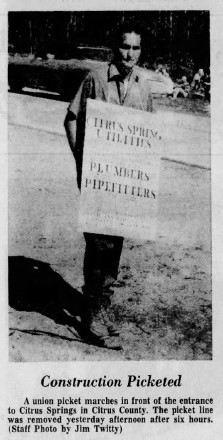
Construction started the following month. Formal opening was set for January 4, 1970. Work was briefly halted on November 11, 1969 due to a misunderstanding with the construction unions. After the appropriate negotiations, work resumed the next day.
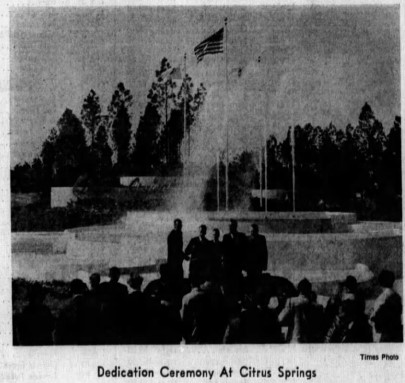
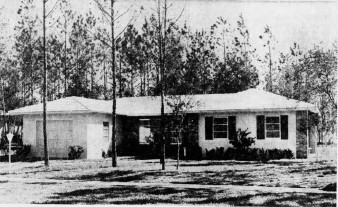
The Mackles flipped the switch on the landmark water fountain on January 4, 1970 to great fanfare. They offered fifteen model homes for viewing as well as their vision for the completed development.
The Marketing Campaign Begins
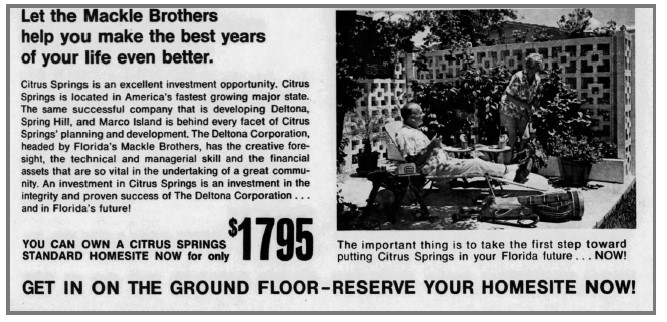
An intensive marketing campaign was initiated across the cold Northern states. Newspaper inserts and advertisements were distributed to approximately 15 million people across the region. Coincidentally, the temperature in Chicago dropped to -12F that weekend which was the lowest reading for that year. Detroit also checked in at -10F. Mackle hoped that winter-weary Northerners would be ready to move South.
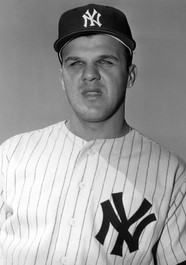
Chicago was a particular area of focus for Mackle’s marketing. The sales manager for Citrus Springs was former NY Yankees great Bill “Moose” Skowron, who was a Chicago native. His former teammate Roger Maris, who was the first to beat Babe Ruth’s single season home run record, also attended marketing festivities at Citrus Springs. Chicago Bears legend Dick Butkus and former AFL All-Star (and future coach) Marty Schottenheimer staffed the Mackle’s Chicago office.
The Citrus County Airlift
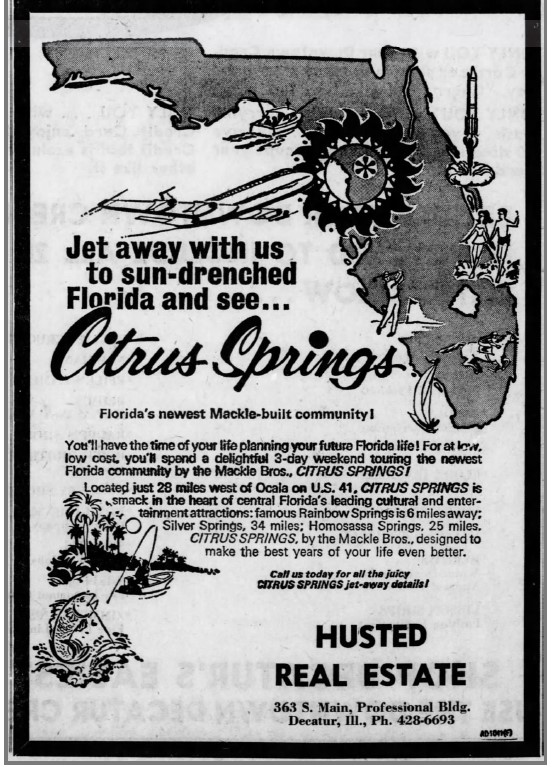
The Mackle Brothers chartered airplanes to bring buyers from across the North. They estimated that during the month of January, 70,000 people were flown from the frozen cities of Chicago, Grand Rapids, Detroit, Pittsburgh, Columbus, Boston, and Philadelphia to Citrus Springs. They were met by “Moose” Skowron and his staff at the Ocala airport and loaded onto buses for the short trip to Citrus County. Meals were provided and side trips to Weeki Wachee and local beaches were scheduled. Special tours of the area and model homes were featured. In the end, thousands of happy travelers, dreaming of escaping the freezing cold temperatures purchased lots in the new community.
Citrus Springs Today
The population of the development today is about 10,000 residents. There are Elementary and Middle Schools on site, but the planned High School has not been constructed. There are about 34,000 homesites in its 21.2 square-mile area. While the original brochure offered fifteen different models (and some of them were relatively small), today’s marketing materials describe four models with more expanded living space. Of course, the water fountain at the entrance is still in operation and distinguishes this planned community.