
The Bridges of Citrus County
By: Ken Marotte, Citrus County Historical Society
We drive over them every day without noticing them. Most people are unaware of the political intrigue, criminal charges and danger involved in crossing the Withlacoochee River in the past. While Clint Eastwood will probably not be making a movie about them, this is the interesting story of the Bridges of Citrus County.
Fording the River
Long before there were bridges and ferries, soldiers and settlers needed to find a way across the Withlacoochee River. This usually involved scouting the riverbank for the most shallow and narrow places in the river and leading their horses and wagons through the water. This could be a long and arduous process (and fraught with danger during times of flooding, Seminole attacks and changes to the river due to fallen trees and shoaling).
Lt. James Farley Izard was shot during the Second Seminole War when he volunteered to find a path across the Withlacoochee River in 1836. His fellow troops pulled the injured officer to the relative safety of a hastily-built log fortification where he died a few days later. The crude stronghold was named “Fort Izard” in his honor. The surviving US Army troops were pinned down at the fort by the Native Americans until rescued by reinforcements.
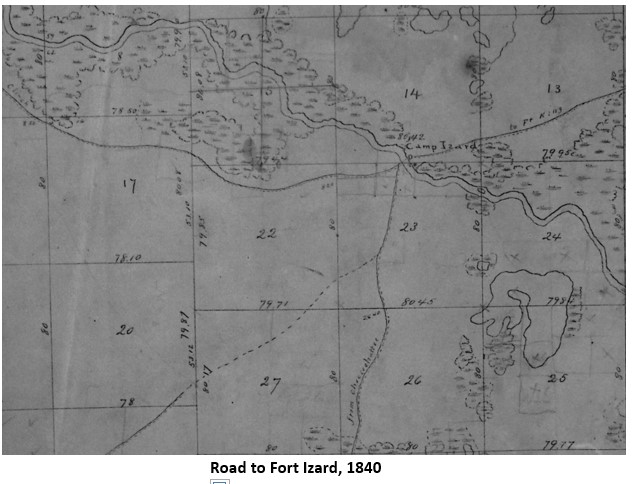
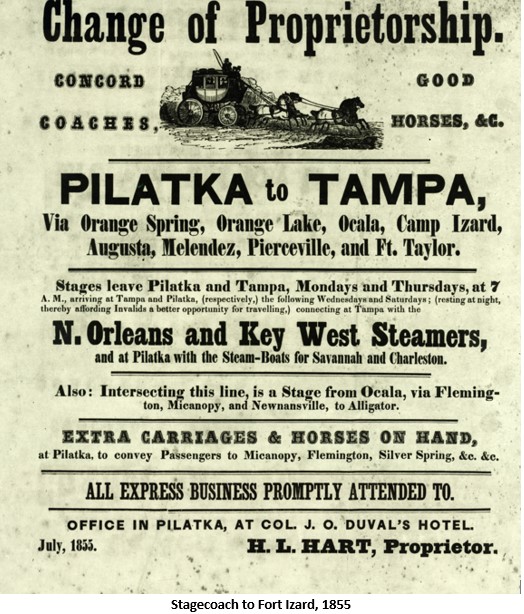
Within a few years a number of settlers (including eventual Citrus County Clerk W.C. Zimmerman) had migrated to the area and Fort Izard became a vibrant community. A stagecoach connected Tampa to Florida’s East Coast and the trail included Fort Izard as one of the stops on the line. Continuing to ford the river became impractical for the drivers of the stagecoach. Accordingly, in 1843 the Florida territorial legislature agreed to allow John G. Swan to operate a ferry at Fort Izard provided he maintained “…suitable boats and flats in good order for the passage of carriages and other vehicles”.
The era of ferries in Citrus County had arrived.
Taking the Ferry
The number of ferries across the Withlacoochee exploded in the 19th century. Since the river was considered a “navigable waterway”, operators had to obtain the permission of the legislature before they could construct their ferries. Some entrepreneurs, however, did not see the necessity of following such bureaucratic procedures.
Today we think of ferries as motorized vessels that regularly cross a river or bay on an established schedule. In the early days of Citrus County, ferries were flat boats that were permanently tethered to two sides of the river. A ferryman would wait for customers to arrive, load the passengers and their possessions on the boat, and physically pull the boat to the other shore using cables and ropes. The ferryman would charge the passenger a toll to cross. In some cases, a city or county would pay the ferryman a set salary and collect the fares for the government treasury. In other cases, the owner of a private ferry would rely solely on the tolls that they collected from customers.
One of the most famous local operators was Rueben “Binkie” Stokes who built a crossing on the Withlacoochee River. He continued to operate the ferry until his death in 1894. The area is still called “Stokes Ferry” today and commemorates his service between Citrus and Marion counties.
Ferry crossings could be dangerous. If the connecting cable or ropes became detached, then the hapless passengers could careen downstream at the mercy of the current. In 1902 Frank Turner, son of prominent citizen Dr. Walter S Turner, lost his life on the Withlacoochee when his horse became spooked midway across the Stokes Ferry passage and leaped into the water. Both Turner and the horse were drowned.
In addition to the inherent dangers, the existence of multiple attached ferry cables across the Withlacoochee hindered navigation by steamers and barges. Also the cost of maintaining ferry facilities, especially ropes and cables, led to prohibitive costs.
The Bridge to Dunnellon – Marion County Plays Hardball
The discovery of phosphate in the late 1880’s had attracted the interest of international investors. New railroad lines were constructed and the existing passenger ferries were not a practical way to transport the “white gold”. When the phosphate companies needed to have a more robust way to cross the Withlacoochee, they built a wooden bridge across the river.
Marion county merchants saw continued ferry use as an impediment to southward business expansion, so they began to lobby for a permanent bridge near Stokes Ferry in 1897. The Marion Board of County Commissioners (BOCC) approached their Citrus County counterparts and offered a 50/50 partnership to build a bridge across the span. When Citrus BOCC declined the offer based on finances, Marion’s BOCC offered to cover 2/3 of the cost. The Citrus BOCC replied that the county still did not have funds to meet the reduced share of $295. Citrus County residents in the Stokes Ferry area offered to supplement the Citrus County’s share with $145 from their own funds but the Citrus BOCC would not agree.
Since Stokes Ferry was still the primary method of crossing the Withlacoochee, Marion BOCC decided to offer its citizens free ferry passage, but passengers from Citrus County would pay an increased fare. An exasperated Dr. Walter S Turner, who had lost his son months earlier, offered to underwrite the entire cost of the bridge as a memorial to his departed son so that no one else had to face the dangers of ferry crossing.
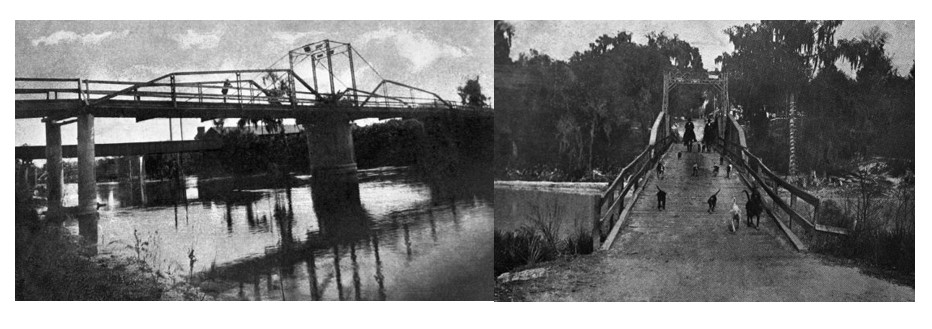
Citrus BOCC relented and agreed to pay for a share of a new steel bridge in 1903 (augmented by personal contributions by citizens on both sides of the river). The bridge was inspected and opened for traffic the following year. However, the span was narrow and only allowed traffic in one direction. In addition, it required constant maintenance such as scraping, painting and replacement of the wood decking.
By the 1920’s most counties recognized that the existence of integrated hard roads and improved bridges were the key to their survival. A new concrete bridge spanning the Withlacoochee at Stokes Ferry was proposed in 1927. Once again there were differences between the BOCC’s in Marion and Citrus counties regarding the scope and need for the bridge. Condemnation of property and obtaining rights of way for the bridge and expanded highway were points of contention. Resolution was not reached until 1934 and construction was allowed to go forward with federal assistance.
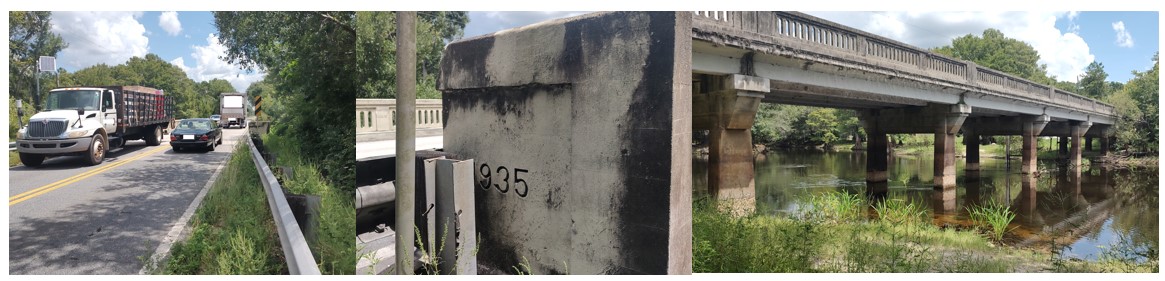
The Citrus – Marion bridge to Dunnellon was completed in 1935. It accommodates two-way traffic (based on the size of cars in 1935). The span is part of Route 200. It still exists today and celebrates its 90th birthday this year. Needless to say, the relatively narrow width of the traffic lanes affords an “exciting experience” driving today’s vehicles, especially if you cross with an RV or truck!
Rutland Bridge – Sorry, We Ran Out of Money
The Citrus BOCC had recognized the need for better ways to cross the Withlacoochee into Sumter County. Two new bridges – the Rutland Bridge (on today’s Route 44) and Weeds Landing Bridge (connecting with Floral City) were proposed in the 1920’s. The county had budgeted for these spans over the years in the “Roads and Bridges” fund. The fund was overseen by a “Bond Trustee Committee” headed by Isaac O. Fender, who was also chairman of the Board of Instruction as well as Cashier at the Citizens Bank of Inverness
The Citrus BOCC solicited bids to build the new Rutland Bridge in 1927. The contract was awarded to Steed Construction and work commenced in 1928. When the county proceeded to pay the initial installments to the contractor, they were informed that their account did not have the funds to cover their bonds. It appeared that Fender had not followed county instructions to move funds from the Citizens Bank of Inverness to the contractor’s bank.
In the meanwhile, the Citizens Bank of Inverness was declared insolvent. Fender and other bank officials absconded from the county. After a nationwide search, they were captured and brought back for court proceedings. The court cases wound through the legal system for years and eventually the bankers were judged not guilty. However, the county was missing over $20,000 which they planned to use for financing the Rutland bridge.
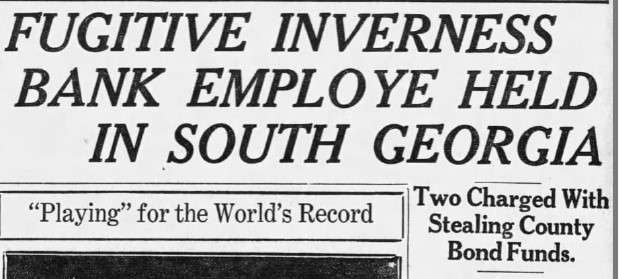
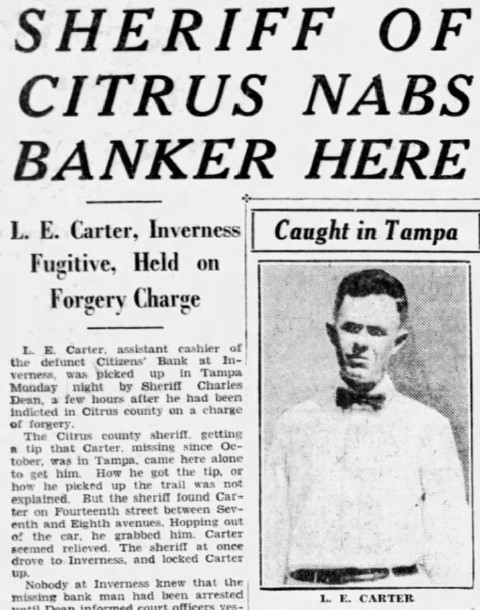
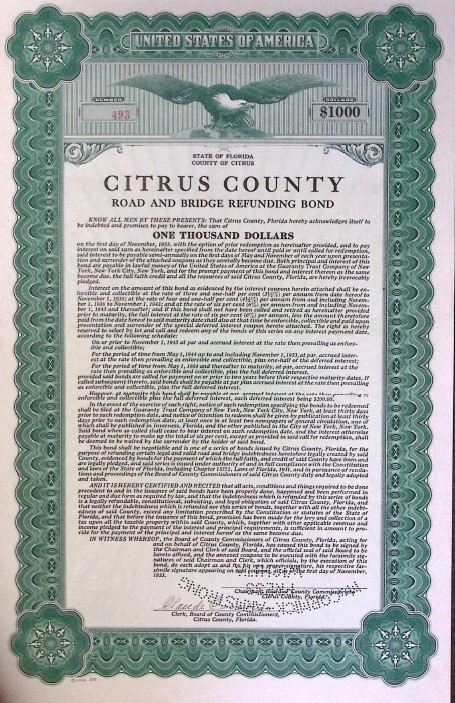
Work stopped immediately on the bridge once the shortfall was discovered. The county appealed to the State Comptroller who authorized the bridge bonds to be reissued (and the county had to increase taxes to cover the missing funds). Eventually the federal government stepped in and helped Citrus and Sumter counties cover the cost of the bridge. The bridge was completed in 1935.
Epilogue
This story covers the story of only two of the bridges constructed by Citrus County since 1900. There were many more spans built during that time, but none experienced the difficulties of the Stokes Ferry and Rutland bridges.
Ken Marotte writes for the Citrus County Historical Society. He can be reached via email at kenmarottejr@gmail.com if you have any comments, questions or suggestions Contact him if you’d like to participate in the ongoing CCHS Oral History Project.