
Remembering the Sacrifice of Lt. James F. Izard
By: Ken Marotte, Citrus County Historical Society
It’s difficult to imagine that the lands around Citrus County were once a battleground. You may be familiar with the siege of Fort Cooper since it’s commemorated by an annual reenactment of that event. You may not be aware that another brave soldier met his fate during the Seminole Wars after volunteering to find a way across the Withlacoochee River to advance his regiment. This is the story of James Farley Izard who fell in our area during the Second Seminole War in 1836.
A Tradition of Service
The Izard family emigrated from England to the rich lowlands of South Carolina. They established a large plantation focused on growing rice. The family patriarch, Ralph Izard, became a respected voice for American independence and was an active participant in the Revolutionary War. Ralph Izard eventually became a United States Senator and served as President pro tempore of that body. He was a friend and confidant of George Washington. He sought Washington’s advice regarding a career path for his son, George Izard, and two agreed that young George should receive a military education abroad.
George Izard joined the fledgling US Army when he returned and eventually rose to the rank of Major General. He was responsible for executing an attack on Canada and protecting America’s northern frontier during the War of 1812. That campaign was fought to a stalemate when the Treaty of Paris ended the conflict.
George Izard’s brother, also named Ralph, earned distinction in the US Navy during their campaign against the Tripoli pirates. He served alongside Steven Decatur and was instrumental in retaking and burning a captured USN frigate (USS Philadelphia). The destroyer USS Izard (DD-589) was named in his honor.
After retirement, George Izard was appointed territorial Governor of Arkansas. One of his goals was to peacefully arbitrate disputes between the Native Americas and the white settlers.
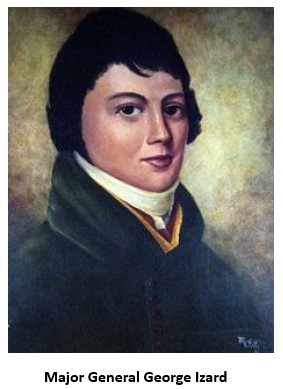
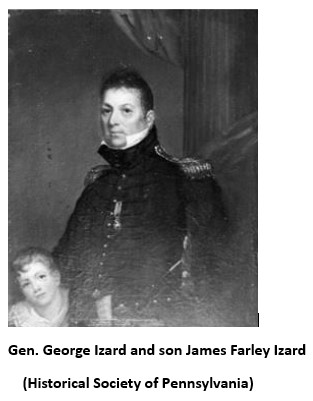
Seeking to continue the family legacy, he secured an appointment to the United States Military Academy at West Point for his son, James Farley Izard.
Cadet James F. Izard
James Izard entered West Point at a pivotal point in history. One of his artillery professors was the inventor of the famed Parrot Rifle cannon that was used extensively during the Civil War. Robert E. Lee was enrolled in the class one level junior to Izard. Another contemporary student was Jefferson Davis and Izard struck up an intimate friendship with the future President of the Confederacy.
Izard was a good student but displayed a mischievous side. He graduated 17th in his class but his superiors did not always appreciate his attitude. During his final year, the strait-laced Robert E. Lee had zero demerits while the fun-loving Jefferson Davis had and Izard had quite a few transgressions on their records. This foreshadowed Izard’s later tendency as a risk-taker who would not back away from a challenge.
Izard was given a commission as a Brevet 2nd Lieutenant upon graduation in 1828 and assigned to the Infantry. He was promoted to a permanent rank when a new mounted force called the “1st Regiment of Dragoons” was formed in 1833. The Dragoons were the forerunners of the 1st US Cavalry.
Early Military Service
Izard’s primary assignments included patrolling Army installations to the west of the Mississippi. He contracted cholera during one of the military expeditions and returned to South Carolina to restore his health. He was still on medical leave when news reached him about the need for experienced officers to help lead excursions against the Seminoles in Florida. He volunteered his services in spite of his adverse health conditions. He was assigned to the force led by General Edmond Gaines in Central Florida. Izard was given the temporary rank of Brigade Major. Gaines troops consisted mainly of volunteer militia from other states and he sorely needed experienced Regular Army officers to provide leadership.
Skirmish on the Withlacoochee
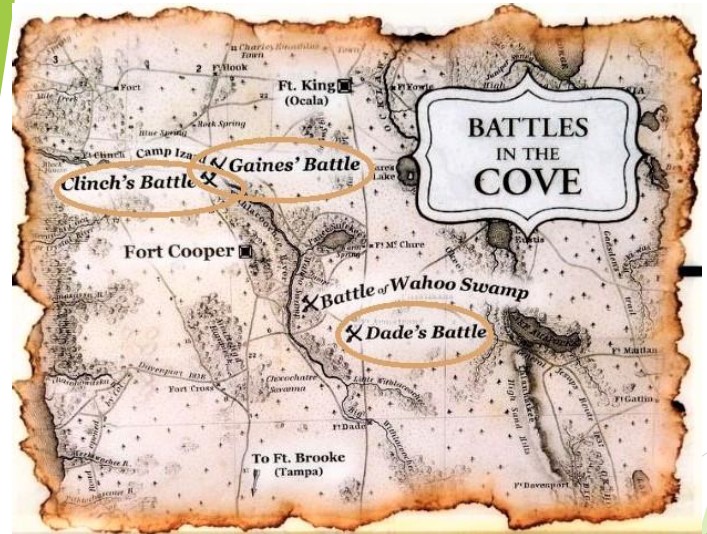
General Gaines marched from Fort Brooke (Tampa) in search of the opposing Seminoles. He had expected to find more rations to replenish his supply at Fort King (Ocala) but was disappointed to find that General Winfield Scott told Gaines there were insufficient provisions there. He decided to march back to Fort Brooke, but the path would require fording the Withlacoochee River near a Seminole stronghold. He underestimated the opponent’s strength and thought that crossing the river would be uneventful. On February 28, 1836 Lt. Izard volunteered to serve as a ranger and find the best place to ford the river. He dismounted from his horse on the east bank of the river and attempted to find a path to the western shore. A Seminole scout spied Izard preparing the cross and took aim at the Cavalryman. A musket ball had pierced Izard’s eye. He continued to lead his men and told them “to keep their positions and lie close”. However, the futility of their situation became clear. His troops managed to drag him back to a rudimentary fort that they had constructed. Izard received as much medical treatment as could be offered in that location. The Seminoles maintained constant gunfire at the soldier’s camp, and even set fires to the nearby grasslands to “smoke them out”, making it impossible for Gaines to retreat or bring medical reinforcements to Izard’s aid. He passed away in that rude camp five days later.
The officers were careful not to hold a burial ceremony because that would reveal the gravesite to the vigilant Seminoles. The soldiers feared that Izard’s remains would be exhumed and desecrated if the location of his resting place was revealed. He remained buried in that unmarked grave until 1842, when his body was reinterred in a military burying ground at the former Fort Marion in St. Augustine, Florida where he remains today.
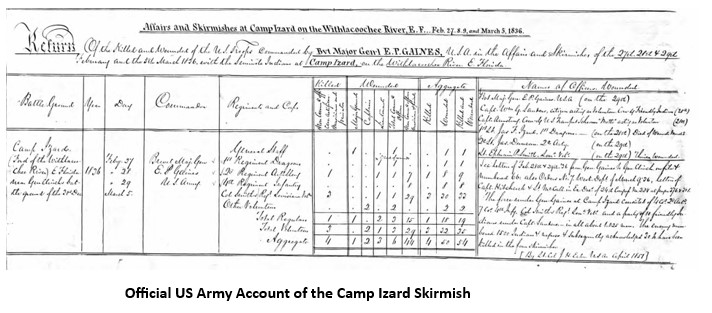
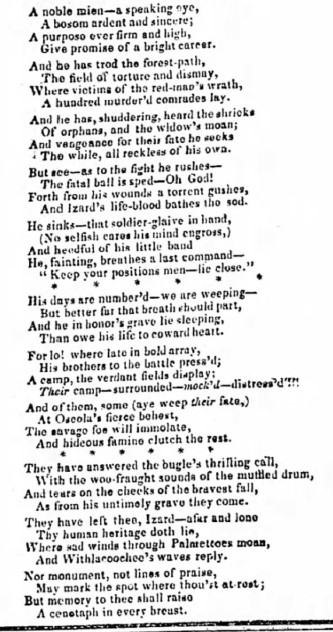
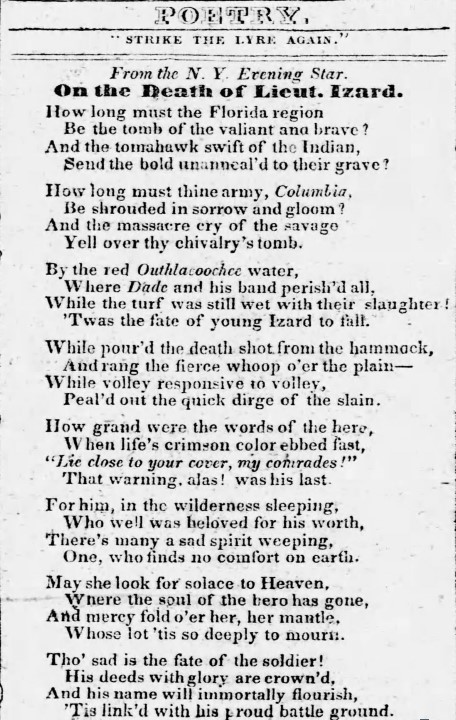
When news of Izard’s sacrifice reached the public, there was an outpouring of grief throughout the county. Newspapers carried poems about Lt. Izard’s bravery. The Philadelphia Gazette reported: “Izard was a gallant officer. He suffered many hardships on the Western frontier, from ill health and other causes. In society he was much esteemed; in the field he was brave and generous.”
Camp Izard
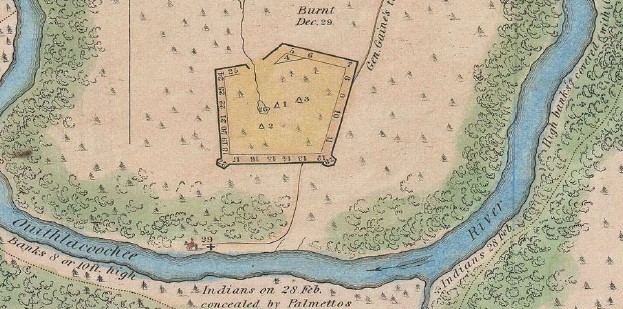
Gaines named his makeshift fort “Camp Izard” in honor of the fallen hero. His troops dug in and prepared for a siege by Osceola and his bands. Neither side could dislodge the other from their positions. Gaines troops were cut off from supply routes and provisions ran dangerously low. They began to butcher their horses and pack animals to stay alive. In the meanwhile, Osceola had scouts embedded throughout the swamps and surrounding forests. They reported to their chief that a large contingent of soldiers under General Clinch were enroute to relieve Gaines’ men. The immanent arrival of the soldiers caused Osceola to reconsider his siege of Camp Izard and sign a truce which allowed the soldiers to finally leave their fortification.
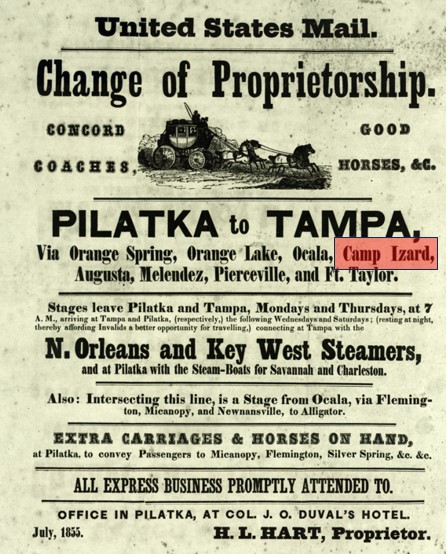
While the fort was eventually abandoned by the military, the area around the old encampment continued to be called “Camp Izard” by the settlers who migrated there. Citrus County pioneers such as E. Croft and W.C. Zimmerman were listed as residents of Camp Izard. “Uncle Alf” Tompkins was a Constable for Camp Izard before there was a “Tompkinsville” – the forerunner of Inverness. It was a stop on the stagecoach between Tampa and Pilatka.
Camp Izard was recognized as a village within the areas of Marion and Citrus Counties for years after the Seminole Wars. There were about 1,500 residents listed as living in the area according the census figures from the late 1800’s. They were farmers and ranchers who were acutely aware of the land’s historical significance – and sacrifices made during past struggles – so they could prosper in their village.
Honoring Izard’s Legacy
Renowned archeologist Gary Ellis of the Gulf Archaeology Research Institute has conducted extensive surveys of the Camp Izard site. Even after years of natural decay, Ellis was able to identify the probable site of the defenses and campfires of old Camp Izard. His summary provides tangible evidence of the conditions that faced the soldiers who survived (and those who died) during the siege of the fortifications.
Boaters could access the Withlacoochee at a ramp known as Izard’s Landing. However, that ramp is located on private property and the ramp has been closed to the public. The name of Lt. James Farley Izard may fade into history unless we can find a way to honor his sacrifice. Colonel Michael “Max” Schulman (USAF, Ret.) is spearheading an effort to rename the Spruce boat ramp in Citrus County in honor of Lt. Izard. He has appeared before the Citrus County Commissioners to advocate for this token of gratitude for Izard’s sacrifice. Please join Col. Schulman and the Citrus County Historical Society in the campaign to remember this brave soldier.
Thanks to Colonel Schulman for much of the background information and graphic depictions for this article.
Ken Marotte writes for the Citrus County Historical Society. He can be reached via email at kenmarottejr@gmail.com if you have any comments, questions or suggestions.