
Remembering Our World War I Veterans
By: Ken Marotte, Citrus County Historical Society
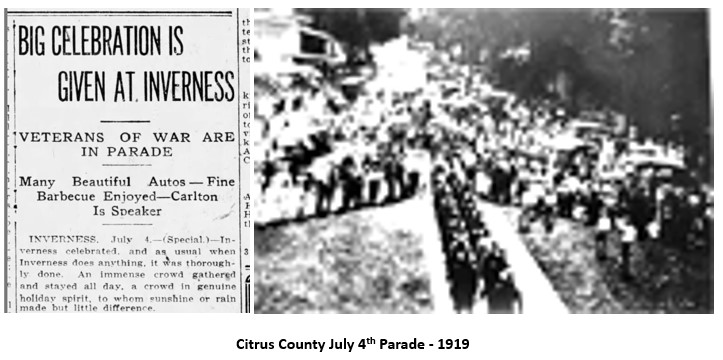
The Fourth of July in 1919 was a glorious day. The nation had tried to avoid involvement in the European conflict but was eventually drawn into the “Great War”. After years of bloody trench fighting and poison gas attacks, Citrus County’s soldiers and sailors had finally returned home. Over 3,000 residents lined the streets of Inverness while the contingent of about forty veterans passed on parade. There were cheers, speeches, BBQ, and fried fish to entertain the crowd that had gathered near the lakefront. However, the event had a bittersweet tone because seven soldiers had made the ultimate sacrifice and could not join their parents and friends that day.
Remembering the Fallen
After the returning soldiers marched past the Courthouse, county leaders decided that they wanted to honor those young men who did not return. They solicited bids for a stone monument that would stand on the front lawn of the Courthouse with the names of the fallen. After reviewing several offers, the Board of County Commissioners (BoCC) voted to spend the equivalent of $29,000 for Ocala Marble Works to create a monument hewn from Pittsford Valley (VT) granite. Unfortunately, the names of the casualties of World War I have since been joined by entries of other Citrus County youths who met their fate in subsequent conflicts.
The stone tablet simply listed the names of those deceased World War I men. This story highlights the personal lives of the men behind the monument. In this way, their stories and legacy will not be forgotten.

John T. Allen
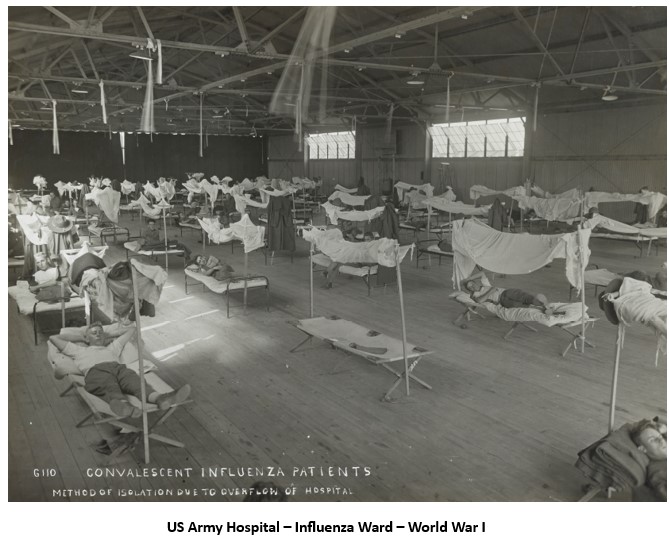
John Toy Allen was descended from one of the Pioneer families of Lecanto. His father, John A. Allen, had passed away from typhoid fever in 1907 and left the farm operations to John T and his brothers. Allen chose a career in the new field of telephone communications and was employed as a lineman. When the United States entered the War, Allen’s skills as a telephone expert were in demand. He joined the service in May 1918 and looked forward to expanding his technical education. After enlisting, he was ordered report to Fort Leavenworth, Kansas for training in the US Army Signal Corps. He was assigned to Company “C”, 1st Training Battalion.
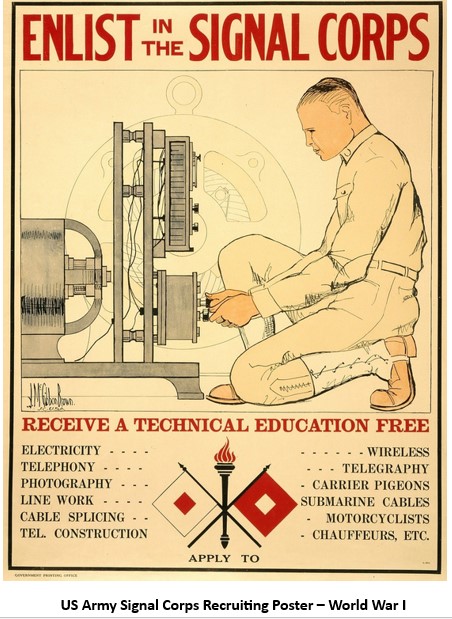
Unfortunately, the Army bases in Kansas (including Fort Leavenworth) were Ground Zero for a devastating worldwide pandemic that came to be known as the “Spanish Flu” in 1918. The close quarters of the soldier’s barracks were a breeding ground for the outbreak. US Army statistics for Kansas indicate that the number of deaths from the flu reached a peak in October 1918. Allen contracted what was euphemistically called “broncho pneumonia” that month and was confined to the base hospital. However, there were no effective vaccines and isolating large groups of sick men together on hospital cots only made the problem worse. John T. Allen passed away on October 28, 1918.
Bryan I. Barnes
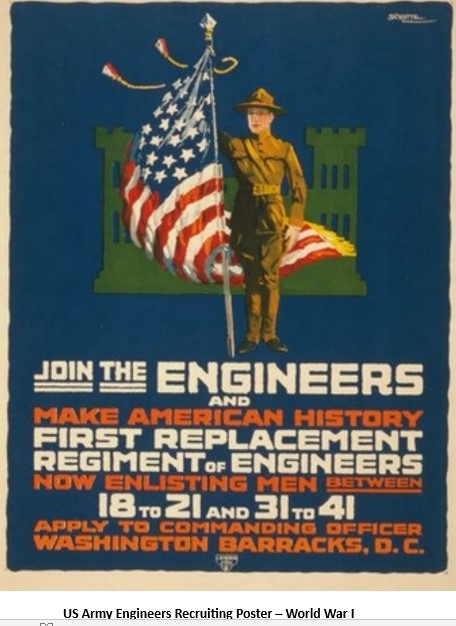
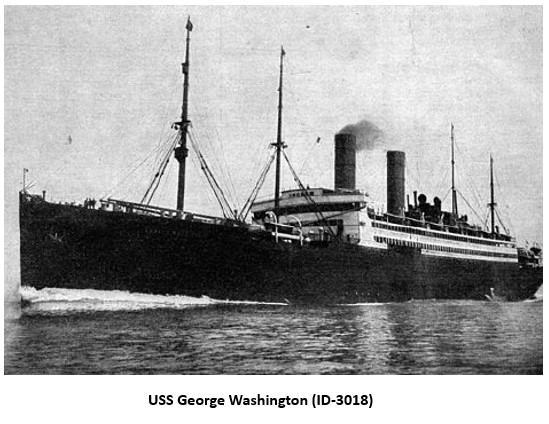
Bryan Irwin Barnes was the son of a prominent contractor and politician from Lecanto. His father, John Yulee Barnes, had constructed many of the roads through the young Citrus County. He served for several terms as a Commissioner on the BoCC and represented Citrus County in the Florida legislature. The US Army needed engineers to construct roads and repair bridges in Europe so our troops could advance. Barnes volunteered to join the Engineers and was assigned to Company A in the 211th Engineers. After basic training, he was transported to Hoboken NJ and loaded onto the USS George Washington (ID-3018). The group left Hoboken and was bound for France on September 30, 1918. Shortly after arriving in France , Barnes was diagnosed with “lobar pneumonia” – another euphemism for Spanish Flu – and passed away on October 16, 1918.
As an aside, Bryan Barnes’ older brother, John Ira Barnes, also joined the Engineers and traveled to France aboard the George Washington on same trip. Their mother, Martha A (Johns) Barnes, died in December 1918.
Leroy Black
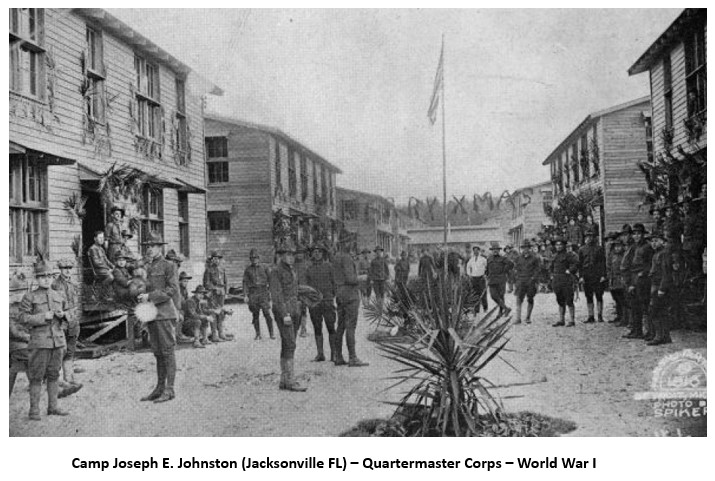
Leroy “Roy” Black was born in 1894 to Charles Black and Rebecca Black. By the time he was 21, both parents had passed away and he decided to join the US Army Quartermaster Corps (QMC) to start his career. Camp Joseph E. Johnston, located in Jacksonville FL, was one of the largest Quartermaster Corps locations in the country and encompassed more than 600 buildings. Known as “the Army behind the Army”, the QMC provided diverse services such as replenishment, logistics and operational support. Black was assigned to the Office Services Company #1 upon arrival on April 2, 1918. He fell victim to the Spanish Flu in September and confined to the base hospital. Unfortunately, he passed away in the hospital on October 3, 1918.
Today Camp Joseph E. Johnston is known as NAS Jacksonville.
Iley Herring
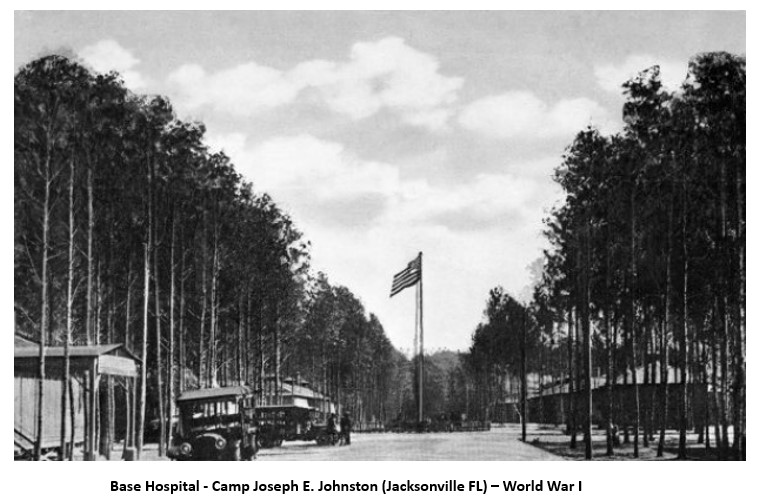
Records are inconsistent about the real name for Iley Herring. Most official records list his last name as “Herrin”. Black soldiers were also required to register for the draft. Herrin was called for military service and was inducted on April 26, 1918. Like many of his compatriots, he was assigned to the Quartermaster Corps and ordered to report at Camp Joseph E. Johnston in Jacksonville. Since he was a recruit, he began training as a service clerk. However, as was the case with many other soldiers, he was diagnosed with lobar pneumonia – a.k.a. “Spanish Flu” within a few weeks and brought to the base hospital. After a little more than a month serving in the Army, Herrin passed away on May 30, 1918.
William F. Nettles
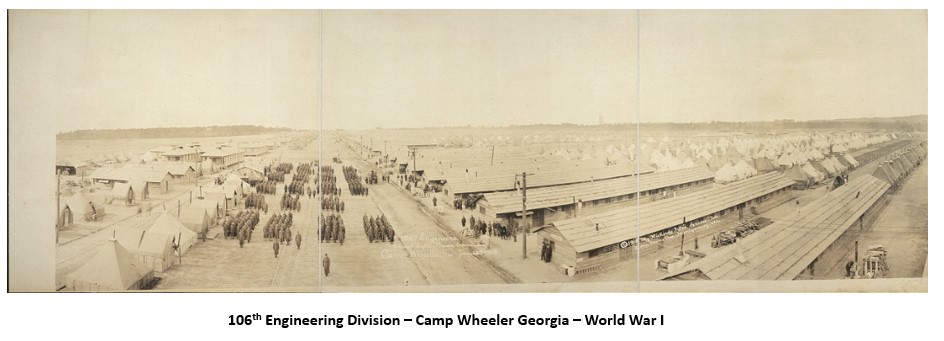
William Franklin Nettles resided in Holder. When Mexican bandit Pancho Villa conducted raids on settlements in the United States during 1916, the President ordered John “Blackjack” Pershing to mount a punitive expedition into Mexico. A call for volunteers was issued and William Nettles joined Company A of the Ocala Rifles in June of 1916 and was deployed to Mexico. At the conclusion of the US Army’s mission, Nettles left the Army and returned to private life after finding a job in Jacksonville. When the United States was drawn into World War I, Nettles once again volunteered to join Company F of the First Florida Infantry and was transported to Camp Wheeler in Georgia for further training. Records indicate that he was promoted to the rank of Corporal at that time as part of the 106th Engineering Division.
He fell ill while at Camp Wheeler and fought a severe infection for over five weeks. In the end, Nettles succumbed to Empyema/pneumonia on December 9, 1917. He is buried in the Holder Cemetery.
Willie Rawls
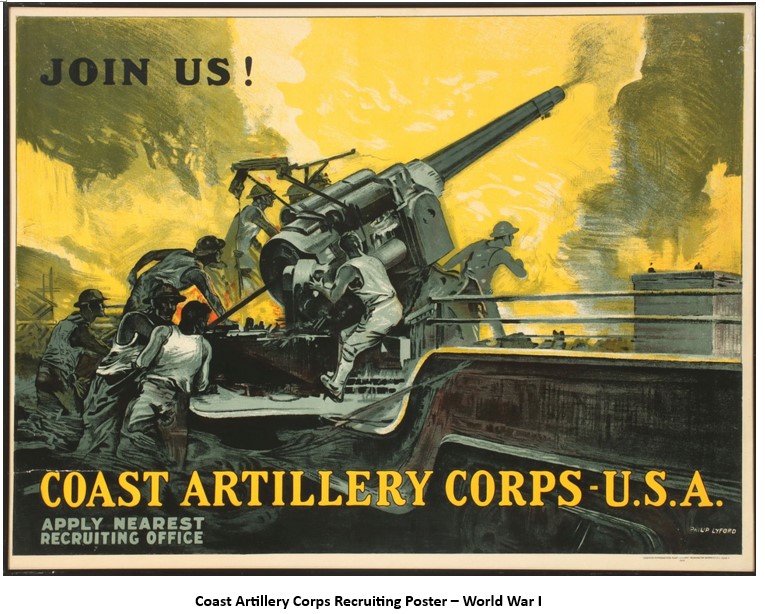
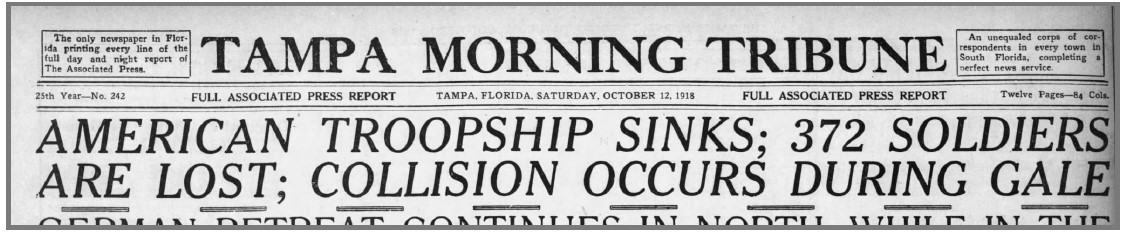
Elisha “Willie” Rawls of Crystal River joined the Coast Artillery Corps (CAC) on October 23, 1917. He was sent to Ft Screven, Georgia for artillery training. CAC units were not only charged with the defending the coast of the United States, but were also needed to man cannon batteries in Europe. Rawls and almost 700 soldiers were loaded onto the troopship Otranto and joined a convoy headed to a British port. As they approached the Irish coast, a tremendous gale rocked all of the ships in the formation. Due to the immense swells, the ships were at the mercy of the seas and the Otranto and liner Kashmir eventually collided. The Otranto was hit amidships and water immediately started to flood the compartments. Other ships tried to assist but the towering waves presented a risk of more collisions. In spite of the crews valiant efforts, the order was eventually given to abandon ship. Soldiers and sailors were told to save themselves in any manner possible. Some boarded lifeboats, others tried to make their way to nearby destroyers, while others took their chances and tried to swim in the direction of shore. Since the water temperature was under 60F that time of year, many of the passengers fell victim to hypothermia.
The first news reports indicated that there was only one death and several injuries. As bodies started to wash up on the Irish shore, the scope of the disaster became apparent. Unfortunately, “Willie” Rawls was lost within sight of the European coastline on October 6, 1918. He is buried in the Crystal River City cemetery.
Fred O. Roux
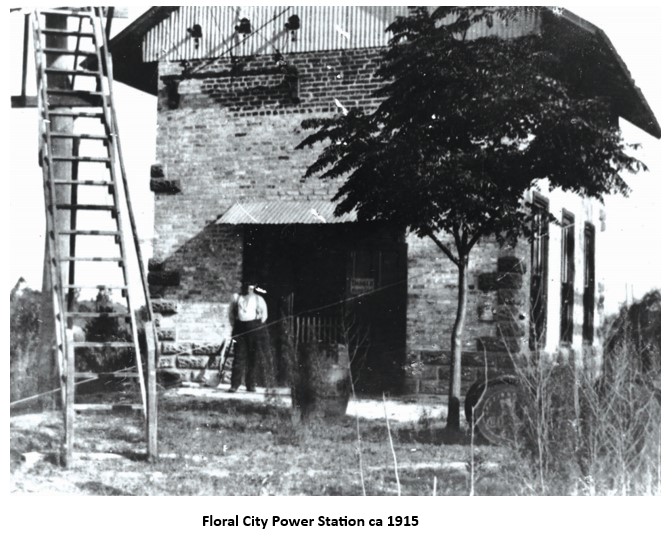
Fred Oliver Roux joined his father as a high-tension electrical lineman prior to the War. The Roux team was charged with installing and maintaining the power facilities for the Camp Phosphate company near Floral City. The substation also supplied power to nearby residents. When America declared war, Roux realized that his prior experience could address a critical need for the US Army. He enthusiastically joined the Signal Corps on May 6, 1918 and told his family that he “…enlisted to help Uncle Sam whip the Kaiser”.
Before Roux departed for Fort Leavenworth KS, he told a local reporter that “… he has had quite an experience in electrical work and does not wish to be held in America but will request his officers to send him to France immediately”. He joined Company C, 217th Signal Corps.
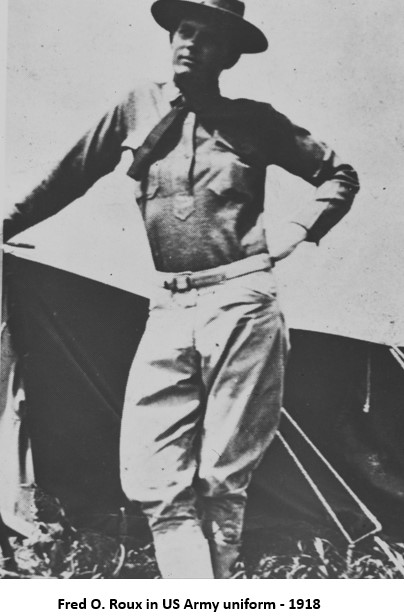
Based on the experiences of the other soldiers in this story, you may have expected that Fred Roux may have succumbed to Spanish Flu in Kansas. However, he survived both the epidemic and the War and was discharged from the US Army on January 4, 1919. The Army never granted his wish to be deployed overseas. He remained at Fort Leavenworth for the duration and may have been engaged in training other soldiers.
Roux returned to Citrus County but never had a chance to join the July 4 victory parade in Inverness. He passed away in May, 1919 while working on the electrical connections for the new rock crushing plant near Crystal River. Since he had returned from service only a few months before, his name was included in the list of honored departed soldiers.
Ken Marotte writes for the Citrus County Historical Society. He can be reached via email at kenmarottejr@gmail.com if you have any comments, questions or suggestions Contact him if you’d like to participate in the ongoing CCHS Oral History Project.