Remembering Our Spanish-American War Veterans
By: Ken Marotte, Citrus County Historical Society
Most Americans have a few distant memories of the 1898 Spanish-American War. They might remember vague images of Teddy Roosevelt charging up a hill with his Rough Riders. Some may recall the slogan “Remember The Maine!” that roused a patriotic spirit in the country. This short (almost forgotten) conflict thrust America onto the stage as an international power and set events in motion that led to our country becoming a preeminent leader in the Twentieth Century and beyond. This is the story of the Citrus County soldiers who responded to the call and served during that conflict.
A Well-Regulated Militia
The Florida legislature passed a bill in 1887 calling for the establishment of more volunteer militia units throughout the state. These units would be locally controlled but subject to an annual review by the State Adjutant General as part of “Florida State Troop”. The combined local militias, under the auspices of the Florida State Troop, would later provide the state’s manpower contribution to the Spanish-American War effort as the “1st Florida Volunteers” regiment.
Since Citrus County had been created in 1887, local citizens decided to organize their own militia known as the “Citrus Cadets” the following year. Thirty-two men from across the county were listed on the original Muster Roll. Mannfield’s Davis D. Vennigeshotz was elected Captain and Jackson W. Clay was appointed 1st Lt. while James A. Kitchens from Floral City was designated as 2nd Lt. The group actually missed the deadline for their official State filing due to the difficulties of getting all members together at the same time. Captain Vennigeshotz also asked the State to provide arms and uniforms for the men.

As a result of the 1887 legislation, State officials were flooded with requests from small militia groups such as the Citrus Cadets. Legislation was passed in 1889 limiting the number of official militia units to twenty across the State. The law also required that all militia units must be comprised of one Captain, one First Lieutenant, one Second Lieutenant, five Sergeants, four Corporals, and between twenty and fifty-two privates. Members of smaller militias that could not meet these requirements were urged to join other larger organizations. Of the 32 Citrus Cadet members, only Jackson M. Clay was listed on the Muster Roll of the nearby Ocala Rifles in 1898. The plan to create the Citrus Cadets faded into history.
The military requirements for the militia units of the Florida State Troop were not extensive to say the least. Each group was required to undergo a formal review by the State Adjutant General on an annual basis. The review was usually conducted at state convocations or encampments. Each group would select a drill team that would compete against their compatriots for “bragging rights” that year. The massed groups would parade past the General, replete with their elegant uniforms and antiquated weapons. Units recruited members particularly for their musical skills that would impress the onlookers as the band marched by.
The flavor of a typical Troop encampment can be gleaned from this 1887 newspaper account: “The troops will remain in camp for a week, and while improving in the drill and discipline of the soldier are enjoying a delightful and gigantic picnic on the breezy sands of Pablo Beach, for that pleasant resort is crowded with visitors, and among them are many of the fairest ladies of the land – and none but the brave deserve the fair”. Given the lack of rigor for military training in the early days, these volunteers would be unprepared for war – unless the enemy challenged the Troopers to a game of beach volleyball.
The Winds of War
The tone and urgency of military preparation changed in 1897-98. The United States looked longingly at the island of Cuba and was sympathetic to the inhabitants battle for independence from Spain. America was anxious to establish itself as a major player on the world stage. In the midst of the civil unrest in Cuba, President McKinley sent the battleship/armored cruiser Maine (ACR-1) to Cuba with the ostensible goal of protecting American interests. While anchored in Havana harbor on February 15, 1898, a terrible explosion rocked the ship, resulting in the sinking of the vessel with a loss of almost 270 sailors. While Spanish officials scrambled to help the survivors, rumors swirled that the ship had been deliberately sabotaged.
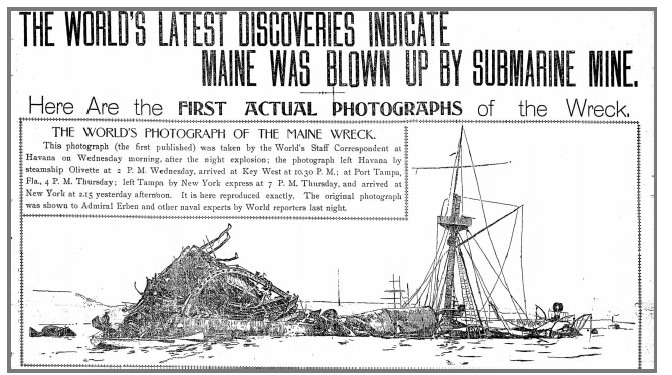
President McKinley appointed a Naval Court of Inquiry to conduct a full examination of the situation that led to the Maine’s sinking. He urged Americans to remain calm and wait for the results of the Court’s report. Sensing a potential crisis, the Ocala Rifles increased the number of military drills. Their defective rifles were replaced by the latest models that were used by the regular US Army. Proceeds from their annual Military Ball helped pay for the new arms. They started to actively recruit new members in Citrus County to fill their ranks.
The Court released their findings to Congress on March 28, 1898. They expressed the opinion that the Maine had been sunk by an underwater mine. Newspapers carried the story across the country and whipped the American public into a patriotic frenzy. The phrase “Remember the Maine” was heard on every street corner. After attempts at diplomatic resolution failed, the nations declared war on each other April 21, 1898.
Florida Prepares for War
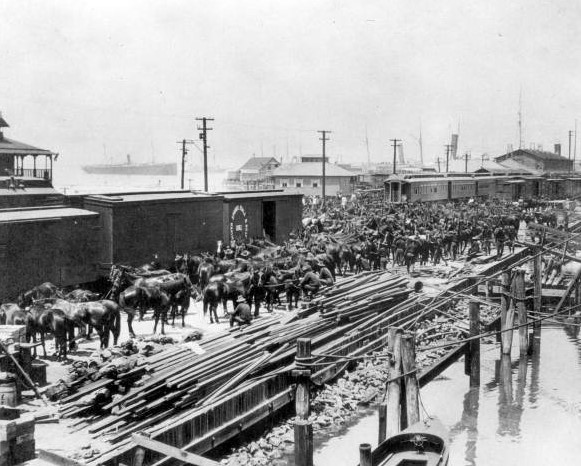
The impending war impacted Florida in two ways: Tampa would see a massive influx of military personnel because it was to be used as the major embarkation point for troops invading Cuba. This meant that troops from all over the country would swell the number of people who needed to be fed and housed for the duration. Closer to home, units of the Florida State Troop would be designated as the “1st Florida Volunteers” regiment. Given the patriotic fervor, many young Floridians were anxious to test their mettle in combat. The Governor faced a problem because there were twenty militia units in the Troops but Florida was only allocated US Army slots for twelve groups. He had to decide which twelve organizations would be selected and notify the other eight disappointed militias that their services would not be needed. The Ocala Rifles were one of the groups accepted and designated as “Company A” in the regiment.
The Ocala Rifles expanded their Citrus County recruitment activities and convinced at least ten local men to join their Company. They were provided with expedited training in anticipation of official unit activation in May.
Company A was assembled with great fanfare in Ocala on April 25, 1898 and marched through town before boarding the train for Tampa.
Hurry Up and Wait
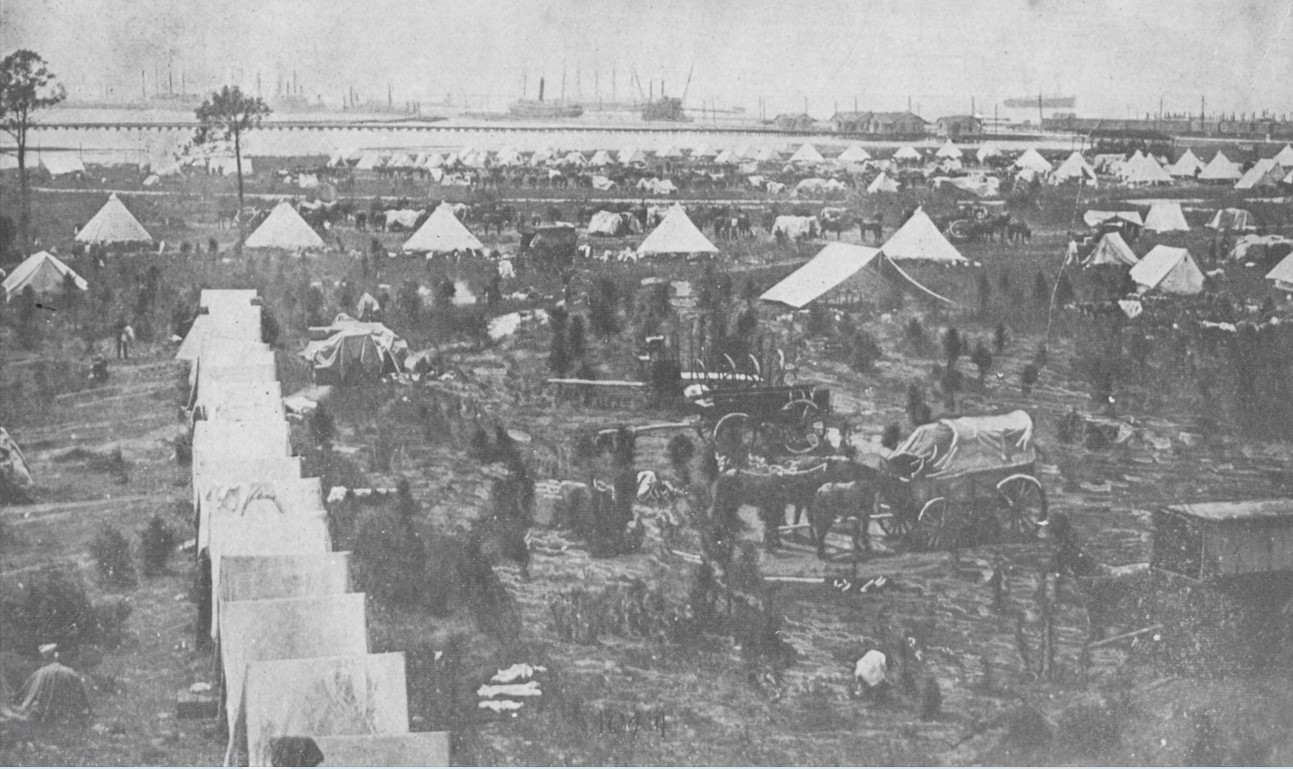
Company A found a chaotic scene when they disembarked in Tampa. Men, artillery and horses from across the country were camped in the city awaiting orders to invade Cuba. Company A’s troupe was originally assigned to bivouac at Fort Brooke. They were officially mustered into the Army as a Volunteer regiment on May 20. A week later, they marched to Fort DeSoto and remained there for a month awaiting orders. They were relocated to Tampa Heights where they remained for another few weeks. In order to deal with the glut of men and machines in Tampa, the Company was loaded on a train and assigned to a camp in Fernandina FL on July 21. They were employed in clearing and refurbishing the area around the Army camp until August 21. The Company was once again loaded on trains destined for Huntsville, Alabama. They spent over a month in Huntsville and were transported to Tallahassee on October 11. Plans were made to muster the entire company out of active service. The troops were allowed to return home for a thirty-day furlough and then return to Tallahassee for a formal Mustering Out ceremony on December 3, 1898.
The conditions in the military bases were breeding grounds for death and disease. Most of the Citrus County volunteers experienced multiple bouts of illness that required them to remain in their quarters. Some contracted Malaria and were taken to the Army hospital for treatment. Dispersing troops to other areas outside Tampa were one of the ways that Army leadership hoped to stop the spread of debilitating sickness.
Citrus County Honor Roll – 1st Florida Volunteers
Even though they did not reach Cuba, the men of Citrus County left their homes and families to serve their country. The United States had embarked on a two-front war with a military that had not been battle-tested in over thirty years. It was anticipated that the war would last much longer. If the war had continued, the 1st Florida would have been called into action and these men would have been ready to do their part for the country.
Corporal Isaac N Buchan (Hartshorne). Mustered in May 20th, 1898; Promoted to Corporal on August 1st; Mustered out in December. During his enlistment, he was confined to quarters three times due to illness.
Private George R. Carter (Crystal River/Inverness). Mustered in May 20th, 1898; Mustered out in December. During his enlistment, he was confined to quarters three times due to illness and spent several weeks in the Brigade Hospital. Carter eventually became Sheriff of Citrus County for two separate terms of office after being removed by the Governor. He continued his law enforcement career in Mulberry FL.
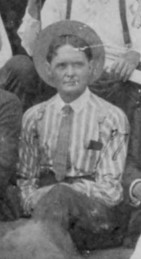
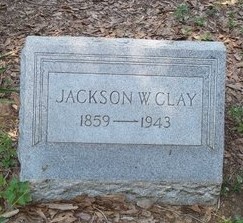
Private Jackson W. Clay (Stage Pond). Mustered in May 20th, 1898; Mustered out in December. During his enlistment, he was confined to quarters six times due to illness and spent several weeks in the Brigade Hospital. Clay was a member of the original Citrus Cadets in 1888 and served as 1st Lt. in Cadets. He became an orange grove owner and died in Alva FL at the age of 84.
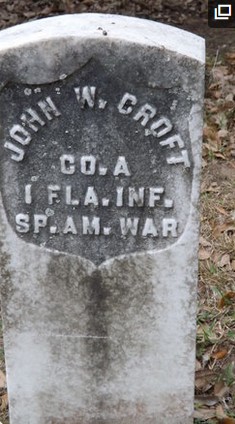
Private John W. Croft (Hernando). Mustered in May 20th, 1898; Mustered out in December. During his enlistment, he was confined to quarters two times due to illness. He was a member of the pioneer Croft family of Hernando FL. He died in 1927 after spending time in a home for disabled volunteer soldiers.
Private George E. Lancaster (Crystal River). Mustered in May 20th, 1898; Mustered out in December. During his enlistment, he was confined to quarters two times due to illness and was sent to the Brigade Hospital three times. After the war, he resumed his career as a fisherman in Crystal River.
Private Frank S. Turner (Hartshorne). Mustered in May 20th, 1898; Mustered out in December. During his enlistment, he was confined to quarters five times due to illness and was sent to the Brigade Hospital twice. After the war, Turner became a Deputy Sheriff in Citrus County. He also served as local news editor of the Cordeal Journal. He was tragically drowned while crossing the Withlacoochee River on a ferry in 1902.
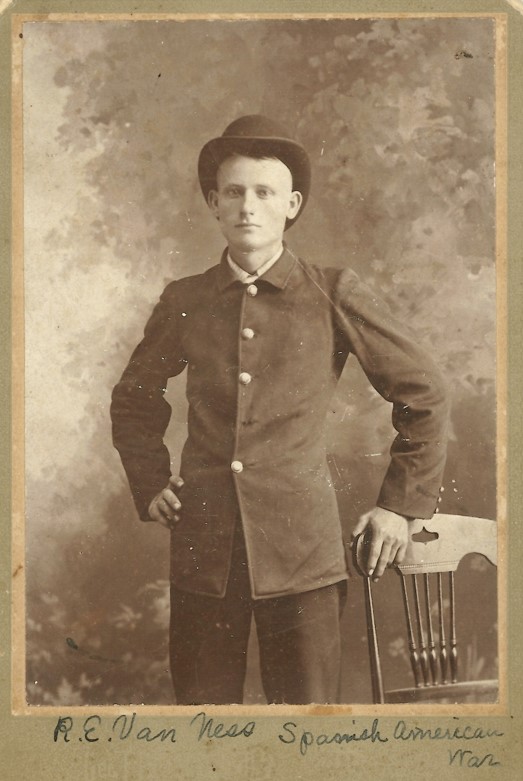
Private Ralph E “Elmer” Van Ness (Hernando). Mustered in May 20th, 1898; Mustered out in December. During his enlistment, he was confined to quarters twice due to illness. He was a dedicated booster of Citrus County and was described by Judge May as “…the best farmer Citrus County has ever seen”. His prolific life was highlighted in a previous Chronicle article (https://www.chronicleonline.com/lifestyle/community/mr-van-ness-goes-to-washington-with-his-load-of-watermelons/article_e3b25b2b-dd87-5fdb-b16b-82947d9932ad.html)
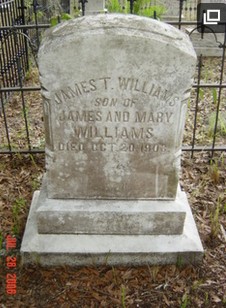
Private James T. Williams (Crystal River). Mustered in May 20th, 1898; Mustered out in December. During his enlistment, he was confined to quarters two times due to illness. After the war, he became a local salesman. Unfortunately, he died in 1903 due to hemorrhagic fever at the age of 32.
Private Karl/Carroll/Carl H. Zimmerman (Floral City). Mustered in May 20th, 1898; Mustered out in December. During his enlistment, he was confined to quarters two times due to illness. He was the son of County Clerk W.C. Zimmerman. In 1910, the State of Florida gave a small award to Spanish-American War veterans. The Governor’s newspaper notice identified him as “Kark H. Zimmeron” so it’s doubtful the he received his compensation.
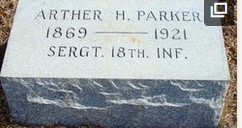
Private Arthur Hamilton Parker (Floral City). Mustered in May 20th, 1898; Mustered out in December. During his enlistment, he was confined to quarters two times due to illness. Parker was employed as a woodman for W.J. Hillman at the time of his enlistment. He re-enlisted to fight in the Philippine uprising and remained in the Army for the rest of his life. He died in 1921 after serving as a Sergeant in the 18th Infantry in World War I.