
Open Range and Citrus County’s Cracker Cattlemen
By: Ken Marotte, Citrus County Historical Society
Imagine a time when vast herds of cattle were free to graze everywhere in our area. Unconventional “cracker cowboys” tracked wild cows and pigs through the palmettos and marshes. It wasn’t so long ago when the land where we reside today was part of a cattle industry that rivaled the ranges of Texas. This is the story of how local cattlemen operated, adapted to changing conditions in Citrus County and continue to thrive today.
Special thanks to Robert Croft, Eugene Rooks and Larry Rooks (members of Citrus County’s prominent cattlemen families) who provided commentary and local history for this story.
Spanish Livestock
The Spanish were first European settlers in Florida and they introduced their horses, pigs and cows to the New World. They established a number of ranches in the colony before exiting the scene. Some of the livestock had escaped and the Native Americans continued to farm the animals after Spanish left. The conditions in Florida were extremely harsh compared to Europe and those surviving animals needed to develop special characteristics to survive.
A special breed of cattle, known colloquially as the cracker cow, evolved in the Florida grasslands. They have been described as “short, rangy and scrawny”. They were much smaller than the cattle we see on most ranches today. Their size allowed them to tolerate the heat and drought that characterized the Florida range. They developed the ability to survive on whatever vegetation was available, including wire grass and palmettos. The land was filled with predators, so only the strongest and smartest individuals survived. In short, the cracker cows learned to be tough and deal with whatever conditions they encountered.
The cracker horse shares many of the same characteristics as the cracker cow. They were also relatively small (standing between 13 and 15 hands) and could survive life unattended on the range. Their ability to navigate through the marshes and grasslands under the hot Florida sun made them a favorite among the early cattlemen who used them to hunt the resident cows.
Rise of the Florida Cracker
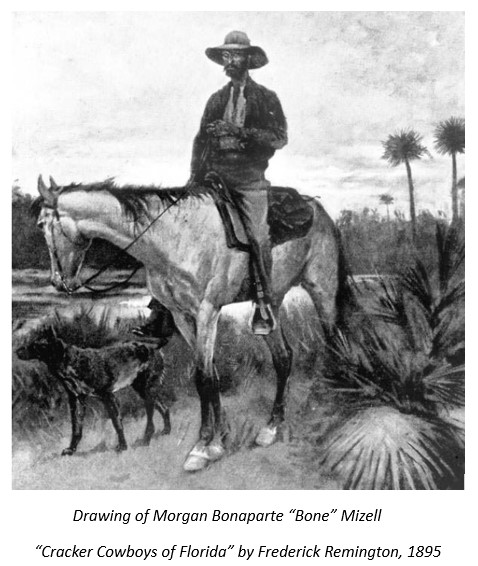
The wide-open range of Florida attracted a new breed of cattlemen to our area. They were aware that numbers of freely roaming cattle could be obtained and all they had to do was catch and brand them. This job was easier said than done and required an individual who was as independent, self-sufficient and rugged as the cows that they chased. Frederick Remington introduced the Florida Cracker Cowboy to the country in an article he authored for Harpers in 1895. He had spent time with the Western plains cowboys and found that the Florida Cracker shared few similarities with their Western colleagues.
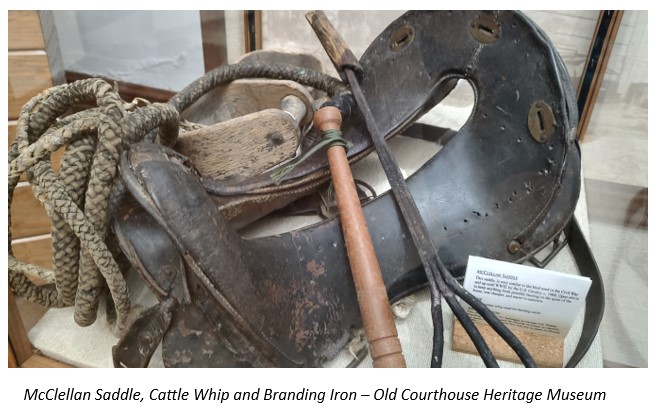
The Cracker Cowboys did not drive cattle across plains to market nor did they use lariats or saddle ropes. They hunted through the thickets where the cracker cattle lived and drove them into pens using cur-dogs. Since the area was open range, they could claim any unbranded cows. The equipment they used was different as well. Since they didn’t need to rope cattle, they didn’t use a heavy saddle with the traditional western horn. They mainly used US Army surplus McClelland saddles which were much lighter and could better accommodate their smaller horses. Their most distinctive piece of equipment was a long whip, which made a loud cracking sound when snapped over the heads of the cattle, giving them the name “crackers”.
Open range
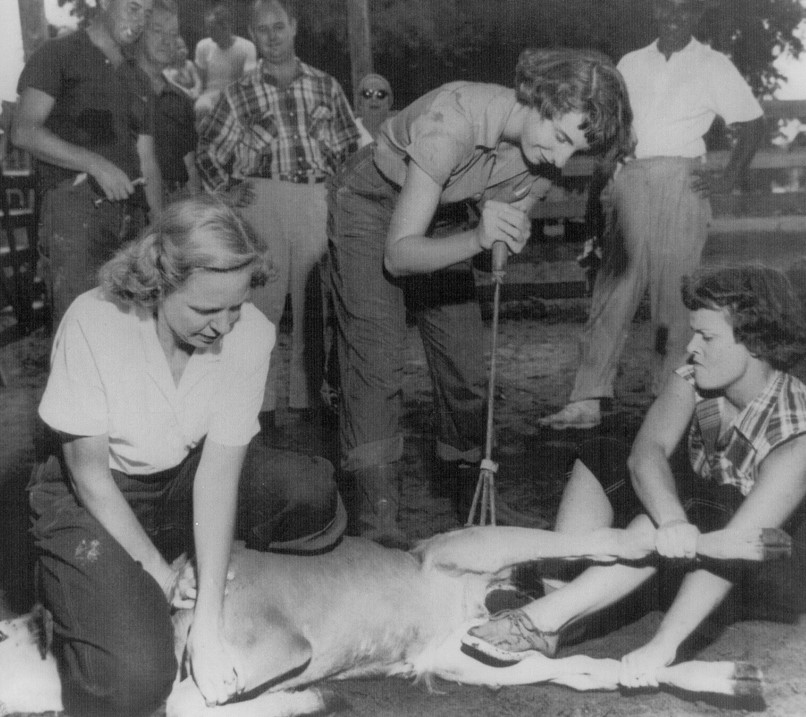
Once branded, a cattle owner would allow their herd to wander across the countryside and find their own food. The ranchers in the community would have a round-up in the Springtime. Cattlemen scrambled over the countryside for a period of several days to collect all of their herds. Robert Croft noted that his family cooked rice and hunted small game during their overnight hunting of cows on the range. Cattle was led to communal pens and there was a general agreement who owned each cow based on the brand. Unbranded yearlings could be claimed by anyone who managed to catch them and apply their distinctive brand.
Cows were not the only livestock animals allowed to roam freely. Gene and Larry Rooks recounted how their family used to have passels of Essex and Mulefooted hogs. They would fatten up on acorns and Florida Runner Peanuts and then rounded up in the Fall for harvesting.
Livestock brands were usually passed down within families. Eloise Van Ness recalled when her kids were born in their family, they didn’t get a silver spoon, but got their own iron brand to brand cows. The brand that her husband Mike Van Ness “…ended up with was a J8. His Daddy had bought a small herd of cattle from somebody else and gave it to his Mom, and then Mike got it when he passed, but it was a J8. Then somewhere around when it got where it had to be statewide, instead of just countywide, he had re re-register them, and somebody somewhere around had the J8. So then he just put a T across the top and made it TJ8, and that went through for that bit. But he could never get his Daddy’ Circle B registered. Somebody had it registered. We never saw it anywhere, but they had it registered and kept it registered, so it must have been a family name…I mean a family brand…just like Mike’s or Dad’s.”
Settlement vs. Open Range
The Open Range concept worked well while Florida was sparsely populated. Florida became one of the primary sources of cattle during the Civil War and was the leading exporter of cattle in the decades following the War. However, as more settlers arrived, people relied on gardens and farms for their livelihoods. Roaming livestock could wreak havoc on those private farms. Hogs could cause considerable damage but the property owner was responsible for erecting a fence if they wanted to keep other’s livestock out.
“We had a few cows and we had hogs and they were running loose in the woods because we didn’t have a fence law so our hogs could run anywhere and our cows could graze on anybody’s land, you know, land wasn’t very expensive and some of it wasn’t worth fencing, back then the price of cows. My father bought cows for ten dollars a head. We would butcher our hogs in the winter time, let them fatten on acorns, then get them up and feed them corn for about three weeks and then butcher them.” – Almarene Outlaw, oral history interview
Population Increases led to dangerous situations for the free-ranging livestock. A growing network of railroads connected people across the State and collisions with the trains could result in damage and injuries to the human and bovine victims.
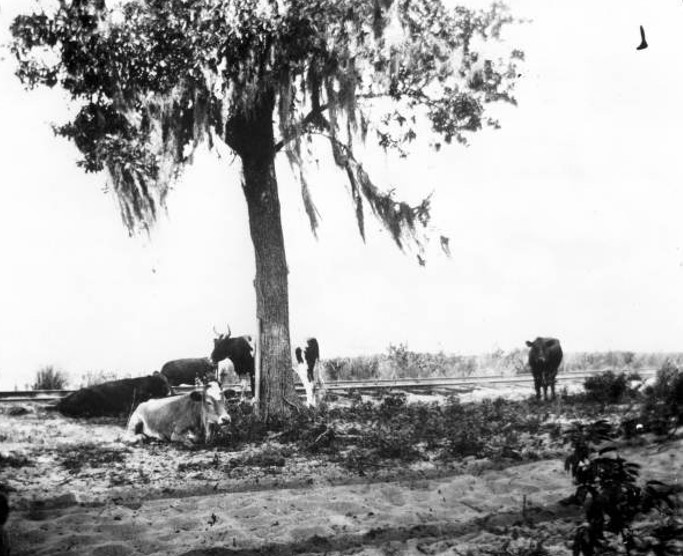
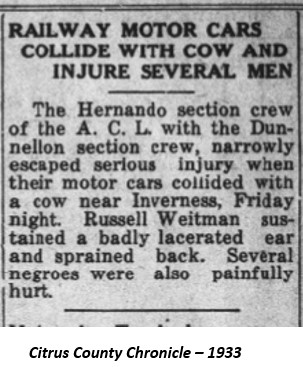
The advent of the automobile resulted in the construction of better hard roads through the county. People traveled longer distances at faster speeds than had been the case at the turn of the century. Livestock freely roamed the on the highways and local roads which inevitably led to inconvenience and even serious injury or death due to collisions. In some cases, even the US Army was obliged to halt their troops during World War II when confronted with a stubborn bovine. Florida law placed blame on the human for collisions and the person was responsible for paying damages to rancher for loss of livestock. This was the case even if the human was killed in the crash – their estate would be responsible for paying the rancher for his losses.
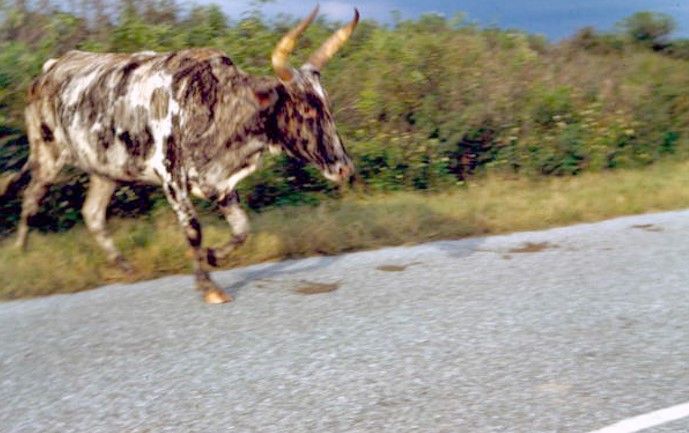
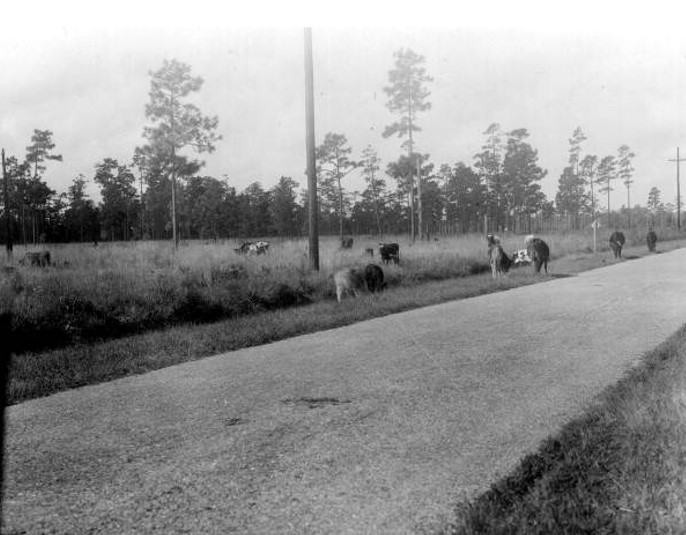
Ethel Carrington Spires was a long time resident and Citrus County historian. She was a correspondent for the Citrus Chronicle for more than 25 years. She left a detailed account of the impact of the Open Range (no-fence) situation in Citrus County.
“I remember we had attended church services in Inverness one night and had to stop our Buick touring car until five cows sleeping in the street near where the High School now is took their own good time to get up and move to one side of the road.”
“My husband owned unnumbered droves of hogs, cows and goats all of which roamed the highway, big roads, they were called then and byways at will, I remember during the second world war when soldiers were being transferred from MacDill Field to Camp Blanding sometimes the roads crossing the highway, now US 41, would be blocked for an hour or more as long convoys to transport trucks passed enroute from one training camp to the other, one day an old butt head cow walked up on the highway and became confused at the honking horns, not knowing which way to go she stood still and held up the army until my grandson threw a rock and brought her to her senses, she leisurely crossed the road and trucks moved on.”
The End of the Open Range (No-Fence Law)
Increased population growth led to calls for repeal of the open range situation. Some municipalities enacted ordinances requiring livestock to be fenced by their owners but those laws were struck down by Florida’s District Courts as unconstitutional. The powerful Cattleman’s Association initially lobbied against changes to their way of life. However, by the 1940’s they saw that the cattle industry needed to make adjustments to keep pace with the future needs of the State. A cattleman who bred white-faced Herefords was interviewed for a 1948 newspaper article regarding how to improve business in Citrus County. His advice was to “…get the bloomin’ stock off the road. There’s hardly a week goes by somebody doesn’t hit a cow or hog on the highway. If you keep your cattle under fence and plant pasture, you not only save money, you produce better cattle that will bring more money. That’s one way to bring more money into town – improve the cattle industry and keep the cows off the roads.”
The state Cattleman’s Association participated in the passage of a new state law that outlawed free roaming herds from state highways in 1949. Cities and counties were authorized to hold votes to decide whether or not residents wanted livestock to be banned from local roads as well. A special election was held in Citrus County in August 1951 to determine if the fence law should be more restrictive in our area. Over 1,200 people (42% of registered voters) turned out and the majority agreed that ranchers should be required to keep their herds behind secure fences.
The Benefits of the Fence Law
Cattlemen like the Rooks, Bellamy, Van Ness and Croft families saw the handwriting on the wall long before the passage of the new laws. They obtained enough pasture land for their herds either through purchase or long-term leases. They spent 14-hour days installing new fences around their grazing lands.
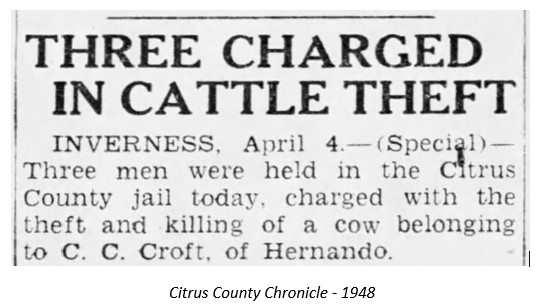
Cattle rustling was an ongoing problem and containment of herds enabled cattlemen to better monitor and protect their cattle.
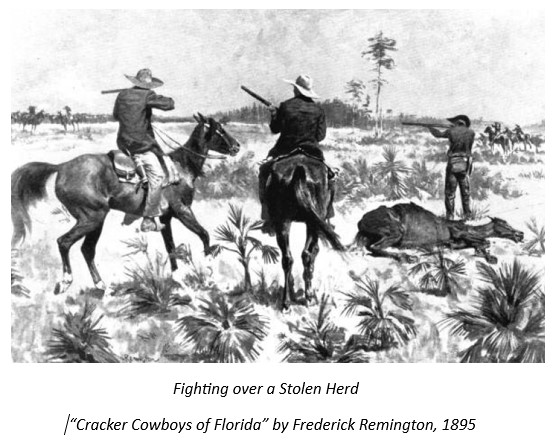
Today we see that their efforts led to higher quality cattle and better conservation of the land than in years past. The Rooks stated that they carefully manage their pastureland because “better grass makes for better cows”. In addition, having their herds contained in a smaller area enables then to better detect and fight parasites such as screwworm, ticks and flies. Elimination of free ranging also limits indiscriminate cross-breeding.
Their livelihood relies on wise management and use of natural resources, which leads our Citrus County cattlemen (and cattlewomen) to be the best conservationists in the county today.