
Old-Time Sugar Cane Grinding
By: Ken Marotte, Citrus County Historical Society
Every Fall the descendants of our pioneer families gather to continue the age-old ritual of sugar cane grinding. It’s an opportunity to renew family connections and welcome neighbors to a community event. More importantly, the younger generations are encouraged to learn and participate in the old-time processes so they can keep the tradition alive for the future.
Sugar – A Valuable Cash Crop
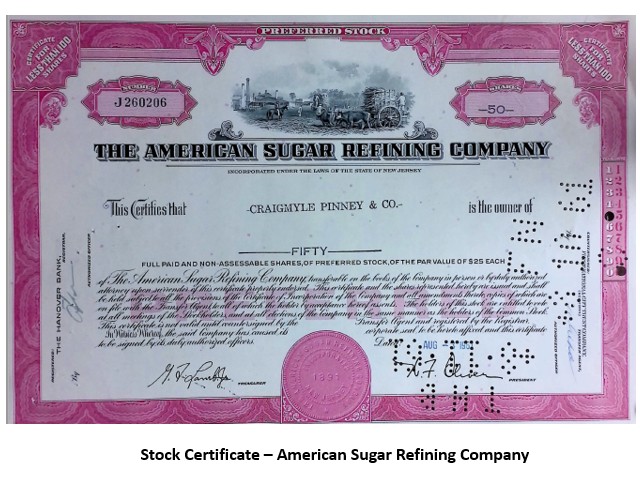
Many people buy sugar in the grocery store without thinking about the source of the white crystals in their packages. In the United States, most sugar is harvested from either sugar beets or sugar cane stalks. The cane plants grow particularly well in subtropical areas such as the Caribbean Islands and Florida. The suitability of Florida for large sugar cane fields led to substantial investment by businessmen across the county.
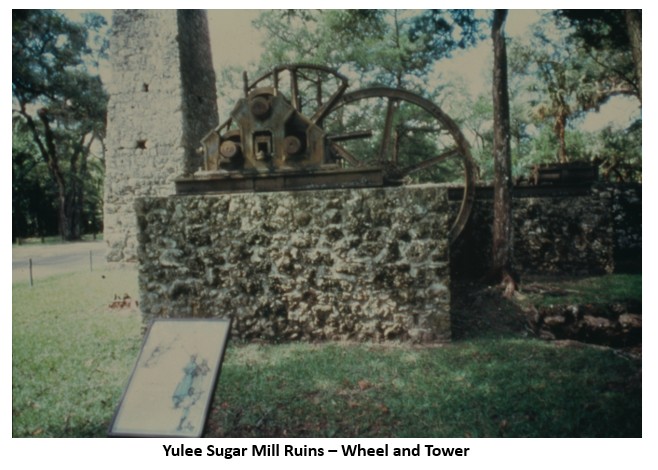
While most of today’s commercial enterprises focus on the Everglades of south Florida, Citrus County was the home to one of the largest sugar cane operations in the state prior to the Civil War. The remains of Senator David Levy Yulee’s sugar mill can still be visited today. He devoted over 5,000 acres in Homosassa to the raising and processing of sugar cane. The operation was partially mechanized through the use of steam energy but still required the work of 150 slaves to produce cane syrup, sugar and molasses. His commercial enterprise was eventually destroyed by Union soldiers during the Civil War and never resumed after the conflict.
Remnants of Yulee’s mill can be visited today and are well worth the short trip. The site has been designated as a Florida State park. The park includes machinery and masonry buildings as well as a series of interpretative plaques that explain the details of the commercial process. The ruins are located on West Yulee Drive in Homosassa, directly across the street from the Old Mill House Gallery & Printing Museum – which includes a fascinating display of printing presses and other antiques. Make sure to have one of their famous Cuban sandwiches in the café.
Pioneers and Home-Grown Sugar
Sugar cane became an important crop for the early settlers of Citrus County. The plant is relatively easy to grow and doesn’t require intensive cultivation. (As an aside, I have grown a small stand of sugar cane in my backyard and can attest that would not have survived if it needed any attention at all!). It seems to thrive best in areas with lots of sunlight.
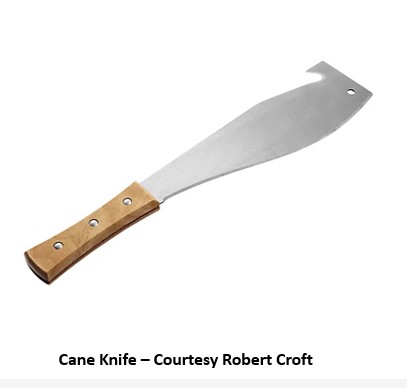
The early residents found that the cane plant had a plentiful supply of sweet juice especially in the late Fall. The crop is not especially resistant to freezing temperatures so cane was traditionally harvested in late November through December. A special tool known as a cane knife proved effected for manually cutting the stalks and removing leaves. Since the sweetest juice was found in the lower part of the plant, the leafy upper branches could be removed with the knife and used for fertilizer.
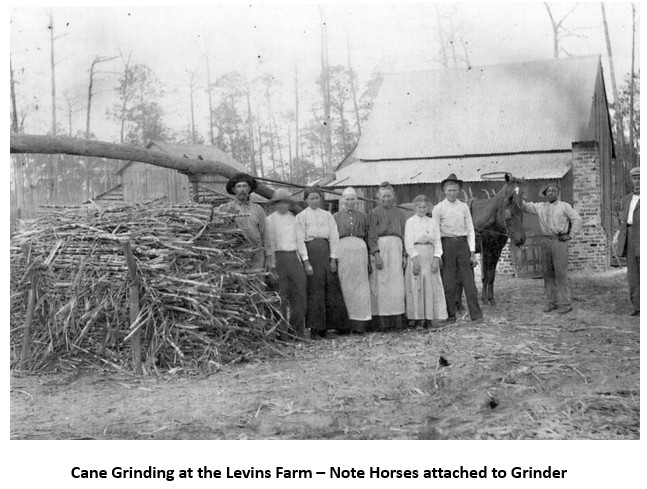
The next step required the stalks to be pushed through a grinding machine and the extracted juice would flow into a collection bin or bucket. The grinding machine was usually attached to a long piece of lumber and a mule or horse would be harnessed to drive the mechanism. The animal would be guided to walk in circles to power the grinder while family members fed the pile of harvested stalks through the device.
The sweet extract would be collected and placed into a large metal kettle to be heated by a wood fire. While maintaining a slow boil, any impurities would be rise to the top and scooped out by a team of attendants armed with nets. After hours of boiling the syrup would be allowed to cool and poured into bottles. The cane syrup became an important food sweetener for the family during the year as well as a source of income for the farmer.
The iron kettle did not sit idle during the rest of the year. Industrious farmers made sure that everything they owned would prove useful for a variety of other purposes. For example, John Zellner reflected that one of his daily chores was to pump water into the old syrup kettle every day before going to school. The kettle would be used to wash dishes and clothes as well as serving a bathtub for the children.
Remnants of old-time cane grinding activities can be found throughout Citrus County. During a recent visit to the historic Duval-Metz house in Floral City, organization President Janie Stewart pointed out an old syrup pot in the backyard. In spite of enduring years of Florida weather, it still looked sturdy enough to once again boil a run of cane syrup.
Cane Grindings and Taffy Pulls – A Love Connection
Cane grinding events became a way for young people to meet and establish “proper” romantic connections. Farmers would open their sugar cooking sheds to wagonloads of teenagers during the season. Under the eye of a trusted chaperone, the youths would board a wagon and were brought to the farm. They had a chance to cast furtive glances at each other while helping refine the syrup – and best of all – pull the hardened residue at the bottom of the pot and make taffy. They were encouraged to have as much candy as they wanted and sometimes filled old corn stalks with the syrup that would harden into a sweet candy.
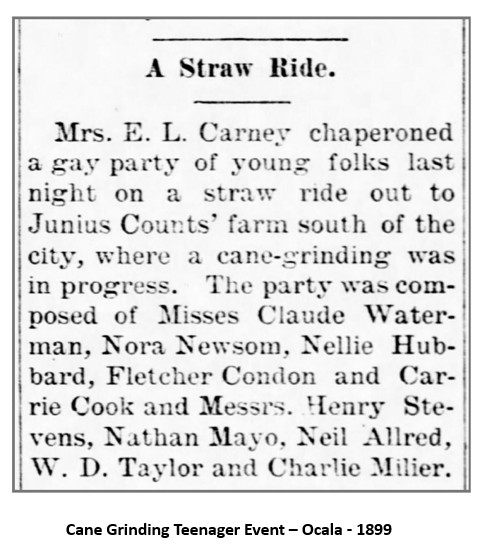
Newspapers of day commonly reported the names of the teens who attended a taffy pull, where the event was held, when they returned to their homes and, most importantly, the names of the adults who chaperoned them.
Citrus County Historical Society President Robert Croft is well acquainted with stories of romance developing while the sugar cane simmered. He relates the story of the time when his father (John Croft) was asked to join his friends at a cane grinding held by local farmer Joseph “Tony” Johns. The elder Croft was assured that there would be a lot of pretty girls there and they should try their luck to meet one during the taffy pull. As fate would have it, Croft caught the eye of the farmer’s daughter – Lucy Mae Johns – and a “sweet” romance soon developed. Their encounter at a cane grinding led to marriage in June, 1933.
The Tradition Continues
As is the case with many descendants of Citrus County pioneers, the Croft family continues the cane grinding tradition today. The sugar cane is still cut by hand and an original grinding machine is still used. The horse-driven mill of yesterday has been replaced by a pulley attached to a tractor and mechanical processes replace the need for circling farm animals.
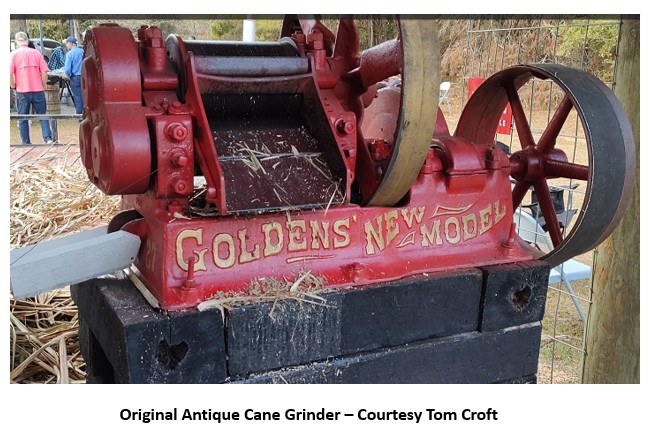
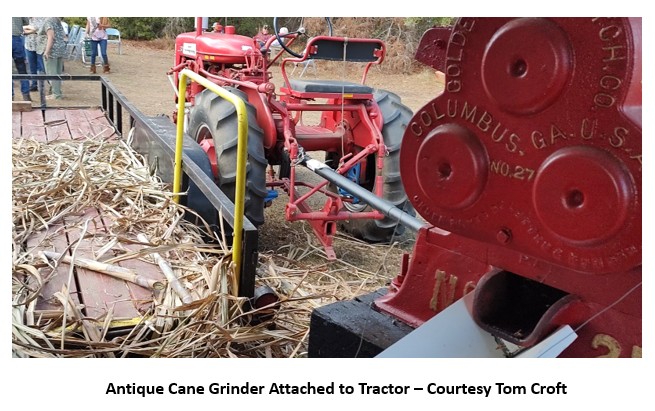
Regardless of the type of power used by the grinding machine, traditional sugar cane extraction still requires someone feeding cane into the machine and another person standing by the sluice ready to collect the juice and load into the boiling pot.
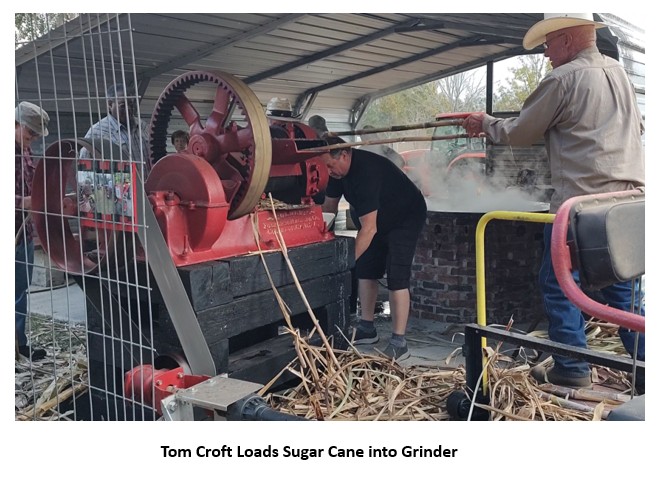
Today’s syrup boiling pot has replaced wood as a heat source in favor of the even heat provided by propane. Many farmers have further insulated their pots with an external layer of bricks. The bricks help to maintain uniform heat around the pot which ensures a better product.
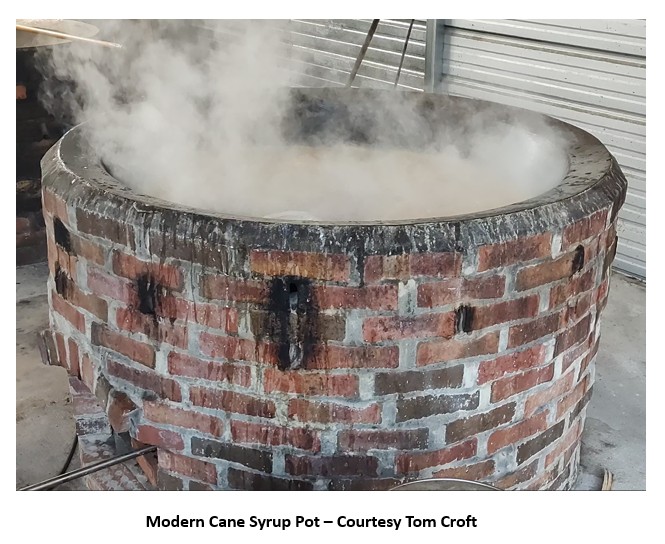
As was the case for our pioneers, the boiling syrup needs continual monitoring to ensure that proper temperature is maintained and to remove impurities that bubble to the surface. After the syrup has a chance to cool, it is poured into airtight bottles and can be stored for use during the year.
One factor that has not changed is using the annual sugar cane grinding as an occasion for a community get-together. Relatives travel across the state for the event and neighbors make a point to stop by with their folding chairs. Young people have a chance to experience traditional cane syrup processes first-hand. Sometimes there are demonstrations of how dried corn is ground into grits and corn meal.
Everyone brings a covered dish or dessert with some of the most appetizing Southern foods that you’ve ever tasted. Regardless whether you are a relative, neighbor or friend, you’re treated like family and no one goes home hungry – or leaves without a bottle of cane syrup.
Special thanks to Robert, Tom and Carlene Croft and the Croft family for keeping the tradition alive through their annual cane grinding events.
Also thanks to the Rooks family who continues the tradition and has cane grindings during Thanksgiving week each year on their property off Pleasant Grove Road. I attended their event a few years ago and was impressed by their dedication to keeping the old-time practices alive.
Ken Marotte writes for the Citrus County Historical Society. He can be reached via email at kenmarottejr@gmail.com if you have any comments, questions or suggestions. Contact him if you’d like to participate in the ongoing CCHS Oral History Project.