
Moonshine in Citrus County
It’s 1953 and Citrus County Sheriff B. R. Quinn pulls up to the gate of a chicken farm near Lecanto, along with a number of federal and state revenuers. A man by the name of Horace McKenzie comes down quickly to open the gate, believing the men he works for are returning, but balks when he sees the badges. One of the agents hears McKenzie saying something along the lines of “Ain’t nobody here but us chickens,” after a brief but nervous greeting to the officers. But they know that isn’t true—surely somewhere on the property is a moonshine still and the agents are determined to put it out of commission.
Bootleggers, moonshiners, and rum runners in the state of Florida were thrilled when Prohibition banned the manufacture, transportation, and sale of alcoholic beverages. They knew if Prohibition was in place, they would be able to take advantage of the miles of unpatrolled shoreline to move illegal booze from the Caribbean through Florida’s isolated, undeveloped palm scrub. People could also make their own illegal moonshine with only some barrels, dried corn or whole-grain rye, water, and lots of sugar. During the 1930s, “good shine” might sell for between $50 to $60 for a five-gallon jug.
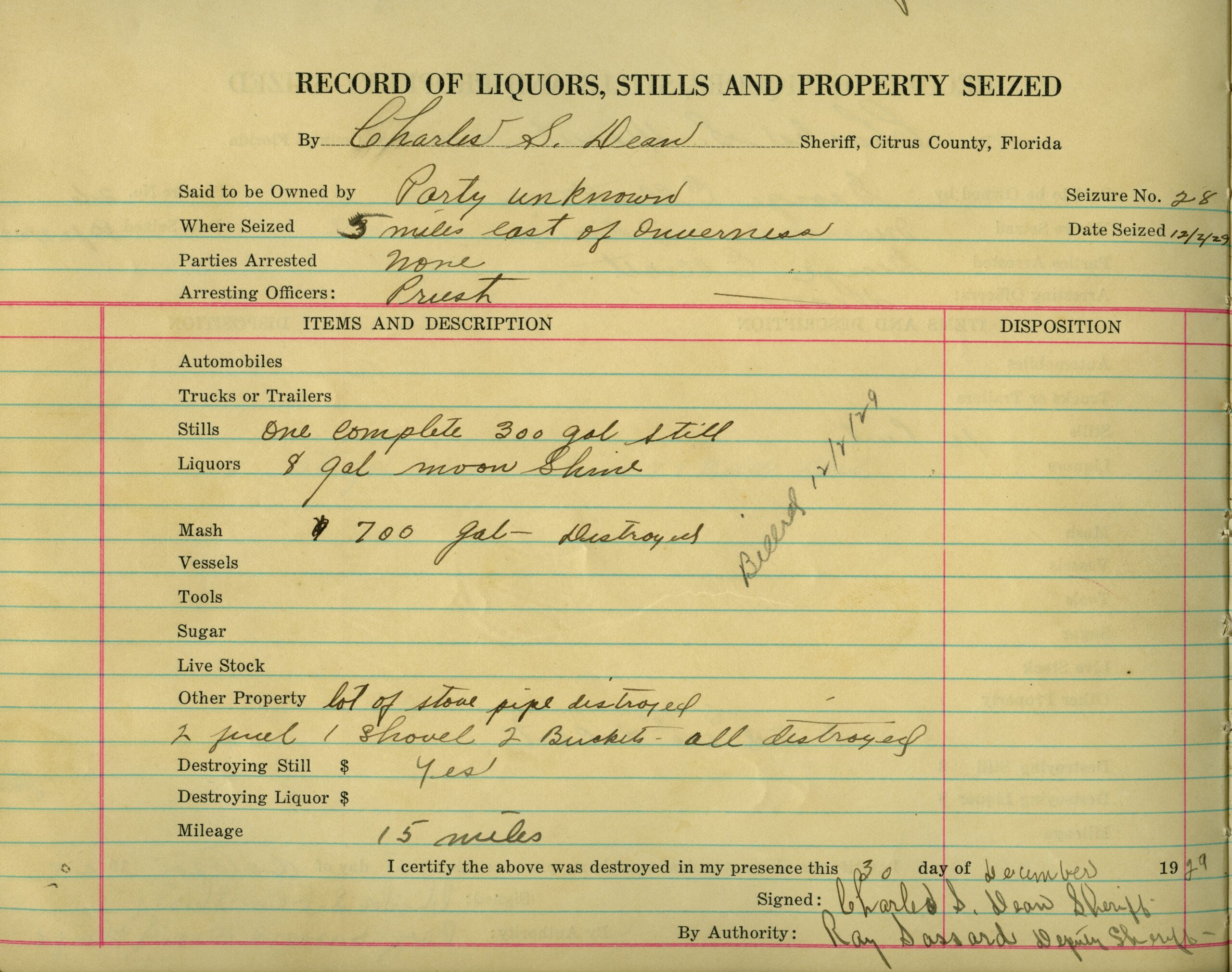
Many people regarded making moonshine as a way to supplement one’s income. Even after Prohibition and into the 1950s, people continued to make moonshine for a profit. Although moonshine was not much cheaper than legal whiskey, it remained popular after prohibition because it could be purchased at all hours and even on Sundays. It was one of the biggest illegal rackets in the state by the 1950s and the revenuers, federal and state agents tasked with enforcing the prohibition of illegally distilled alcohol, were constantly busy tracking down moonshiners and stills, part of new crackdown effort aimed at reducing lost state tax dollars. In a June 1953 newspaper article from the Tampa Tribune, it was estimated that the state would lose $14 million in tax dollars (adjusted to today’s dollars that would be over $140 million) that year due to the illegal moonshine industry.
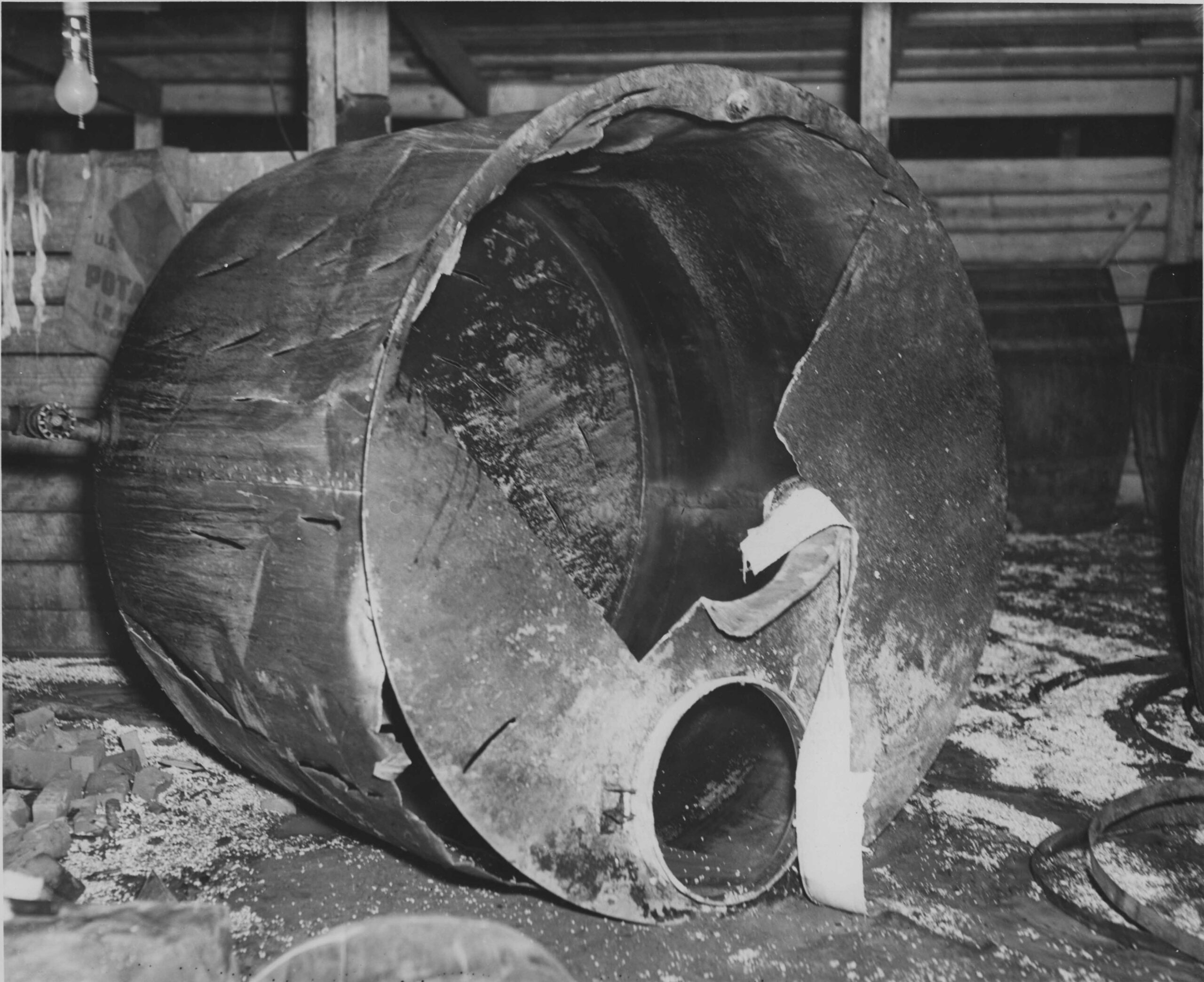
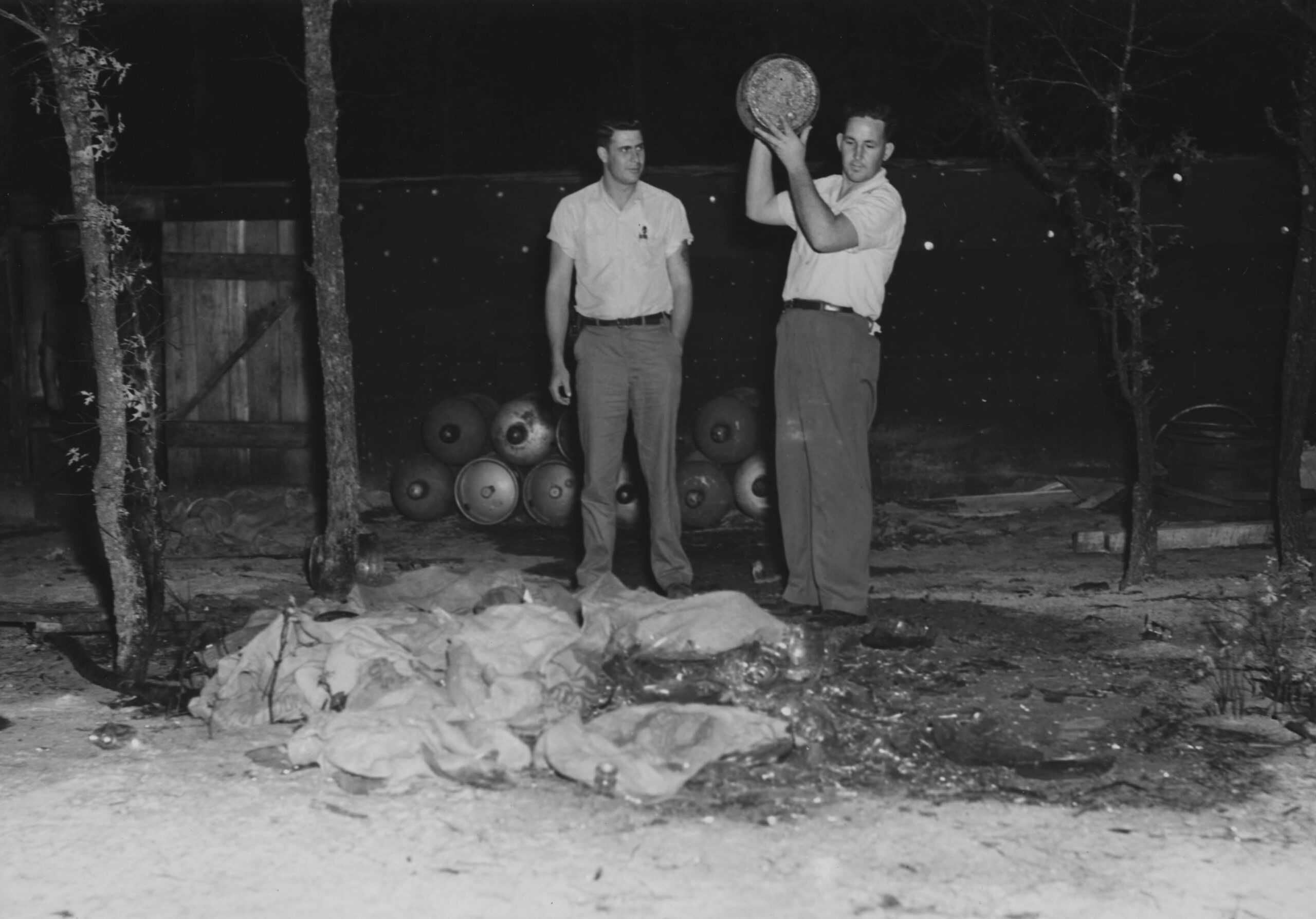
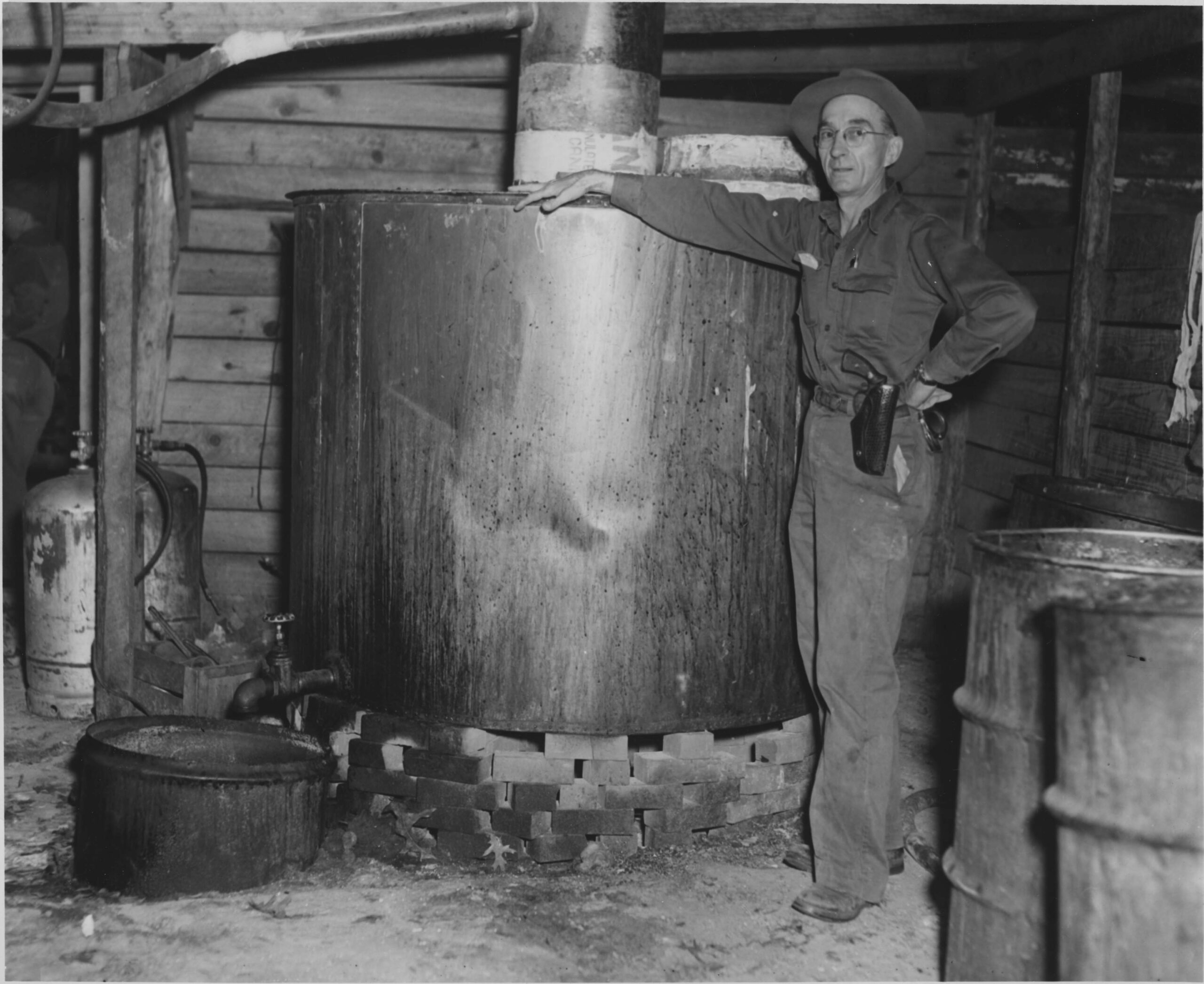
One of the giveaways to the location of a moonshine still is the smell. Many bigger operations use septic tanks to dump used mash to avoid being detected by the odor. Out in Lecanto, the hope was that the couple dozen chickens would make enough of a stink to cover the odor from the still and act as a cover for the operation. Unfortunately for the bootleggers, Quinn, his deputies, and the revenuers are persistent. They find the still in a low building containing an 800-gallon still that could produce up to 1,000 gallons a week, 50 barrels for mash, 16 tanks of gas, 1,000 pounds of cracked corn, 1,600 pounds of sugar, and 69 gallons of moonshine in jugs. C. M Starry, the revenuers’ supervisor from Ocala, poses with the still before it is hacked up and destroyed. The other contraband is confiscated, and the agents arrest McKenzie and the only other worker at the location, Annie Bell Jiles. But is this case closed…?
Unfortunately, the true operators of the still were not at the scene. They had driven away the night prior to the raid with 480 gallons of moonshine, worth about $2,400 (almost $25,000 in todays dollars). The most difficult part of the job for the revenuers and local sheriffs, is that the bootleggers had to be caught in the act to be apprehended. The unknown men who ran the chicken farm still got away, perhaps to set up a new operation somewhere else.