
Meet Me at the World Fair
By: Ken Marotte, Citrus County Historical Society
The 20th century featured an explosion of World Fairs at different sites across the Globe. These events gave ordinary people a glimpse into the future and a chance to explore different foods, customs and cultures. Citrus County residents were no exception and traveled long distances to visit these showcases. They saw attractions and technology they had never seen before but would eventually become a cornerstone of Florida life.
Early World Fairs
Florida’s leaders saw a chance to market the features of the state at the initial World Fairs. There was a group organized in some of the state’s counties to participate in the Chicago World Fair, otherwise known as the “Columbian Exposition” in 1893. Citrus County was facing financial challenges at the time so official participation in that event was not considered by the County BoCC.
While Florida did have a large exhibit, there was general disappointment with the general presentation and the exhibit manager was dismissed after political unrest with his performance.
There was at least one Citrus County connection to that event. A local woman revealed during an oral history session that her late father was adopted in the Chicago area and the only information that she had about him was a small cup embossed “World’s Fair 1893” with his first and middle name engraved on the side. She guarded this precious artifact as her only link to his biological family.
A similar World’s Fair event was planned for St. Louis in 1903-1904 that commemorated the Westward journey of Louis and Clark. Florida’s fair manager invited the Citrus County BoCC to attend an organizational meeting in Jacksonville. The request was “…considered but no action taken”.
The editor of the Florida Times Union approached the Commissioners and expounded on the benefits of advertising in the special “World’s Fair edition” of the newspaper. Once again, the BoCC considered the proposal but decided not to advertise. They doubted that many residents would be interested or profit from the distant event.
The Commissioners were also asked to reserve an exhibit site at the upcoming 1904 South Florida Fair. The BoCC held firm with a negative response citing “…the discouraging outlook for an exhibit”. The community planned their own local county fair in Lecanto as an alternative.
New York – 1939/1940
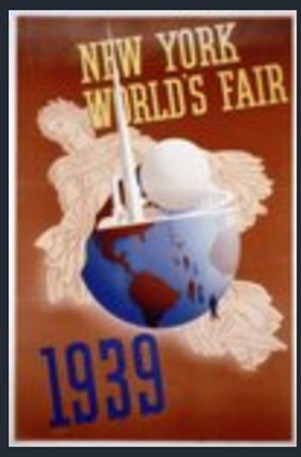
The Great Depression seemed to have passed and residents had a more optimistic outlook. The County Commissioners recognized the marketing potential of the upcoming New York World Fair and actually allocated $250 (about $6,000 in today’s dollars) to help fund Florida’s entry in the upcoming event.
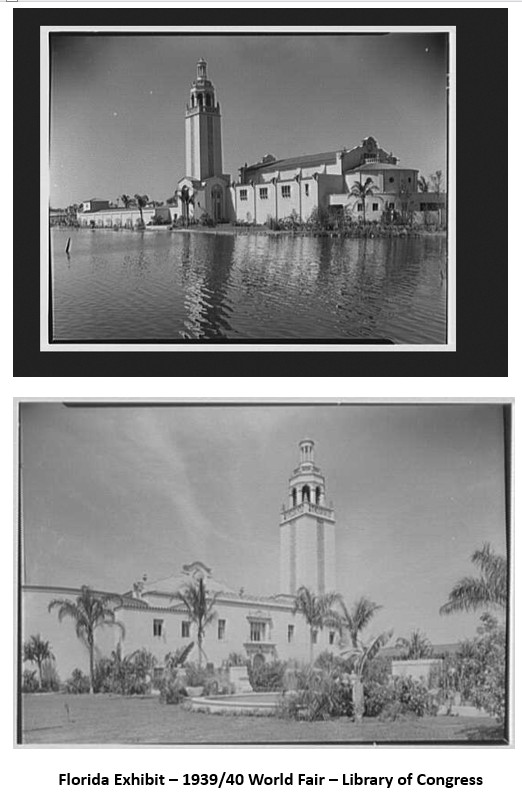
Leaders in Florida felt that the State was perched on the brink of a dramatic expansion and wanted to leave fairgoers with a “must see” impression. They succeeded in creating a tropical oasis, complete with palm trees, in the Flushing Meadows (Queens) park. A sherbet bar within the Florida building was a favorite attraction for visitors during the hot Summer months.
A special “World’s Fair” edition of their American Voices series was released by Avon House publishers in conjunction with the Fair. Over 10,000 poets submitted their best works for inclusion in the book. Citrus County residents were proud to learn that a verse by Mrs. Phebe Thompson of Inverness was honored by selection in the commemorative book. The author was also selected for inclusion in the “World’s Fair Anthology of 1939” by New York’s Exposition Press.
Citrus County Visits the Fair
The reporters of the Citrus County Chronicle were adept at keeping track of the comings and goings of their neighbors. In an age before Facebook and other social media platforms, the newspaper kept everyone informed regarding who went on vacation, how they traveled, who accompanied them and what they did while away from Citrus County. It’s no surprise that the pages of the paper contain a detailed archival history of resident’s trips to the 1939-1940 World Fair.
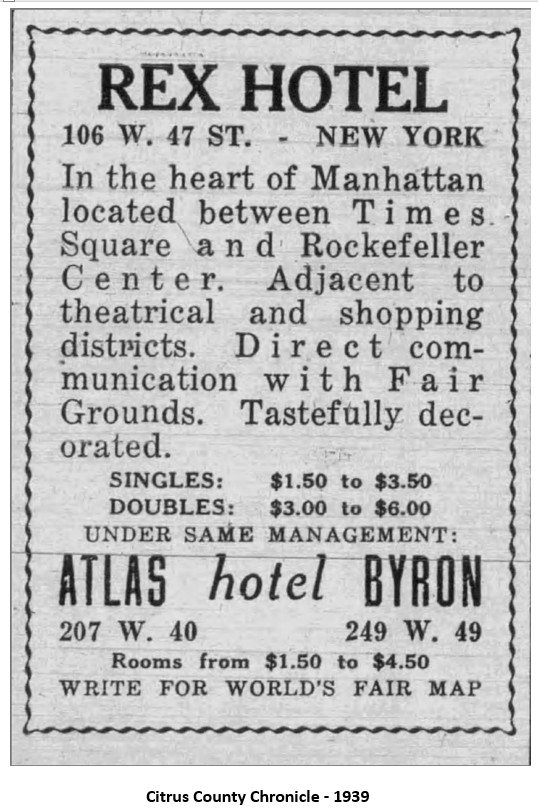
Most residents had access to automobiles that could accommodate long-distance travel by 1939. Accordingly, local leaders and ordinary citizens alike loaded their cars and headed North during this period. Usually, the World Fair was the impetus for the trip but vacationers made the most of their trip by including visits with friends and family along the way. Many had never been to New York and extended their vacation to include Broadway shows and other “big city” sights.
George Scofield’s family stopped in Washington DC before attending the World Fair and continued onward to visit family in Detroit.
Citrus County’s U.S. Congressman Joe Hendricks noticed the interest in the Fair in June 1939 : “In the past few days we have had a greater influx of visitors from the State and my District than ever before…generally they are visitors who are on their way to the World’s Fair and stop in Washington to see the points of interest.” Hendricks invited more constituents to stop by his office and he would arrange for tickets to the Senate and House galleries.
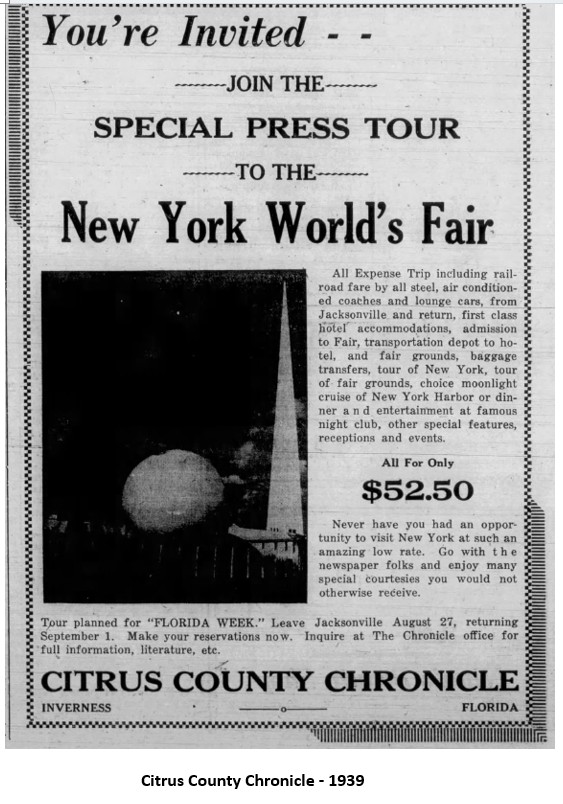
The Citrus County Chronicle, in conjunction with other Florida newspapers, arranged for a special trip to the World Fair for residents. The press release promised luxury travel and good accommodations as well as a VIP reception at the Florida exhibit. Admission tickets were included. The only expense for travelers would be food and souvenirs.
The 1939-1940 World Fair was well-received by those Citrus County visitors who attended. They witnessed the first televised baseball game as well as many other technological wonders. General Motors sponsored “Futurama” and pioneer gamers could play on an early Nimatron computer. Westinghouse built a seven-foot-tall robot named “Elektro” who used pre-recorded messages to talk with visitors, “see” through photoelectric eyes and could even smoke cigarettes.
From a business perspective, that edition of the World Fair experienced financial difficulties and never reached the planned attendance figures. After the Fair was over, most of the buildings were demolished and the area reverted into a city park. A few buildings remained but fell into disrepair until the next World Fair was planned for the same Flushing Meadows location.
New York – 1964/1965
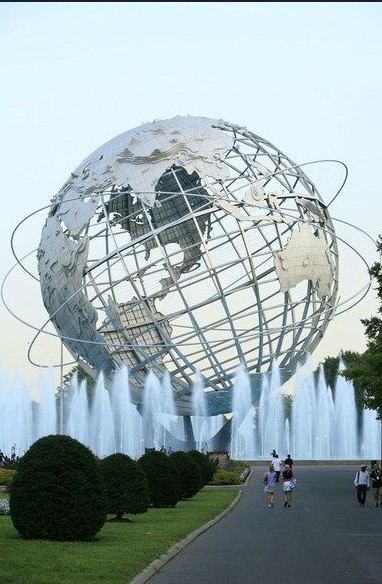
A new World’s Fair – planned to open in 1964 – was envisioned at the same location as the previous event. This fair would prove to be even more popular than the prior version. The comfort afforded by Automobile automobiles had advanced since 1939 and even more Citrus County residents were hitting the roads. Since the roadway system now included highways, travel time was reduced which allow for more sightseeing and visits with families.
Some of the most impactful features of the 1964 edition were related to Walt Disney’s experimentation with animatronics in new exhibits, many of which eventually migrated to Walt Disney World in Orlando. For example, the animatronic Abraham Lincoln exhibit has grown into Disney’s Hall of the Presidents. The Magic Skyway and the incessant “It’s a Small World” ride were originally developed for the World Fair.
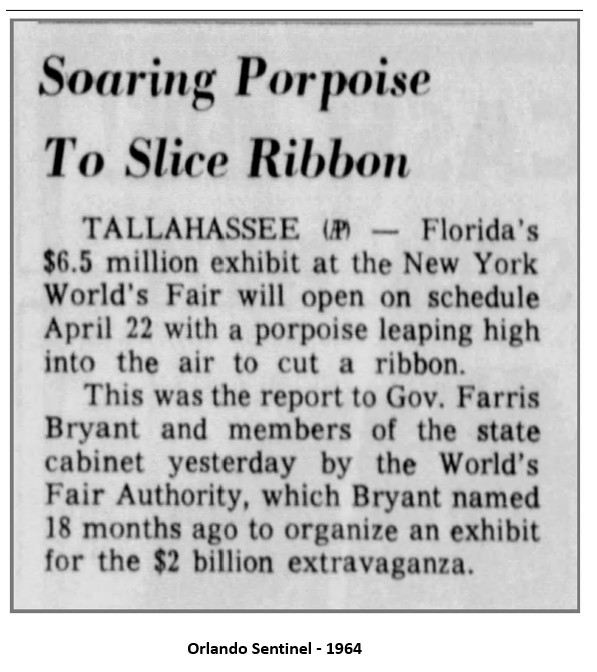
The State of Florida opened our pavilion with a splash. A dolphin had undergone a year-long training program to leap out of the water and cut the ribbon to welcome the crowds to the exhibit.
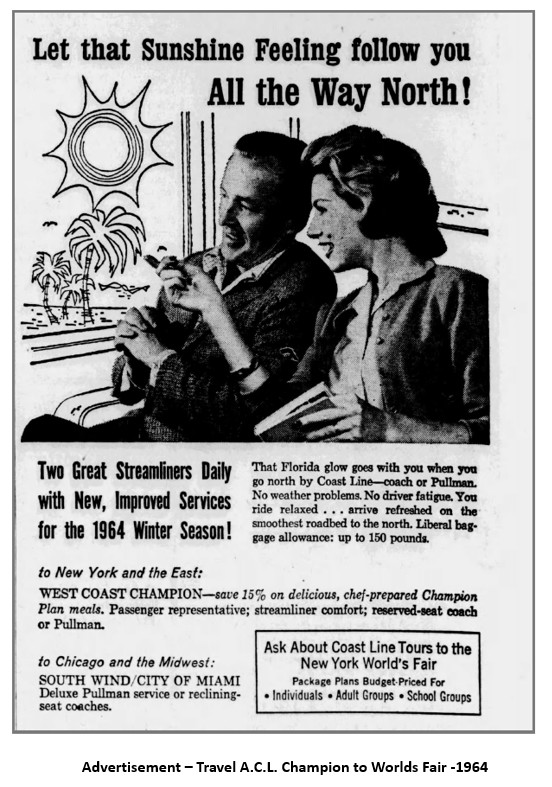
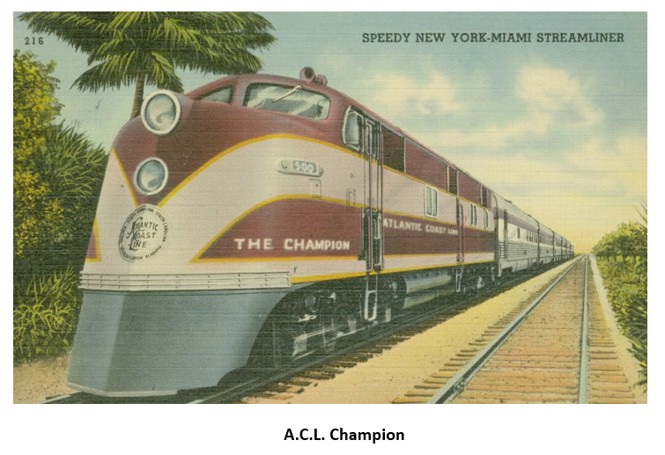
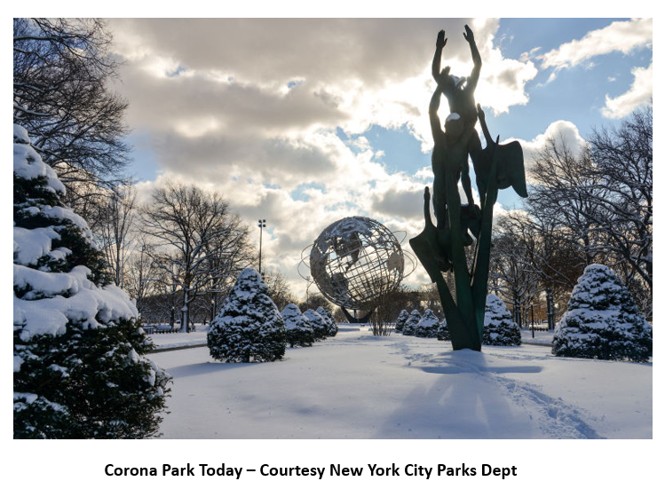
Similar to the fate of the buildings at the 1939 Fair, most of the structures were torn down at the conclusion of the event. However, some of the original buildings and remnants of rides can still be seen today.
Epilogue
I recall boarding buses for the long ride to the 1964-65 World’s Fair in New York as part of a school trip. The nuns paired us with a “buddy” for safety and sent us out into the chaos of the Fair. Since I was a small-town boy, I confided to my good friend that I was a little concerned about the possibility of becoming victims of crime in the Big City. He told me not to worry and he pulled a cardboard envelope from his pocket – with a scalpel inside. I didn’t ask where it came from and was glad it stayed in his pocket for the entire day. But if anyone needed an emergency appendectomy – we were good to go.
Ken Marotte writes for the Citrus County Historical Society. He can be reached via email at kenmarottejr@gmail.com if you have any comments, questions or suggestions.
Join the Citrus County Historical Society! Call 352-341-6428 or visit https://cccourthouse.org/ for more information.