LC Yeomans: Commercial Fisherman, Legislator, Conservationist
By: Ken Marotte, Citrus County Historical Society
You may have seen signs for a city recreation area on North Turkey Oak Drive in Crystal River named Yeomans Park. This is the story about the park’s namesake, L. C. Yeomans, who was a community leader, legislator and statewide advocate for conservation of fishing resources.
Early Life
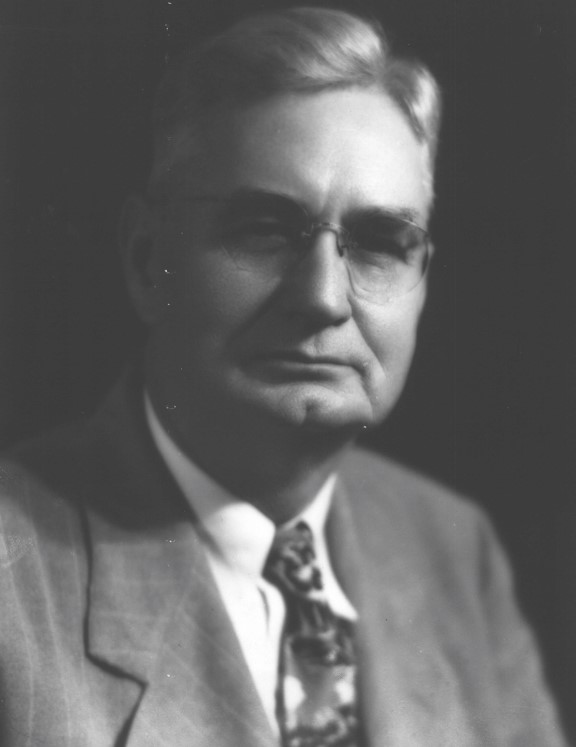
Lee Columbus Yeomans was born in Georgia on November 26, 1892. As was the case for many young boys at that time, he worked on the family farm and attended school up to the eighth grade. He was a tall and imposing figure, which may have encouraged the managers at Macon’s Western Loan Company to employ Lee as a delinquent collector during his early career. Tiring of that job, he eventually joined the Atlantic Fish Company in Macon as an operative, which was a career change that would eventually lead him to Crystal River.
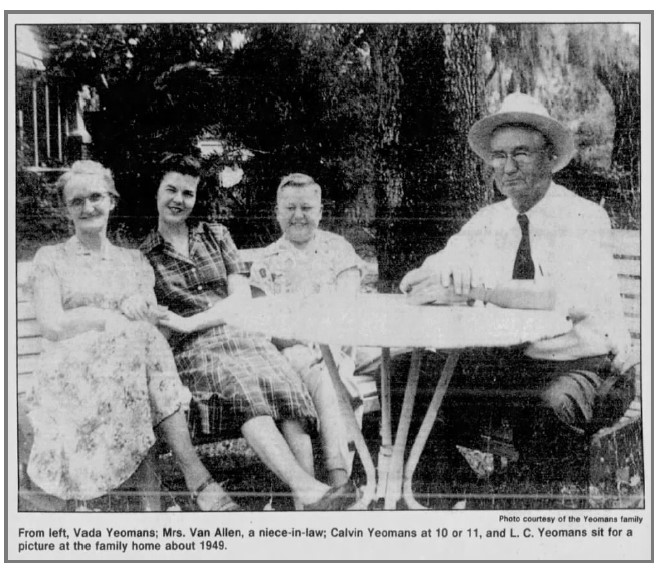
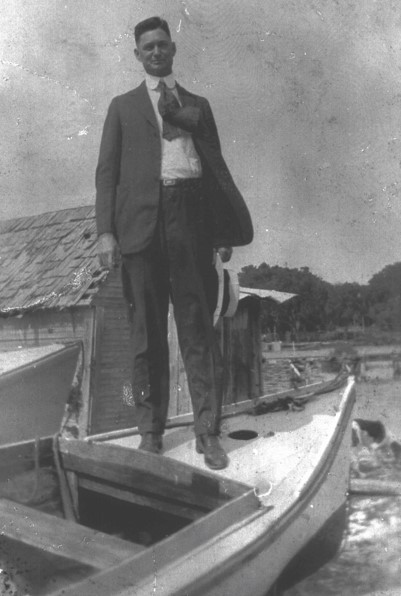
Yeomans joined the US Army as part of the American Expeditionary Force in World War One. After being honorably discharged in 1919, he looked southward to Florida as a place to make his fortune. He moved to Crystal River and lived with Herman G Miller and another fishery dealer in 1920. He purchased the “Miller’s Point Fish Company” shortly afterward. He met Veda Allen, who the Chronicle described as a “bewitching” young schoolteacher and they two became smitten with each other. They married in 1921 and remained together for the rest of their lives.
Crystal River Businessman
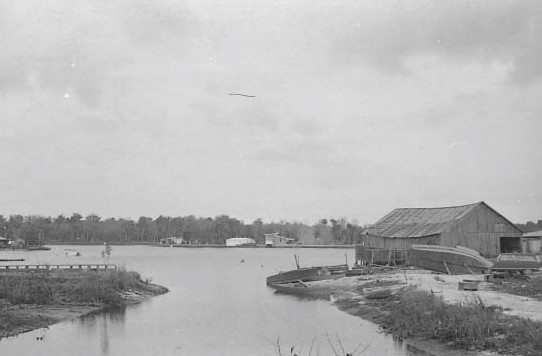
Crystal River was the perfect place for Yeoman’s business. Oysters from this town were known across the state as being the fattest and juiciest on the market. Fish were plentiful and there was money to be made for operatives willing to work hard. Yeomans worked his boat with a small crew and grew into a fleet of boats that harvested fish from the Gulf and processed through his fish house. Eventually the Yeomans boats ranged as far as the waters of South America in search of new fishing grounds.
He also loved to fish for recreational purposes. In 1929, he managed to catch a huge 254-pound sea turtle in a net. The story was reported across the state.
Oyster harvesting utilized the “tonging” method. This process required strong arms to operate the long hand operated tongs to scoop the oysters from the bottom. The company would tow long chains of “oyster scows” into the Gulf, each one occupied by a worker. The harvest would be collected periodically and brought to shore. In most cases, “shuckers” would remove the oyster from its shell and pack for market. One “gatherer” in 1941 earned the equivalent of $2,000 in a single week. An average “shucker” made the equivalent of $250 per day. During this time, the price of shucked oysters rose to the equivalent of $95 per gallon.
Yeomans diversified to other enterprises in Citrus County. He was a Director in the Bank of Inverness. He headed the Citrus County Ice Company. The purchase of the Regent Theatre gave Yeomans an entertainment venue. His wife Vada held viewing parties for the ladies in her social circle. Their son (Calvin Yeomans) later recounted that “…he had his own padded chair in the theatre and that’s where he went at night. Nobody sat in Mr. Yeoman’s chair.”
The younger Yeomans continued “The theatre was basically a babysitting service where for 12 cents, parents could park their children for however long it took to attend to their business while the movie would run twice.”
The Frog King
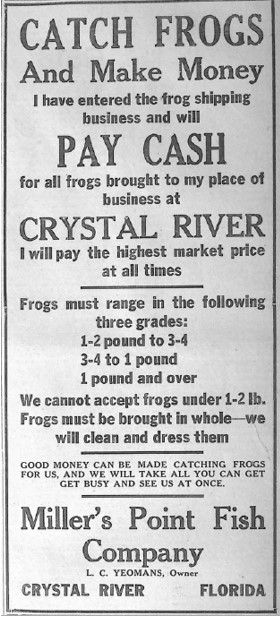
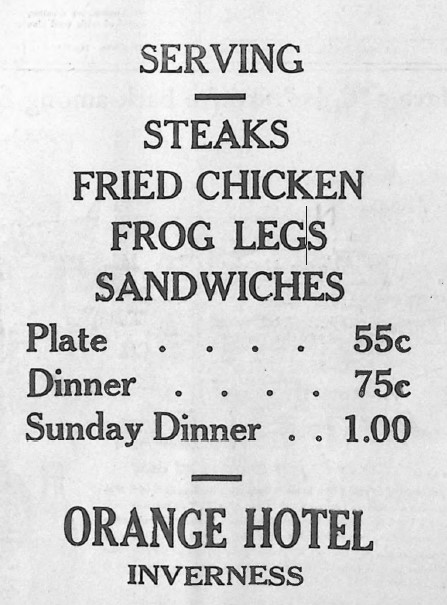
The nation was in the grip of the Great Depression in the 1930’s. Yeomans’ fish and oyster business experienced some slow times and he needed an alternative source of income to keep his business afloat. He was aware that frog legs were becoming a leading delicacy in America and that parts of Florida were reaping the benefits. He decided to convert part of his operation from a fishery to a “froggery”. He placed advertisements in the Citrus Chronicle that offered the citizens a chance to make some extra money by supplying him with the biggest frogs they could find. Any frog that weighed over ½ pound would be acceptable, with larger bounties paid for frogs weighing in over one pound. He promised residents that “good money can be made catching frogs for us, and we will take all you can get.” While this was not a major source of income, the extra money was welcomed by cash-strapped residents.
Public Service
Yeomans naturally became involved in advocating for his community in the political arena. He was first elected to the Crystal River Council in 1923. Using that office as a springboard, he successfully ran for the Citrus Board of County Commissioners in 1924 and was easily re-elected two times. He returned to the Crystal River Council in 1932 and served for three terms. He also functioned as a member of the Selective Service Board during World War II.
Yeomans decided that he could be more effective in the Florida State legislature. He was passionate about the condition of the fisheries in Florida and wanted to represent their interests in the Florida House. Yeomans was victorious in the election of 1944 and he took his seat in the legislature in 1945. His first assignment was on the salt water fisheries committee.
One of his priorities was to institute a state-wide ban on mullet fishing for a period two months every year. Yeomans believed that this fish had to be protected in order for the survival of the species (and the survival of the fishermen who relied on that fish). He called for conservation of a resource that needed time to replenish themselves. He also argued that the use of seines was overtaxing the fish population and needed to be restricted. While some areas such as Citrus County legislated local “pauses” in the open season, other counties on the Western Panhandle had no closed season at all. Yeomans felt that counties that had a closed season were at disadvantage to counties that remained opened year-round. The Representatives of the Panhandle areas responded that the adoption of this plan would make them lose their competitive advantage. They attached amendments to Yeomans’ bill which effectively negated the intended effects. An open feud developed between the two competing regions and legislation was stymied. The bills were re-introduced in the coming years and a compromise acceptable to all parties was reached.
Yeomans continued to push for further fisheries conservation legislation during his time in Tallahassee.
The SOB List
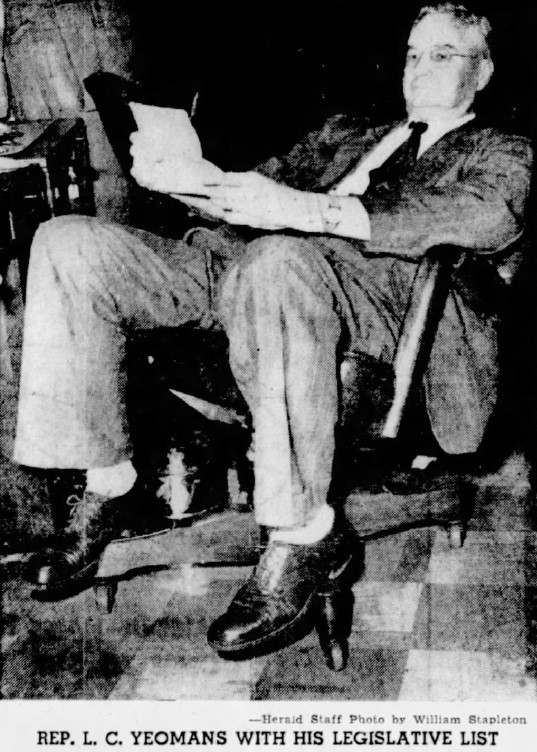
Yeomans time in the legislature was not completely contentious. The dry-witted Representative was at the center of a running joke in the Florida Legislature. Whenever a member of that body made a long, self-serving speech, the other Representatives who suffered through the oratory would turn toward Yeomans as the speaker sat down. One capitol newspaper observer reported “If Yeomans nods most solemnly, pulls the list from his pockets and goes through the motion of moving a name from a lower position to the top – that’s the ‘No. 1 S.O.B.’ until someone replaces him. If Yeomans doesn’t think he quite made the top of the list, he’ll hold up two or three fingers, indicating that the fellow is getting up there, but hasn’t made it to the top”. The reporter was later taken to task for printing a “inside joke” that was never meant for publication.
In the election of 1950, Yeomans was defeated for reelection by Francis “Cowboy” Williams, the dynamic Mayor of Inverness. One of the major campaign issues was the institution of a statewide sales tax. Yeomans was initially against the tax, but appeared to waver in his position and Williams seized that issue and rode to victory.
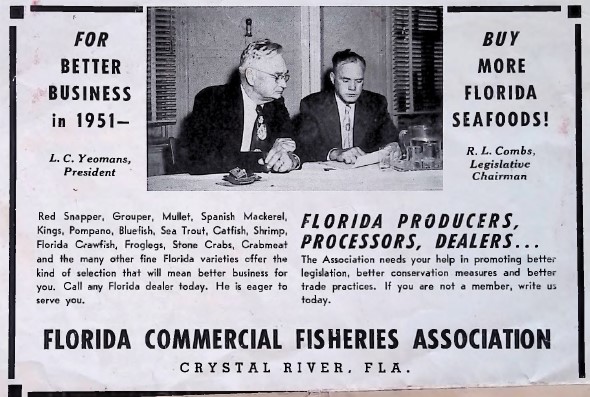
Yeomans did not sit idle after his retirement from public office. He had been elected President of the Florida Commercial Fisheries Association decades ago and continued to use that position to advocate for sound fisheries conservation based on scientific research.
Coda
L.C. Yeomans suffered a sudden stroke on September 6, 1951. He was transported to a hospital in Ocala and specialists from Tampa were rushed to his bedside. In spite of their best efforts, he perished on September 9. He left behind his widow, Vada Allen Yeomans and son Calvin. The Florida Senate observed his passing with a moment of silence.