
Inverness Highlands – the First Large Development in the City
By: Ken Marotte, Citrus County Historical Society
Arguably the first large housing development in Inverness, the area known as the “Inverness Highlands” was conceived by an experienced real estate promoter from New York City. This project had an impact on city life that still reverberates today. If you (or someone you know) lives in Inverness Highlands, you may be surprised about the scope of the development, the growth it spawned and the ramifications for the political landscape in Citrus county.
The Developer
Cadman H. Frederick is not a household name in Citrus County today. In the world of New York real estate, he had a presence that made him a local legend. He brought some of that magic to Citrus County in the 1950’s.
Arriving from the British West Indies in 1894, the driven 14-year-old surveyed the scene at Ellis Island. He knew that others had succeeded through hard work and he was determined to make his mark. By age 22, Frederick had become a successful real estate agent. He was granted United State citizenship in 1902. James J. Gormley, an experienced real estate developer, took Frederick under his wing and designated him as the Secretary in his new Long Island Realty Company. At that time, Long Island was largely undeveloped and its proximity to new transportation links into New York City had the island poised for explosive growth in the future.
By 1908, Frederick had developed the advertising formula that he would later use to market real estate in Citrus County. His advertisements featured a low price for a lot that was bigger than the city dwellers were accustomed. He instituted an installment sales policy that allowed customers to pay a small down payment and an even lower monthly payment. The ads highlighted the modern conveniences and services that would be available in the new Freeport area and the relative proximity to New York City.
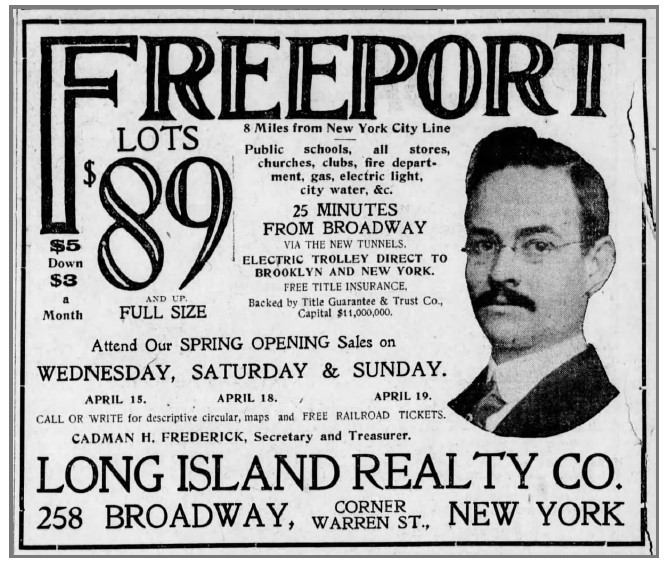
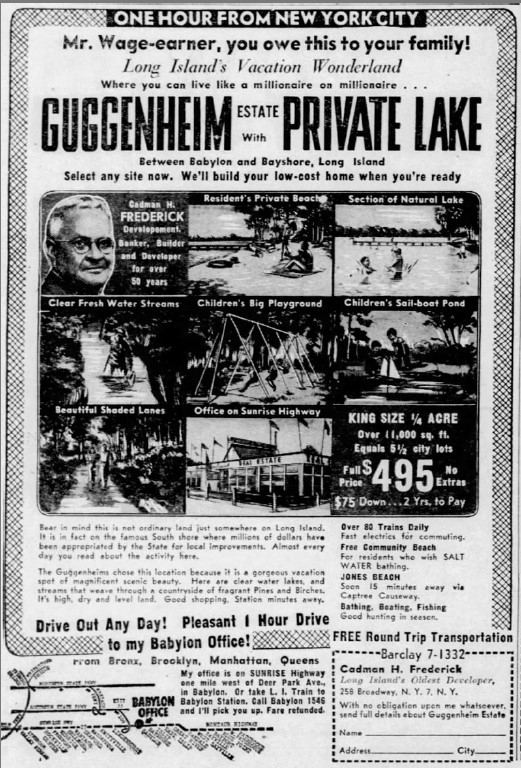
Frederick eventually assumed the Presidency of the Long Island Realty Company and continued to play a lead role in the company until his death in 1961. Along the way, he became a two-term mayor of Babylon, NY and President of the Suffolk County Savings and Loan bank. He appealed to the common working man and had been responsible for tremendous growth along the south shore of Long Island. In 1951, he purchased the Guggenheim Estate and carved the property into vacation get-away lots for “Mr. Wage-Earner”, envisioning the customer’s relaxation along the shores of a private lake.
Carman Frederick looks Southward
Frederick saw a similar opportunity for development in our area. He formed the official-sounding “Citrus County Land Bureau” corporation in 1954. He shrewdly worked with the Inverness Junior Chamber of Commerce to adopt a joint marketing plan. All of the advertisements for the new development would prominently highlight that the Jaycees “sponsor, recommend and endorse” the project. The name of the Citrus County Land Bureau would be listed only in smaller text on the response portion of the ad. Many of the proven marketing tactics that were successful in New York were included in the Inverness Highlands offering. A small down payment would hold a purchase and a low monthly payment would make the investment manageable. Free title insurance would be offered to every buyer. Since there were only small stores and local attractions at the time, the focus of the early advertisements was on the warm temperatures and the multitude of outside activities that would be available, such as fishing, bathing, boating, gardening…and chickens.
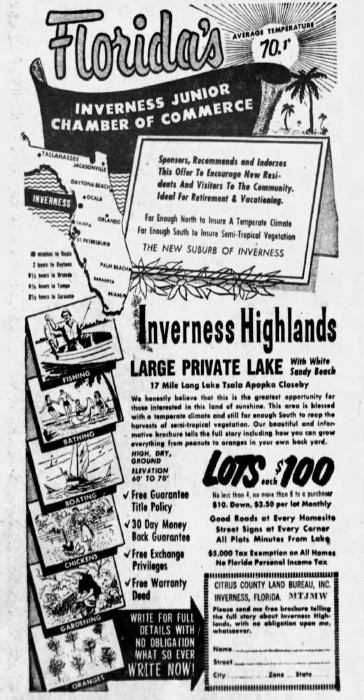
One of the more curious aspects of the offering was the requirement that a customer must purchase a minimum of four lots (but no more than eight). The reason for this policy was the fact that each “lot” was platted as only 20’x120’, so the buyer needed to add the four “lots” together the make an aggregate 80’x120’ building site. Unlike other developments in the county, the Citrus County Land Bureau did not initially build houses but collaborated with local builders to construct homes. The company would help the buyer find financing for their construction. There were few amenities such as common areas, community clubhouses or pools and hence no need for restrictive Home Owners Associations (HOA) and their myriad rules and regulations.
No tents or shacks would be allowed. Buyers were free to build their own houses or contract with a local builder. There were no architectural requirements other than the house must have a minimum of 600 square feet.
Frederick’s company had initially purchased 1,100 acres for Inverness Highlands. Most of the land was purchased from Norvell Bryant, Schuyler Orvis, Gilbert Van Ness and Carl Tedger. He augmented that land with an additional 160 acres from Bryant and 206 acres from Willie Williamson. The total property could be carved into about 5,000 lots.
An advertising blitz commenced in January 1955. There were ads placed in over 200 newspapers across 28 states, mostly in the North and Mid-West. An estimated 2,000,000 readers would see the information about the new development in Citrus County over the next few weeks. The timing of the campaign was critical, because those areas would be in the grips of Wintertime and presumably open to enjoying Florida’s warmer temperatures. It was expected that thousands of lots would be sold over the first year.
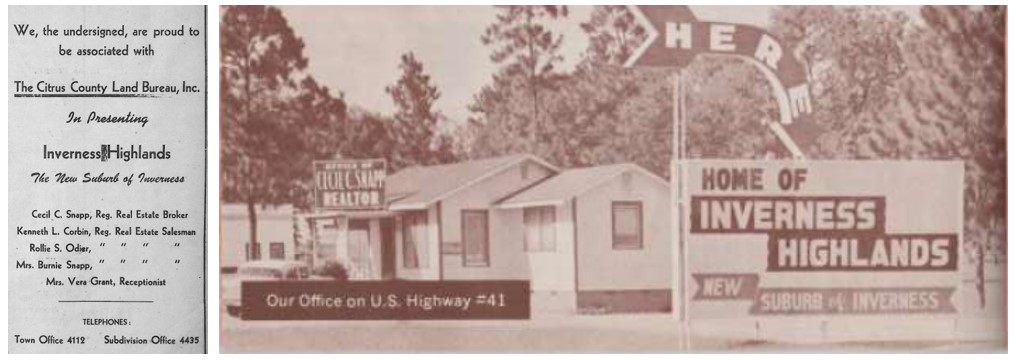
Cecil Snapp served as the exclusive Real Estate Broker for the Citrus County Land Bureau. A small sales office was set up on Route 41 near the old Citrus Drive-In Theatre.
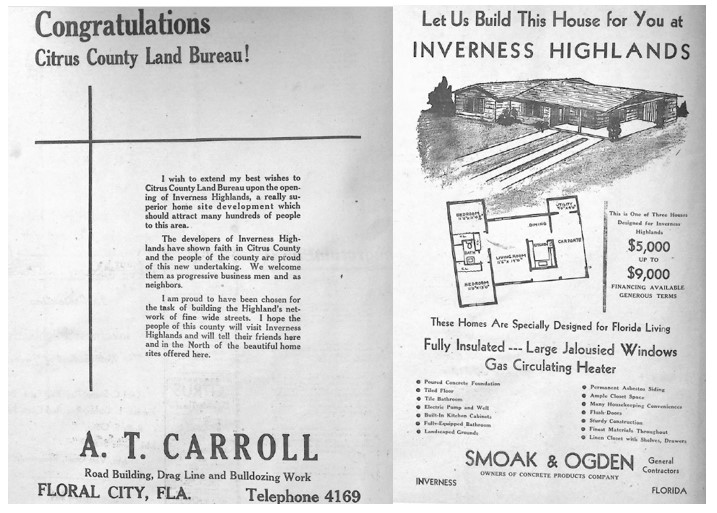
Frederick’s agreement with the Jaycees stipulated that the developer would use Citrus County citizens and companies (wherever possible) to accomplish the preparation and construction of the homes. A.T. Carroll of Floral City prepared the lots and built the streets. Some local contractors, such as Smoak and Ogden, designed three homes for the Inverness Highlands buyers.
Sophisticated Marketing
After the initial advertising campaign, the newspaper entries continued for the next dozen years. The content became more expansive and included the local amenities beyond the temperature and fresh water beaches.
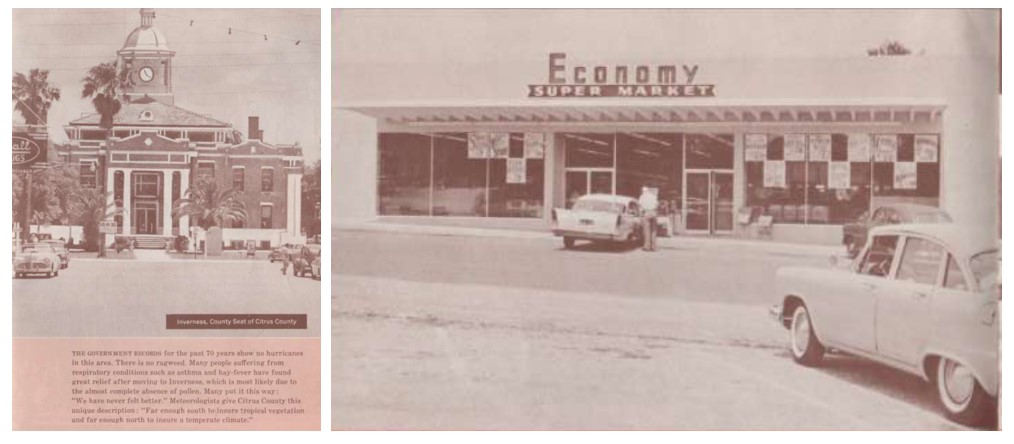
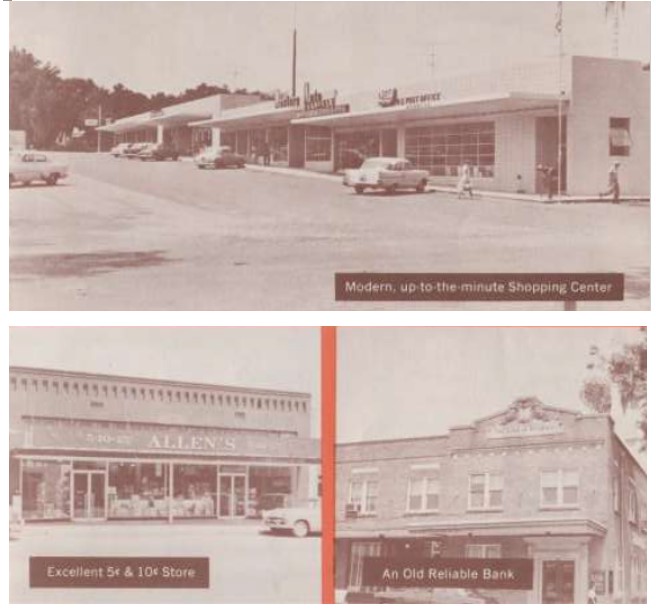
Their advertising brochure included the obligatory view of the Citrus County courthouse accompanied by a claim that the environment in our area made people healthier due to the low stress and absence of pollen. They touted the “Modern, Big City Shopping” of the Economy Supermarket and the “modern up-to-the-minute shopping center” in downtown Inverness. Allen’s 5 & 10 Cent store was featured as well as the “Old, Reliable Bank” in the heart of the city.
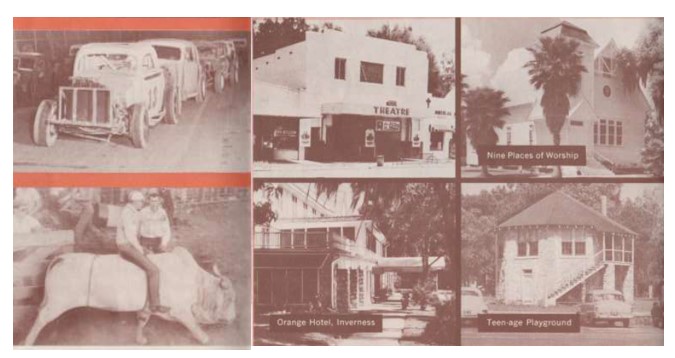
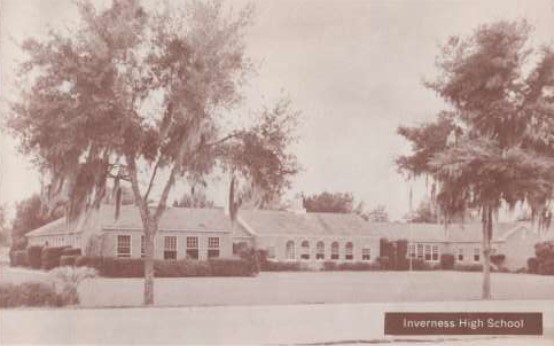
Entertainment offerings included the Citrus County Speedway and rodeos held at the Fairgrounds. There were pictures of an almost unrecognizable Valerie Theatre, churches and a teen-age playground. They appealed to families with children by highlighting the expansive Inverness High School. The brochure trumpeted that the school “…boasts a long and credible record of achievements. In addition to an extensive up-to-date library for modern research, there’s a first-rate laboratory for those interested in the sciences.”
Citrus Plaza Shopping Center
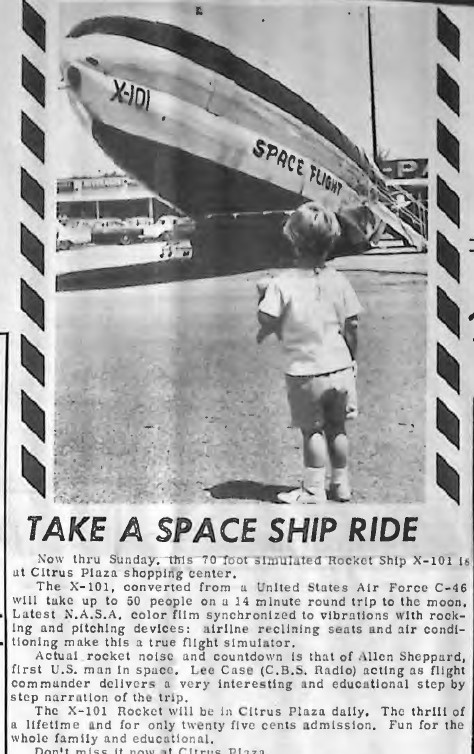
By 1968 the population of the Inverness Highlands area had exploded. Traditional downtown stores were adequate during the first wave of homeowners. Supermarkets such as Kash and Karry, Gooding’s and A&P had moved into the area. However, a new larger shopping center was needed to accommodate the growth. On March 21, 1968 the new Citrus Plaza Shopping Center opened to great fanfare on US Highway 41S. Local radio station WYSE broadcast opening events live from the parking lot. The Citrus High School marching band performed, as well as the Beverly Hills Red-Tops and other musical acts. A giant X-101 simulated rocket ship (fashioned from a surplus Air Force C-46) took up to 50 citizens on a 14-minute trip to the moon. Enthusiastic residents formed long lines out the door to shop at the new Winn-Dixie food store. The Beverly Lee women’s fashion shop hired local women to act as live mannequins in their store front window and then strut up and down the sidewalk of the center showing the shop’s latest offerings.
Political Landscape
The region was known as the “Solid South” by the Democratic Party during this time. The Republican Party was almost non-existent in the area. Shifts in the political landscape were underway that would flip those affiliations in the region in general and Citrus County in particular. One of the factors that accelerated this change was the influx of largely conservative Republican voters from the Mid-West into areas such as Inverness Highlands. In the period 1966 – 1970, Republican membership in Citrus County increased by 200 percent. A newspaper analysis of voter patterns predicted that Citrus County may become a Republican stronghold by 2000 (a forecast which eventually proved to be true).
One ironic result of this shift impacted Norvell Bryant, who sold much of the land to Carman Frederick’s company where Inverness Highlands was built. Due mainly to new Republican voters, Democrat Bryant lost his bid for a School Committee seat to Republican John Hodgkins during this period.