
Howard B. Tuttle and ESPEDECO/Southern Pines
By: Ken Marotte, Citrus County Historical Society
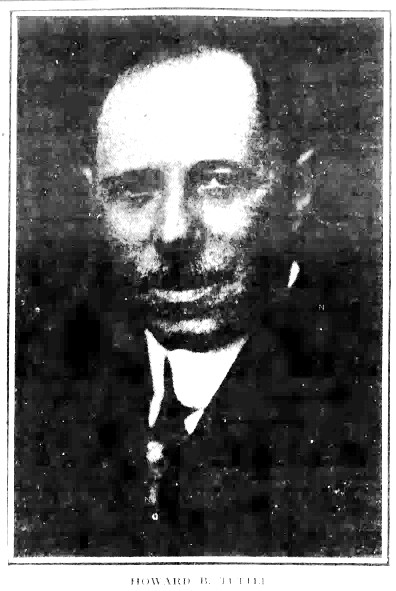
No one has arguably had more influence on the history of Inverness than a family from Connecticut who adopted the town as their Winter home. Most people are not aware of Howard B. Tuttle and his impact on the community and his family’s role in establishing many of the landmarks that we take for granted today.
A Prestigious New England Family
Howard B. Tuttle was born into a prosperous Connecticut family in Middlebury CT in 1862. His father, Bronson B. Tuttle, had a successful metal foundry business and had served in the Connecticut State Senate. Howard attended the prestigious Yale University and graduated in 1887. Howard married Nettie Seymour the following year. The couple planned a year-long honeymoon trip but escaped serious injury when their cruise liner struck another ship in foggy conditions off the Long Island coast. After returning from their extended trip, young Howard followed his father into the family business. Coincidentally, he was elected to his father’s former State Senate seat in 1916.
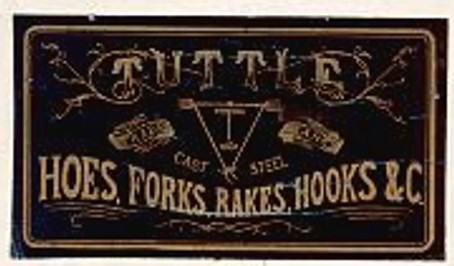
The Tuttle’s foundry focused on making farming tools. At the time, cast iron was the primary material used by most manufacturers. Howard convinced his father to invest in malleable iron production, which produced tools that were better suited to harsh farming use. As a result, the family fortunes grew and Tuttle hoes and implements were sold across the county. At the time of his death, Bronson B. Tuttle left his wife and son Howard an estate valued at about $3.5 million dollars (approximately $127 million in 2025 dollars).
Diverse Income Sources
Howard Tuttle proved to be an astute businessman in his own right and had an uncanny knack for spotting a favorable deal. He purchased extensive land holdings in Chicago and was handsomely rewarded when the city’s electric trolley system built their power station on Tuttle’s land. He also strategically purchased property in St. Louis MO. He had a herd of prized Guernsey cows that broke production records (in 1906, one of his cows produced almost 7,800 pounds of milk and 400 pounds of butter fat).
In the 1890’s Tuttle became aware of the Florida phosphate boom and bought mines Floral City and formed the Southern Phosphate Development Company (“ESPEDECO”)
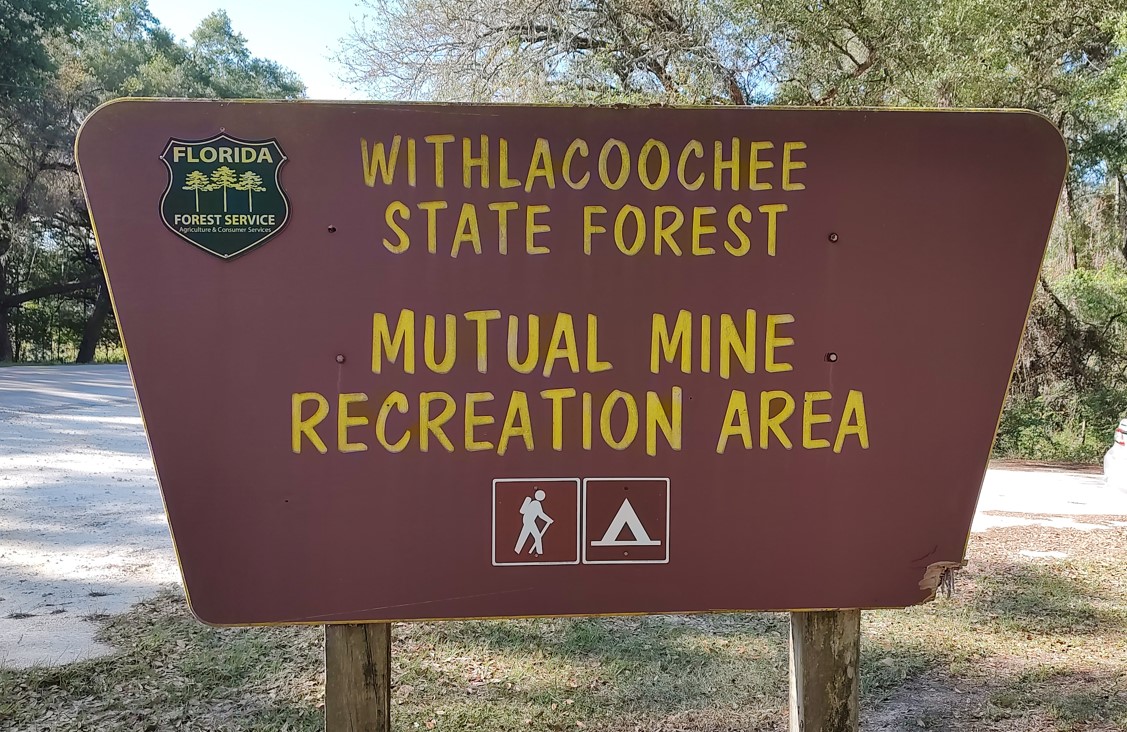
He eventually expanded operations in and shifted his headquarters to Inverness. His company conducted open pit mining, processing and shipping from his base in Inverness. Along the way, he provided housing for some of his workers and management staff. A large number of those workers were Black and they were eventually settled in an area known as “Rosemary”. The story behind that area was highlighted in a recent Citrus County Chronicle article.
Family Ties
Howard B. Tuttle and his wife Jeanette eventually had three children. According to historian Rev. James C. Hoge, “Donald Seymour, Muriel, and Ruby. All three children were to play a prominent role in life at Espedeco, though mainly in the winter season. Graduating from Yale in 1912, Donald worked mainly in the payroll department, while Muriel (married to John Eden, Sr.) and Ruby (married to Dr. Charles L. Larkin, Sr.) concentrated on raising their families.”
Demise of “White Gold” in Citrus County
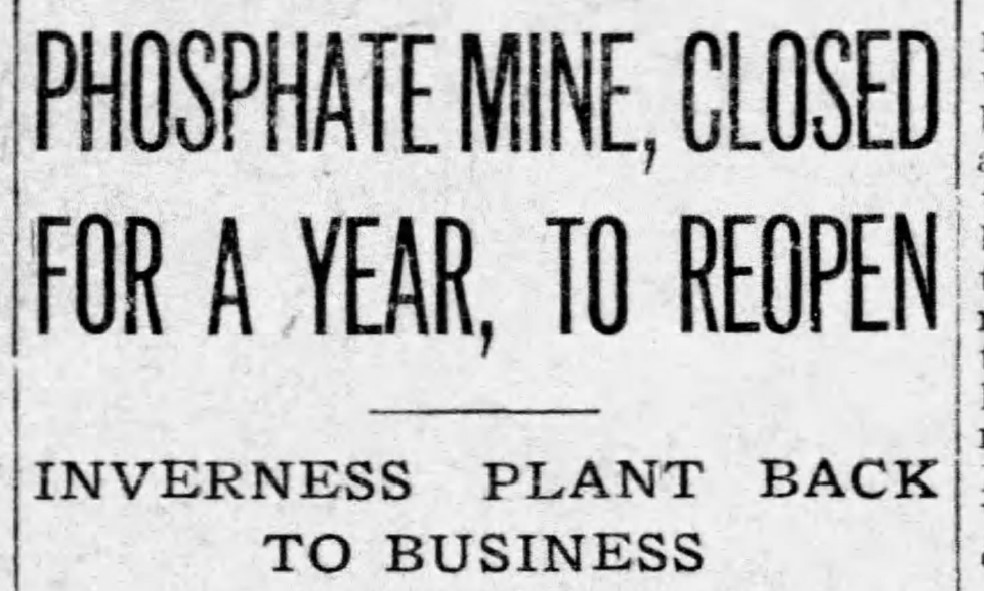
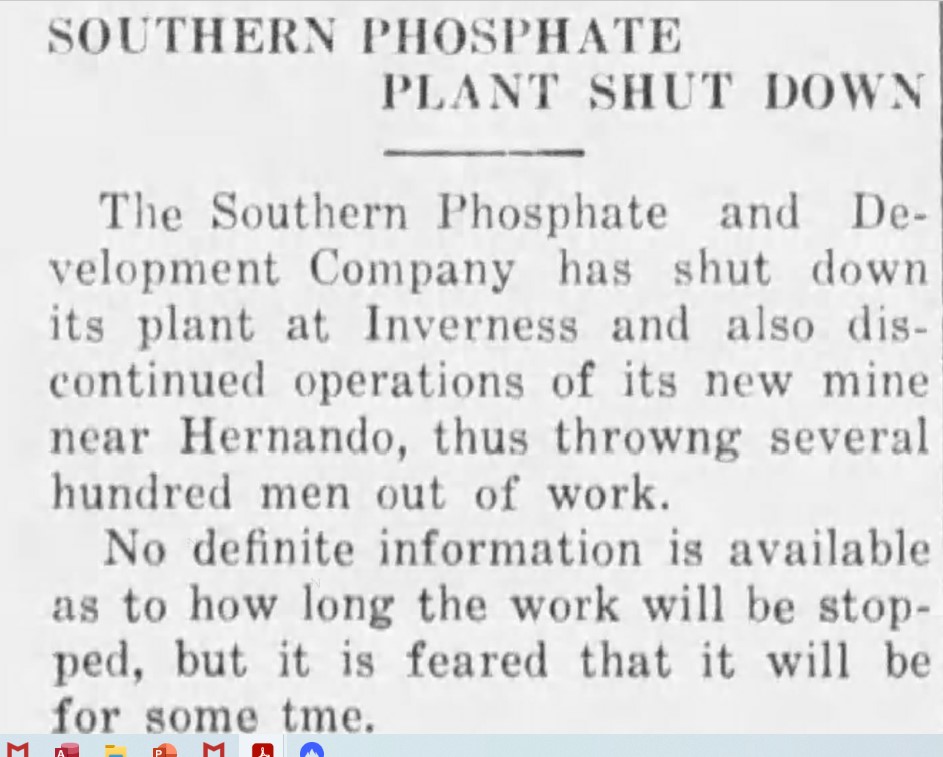
The phosphate industry was subject to changes in the market both before and after World War I. The mines in Inverness were shut down for a year in 1914, reopened in 1915, shut down again in 1921 and then closed permanently in 1924.
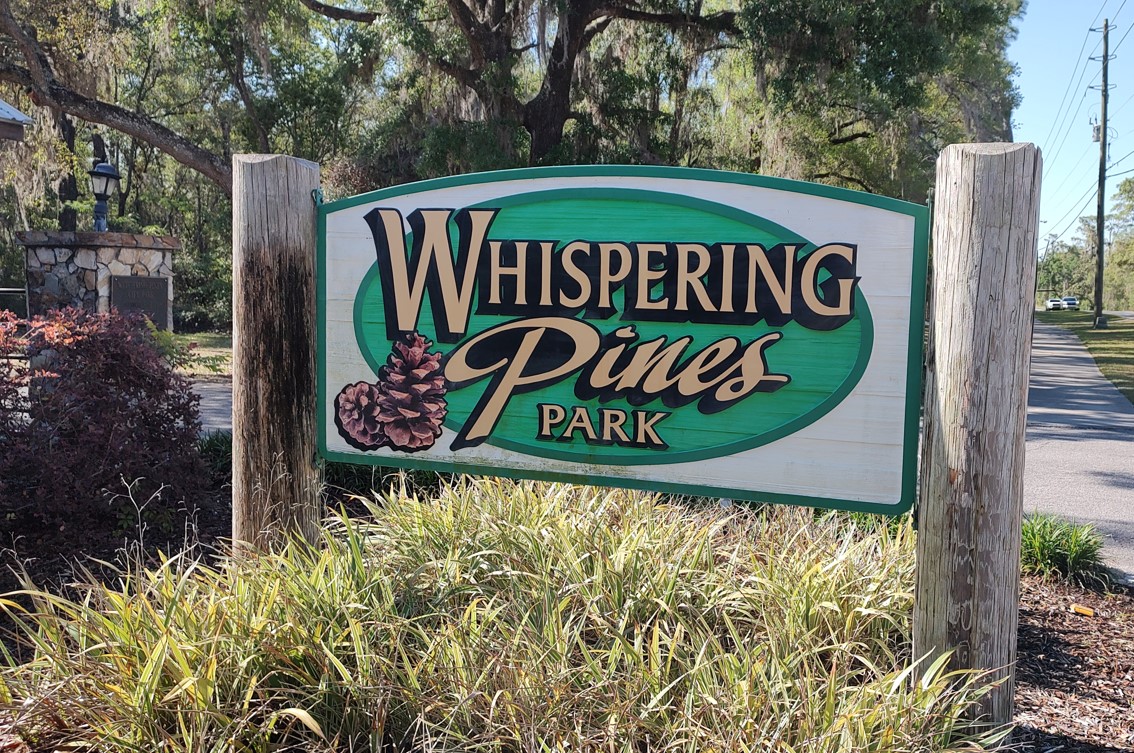
Along the way, the Southern Phosphate Development Company had amassed a huge amount of acreage in the Inverness area. After the land ceased to be commercially viable, Tuttle and his family decided to donate parcels for the betterment of the community. The city park known today as “Whispering Pines” was the result of a 400-acre donation from the Tuttle’s. The land where the current Withlacoochee Technical College sits was the result of a bequest by the Tuttle’s – as well as the current site of the Inverness Middle School.
A Challenging Golf Course
Donald S. Tuttle (Howard’s son) was devoted to the increasing popular game of golf. Since the family had an ample supply of properties, he decided to convert a portion of the family retreat to a 9-hole gold course. He hired a renowned course architect, Robert T. Jones of Chicago, to design the course. (As an aside, course architect Jones was often confused with famed golf legend Robert T. “Bobby” Jones given the similarity of their names and association with the game. They sometimes worked together and joked about the public’s confusion.)
Jones designed a course that served the Tuttle’s well through the years and represented the only golf course in Citrus County at that time. The family was gracious about sharing the course with local golfers, especially during the off-season.
Off to the Races
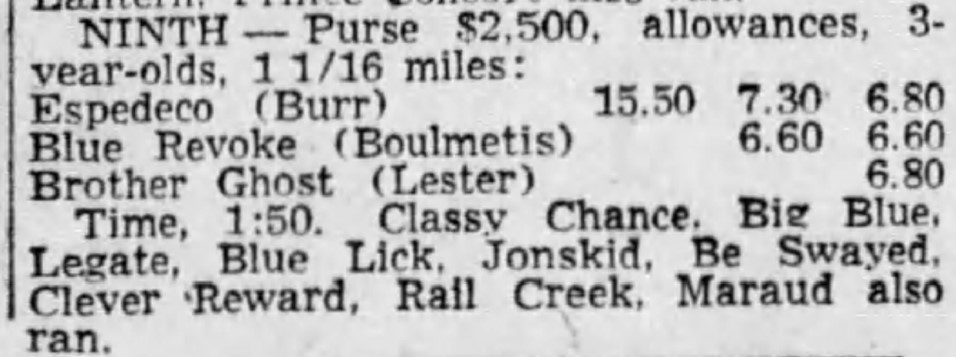
Dr. Charles and Ruby Larkin invested in a thoroughbred race horse named (of course) “Espedeco”. They entered the horse in races in Florida during the 1950’s and the results were included in newspaper sports pages across the country. He was a strong contender in most races and would occasionally walk to the Winner’s Circle. In the words of Mrs. Larkin, “He didn’t distinguish himself, but he didn’t disgrace us, either.”
Citrus County Remembers
Mention the word “Espedeco” to an old-time resident and they’ll step back in time to recall what the area meant to them. Chronicle reader Doug Johnston recounted the one and only time he played “hooky” with some of his friends. He remembered that “Espedeco held a bit of mystique to us. We had never really seen most of the grounds but, had heard story of a golf course and homes there. Our imaginations embellished many images to what was there. On a warm Spring day the four of us acted out our ill-fated adventure that we had spent weeks planning. We gathered at place on the elementary school playground before school and when the bell rang to enter the schoolhouse, we sneaked off the campus and gathered our fishing poles, which we had stashed close by, and started our journey to Espedeco. We laughed and had a good time looking around the grounds and observed the golf course. I think we swam and fished in one of the pits that were there before returning to our respective homes that afternoon. Long story short, we were busted. Mrs. Yoder, whose home was directly across from the school, had witnessed what we were doing and immediately called the school principal, Mr. Buie, then each of our parents. Remember, everyone in Inverness new each other in those days. I can’t speak for my partners in crime but it was the first and last time I played “Hooky “ from school.”
Former Citrus County resident and newspaperman Ashton Hester remembers that Carey Smoak was the caretaker at “Southern Pines” during his youth and he attended Mrs. Essie Smoak’s kindergarten on the premises. He had a mishap one day playing on Mr. Smoak’s truck and had to be rushed to Dr. Mason’s office in the Masonic Building (Citrus County Memorial Hospital was years way from being built at that time). After closing a large gash with 13 stitches, Hester was released to his parents and admonished to never play on the truck again. As an adolescent, his parent’s friendship with the Smoak’s led to invitations at Espedeco where he enjoyed playing golf and swimming in one of the large quarry pits. He noted that one of the pits had a small dock with a high-dive board which was one of his favorite ways to spend a hot Florida afternoon.
Hester describes a particularly challenging day on the links at Espedeco: “One day I was playing with a friend and hit a particularly bad shot (even for me). I began screaming angrily and threw my club to the ground. It so happened that Dr. Larkin [Ruby Tuttle’s husband] was playing right behind us and observed me. He was a very distinguished gentleman, probably in his 60s or early 70s. A few days later he approached me and presented me with a golf instruction book by one of the famous golfers, Ben Hogan, I believe, and he inscribed it: “To Ashton Hester: Hope you enjoy this. Remember to keep your head down and control your temper. – Dr. Larkin.” Hester wryly notes that he studied the book but it still didn’t seem to improve his slice.
Current Citrus County Historical Society President Robert Croft recalls that his father, a truck farmer, used to provide different kinds of produce to the family at their compound. They were always gracious and his father told him that they were good customers over the years.
Epilogue
The locations of many of the public institutions in Inverness were directly attributable to the generosity of the Tuttle family. People living in the Inverness area owe a debt of gratitude to the Tuttle’s and their descendants.
I’d like to specially thank Doug Johnston, Ashton Hester and Robert Croft for their contributions to this article. The article titled “Howard G. Tuttle, Citrus County’s First Tycoon”, written by the late CCHS President Rev. James T. Hoge in 1997, was an invaluable background source as well.
Ken Marotte writes for the Citrus County Historical Society. He can be reached via email at kenmarottejr@gmail.com if you have any comments, questions or suggestions Contact him if you’d like to participate in the ongoing CCHS Oral History Project.