
Homosassa’s Atlanta Fishing Club
By Ken Marotte, Citrus County Historical Society
It Started with Phosphate
George S. Lowdnes was a true entrepreneur by any standard. He had prospected for gold in North Georgia. He was a partner in a successful patent medicine company – Dr. Woolley’s Opium and Whiskey Cure – that yielded significant profits. In a single year, his share of the medicine profits was about $1.4 MM in 2021 dollars. He invested the proceeds in a huge commercial building that housed a number of businesses in Atlanta. He partnered with others to invest in various properties in that city. He was a partner in the Georgia Bond and Investment Company. So, when word spread throughout the country about the discovery of large phosphate deposits in West Central Florida, Lowdnes decided that he would join the search for “white gold” in Florida.
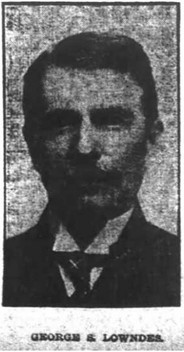
While prospecting in Marion and Citrus counties, Lowndes heard about an unspoiled paradise where fish were plentiful and practically jumped in your boat. He traveled to Homosassa and found that the stories were true. History doesn’t record whether or not he ever found phosphate, but Lowndes had discovered the location that is still enjoyed today by Atlanta’s Homosassa Fishing Club.
Birth of the Homosassa Fishing Club
Lowndes invited other like-minded Atlanta civic leaders to join the fishing expeditions in the upcoming years. At first, a small group brought tents and camping equipment. Later, they reportedly stayed at the Homosassa Inn. The group decided to rent a cottage near The Rendezvous beginning in 1899. The fishing bounty was plentiful that year. They caught 5,235 pounds (32 barrels) of game fish, which they sent back to be distributed to orphans in Atlanta.
The regular members decided to establish a permanent presence in Homosassa. The Homosassa Fishing Club was incorporated in 1903-04 and the group purchased a waterfront house for $2,400 ($73K in 2021 dollars). By that time, only 3 members of the original party of 14 were still active.
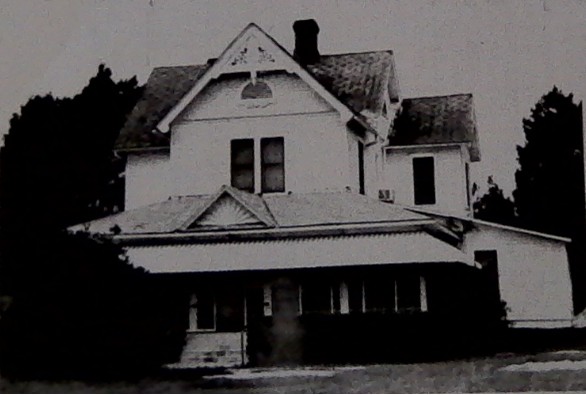
The home was previously owned by Lucy Jenkins and then Cora Castner. There was an adjacent cottage for workers (3 cooks and 3 servants). The Club location featured waterfront access on the Homosassa River. The property included a launch and two boats. A windmill was used to provide water pressure.
The lodge was eventually decorated with pictures and trophies of past hunting and fishing excursions. In 1923, a newspaper reported that a 20 foot “swamp snake” was stuffed and mounted across the walls of the living area.
Time to Relax
The first President of the Homosassa Fishing Club was Frank M. Potts of Atlanta. He was also a successful business man but differed from founder George Lowndes in several ways. Lowndes was a pillar of the Second Baptist Church in Atlanta and partner in an Opium and Whiskey addiction cure company. Potts owned a large whiskey and beer distribution company who had found “creative ways” to grow his business in spite of Atlanta’s temperance laws in the 1880’s. He also encountered some revenue tax issues. In spite of their differences, they agreed to leave their opinions at the door and just enjoy fishing together. This was to be the credo for any future Club members.
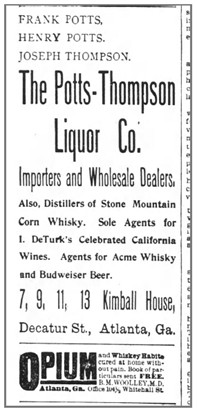
Frank Potts’ Whiskey Liquor advertisement on same newspaper page as George Lowndes’ Opium and Whiskey Cure company in 1894.
Club membership was restricted to 24 men during this time. By 1969, membership was expanded to 50 in response to the long waiting list. Women sometimes accompanied their husbands on the annual trips, but were not allowed to formally join as members until 1969. New members had to be sponsored by an existing member and receive a 100% approval vote of the other members.
The entire club membership was invited to join the annual excursion in January. The group usually stayed for two or three weeks. A couple of members traveled to Homosassa a few days in advance to make sure that everything was ready for the throng of visitors. The members used railroads such as the Silver Springs, Ocala, and Gulf line to access their winter home. There is a report that they even purchased a short line railroad and cars to avoid long layovers in Dunnellon.
The focus of the crowd was fishing and fun. One year, a couple of members snuck out of the house one night and dressed in Native American costumes. They returned to the dark home shouting war-whoops and laughed heartily when their cohorts jumped out windows and crouched behind furniture to hide.
One member used a shotgun to “catch” his quarry. Edward C. Peters grew tired of the monotony of pulling fish after fish from the water. At that time, there was a dam across part of the Homosassa River. His local guide mentioned that fish have been known to jump over the dam depending on the tide. Peters took a couple of hunting dogs and had them jump in the water to scare the fish below the dam. When the fish jumped to escape the dogs, Peters shot the fish as the they jumped. He continued to shoot fish for three hours. By the end of the day, he had expended 40 shells and bagged 40 fish.
Fishing was so good that one participant reportedly hauled in 21 fish within an hour. Another fisherman lost his balance and fell into the water. He grabbed his chair before he hit the river. By the time he was pulled back into the boat, there were two fish on his line that joined him in the pram. There was an annual award for the first person to accidentally fall into the water that was proudly displayed for the entire year by the lucky incumbent.
One writer described his sojourn to the Club in 1940: “Think of being away from telephones, radio, automobiles and every other form of stress and tension, yet with all of the comforts of modern life. One has to visit the Homosassa Fishing Club to know what I am talking about. As I sit here writing this column, the only sound that comes through the big windows and doors into this charming living room of the clubhouse is the occasional splash of water a few feet away, the bark of a dog over in the little village, the voices of the whippoorwills…and crickets”.
Members utilized the Homosassa railroad spur until it was discontinued in 1941. Since that time, participants have organized motorcades to make the journey from Atlanta to the clubhouse.
One family took their own boat to Homosassa in 1957 and filled it with some of Florida’s exotic plants on the return trip home. They had “…filled the boat with wild orchids, air plants, and even those fly-catcher plants we found growing by the roadside”. Their rolling botanical garden must have garnered quite a few double-takes on the road to Atlanta.
Checking your opinions at the door
The group managed to observe the “check your opinions at the door and just fish” motto even when political rivals were on the trip. A newspaper recounted “Politics – and some of the members of the club are politicians – will be rightly excluded as a topic of conversation. Those who go to Homosassa will put behind them their years and cares and make believe they are boys again”.
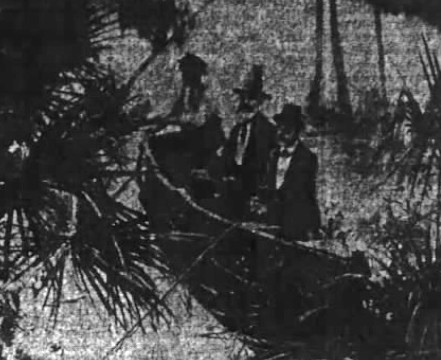
An example of this detente occurred during the 1900 annual trip, when I.S. Mitchell and Frank P. Rice – bitter political opponents – traveled together and actually fished in the same boat. The occasion was captured in the picture below. This is a lesson that could be applied to future generations of politicians.
Notable Members and Guests
The Homosassa Fishing Club became one of the most sought-after billets in Atlanta society. Membership rolls read like a “Who’s Who” of Atlanta society. Some examples include:
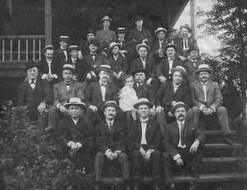
1905 Portrait of members of the Homosassa Fishing Club at a fish fry given by Nym Hurt in the community of East Lake (later annexed into the city of Atlanta), Georgia, including (front row, left to right) Anton Kontz, E. C. Peters, D. B. Desaussure, Clark Howell, (second row, left to right) John Berkele, Dave Woodward, C. E. Currier, Toulman Hurt, James Lawrence Harrison, Howard Van Epps, H. C. Bagley, (third row, left to right) T. T. Williams, George Muse, Henry Durand, Frank Rice, J. C. A. Brannen, I. S. Mitchell, W. S. Duncan, (fourth row, left to right) W. B. Stovall, T. M. Armstead, Preston Arkwright, H. Y. McCord, Nym Hurt, Dave Wyley, (fifth row, left to right) George S. Lowndes and A. W. Calhoun.
Charles A Collier (former mayor of Atlanta) joined the group in 1899
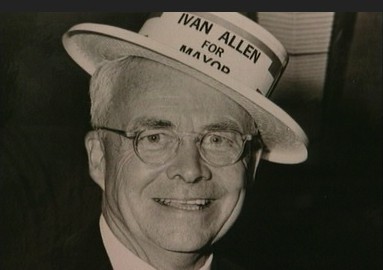
Ivan Allen Jr (former Atlanta mayor) was an American businessman who served two terms as the 52nd mayor of Atlanta, during the Civil Rights Movement of the 1960s. Allen provided pivotal leadership for transforming the segregated and economically stagnant Old South into the progressive New South.
Judge Howard Van Epps – Howard Van Epps settled in Atlanta after graduating from the University of Georgia with second honors in 1869. He became a prominent attorney. He was judge of the city court of Atlanta many years and was the author of a number of works about the law. Judge Van Epps was “dignified in his demeanor and just in all his decisions, fearing neither friend nor foe in the discharge of his duties.” Howard Van Epps died in Atlanta in 1909.
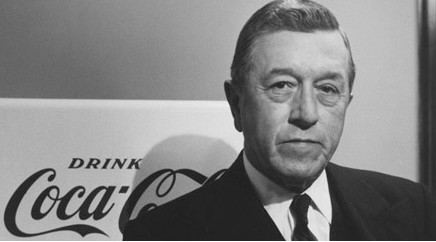
Robert W. Woodruff president of Coca Cola 1923 -1954
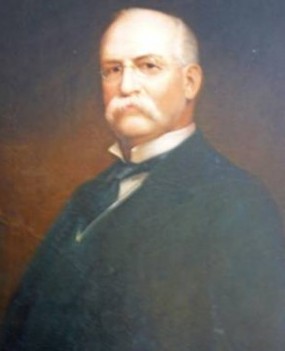
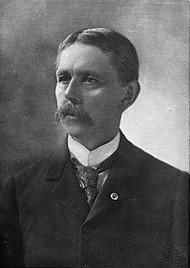
Dr. Abner W. Calhoun was the pioneer ophthalmologist of this section of the country and was Chairman of the Section on Ophthalmology of the A.M.A. in 1882. In 1872, Abner W. Calhoun (1846-1910), the region’s first eye and ear specialist came to Atlanta Medical College, which was established by his father, Andrew B. Calhoun. Abner Calhoun had completed his training in Europe. The college became Emory University School of Medicine in 1915. As the only scientifically trained ophthalmologist south of Maryland, Dr. Abner Calhoun was the specialist of choice for many a Southerner who had a serious eye problem before the turn of the 20th century. He served as faculty president from 1900 until 1910. He and industrialist Andrew Carnegie provided funds to construct a medical college building that later became part of Grady Memorial Hospital, still a training ground for Emory residents
John C Wilson served as chair of the Federal Reserve Bank of Atlanta
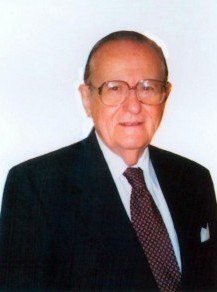
Ed Dodd, creator of popular “Mark Trail” comic served a President
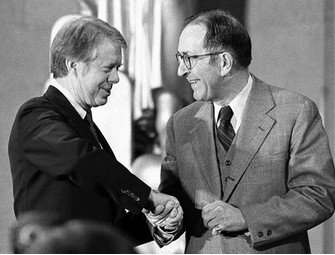
Griffin Bell, former US Attorney General, was a guest
Philanthropic activities
In addition to donating thousands of pounds of fish to Atlanta’s orphans and destitute citizens, the Club members were also known for their philanthropy. They discovered that a local guide named Shivers had significant eye issues and was in danger of going blind. The members of the group paid for him to be transported to Atlanta and undergo a successful operation by the country’s most famous eye surgeon at Emory.
They also contributed to the local economy by employing guides to improve their chances of catching “The Big One” and also caretakers to maintain the lodge. Some of the past caretakers include Clyde Lochlear, Hiram Lochlear, Raymond Williams, James A. “Jockey” Cato and Clifford/Irma Harmon.
Controversies
- A boundary line review in 1925 showed some Club out buildings were not on the officially deeded property. A special deed was filed to accommodate this issue.
- Citrus County officials decided to require a special hunting license. The license cost $10, which would be about $240 in 2021 dollars. Since Club members also hunted during their trips, this action would have curtailed Atlanta club activities. Based on complaints from Club members and other out-of-state visitors, the Commissioners relented and reversed their decision.
- The Club filed a civil suit in 1985 when condo developers quietly purchased adjacent lots and cleared the land one day. The developer planned to construct 40 units with 100 parking spaces. The Club filed suit and alleged that required federal and state permits to fill wetlands were not completed. An access road for the Club was now blocked by the project. The Atlanta contingent enlisted the assistance of Florida’s Department of Environmental Regulation. The DEP quickly reviewed and ordered work halted on the project pending further permitting and a court decision. In the end, a scaled back version of the project appears to have been completed.
Homosassa Fishing Club Today
By the 1960’s, society had changed and the clubhouse was used more for weekend getaways rather than three-week respites. Members could take advantage of air travel to make shorter trips possible. Today’s proliferation of internet and social media makes it difficult to achieve the same level of relaxed isolation that was treasured by the original Club members.
Annual financial reports indicate that the Club is still going strong with 11 employees and assets of over $2MM as of 2018.
The clubhouse has been used for week-long retreats by other organizations.
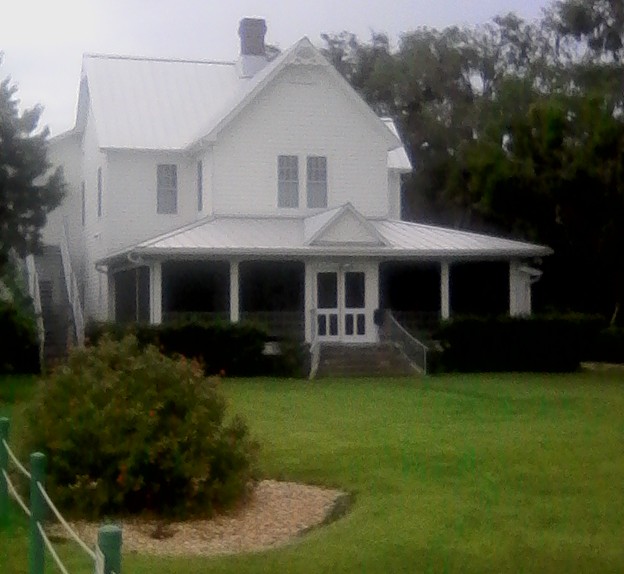
A picture of the Homosassa Fishing Club lodge as seen from Crump’s Landing (above)
Ken Marotte writes for the Citrus County Historical Society. He can be reached via email at kenmarottejr@gmail.com if you have any comments, questions or suggestions Contact him if you’d like to participate in the ongoing CCHS Oral History Project.