
Homespun Citrus County
By: Ken Marotte, Citrus County Historical Society
Long before today’s big-box stores, Citrus County’s early residents had to find ways to produce their own food, clothes and hygiene products. The processes could be labor intensive but gave our independent pioneers the products they needed to thrive.
Homespun Clothes
Citrus County’s pioneers arrived in a wild country and were far from conveniences such as clothing stores. Clothing materials could be ordered, but mail delivery was sporadic and goods seemed to take forever to arrive. This situation meant that people on the frontier had to provide for themselves. They turned to time-honored methods to make clothes for their families.
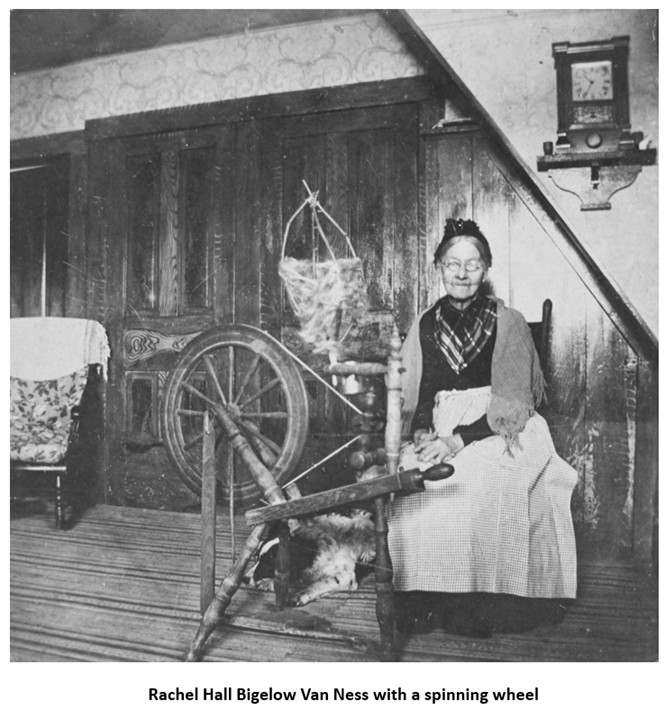
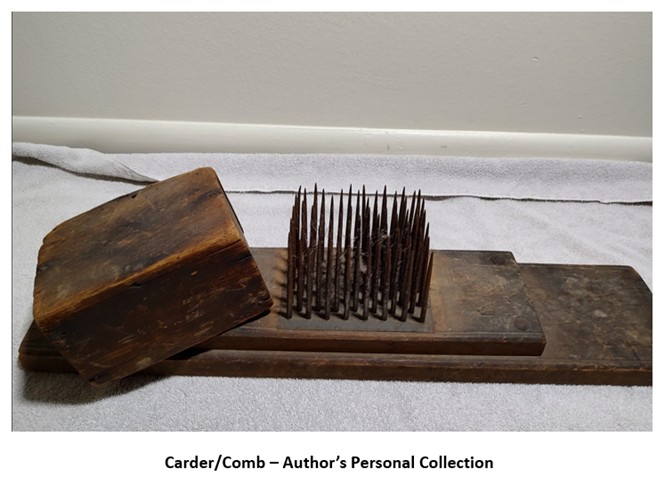
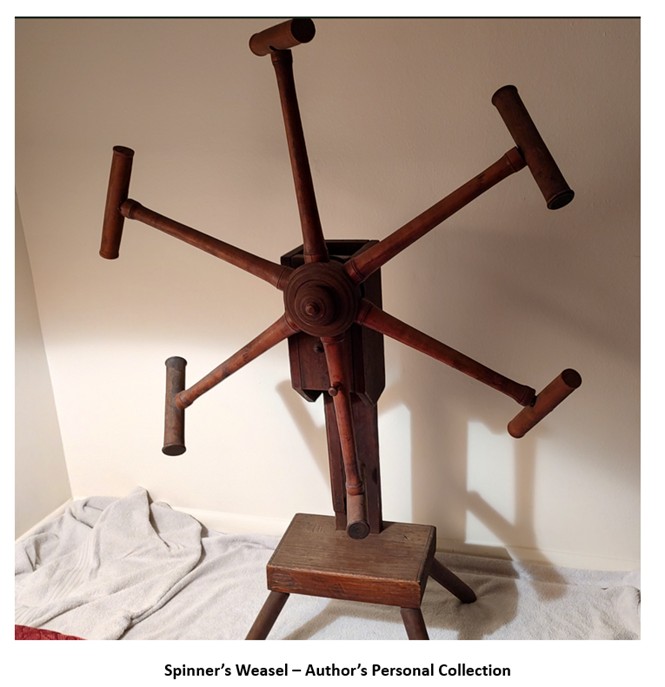
Settlers collected any available materials that nature offered. Piles of wool and cotton were gathered, washed and dyed in preparation for the process of making cloth. Using a sharp metal-spiked carder or comb, the fibers were untangled and fashioned into a long string of threads. The material was then fed into a spinning wheel that twisted the threads into the desired thickness and pattern. In the next step, the user would feed the thread to a device known as a “spinner’s weasel”. The thread wound around the spokes of the “weasel” while a set of mechanical gears measured the thread, enabling the spinner to produce a uniform skein of thread.
The “weasel” would produce an audible popping sound when the desired amount of thread was processed. Some claim that this device may have been the inspiration for a verse in the famous children’s nursery rhyme – “pop goes the weasel”.
The skeins would then be fashioned into clothing using a loom, knitting or other methods depending on the type of materials used and the intended use.
Dyes for thread and materials utilized natural assets such as Indigo (blue), copperas (yellow/black) and red oak chips (red). Poke berries were also used effectively to dye cloth.
The primitive process of gathering raw materials and manually processing into cloth proved cumbersome and time-consuming. The establishment of local mercantile stores that made finished cloth widely available improved pioneer life considerably.
High Fashion in Citrus County
Improved machinery, materials and patterns became widely available at the dawn of the 20th century. Rather than relying on mail-ordered dresses or homespun clothing, our settlers were able to re-create the latest fashions at home.
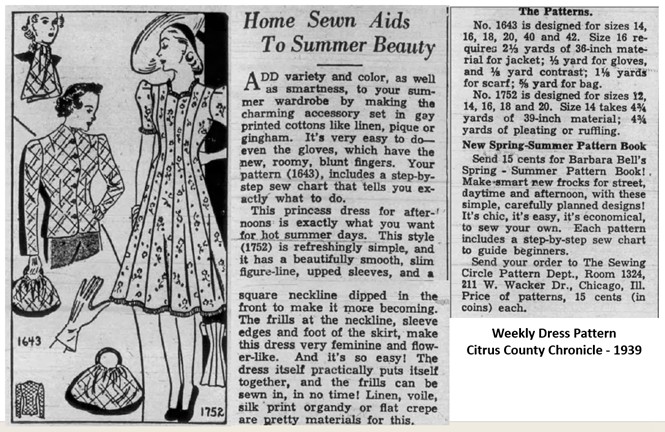
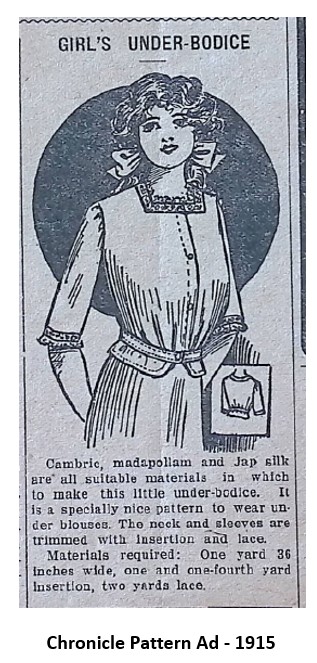
The Citrus County Chronicle started to publish advertisements for dress patterns in the early 1900’s. Drawings of the latest fashions from the “big city” were accompanied by estimates of how much material would be required to make the clothing. In many cases, the material required would be based on the size of the woman. Mary Lou Brown, the CCHS’ Archivist, recalls that she used to make some of her most fashionable dresses by using a mail-order pattern and her family’s sewing machine. She humorously notes that the sizing measurement for dresses has been adjusted downward to accommodate changing American profiles.
Some advertisements featured drawings of an entire ensemble, including gloves. Patterns for each item were available for purchase for a nominal cost of 10 – 25 cents.
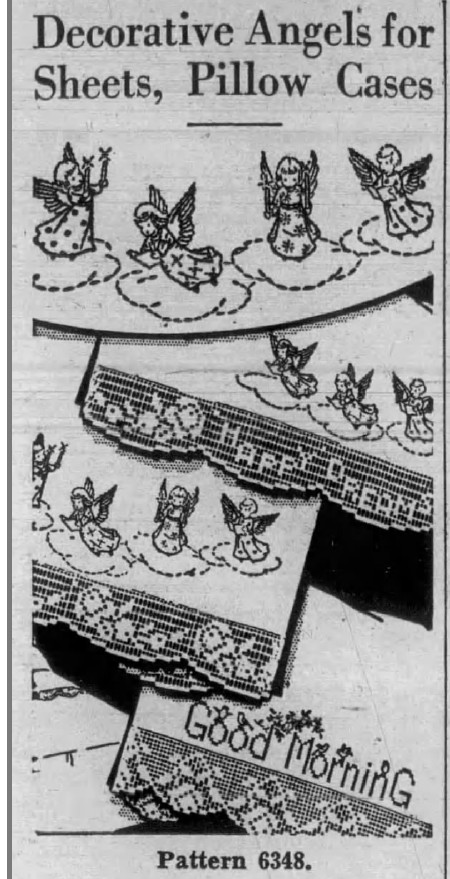
Patterns were not restricted to making clothes for the family. Sheets, pillowcases and tablecloths could be embellished with needlepoint designs that personalized those items for the family.
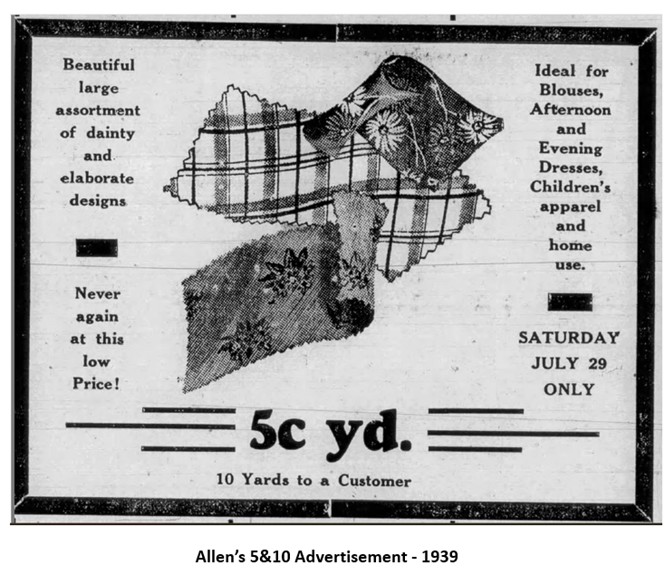
Local stores such as Otto “Pop” Allen’s 5&10 catered to the local dressmakers with an expanded inventory of assorted cloth materials, During the special “Thrift Days” sales in Inverness, Allen offered a wide variety of flat cloth, suitable for a number of different applications, for only 5 cents per yard.
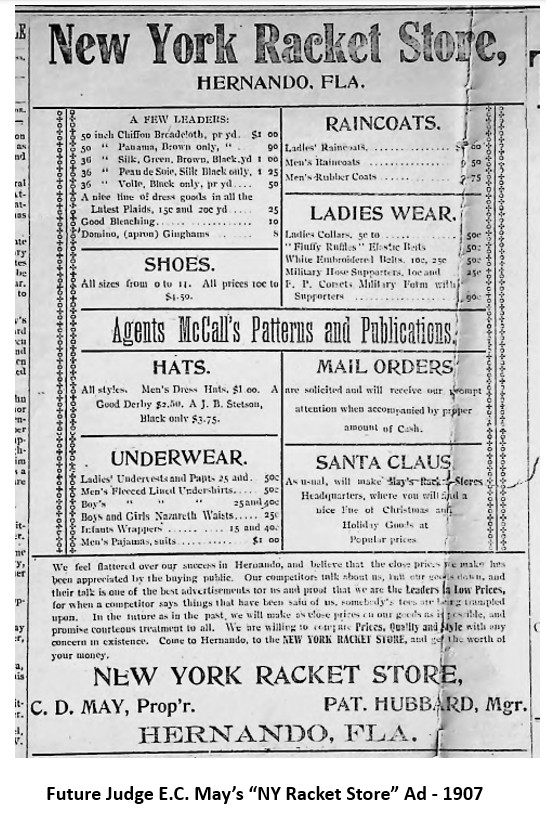
Organizations such as the 4-H for girls and the Demonstration Clubs for women provided encouragement and guidance in skills such as dressmaking and sewing. You can read my prior article on the Growth of 4-H in Citrus County for more details. (https://cccourthouse.org/the-growth-of-4-h-in-citrus-county/).
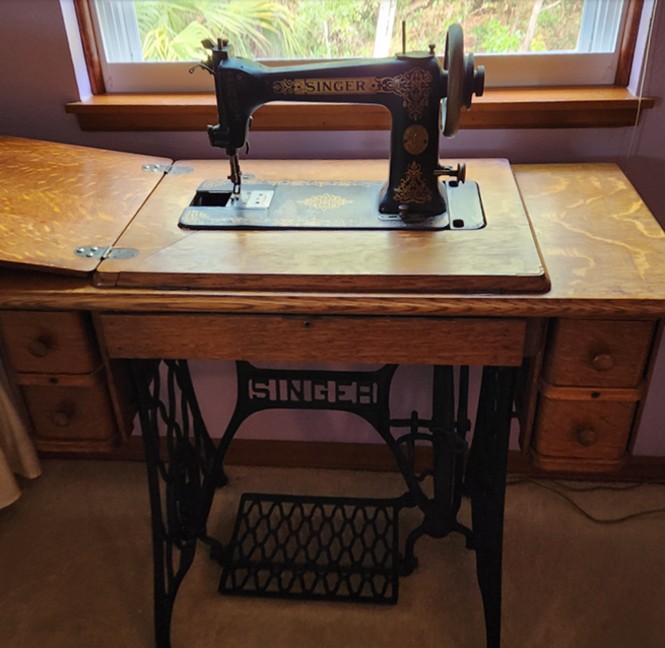
The Singer Treadle sewing machine pictured was recently donated to the Citrus County Historical Society. This popular foldable model is over 100 years old and can be viewed when touring the Old Courthouse Heritage Museum in Inverness. This model did not require electricity because power was supplied by the operator’s continuous foot action on a pedal that was linked to the needle mechanism by mechanical gears.
Homemade Soap
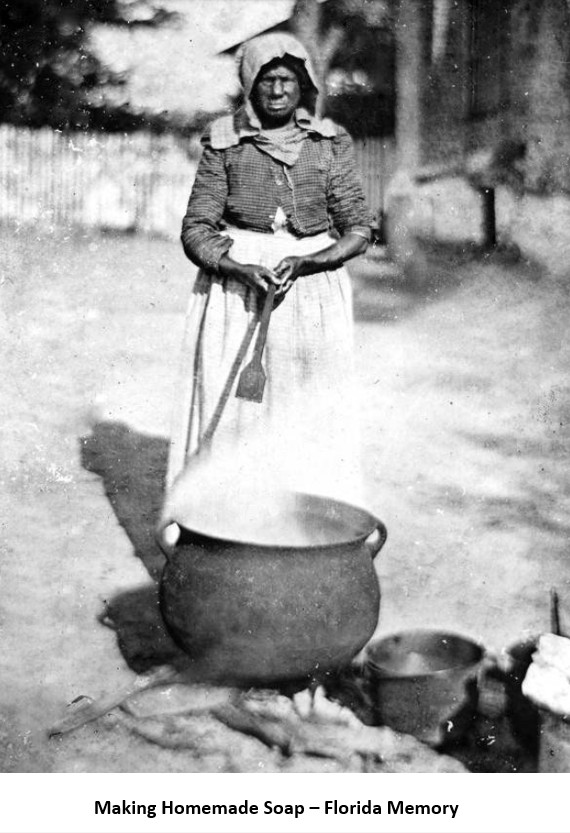
Soap for personal hygiene and household cleaning was not widely available to the pioneers so they adopted innovated approaches to producing homemade products. Oak ashes and leaves would be put into a barrel and covered with pure spring water or rain water collected from the house. After several days the mixture had congealed and was ready to be processed into lye. Holes were drilled into the barrel and the liquid that drained was lye.
Collecting rain water could be an adventure. In a 2009 interview, Elizabeth Smith recounted that her family did not have a well and had to walk a long way to carry water from the nearest pond. They relied on collection of rain water and storage into a cistern. She continued: “…when it would rain, we ran outside and took the downspout out of the cistern until the roof was washed off and clean, and then you put the downspout back in the cistern. And you had to make sure not to let the frogs out.”
Meanwhile, leftover grease from cooking would be drained into a barrel for later use. The lye would be boiled and then divided into bars of soap. Lye is a highly corrosive alkali and could be dangerous to handle if the mixture was too strong. Blockages in the home’s plumbing system could result if too much fat was used in the soap.
The Chronicle published a detailed recipe for producing homemade soap during World War II:
“Heat the fat until it is well melted, adding one pound of lye in three pints of water to every seven pounds of fat. Mix and stir slowly until the mixture resembles honey, pour into granite or wooden containers and cool.” The article added that the mixture should never be heated to a temperature exceeding 150 degrees.
Mrs. R. M. Spires reflected that the lye would also be used to clean the floors of the house. They hunted for coarse white sand to combine with the lye suds. She noted that the scrub broom was a spare piece of lumber with a hole bored for a hoe handle and brush parts. The brushing material was created from coarse corn shucks that were pulled through the holes of the lumber. She found that the device, while it may have looked strange, was very effective at cleaning the floor with the lye and sand mixture.
Pasture plants had other uses in the Spires household. A long grass known as “broomsedge” commonly grew in the pastures on their property. The dried grass was collected in the Fall and cleaned of any impurities. The bundles of broomsedge were placed at the end of a piece of lumber and bound together with lashes and fashioned into a broom. This rudimentary broom was used every day to keep the floors clean and tidy.
Epilogue
In today’s world, we simply go to the superstore or mall when we need clothes. While we’re there, we might add some bar soap and dish soap to our carts. We’ll throw a package of spring water into the cart for good measure. Perhaps we decide that we don’t want to make the trip to the store and order online to have the items delivered to our door.
We should remember the hard work and time that our ancestors spent to make these items for themselves. I wonder what they would think about our lives of convenience?
Ken Marotte writes for the Citrus County Historical Society. He can be reached via email at kenmarottejr@gmail.com if you have any comments, questions or suggestions.