Florida Speed Traps
By : Ken Marotte, Citrus County Historical Society
Visitors traveling though small towns in Florida learned to dread the view of the flashing lights in their rearview mirrors. Emerging from behind a bush or billboard, a “Buford T. Justice” look-alike, would inform the hapless driver that they were facing arrest if they couldn’t make immediate cash payment of their fines. A local Justice of the Peace was conveniently standing by to enforce the law. Welcome to the world of speed traps in Florida and neighboring states in the 20th century. Did speed traps exist here in Citrus County?
Tin Can Tourists
Travel to Florida became more popular with advent of the Ford Model T. The relatively inexpensive automobile opened the roads to people stuck in the frozen Northern sections of the country. Many travelers – nicked named the “Tin Can Tourists” – were the forerunners of today’s Snowbirds. There were no superhighways at the time so most of the routes led through a procession of small towns along the way. Sensing an opportunity to help fill local coffers, many of these villages expanded their roster of constables with the stated purpose of “making the roads safer”. At that time, speed limits on roads were not always marked. Florida did not have a uniform default speed limit so localities were free to enact their own default speed limits in the absence of signage. The definition of traffic offenses was also not clear and varied by location. For instance, a citation for speeding could also be compounded with a “reckless driving” charge for exceeding 25 miles per hour in some areas.
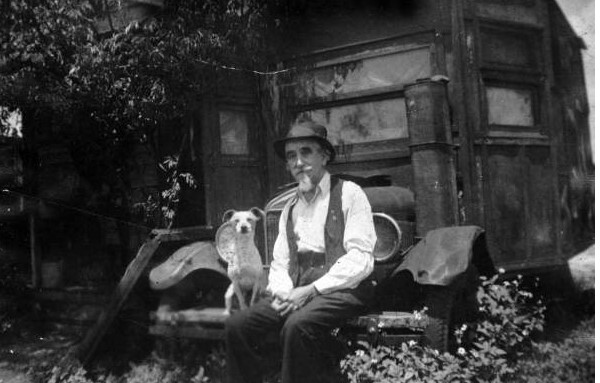
Many of the constables or special police were not paid a salary, but were rather given a hefty percentage of the profits from each traffic ticket. The local Justice of the Peace was charged with rendering immediate decisions and they were also paid on a contingency basis from the profits of each arrest. The lion’s share of the proceeds would be claimed by the local town and served as a major source of income in their annual budget. Since they preyed upon people from out of town, they were reasonably assured that the verdict would not be appealed (especially since the offender would remain in jail while the wheels of justice turned). Travelers learned it was just better to carry some cash and settle with the local authorities so they could continue their journey.
The American Automobile Association (AAA)
Reports of speed traps and roadside courts became widespread throughout the traveling public. The American Automobile Association (AAA) advocacy group declared war on these questionable practices in 1925. Acting upon a multitude of complaints, their investigation “…has clearly proven that fully ninety percent of the roadside courts and speed traps now active are operated for revenue only and not for the enforcement of motor vehicle regulations”. They cited an instance when the Justice of the Peace who was adjudicating traffic cases was the father of the constable who brought the traveler to “justice”. In that way, the spoils were kept within the family. AAA’s research found cases where the Justices of the Peace were not only ignorant of the law but were violating the statutes of their states in the way they imposed fines.
The AAA decided to proactively protect their members from these dubious practices. They collected reports from their members about the specific towns employing roadside justice. They also dispatched researchers to courthouses who would analyze the number of traffic-related arrests per capita and the disbursal of resulting fines. Based on the data, the AAA began publishing an annual report for their members containing the places where speed traps were located. They advised members to avoid those towns and provided them with travel planning maps that deliberately bypassed the unscrupulous “highway bandits”. They even paid to have signs erected on the outskirts of notorious towns to alert drivers of the impending danger.
Local merchants soon found that the revenue-producing traffic practices were a double-edged sword. While the profits from highway justice were being used to keep their local taxes low, their businesses were suffering. Travelers either minimized their time spent in the speed-trap towns or avoided them entirely. People stopped staying in the roadside motels and took their retail business elsewhere.
Roadside Justice Reforms
Florida Governor John W. Martin recognized that the state economy had become dependent on visitors. In 1926, he started meeting with officials from those towns identified by AAA and personally urged them to drop their overzealous practices. He called a meeting of mayors and sheriffs in 1927 where he outlined proposed legislation that will “…do away with such evils such as speed traps, little villages holding up every motorist that passes through for big fines and unusually large county speed forces”. While his efforts were a step in the right direction, the use of roadside justice continued in Florida for decades after his proposals.
Since visitors had to travel through several states to reach Florida, state officials lobbied neighboring states to also reform their speed trap practices. Responses from Georgia Sheriff Dan Waller were typical: “Any motorist…who tries speeding into Florida through Tattnall County will land in jail if the Sheriff or his Deputies catch him”.
Local Speed Traps?
Did our local police or sheriffs conduct speed traps?
Lecanto was incorporated as a separate town in 1927. Since traffic between Crystal River and Inverness flowed through the new town, the town council decided to enhance traffic enforcement. They hired bricklayer Bert D Vaughn as their new traffic patrolman, gave him a motorcycle and sent him out to “make the roads safe” in the town. His position was funded by the proceeds of his arrests and citations.
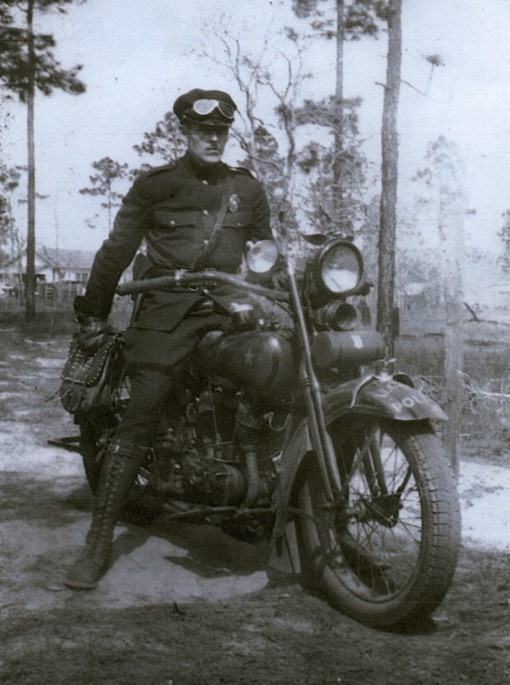
Citrus County historian Hampton Dunn describes the event: The newly incorporated town of Lecanto was accused of running a “speed trap”. Signs were placed on the highway warning motorists to beware of the speed trap. The motorcycle officer on duty was active making arrests of those going over 25 miles per hour. “The fact that the limits of the town extend so far beyond the built-up portion of the community had led many drivers to get caught exceeding the speed limit when they believe they were out of town”, moaned the Chronicle. Mayor John E King replied to the charges and denied a speed trap existed. The Mayor snapped ”As to how long the high-powered speed cop will be on duty will be determined by how long it will take the travelling public to learn it is better and cheaper to obey than to transgress the law”
The town of Lecanto was disincorporated in 1933. Vaughn returned to his career as a bricklayer.
In 1952, Inverness Night Patrolman Elmer E. Snodderly resigned in the wake of charges that he ran his own personal speed trap in the city. Members of the Kiwanis Club approached the city council with verified reports that Snodderly had stopped specific motorists, imposed roadside cash fines, but court records indicated that he had not turned in any money from those fines to the city. Reports stated that Inverness businessmen were told stories of Snodderly taking $5 from a motorist and the officer refused to give him a receipt. A restaurant owner who catered to truckers had overheard multiple complaints about the night patrolman making dubious arrests and imposing cash fines. Snodderly resigned without admitting wrongdoing.
The most controversial Citrus County speed-trap report came from AAA in 1955. The Tampa branch analyzed traffic cases and deemed Citrus County “…as the county where visiting motorists are most likely to be arrested”. AAA provides a bail bond service for its members and their report was based on the number of bail bonds covered by AAA in the Tampa area. Levy County had formerly held that title, but when Sheriff Robbins was removed from office based on moonshining charges, his replacement vowed to end this practice in that county.
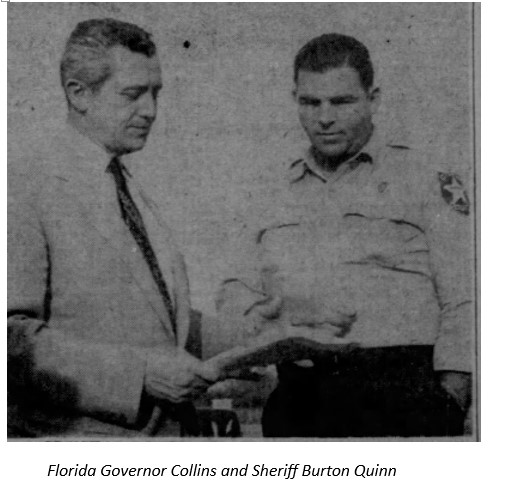
The reaction from Citrus County Sheriff Burton Quinn was swift and direct. He held a press conference with Governor Thomas Collins in Crystal River to address AAA’s findings. He stated “In my county, an AAA member who violates the law is subject to arrest the same as anyone else”. Quinn provided detailed analysis of every traffic arrest his deputies had made to refute the claim that his agency was singling out visitors. He remarked that many of the arrests attributed to the Sheriff’s office were actually conducted by the Florida Highway Patrol. The war of words continued between Burton and the AAA President with neither side backing down.
Epilogue
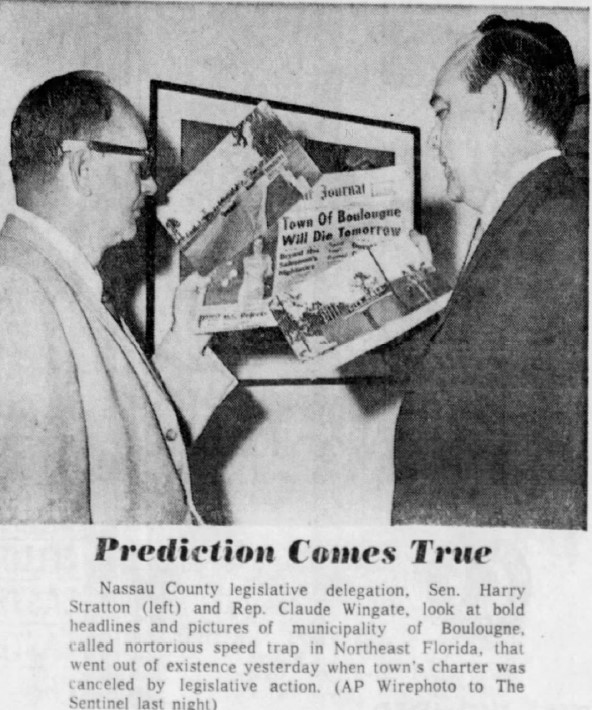
Charges of speed-traps in Crystal River were brought by local businessmen on multiple occasions but investigations did not support those allegations. AAA continued to advocate for the elimination of speed traps in Florida. The Florida legislature passed a bill that restricted the powers of Constables and Justices of the Peace to impose traffic fines. They also mandated that local officials were required to turn a larger percentage of traffic offense revenue to the state. The municipality of Boulougne, which was a notorious speed-trap town in Northeast Florida, found that the Florida legislature voted it out of existence through the revocation of its charter when the town council would not relent in 1963.
Even through these measures were undertaken under the guise of improved traffic safety, motorists and the traveling public were not fooled by the blatant revenue-generating practices of some local law enforcement agencies. In the end, subterfuges such as this usually result in people avoiding those areas and taking their business elsewhere.