

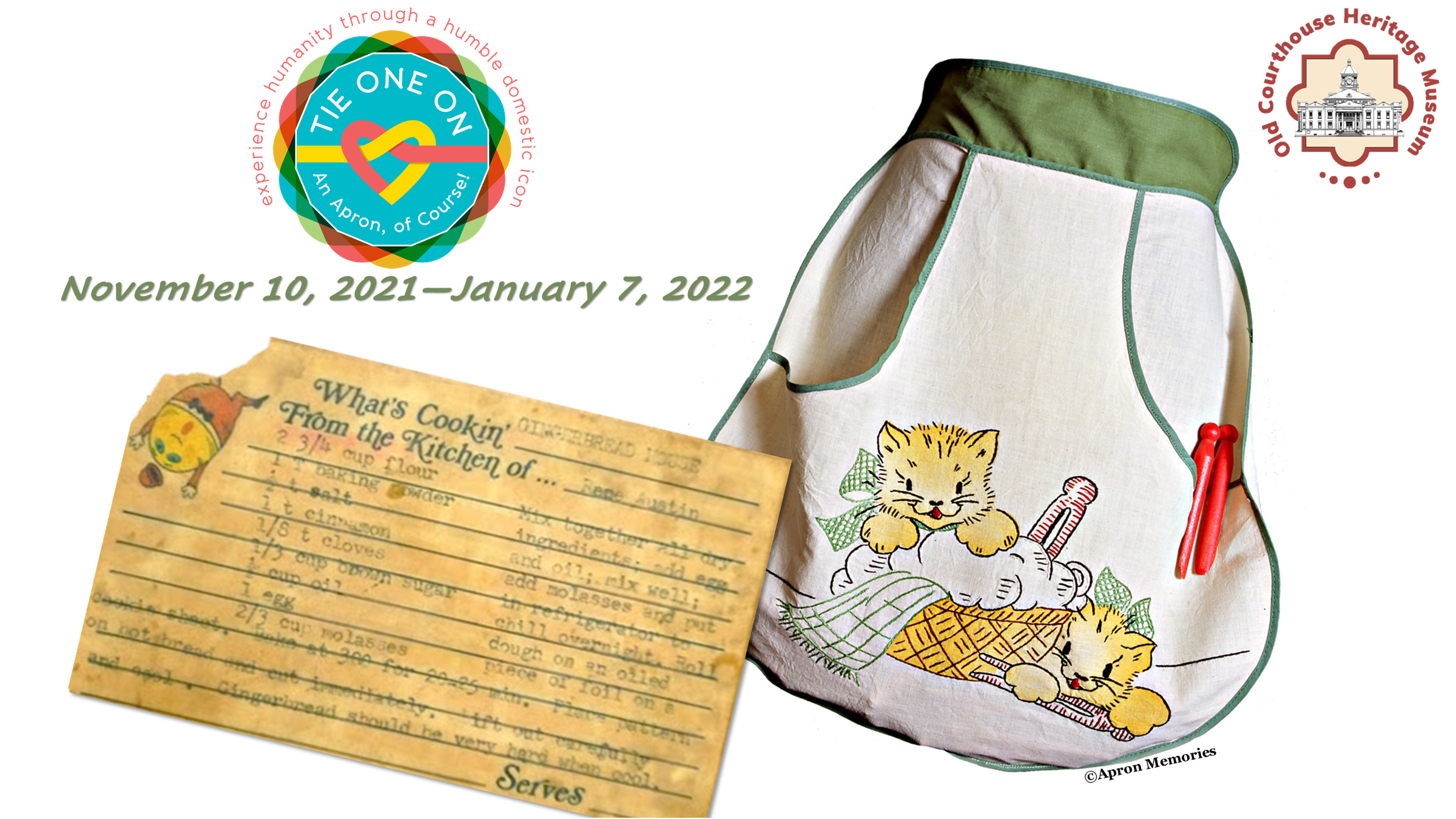
The apron has been taken for granted by many art and social historians. However, this fascinating exhibit will reevaluate these unique objects as an important piece of our social history.
Featuring 50 vintage and contemporary examples, this exhibit reviews the apron’s role as an emotionally charged vehicle for expression with a rich and varied craft history that is still relevant today.
Featuring aprons dating from the 1900s through present, the exhibition chronicles changing attitudes toward women and domestic work. It also surveys the wide range of design and craft techniques apron-makers have used to express themselves, while still working within creative venues traditionally available to women. Elaborately embroidered aprons of delicate cotton, for example, were worn by well-heeled women of the 1920s. In contrast, the Depression and war years of the 1930s and 1940s inspired sturdy, calico bib aprons. The post-war 1940s and 1950s—the June Cleaver era—stand out as the acknowledged heyday of the apron, when commercial and intricately hand-decorated aprons flourished as symbols of family and motherhood.
Today, artists continue using aprons to explore cultural myths and realities, as well as their individual experiences with American domesticity. Though not as widespread as they once were, aprons remain as functional and protective garments for men and women alike.