
Ebbert Castel – Floral City’s Snake Man
By: Ken Marotte, Citrus County Historical Society
If you see some snakes slithering in your yard – who’re you going to call? For many Citrus County residents, the answer was “Ebbert Castel” – the “Snake Man of Floral City”.
Life in Floral City
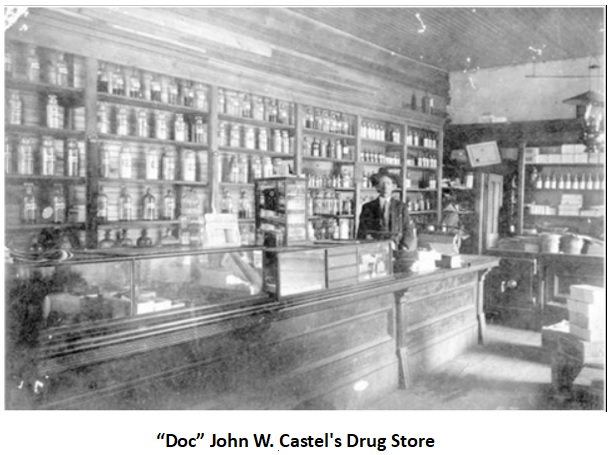
Ebbert Castel grew up in the idyllic rural community of Floral City. He was the son of Mr. and Mrs. Louis Huot Castel. His Grandfather was “Doc” John William Castel, who owned drug stores in Floral City and Dunnellon.
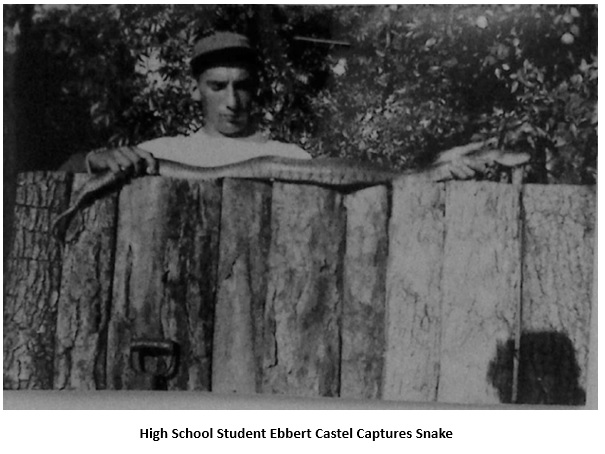
Young Ebbert developed a love of nature during his rambles through the countryside. He became an accomplished fisherman and caught a number of huge fish during his many excursions with his cousin Jimmy Cooper – including a bass that weighed over thirteen pounds. He stalked alligators in the nearby ponds and (legally) hunted them to supplement the family fortunes.
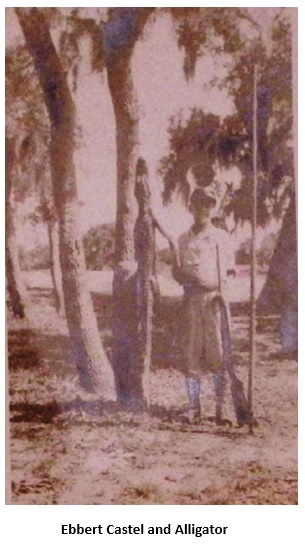
More importantly, he encountered a plethora of snakes during his trips through the woods. He learned which snakes were harmless and which needed to be carefully watched as he passed by. There was no shortage of venomous snakes in Citrus County – there were rattlesnakes, coral snakes and water moccasins that could administer lethal bites if not approached carefully. Rather than avoiding the danger, Castel became fascinated with the varieties of snakes and learned how to handle even the most dangerous serpents.
Castel Finds a Mentor
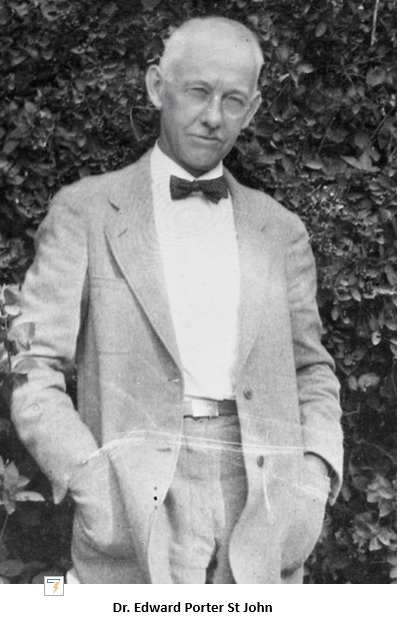
Dr. Edward Porter St John was a “Renaissance Man” who became an expert in a number of scientific fields during the course of his career. He was a science Professor at Clark University in Massachusetts and was a popular international speaker on diverse fields such as child development and ornithology (birds). He discovered a previously unknown species of ferns in Central Florida. More importantly, he was recognized for his studies in herpetology (amphibians and snakes). After traveling throughout the Unites States and Great Britain, he settled down in Floral City after retiring.
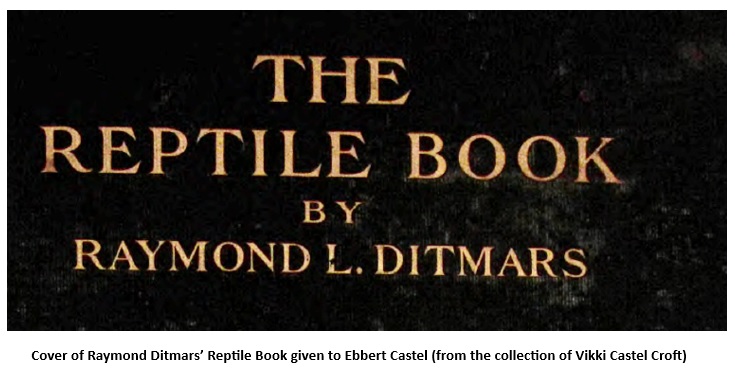
It did not take long for St. John to hear news of a local young man who seemed to have special skills identifying and handling the snakes in the area. St. John sought out Ebbert Castel and the two spent a great deal of time discussing their common interests. Porter presented the young man with a book that he considered to be a bible in the field of reptile studies written by Raymond L. Ditmars. Castel later told his family that he considered St. Johns to be a good friend and the Ditmars book was “…the nicest present he ever received”. His talks with St. Johns and studying the Ditmars book served to expand Castel’s practical knowledge of snakes. Even though he was just a teenager, young Ebbert’s fame in Citrus County grew for his ability to catch and handle the slithery reptiles.
Snakes for Fun and Profit
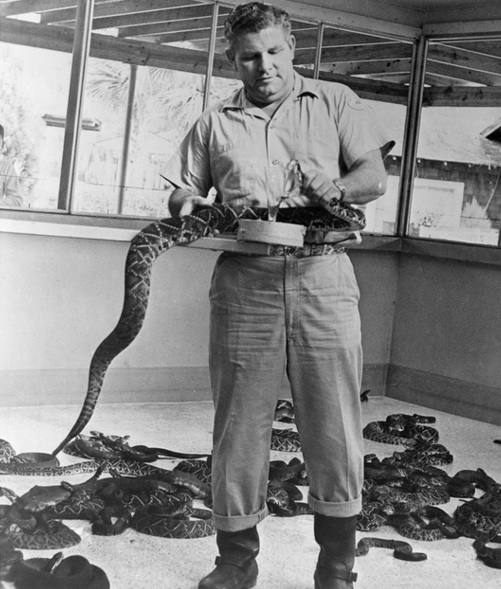
Ross Allen owned a world-famous reptile institute in Silver Springs. The organization was devoted to public education about snakes and other reptiles. Another important role of the institute was devoted to the production of anti-venom that saved the lives of those who had been bitten by snakes. Allen needed a steady supply of snakes for display and medical purposes. He contracted with a small number of local snake hunters to supply his institute with the reptiles he required. At age 14, Ebbert Castel was one of the few chosen to parlay his snake catching skills into a business. He later married Frances Scott Castel and she later recounted Ebbert’s childhood exploits as a snake catcher.
Ebbert constructed three pits in the family’s backyard. One contained common (non-venomous) varieties. The other was filled with water that served as a temporary pen for water snakes. The third pen (which was VERY secure) held the dangerous snakes that would be sent to Allen for “milking” and production of anti-venom. One day his water snakes staged a mass escape which set off alarms throughout Floral City. Castel jumped into action and quickly recaptured the escapees and remanded them to his (more secure) reptile prison. Needless to say, many people gave the Castel home a wide berth when walking down the street.
Allen would send empty collection boxes to Castel via train from Ocala to Floral City. Ebbert unloaded the boxes from the train and brought them to his home. He carefully moved snakes from his collection pits into the appropriate boxes and sent them back to Allen on the next train to Ocala. He told reporters that “I’d get 10 cents a foot for non-poisonous snakes, between 25 and 35 cents a foot for water snakes and a flat $5 for rattlesnakes”. Keep in mind that $5 in 1940 is equivalent to about $120 in 2025.
In 1942 Ebbert Castel was awarded a certificate “For aiding the Armed Forces of the United States of America by supplying live poisonous snakes for production of snake venom.”
Call of Duty
Ebbert Castel enlisted in the US Army after graduation. He was assigned to serve as a communications specialist. After undergoing Specialist training Fort McClelland, AL, he was shipped to Italy. His role involved establishing and fixing critical communication lines. Many times he had to crawl on the ground and avoid enemy fire while he repaired broken communication lines.
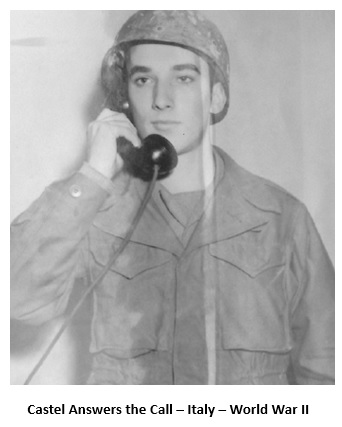
After victory in Europe, he was loaded onto a troopship to help subdue the Japanese. After a few days on the sea, it was announced that our troops and sailors in the Pacific had achieved their objectives and Ebbert Castel was rerouted to New York and civilian life.
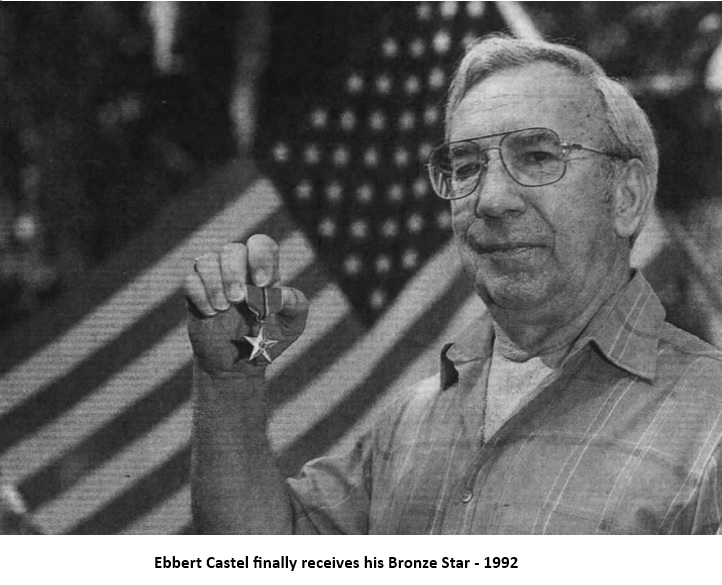
Castel earned the Bronze Star for his service during the Italian Campaign. However, he never actually received the award when he left the Army. He didn’t think much about the missing medal until he was chatting with one of his Army buddies years later when they talked about the Bronze Star. It seems that his friend had the medal in hand, which led Ebbert to wonder why his Bronze Star was AWOL. Ebbert’s wife, Frances Castel, and the Army compatriot investigated and found that Ebbert Castel had been ill on the day when the medals were distributed and a fire in St. Louis had destroyed many veteran’s records. They persisted and convinced the Defense Department to correct the oversight.
In 1992, Ebbert Castel finally received his long-awaited Bronze Star. His wife Frances reportedly quipped “I guess 48 years late isn’t bad for government work…”
Building a Family
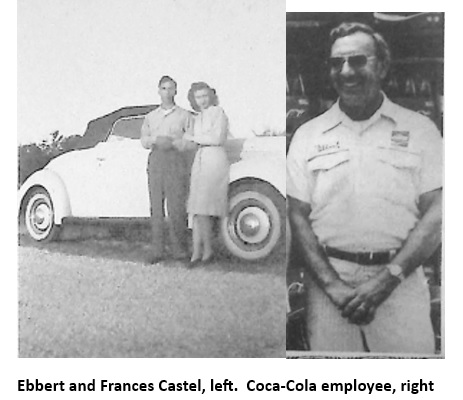
When he returned from the war, Ebbert Castel married the former Frances Scott. The couple made their home in Citrus County and had two daughters, Debbie and Vikki. Castel worked for 32 years at the Coca-Cola company in Inverness and rose to a management position. He was active in the Rail-To-Trails program and the Inverness Golf and County Club. He hosted the Citrus High School’s Class of 1942 50th reunion at the family home in Inverness. He was a star baseball player on the local Inverness team. He participated as a member of the Inverness Development Council. He continued to hunt and fish throughout his life.
Educating the Next Generation
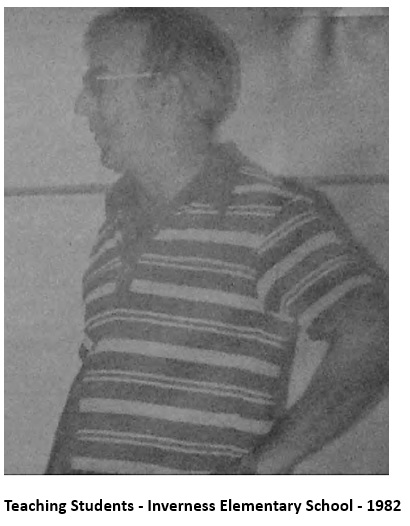
After he retired from Coca- Cola, Castel decided to educate young students about his experiences with snakes. He gave talks to students at the Inverness Elementary school to highlight the various types of snakes that were beneficial and should be left alone, as well as pictures of snakes that could be dangerous and should be avoided at all costs. As a teaching aid, he captured samples of common snakes and saved them in jars so he could better demonstrate his lesson. His goal was to show students that not all snakes are dangerous and that they should appreciate the valuable role that they play in the environment.
Snakes in the Museum!
I met with Ebbert Castel’s daughter, Vikki Castel Croft, several times while preparing this article. I’m indebted to her for supplying many of the pictures and family stories about her father. At the end of our last session, she opened a box that she had brought along for our discussion. I was surprised to see that she had a variety of snakes in jars that her father had used to teach schoolchildren over forty years ago. I thanked her for allowing me to photograph the reptiles but was glad to see that she took them back home with her.
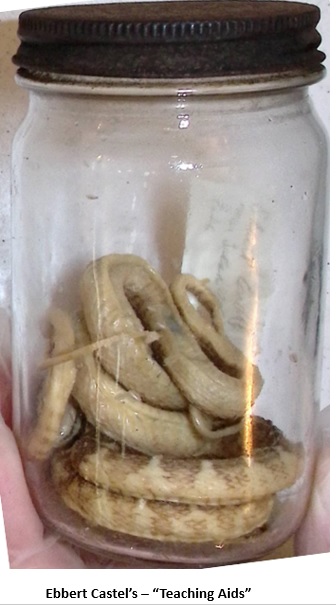
Ebbert Castel passed away in 1999 at the age of 75. He left behind his loving wife Frances, two daughters, Debbie and Vikki, and two grandchildren – as well as four jars of pickled snakes.
Thanks to Vikki Castel Croft for her family remembrances and photographs. Ken Marotte writes for the Citrus County Historical Society. He can be reached via email at kenmarottejr@gmail.com if you have any comments, questions or suggestions Contact him if you’d like to participate in the ongoing CCHS Oral History Project.