
Cola Wars in Citrus County
By Ken Marotte, Citrus County Historical Society
At the dawn of the twentieth century, a war between combatants in the cola wars was heating up. The two leading contenders built bottling plants across the country. This is the story of how the contestants battled each other In Citrus County. One of them was Coca-Cola. The other combatant was not who you may think.
Coca-Cola leads the pack
Coca-Cola was created in the late 1880’s as a patent medicine. John Pemberton was a chemist who believed that the refreshing qualities of his solution would serve as a temperance drink.
They targeted the soda fountain to reach potential customers. In those days, the soda fountain was like today’s pub but was socially acceptable for women of the period to patronize. The demand for Coca-Cola grew slowly. Only 25 gallons of cola syrup were sold in 1886.
Asa Candler was a local drug store owner who took over marketing for the company He came up with an ingenious way to build the business. He made a coupons available for a free sample for all new customers. This campaign was extremely successful and led the company into a dominant position as the new century approached.
The early business model focused on supplying their syrup to soda fountains but eventually licensed the right to bottle the product to third-party installations performing under the rules and review of the Coca Cola company. By 1909, there were 379 licensed bottling plants across the country.
Candler had assumed control of the company after Pemberton’s death, He sold his interest in 1919. Robert Woodruff was tapped to be president of Coca Cola in 1923. As an aside, Woodruff became a member of Homosassa’s Atlanta Fishing Club in 1928.
One of Woodruff’s first initiatives was the address the inconsistent operations and sanitary conditions of the third party bottlers. He ordered samples from each of the independent bottlers and was shocked to find that the way their licensees created the beverage was causing public relations issues.
A Competitor is Born
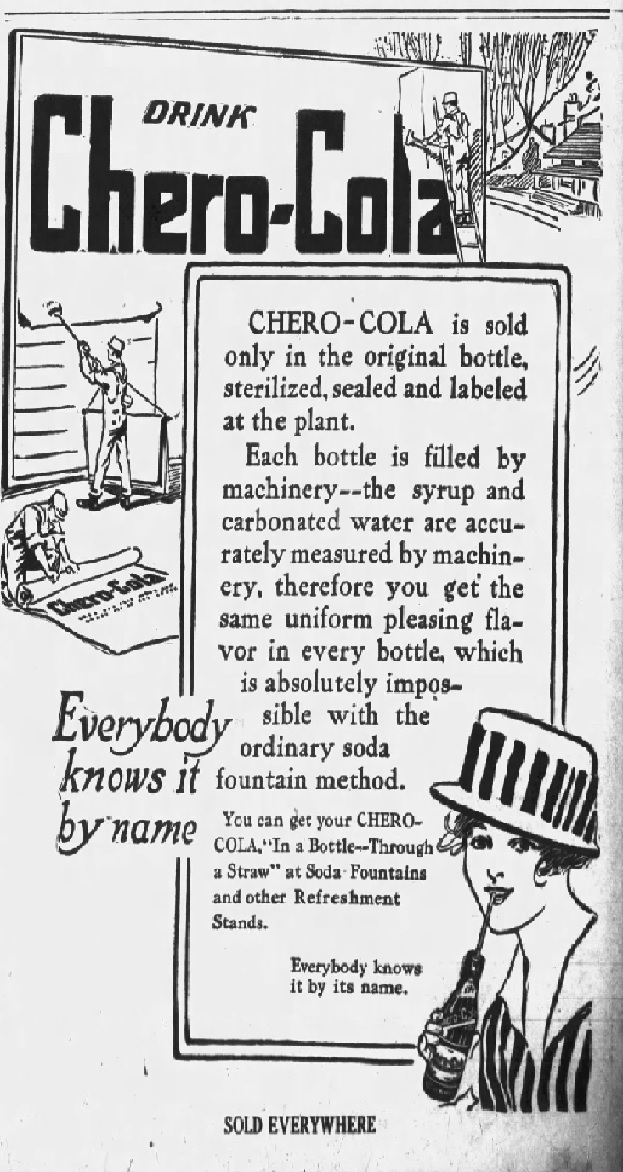
Claud Hatcher had been trained as a pharmacist but left that field to join the family grocery business in 1901. Hatcher sold a great amount of Coca-Cola in his store. He approached the Coca-Cola representative and asked for a wholesaler’s discount, When he received a firm negative response, reportedly a heated argument with the Coca-Cola representative ensued. Hatcher told the salesman that he would never a buy a cola product from that company again. He vowed to develop his own competing soda. In 1905, Hatcher made a moderately successful ginger ale. However, he found that customers wanted cola. He developed a cola formula shortly after and added a cherry flavor to it as a way to distinguish from the Coca-Cola offering.

The new product was called “Chero-Cola” and proved to be very popular by 1912. Worried about competition, Coca-Cola initiated a law suit that asked to award the company exclusive use of the term “cola”. After a protracted series of legal maneuvers, the Coca-Cola lawyers convinced the court to prohibit other companies from using the term “cola” in their beverage names. Chero-Cola had to drop “cola” and simply changed name of their drink to “Chero.” Unfortunately, sales of their cola product dropped dramatically. By 1924, they introduced their Ne-hi brand of fruit-flavored soda drinks. The product turned out to be so successful that the company was renamed to Ne-Hi in 1928. Ads showed a bottle of Ni-hi with a woman’s leg and skirt that was raised to her knees – the dress was “knee high”. The Chero-Cola/Ne-hi company boasted 360 plants across 21 states by 1926.

Soft Drink Wars in Citrus County
Most people traveling through Inverness have noticed a building that has a Coca-Cola logo emblazoned over the door. While the building is empty now, at one time it was the busy hub of a bottling plant. Mr W.T. Baxley had obtained a license to produce the popular cola beverage in 1906. He started a small plant in Hernando. The family moved again to Inverness and set up shop in a small building behind their home in 1914. The home has since been demolished but was located on Pine Street near the small office complex where a Raymond James branch resides today.
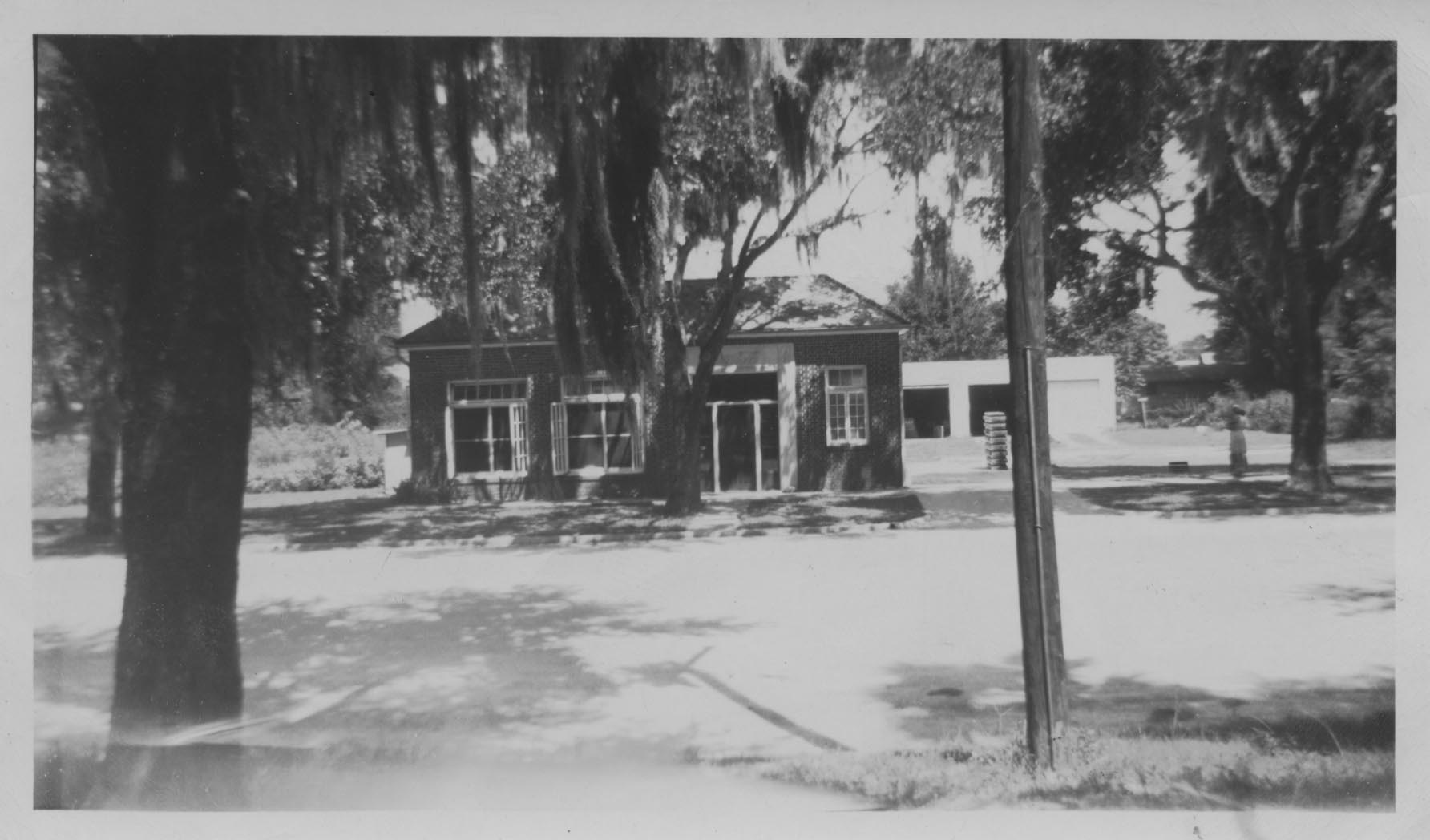
Charles J. Thompson was a long-time engineer for the Charo-Cola company. He presented sessions on building and operating optimal bottling processes at the Chero-Cola company’s annual conventions. Thompson decided to become directly involved in running a plant, so he invested $20,000 in a new bottling plant in Inverness in 1926. It was housed in a 600 square foot, two-story concrete building in between the depots of the Seaboard Air Line and Atlantic Coast Lines. All new bottling equipment was installed on the first floor and the second floor was dedicated to a laboratory for quality assurance testing. They took pains to inform the public that the syrup came directly from the Chero-Cola company and that all bottles were sterilized before being processed in their electrically driven plant. Thompson boasted that there were seven levels of inspection before the finished product was sold to the public. The Inverness plant would employ a manager and eight local workers.
In addition to ginger ale, there were an assortment of fruit flavors processed in Inverness under the Ne-Hi label, including orange, lemon-lime, banana, strawberry and grape soda (Radar O’Reilly’s favorite). They purchased two new trucks to deliver their delicious product throughout Citrus County.
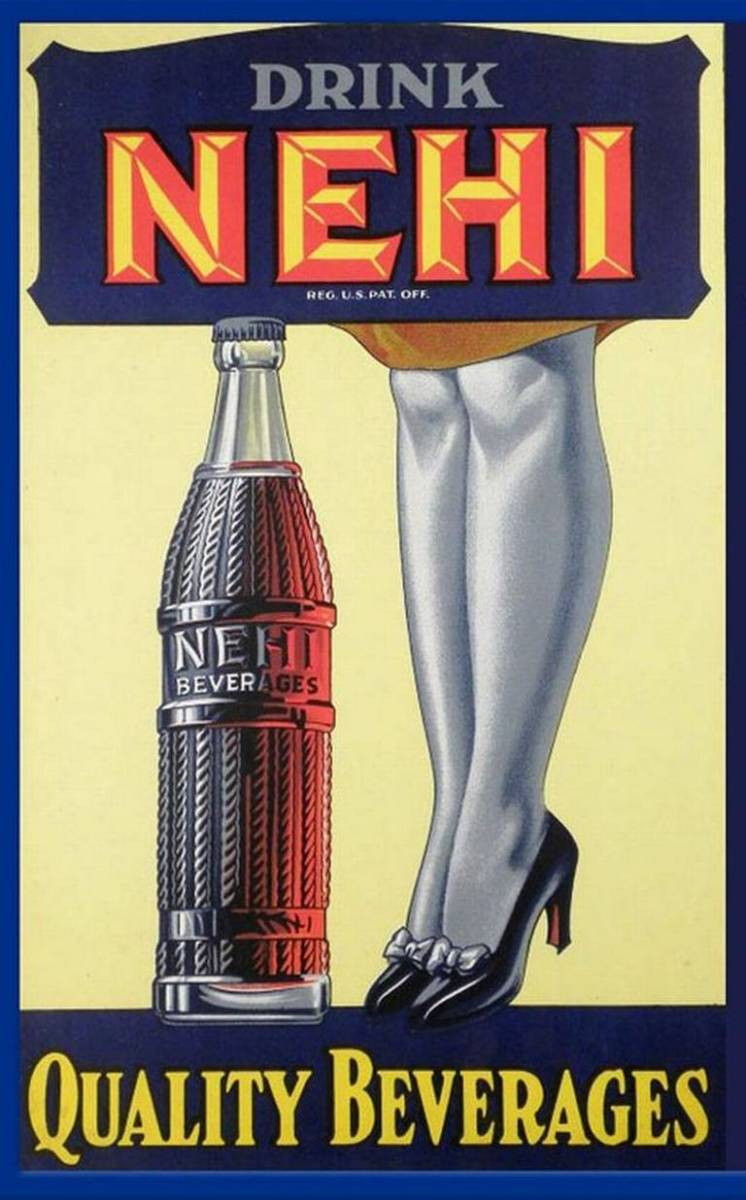
The company was chartered as the Ne-Hi Bottling Company of Inverness in May 1926. It was a formidable opponent for Coca-Cola and the new plant in Inverness threatened the primacy of the local plant run by the Baxley’s.
The Inverness Ne-hi organization further retooled their machinery in 1928 to include chocolate soda to their menu. The drink was made from pure sugar, Hershey’s cocoa and Borden’s milk. It was subjected to a special sterilization process and could be stored “…forever and a day with not the slightest chance of contamination.
The Baxleys knew that they had to modernize their processes if they were to compete against the Ne-HI interlopers. They purchased property on Apopka Avenue and made plans to build a brand new facility. W.T. Baxley suffered a fatal heart attack in 1931 while visiting his daughter near Lake City. His widow, Pearl Baxley had a exceptional business acumen and she vowed to continue fighting the challenger. The new Coca-Cola plant was opened in 1932 and enabled the Baxley family to increase production while ensuring the sanitary condition of the final product. The expanded capacity also enabled Baxley to take over the operations of the plant in Hernando. Baxley purchased the adjacent lot where the remains of the abandoned Avalon Theatre were located. She demolished the old theatre and constructed an annex that dwarfed the original factory in 1960. When she retired in the 1980’s, Baxley sold the property to Citrus County. The Board of Elections occupied the annex until they moved to Crystal River.
The Fate of Ne-Hi of Inverness
What was the fate of the Ne-hi Bottling Company of Inverness? The loss of a viable cola product in 1921 hamstrung the Chero-Cola / Ne-hi company across the country. While their fruit drinks were popular, they couldn’t match the demand for a cola drink. The advent of the Great Depression in 1929 made every business scramble for survival. In the end, the Inverness Ne-hi organization could not remain viable. The license was sold to another district in the 1930’s and the company charter was abandoned in 1936.
It’s interesting to speculate about the outcome of the Citrus County cola war if Coca-Cola had not won their lawsuit in 1921. Chero-Cola was poised for significant growth as the 1920’s dawned. Coca-Cola had no fruit-based products that would have competed with Ne-hi. Perhaps the Coca-Cola juggernaut would have been slowed and a different King would be wearing the Royal Crown today
Epilogue
Chero-Cola’s Asa Hatcher passed away 1933. His company eventually won a lawsuit allowing them to use the term “cola” in 1940. They reformulated their cola syrup and renamed the new soda product after the original Ginger Ale drink – “Royal Crown” cola – known today as RC Cola. The company enjoyed modest success. They were the first to hold a “blind taste test” comparing their drink to Coca-Cola. They innovated with a new Diet Rite soda at a time when no one was selling diet drinks. It proved to be very popular until its main sweetener – cylamate – was deemed unsafe by the government. The Royal Crown company limped along and was subject to several acquisitions and mergers. Today is owned by 7-Up / Dr Pepper.