
Citrus County’s Vital Ice Connection
By: Ken Marotte, Citrus County Historical Society
Today we simply go to our freezer when we need a glass of ice. The refrigerator keeps food cold and stores all of those leftovers after our Thanksgiving dinner. Obtaining ice was quite a different matter for the pioneers of Citrus County. This seemingly ordinary convenience was absolutely vital for the people and businesses of our county – and companies would literally go to great lengths to obtain this precious resource.
A Growing Economy
Some of Citrus County’s strengths during our early history were related to exporting seafood, produce and meat products. These products were intended for customers in distant markets but would spoil without some type of refrigeration. Obtaining ice became a lifeline that determined whether or not local merchants, fishermen and farmers would be successful.
Ice Farming
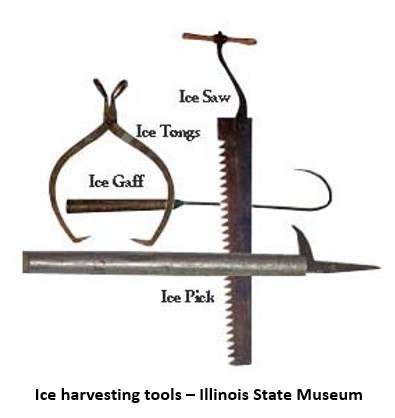
The story of Citrus County’s ice began in the frozen ponds and lakes of New York and New England. Every year the brutal Winter winds would mark the end of the growing season for Northern farmers; however, they were able to use their plows, saws and horses to harvest another profitable “crop”.
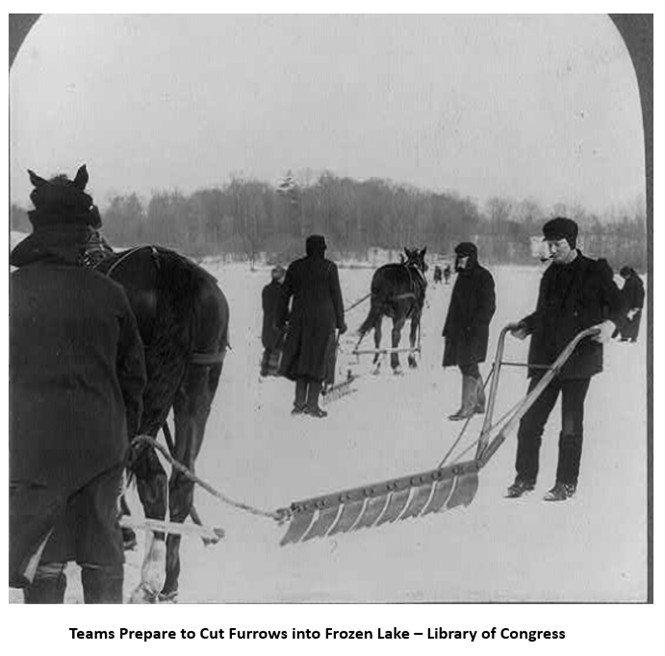
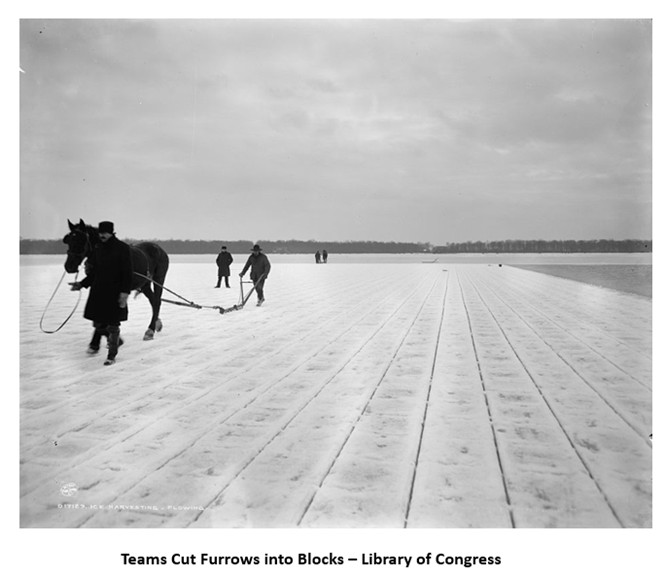
Once the lakes were sufficiently frozen, ice farmers would clear any snow and mark the ice with long lines for the horse-driven plows to follow. Deep grooves would be precisely cut into the ice creating furrows that could be used to separate the ice into manageable blocks. Since the cuts needed to be precise, two people were assigned to each team – one to guide the horse and the other to drive the plow.
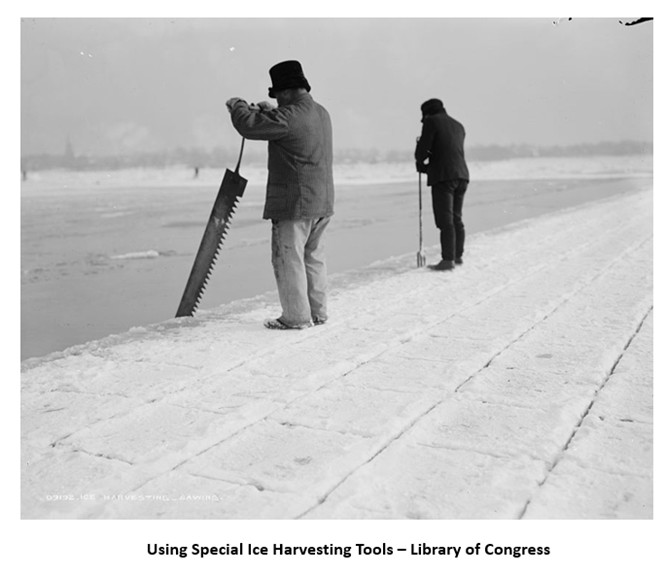
Workers with special ice saws and ice picks then began the arduous (and dangerous) task of cutting the ice into blocks suitable for shipment. They were required to work on the edge of the ice pack and risked falling into the freezing water if they lost their balance.
The ice blocks were loaded onto wagons and brought to well-insulated icehouses while awaiting shipment. Since the ice weighed tons, ice harvesting operations were usually located near railroad or shipping ports for transporting to warm-weather states.
The ice harvesting operation was commonly observed on most lakes and ponds in the Northern states. From his cabin on Walden Pond, Henry David Thoreau recounted in 1846 that “… a hundred Irishmen, with Yankee overseers, came from Cambridge every day to get out the ice. They divided it into cakes by methods too well known to require description.”
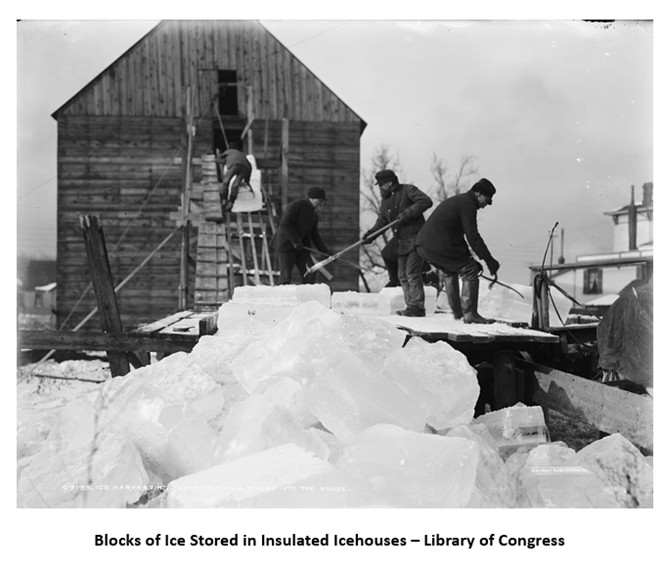
After being brought to waiting ships, the frozen cargo was packed in sawdust and straw for insulation and sent southward to Florida. The yield from just two small lakes near Boston in 1841 was about 40,000 tons in a single season, requiring 133 ships to be loaded with 300 tons each before being sent on their trip to the South.
Florida Needs Ice
Pensacola built their first public ice house in 1840. The local newspaper rejoiced “Ice in summer, may now be almost reckoned among the necessaries of life”.
Once the ice was unloaded and delivered, it was imperative that it would be immediately protected in a tightly insulated ice house. The blocks of ice remained in their original straw or sawdust packing and the walls of the ice house were lined with cork or whatever materials were at hand. For example, a deposit of “infusorial earth” – containing the shells of ancient diatoms – was discovered in Central Florida and was used as insulation between the walls of local icehouses. This material was sought because it was a non-conductor of heat and electricity.
However, the effort involved in the harvesting and transporting of the heavy ice blocks from Northern ponds made ice very expensive for widespread industry and consumer use. Advances in technology led to possibility of producing artificial ice locally. One newspaper stated “Artificial ice is one of the greatest blessings that the+ progress of science in late years has given to the South”.
The impact of this technological breakthrough cannot be underestimated. As a result, ice making machinery encouraged new startup companies to build local facilities devoted ice manufacturing. Many cities in Central Florida built their own artificial ice factories in the 1880’s. By 1892 there were 26 ice factories in the State of Florida.
The Family Ice Box
The various ice companies usually had drivers who would use insulated wagons to make home deliveries. Once they arrived at the customer’s door, a solid block of ice would be loaded into the top of the family “icebox” or refrigerator. Any item that needed to be kept cool would be placed on the shelves below the box. While today’s refrigerators or usually white enamel or stainless steel, the family’s ice box generally had a wood finish, such as hard oak, while the inside was lined with enamel. Insulation between the exterior wood case and the inner icebox kept the perishables cool until the ice melted.
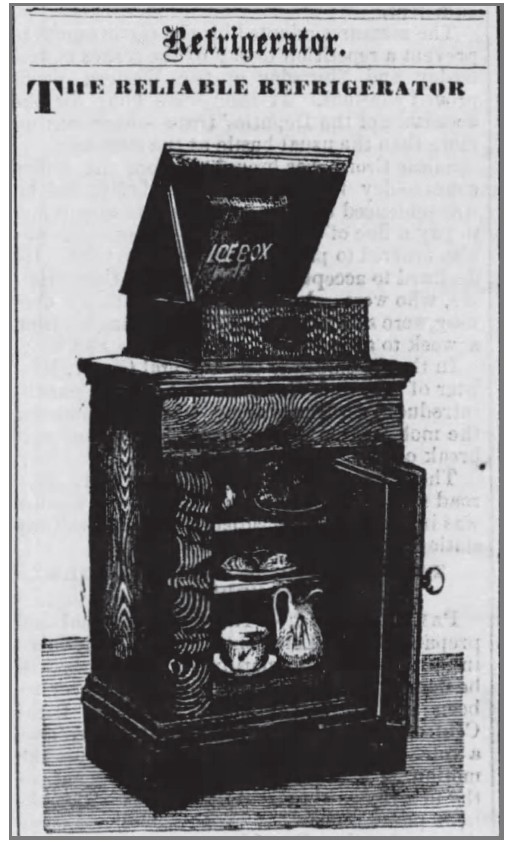
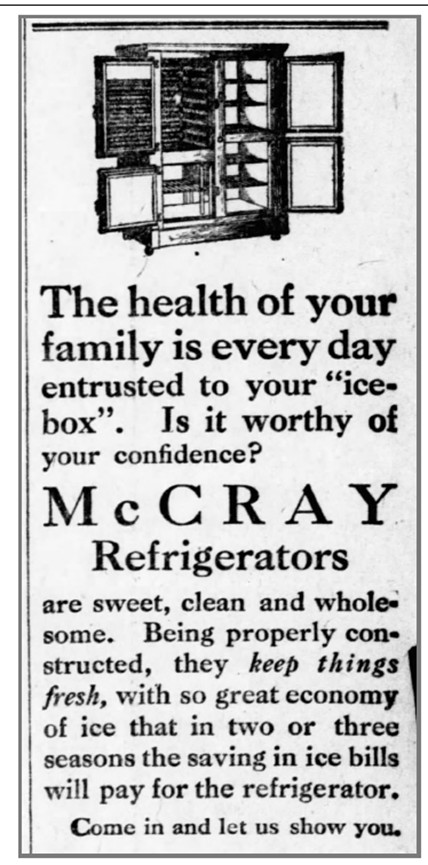
The use of iceboxes was particularly important for areas without electricity. You may be surprised to find that ice companies continued to have home customers until the late 1940’s. It was not unusual to see classified advertisements in the local newspaper for used iceboxes until approximately 1950. Large retailers such as Sears Roebuck offered special deals that allowed customers to purchase new electric refrigerators for a special price with a trade-in of their old icebox.
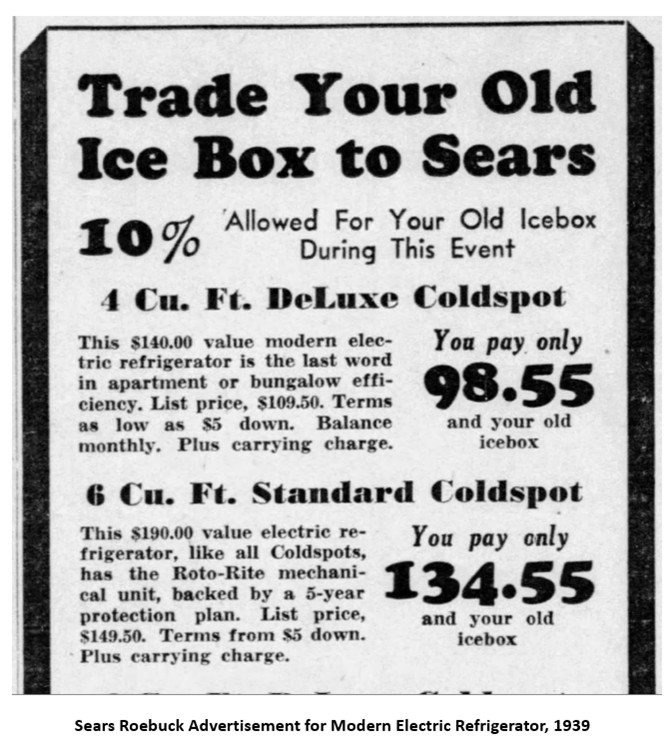
Even after the widespread adoption of fully electric refrigerators, generations of Americans continued to refer to those appliances as “iceboxes”.
Crystal River Ice Factory
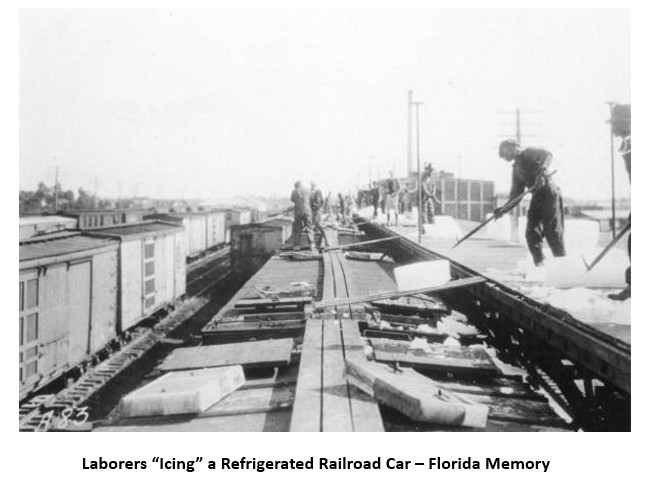
The first areas to require ice for business purposes were Crystal River and Homosassa. Fishermen from those areas needed a way to keep their oysters and fish cool while being transported to markets. Like all Southern towns, they eagerly awaited the train carrying their shipments of ice blocks from the Northern states. They loaded their catch into special refrigerated cars, which had extra insulation and removable slats on the top of the car. After the shipment was loaded, laborers would shovel ice tablets through the slats which would maintain cool temperatures in the railroad car for the journey.
The cost of imported ice rose and the Crystal River businessmen sought other alternatives. Once electric power through a generator became available, the Crystal River Ice Plant was opened. The first plant was operational in 1905 and was featured in a widely-circulated newsletter promoting the town.
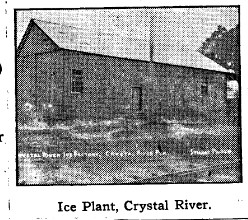
Alonzo Holder purchased an ice house in Crystal River in 1952 but it was subsequently razed in a fire. Since there was still a market for ice, Holder purchased property at the intersection of Routes 19 and 44. The new location was a thriving business until the use of electric appliances overtook the business in 1973. The building was torn down in 1974 and the property now houses a WAWA convenience store.
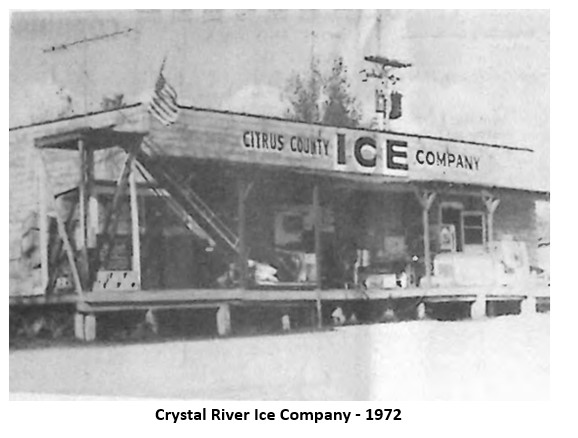
Chronicle reader Gwen Slack Hunt fondly remembers the old Crystal River ice store. She recalled “It was a large rough-hewn unpainted wooden structure, built on pilings, where a few neighborhood dogs found solace from the scorching Florida sun by lying on the sandy ground under a covered porch that stretched across the front of the building…and on that shaded porch, sat a well-used electric ice crushing machine.”
One of her jobs was to drive to the plant and purchase ice for their nearby family store. “I would park in front of the ice house and young, shirtless, barefoot Black men would ask how many bags of ice I wanted to buy. Returning inside they came out lugging large blocks of ice grasped with metal tongs, heaved the ice blocks into the crusher, and then bagged the crushed ice as it slid from a chute”
Inverness Ice Factory
The Inverness Ice Plant followed a similar timeline. Baxter Morrison and Walter Warnock organized the Inverness Power Company in 1908 with the intention of building a modern ice factory near the shores of Lake Tsala Apopka. The company installed a powerful generator and offered to maintain a water works, erect power lines and install streetlights for downtown Inverness.
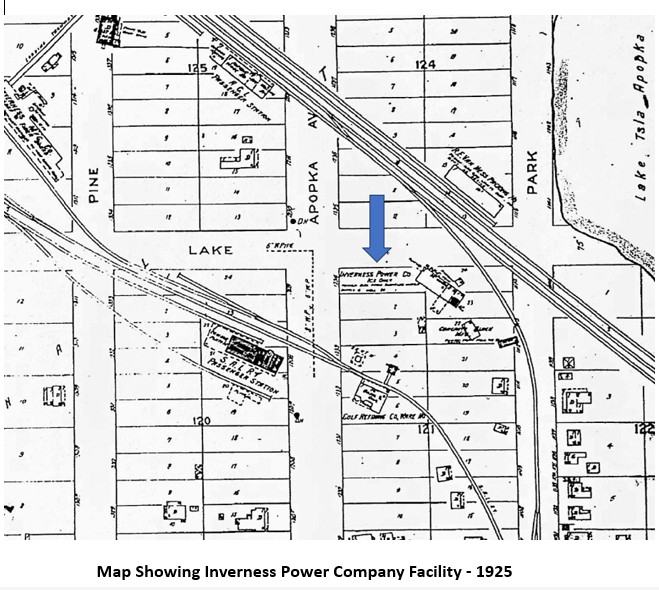
Fletcher Morrison was designated as manager of the company and told the Chronicle: “,,,his cold storage had on hand or had cured and delivered more than ten thousand pounds of hams and shoulders of pork” in 1917
Long-time resident Robert Croft remembers that ice was available at local gas stations, such as Roberts Automotive in Hernando and Cooper’s filling station and his father would obtain as much as ice as they needed for the family truck farm operation.
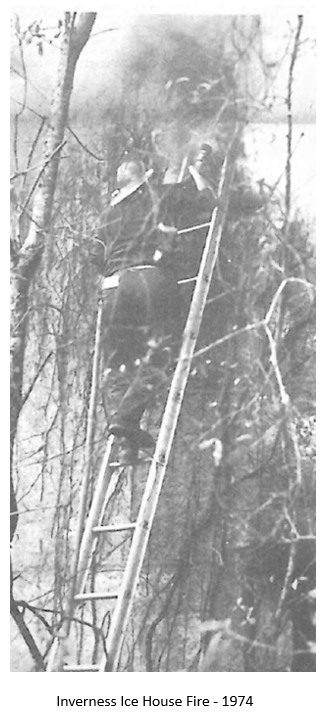
Progress moved forward and the need for large blocks of ice diminished in Inverness as well. The ice plant was closed sometime in 1949 and the derelict building burned in 1974. By that time the building was just a hollow shell and owner John Allen remarked that the loss was negligible given the state of decay.
The old Inverness Ice Plant was located at 212-214 South Apopka Avenue and the property now houses the Citrus County Tax Assessor’s office.
Ken Marotte writes for the Citrus County Historical Society. He can be reached via email at kenmarottejr@gmail.com if you have any comments, questions or suggestions. Contact him if you’d like to participate in the ongoing CCHS Oral History Project.