
Citrus County’s “Rosie the Riveter”
By: Ken Marotte, Citrus County Historical Society
World War II was the first total war that mobilized every person in the country. While men marched off to battle, women stepped in to fill the gap of doing essential work that was sorely needed. They were represented by a mythical character – Rosie the Riveter. This is the story of one of the “Rosies” who calls Citrus County her home.
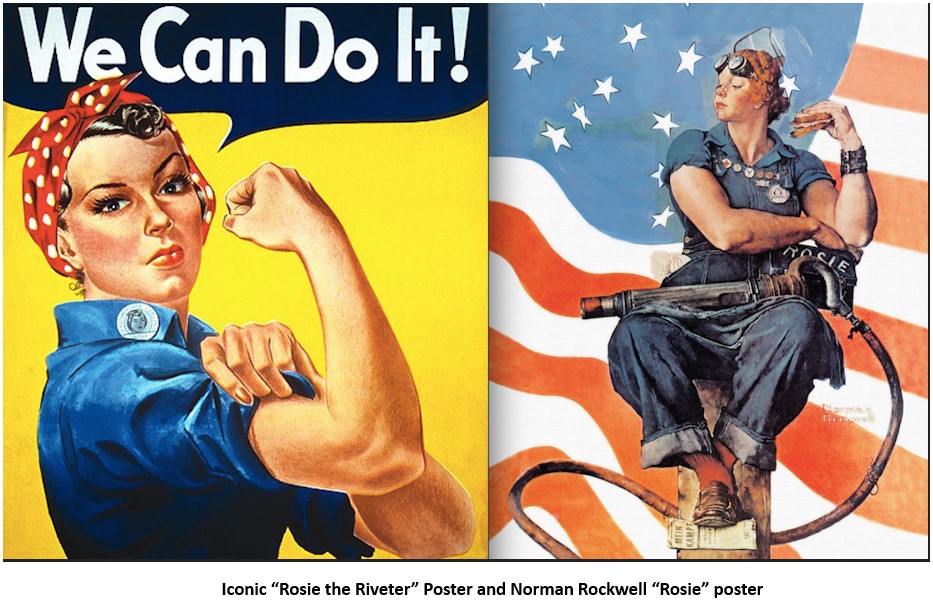
Citrus County Women Support the War
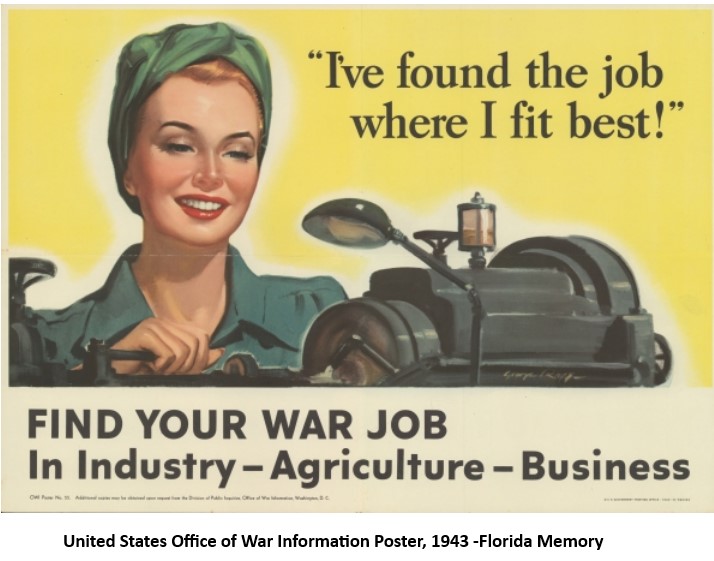
As an agricultural community, Citrus County’s contribution to the war effort was supplying food and rations. Shipbuilding was being undertaken on the St. Johns River in Jacksonville and in Tampa. Local women joined the Red Cross and rolled bandages. Airplane spotters occupied towers in Floral City, Homosassa, Crystal River and Inverness and maintained a 24-hour vigil. Some women joined the auxiliary armed forces and volunteered to become Army WACs and Navy WAVES.
In other areas of the country, many plants were retooled and made components for munitions, ships and aircraft that were assembled for wartime use. Their contribution to the war effort was one of the factors that tipped the balance to the Allie’s favor.
I recently interviewed Phyllis J. Smith of Homosassa as part of CCHS’s Oral History project. Video and photographic services were handled by Herb Law.
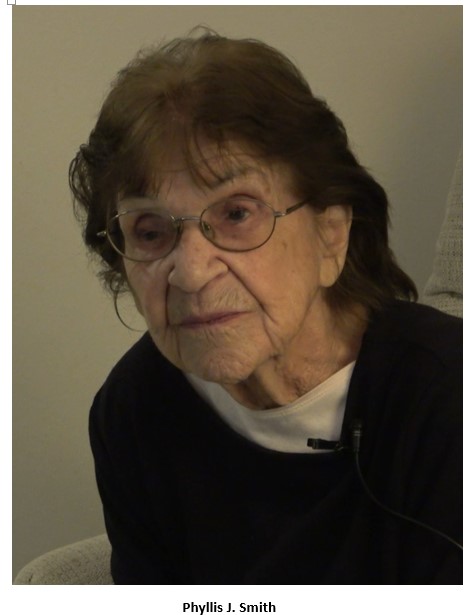
Mrs. Phyllis J. Smith was born in South Bend, Indiana in the late 1920’s. Her father was an armed security guard for US Mail shipments and the family moved frequently. She attended several different schools and had some of her classes in a one-room schoolhouse. She attended one year of High School but had to quit when her father purchased an old dairy farm. Phyllis notes that from that point onward “I went to the School of Life”.
In a scene that was familiar for many rural Citrus Countians, Phyllis was required to “hitch up horses, shovel cow manure onto a wagon and then take it out into one of our fields and shovel it off in the field”. Her father hired her out to local farmers and she would work doing anything from mowing hay to cutting corn. She chuckled that there were no tractors and all of this work had to be done using a team of horses. When the local farmers would store their grain in silos, Phyllis and her sister would be placed in the bottom of the silo and stomp down the grain to compress the harvest and save space in the silo. They didn’t use any protection for that job except scarves around their head and neck. When the silo was full, the sisters would scramble from the top and collect their rewards.
She fondly recalls the times she spent with her siblings while doing their chores. Phyllis and her younger sister would milk cows in different parts of their fields and the two girls would yodel back-and-forth to pass the time. Since their home used wood for heat and hot washing water, Phyllis and her brother would use a cross-cut saw to hew their wood supply into manageable pieces.
Dating was a challenge for Mrs. Smith and her sisters. She wasn’t allowed to go out with boys until she was 16 and the young men would soon learn that they were required by her father to do some chores when arriving at her house – usually picking potatoes – if they wanted to date any of the eligible Smith girls. She chuckles “So my father got extra help for nothing.”
Phyllis Smith Joins the War Effort
The family had settled in Pennsylvania (near the New York State line) during the 1940’s. At that time, the Elmira (NY) Foundry was engaged in casting metals for war equipment. Except for a few clerical positions, all of the jobs in the factory were performed by men. The work was grueling and could be dangerous. It seemed that reports of injuries at the plant were reported every month in the local newspaper. The pool of available men dwindled as the war dragged on. The foundry recruited older men and those who were deemed unfit for military service by the draft board.
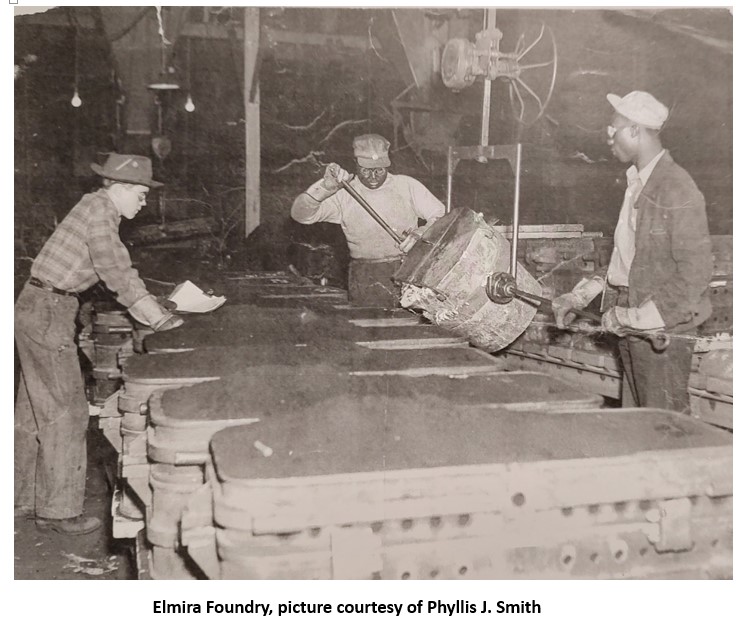
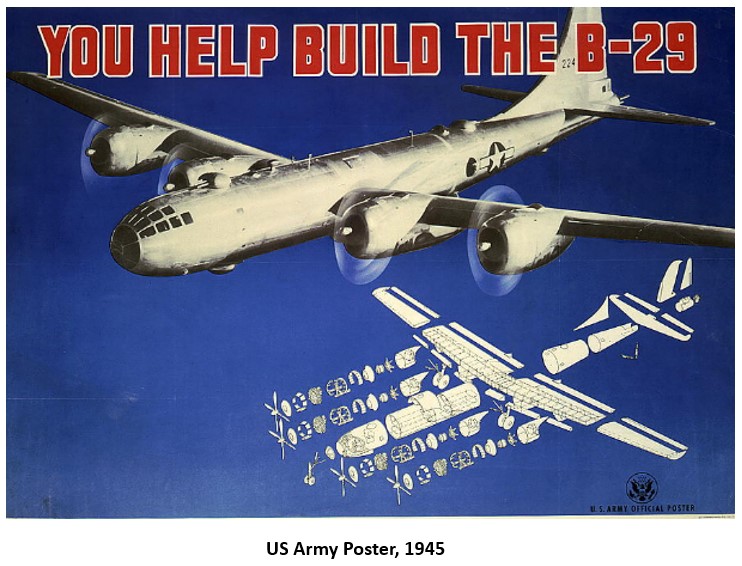
The US Army had developed a new bomber to replace the fleet of older generation planes. The B-29 Superfortress was designed to fly higher, travel farther and carry a larger payload than anything else in the existing inventory. The Army awarded contracts to a number of companies that would be expected to manufacture their components in a short timeframe. Elmira Foundry was one of many companies that bid to participate in the contracts. Executive management knew that there was only one way to fulfill the aggressive timelines of their agreement – they had to recruit and enlist women to help in the foundry.
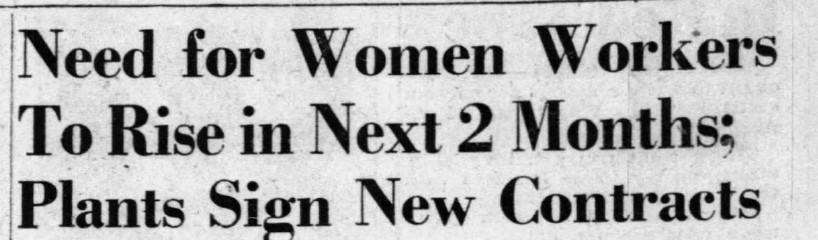
Elmira Foundry posted advertisements in the nearby newspapers. Phyllis Smith’s mother decided that she and her daughter would apply to play a role in the building of the new airplane. They applied and the pair headed to Elmira after hearing that the company wanted them to start immediately. As she noted, the family really needed money and “I couldn’t stand any more shoveling manure” so she welcomed the change of pace.
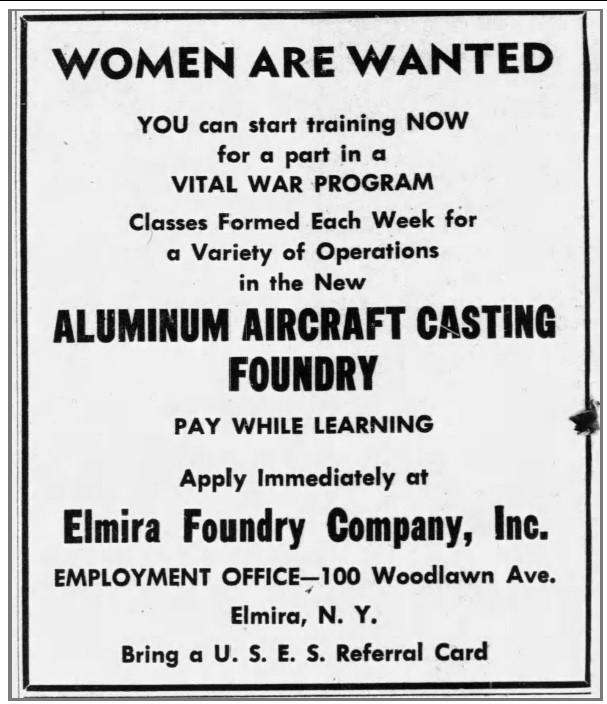
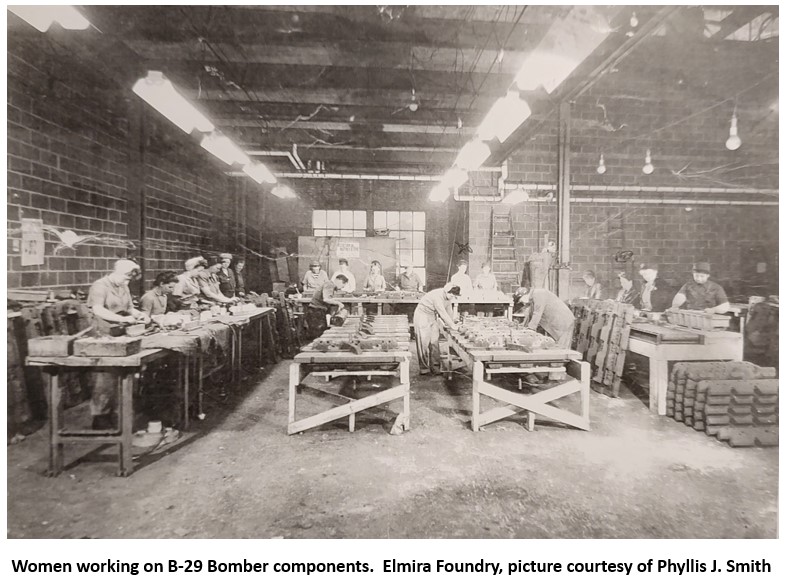
Since the factory was relatively far from their home, they rented a single room in the city. They would take a bus to work every day. Her mother eventually had to return to the family while 16-year-old Phyllis continued to work at the foundry. She remarked: “We made manifolds for B29 bombers and my job was to run the sand mauler, which was a large furnace in the back of the foundry… I had to pull the lever and admit sand and it mixed. I can’t remember if it was or some kind of oil or kerosene or something and stuff, and it ran up a belt and it ran across the top of the vats where the manifolds were hot, metal was being poured in the vats…It was boiling hot.” The foreman, recognizing that she was a very young girl working alone in a big city, watched out for her and made sure she was always safe. She sent all of her wages back home to her parents after paying for her room rent and board.
Return to Normal
As the War progressed, the tide shifted in favor of the Allies. The Army decided that they didn’t need as many B-29 bombers so Phyllis’ work at the Elmira Foundry came to an end. She was hired at the local Remington Rand plant but the need for typewriters diminished as well. As was the case for many women, she returned home and men took back their place in the factories. Her father had sold the farm and bought a hotel in Michigan. One of the guests was a young former sailor named Ray Smith. After a whirlwind romance, they eloped one night in 1947 and remained together for until he passed away. They eventually had three children.
Move to Citrus County
Ray Smith became accomplished as a steam fitter and plumber. Eventually he became supervisor of over 200 workers and traveled the country installing instruments for nuclear power plants and coal operated plants in different parts of the country. However, health issues led the couple to consider moving to Florida. They saw brochures for Citrus County and fell in love with the area. After traveling throughout the Tampa area, they decided to have a house built in Sugarmill Woods and moved in 1990. Phyllis remarked that her time in Citrus County is “…the longest I’ve ever lived in any place and I still love it. I love it here.”
She integrated herself into the community. She joined a group named the “Sugarettes” that visited local nursing homes to exhibit various types of line dancing. They also held fundraisers for the Wildlife Park to build the back porch of the Wildlife Park. She joined the Crystal River Women’s Club, and recently received a certificate for being a member for over 25 years. She is also a member of the Moose organization and the Crystal River Kings Bay Lions Club. Since one of her grandchildren had special needs, she was drawn to a local group named FFRA (Family and Friends Reaching Ability). The group has grown to over 200 members. She still serves as a Sunshine Lady and sends cards to every child on their birthday.
Phyliss became involved in Special Olympics, earning certification as a beloved coach. She notes “a lot of the girls, and the boys, now that I haven’t seen for 2 or 3 years, come up and hug me.”
After husband Ray Smith passed away, Phyllis’ daughter also moved to Citrus County to be closer to her mother. She proudly remarked that she is the grandmother of 5 and also has 6 great-grandchildren. She made sure to point out that her daughter and son-in-law live nearby have been very helpful and visit frequently.
Congressional Commendation
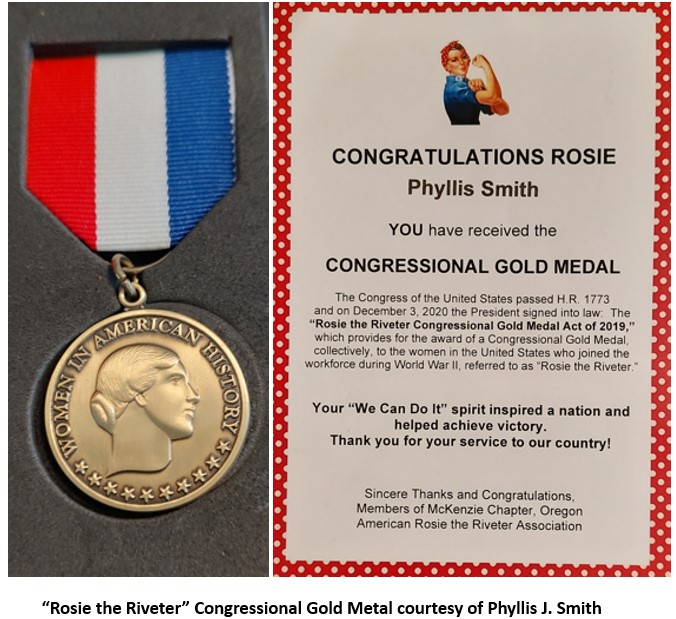
Most of the “Rosies” returned to their family life and didn’t think much about their wartime work in the fields and factories. They saw it as their way to help bring the War to an end while making some money to assist their families. As time passed, people began to recognize how important their work was to the war effort. The President and Congressional leaders commissioned a special “Rosie the Riveter Congressional Gold Medal” that Phyllis Smith proudly displays today. This was a token of appreciation from a grateful nation for all of the hardships that women like Phyllis Smith endured to keep America free.
Ken Marotte writes for the Citrus County Historical Society. He can be reached via email at kenmarottejr@gmail.com if you have any comments, questions or suggestions Contact him if you’d like to participate in the CCHS Oral History Project.
Special thanks to Susie Smith from the Crystal River Kings Bay Lions Club for suggesting this story. Also thanks to Herb Law for his videotaping and transcription services.