
Citrus County’s Historic Restaurants
By: Ken Marotte, Citrus County Historical Society
We all have our favorite local restaurants. There are some interesting stories behind three establishments that were once part of everyday life, but have passed into memory of old-time Citrus County residents. This article highlights three of their stories.
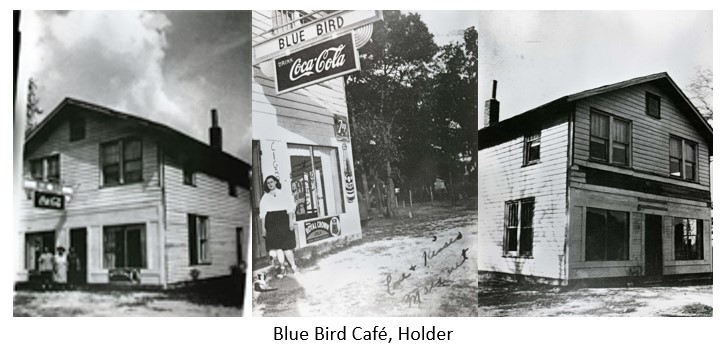
Blue Bird Café – Holder
Before superhighways, traffic moved at a slower pace along local roads. Route 41 (then Route 5) was the main road between the mid-West and Tampa. Along the way thousands of small cafes, gas stations and motels catered to weary travelers. Most of those family run establishments have long since closed and have disappeared into memory. One of those small cafes was called the “Blue Bird” and it was located in the once-bustling village of Holder. Holder was one of the early boom-towns during the phosphate mining craze, but by the 1930’s mining operations moved elsewhere and the area relied on the highway as its lifeblood for residents trying to survive. The Blue Bird was typical of early establishments catering to truckers and the traveling public. The café section was below the living quarters upstairs. Past Chronicle articles touted the legendary homemade pies that truckers found irresistible. When travelers found faster routes, small cafes such as the Blue Bird outlived their usefulness and fell into disrepair. The story of the Blue Bird is representative of the hundreds of cafes, filling stations and motels that have gone down the stream of time.
Crump’s Lodge – Homosassa
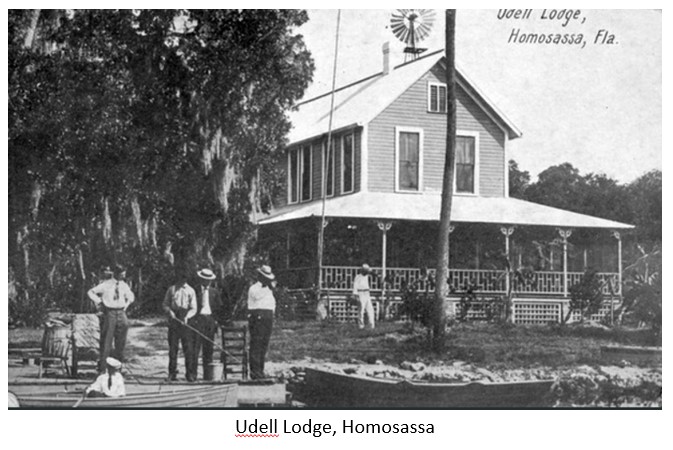
The property that came to be known as “Crumps Lodge” was originally constructed by a retiree from Utica NY in the early 1900’s. After spending several winter seasons at the nearby Rendezvous Lodge, Spencer R. Udell decided to purchase nearby land on the banks of the Homosassa River and replace the small cottage with a more opulent building befitting his status as the “Cheese King of Utica”. He opened the property to a limited number of affluent Northern visitors and named the property “Udell Lodge”. A small restaurant was added in 1909. Udell continued to live in the property until his death in 1921 at age 79. The lodge went through a number of owners until purchased by Georgia businessman Charles Kibbee Crump in 1942.
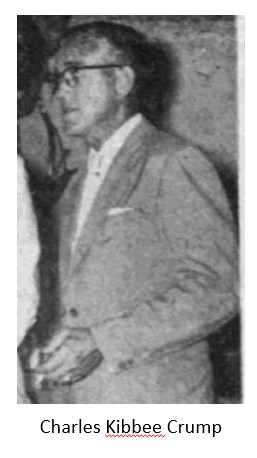
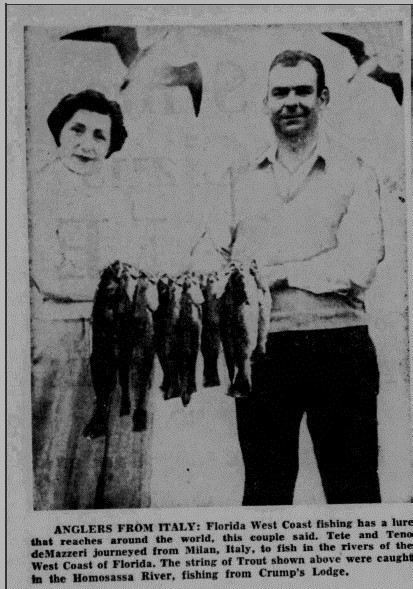
Crump updated the building and aggressively marketed “Crump’s Fishing Lodge” throughout the country. His brother was head of the Coca-Cola franchise in Italy and tourists from that country traveled to the lodge for the mild weather and excellent fishing. The cost for a day’s lodging and food was about $9 per day in 1953, which represented a good value for vacationers.
Crump became active in the Homosassa community and personally supported charities such as the Red Cross. He helped form the Homosassa Chamber of Commerce and served as the organization’s treasurer. When the federal government passed a law levying a 15% excise tax on small (less than 10 passenger) boats for hire, Crump was leader of the Homosassa lodge owners and guides that fought to have the law repealed. He continued to successfully operate the fishing lodge until his death in 1971.
The property once again passed through a variety of owners and fell into disrepair. Stan Olsen, developer of the upscale Meadowcrest and Black Diamond communities in Citrus County, purchased the property in the 1980’s. Olsen completely rebuilt the old lodge and created an upscale restaurant and lounge and named it “K.C. Crump’s” to honor the legacy of its former owner.
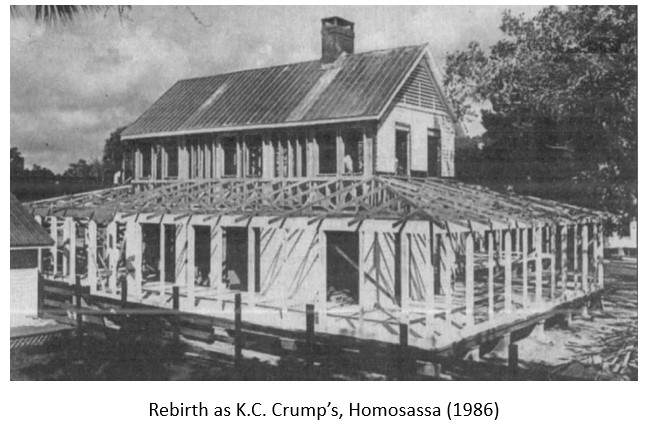
The reborn K.C. Crumps became a favorite with locals and visitors alike. Olsen sold the restaurant to Byron and Cindy Rogers for almost $2 million in 2003. The Rogers made more investments to the property, including the construction of an opulent “Scotch Room” filled with expensive vintage liquors. Tragedy struck the following year when a generator was activated during a power outage and subsequently caught fire. The beloved landmark was quickly consumed by flames. The attached casual dining room named the “Dockside” was also destroyed.
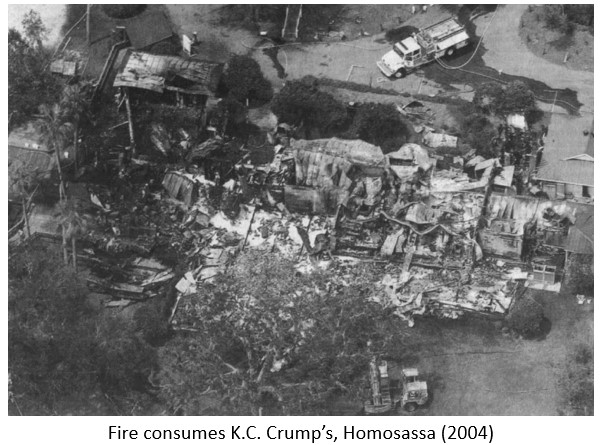
Crump’s legacy did not end with that fire. Like a phoenix, the restaurant today known as “Crump’s Landing” rose and continues to attract a steady stream of patrons.
As a sidenote, newspaper accounts about the building have recounted that President Grover Cleveland once used the Crump’s Lodge property as a winter White House. There were similar claims about the late President’s association with the nearby Rendezvous Lodge. There is no evidence that Grover Cleveland ever stepped foot in Homosassa. My research leads to the conclusion that the legend of Grover Cleveland visiting Homosassa is probably the result of an ambitious marketing plan executed by the Florida West Coast Development Company in the 1920’s. Their stories have been repeated and expanded over the years so the legend has continued to grow and become accepted as an undisputed (but unproven) fact.
Wander Inn – Crystal River
A hundred years ago, many small-town kids dreamed of running away and joining the circus. If you grew up in Crystal River, you wouldn’t have far to go.
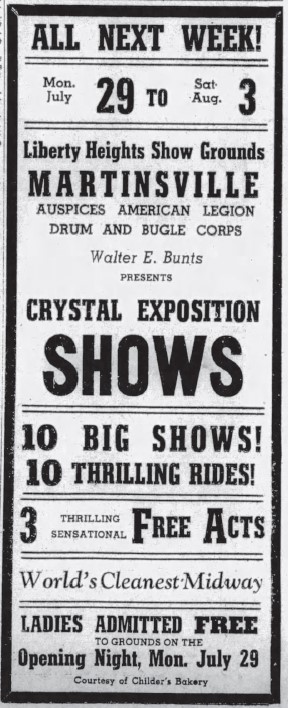
The Bunts family had a circus midway business known as Crystal Exposition Shows. Warren Bunts boasted that they ran the “Worlds’ Cleanest Midway” and the family traveled through the South and Mid-West during the year. They worked at county fairs, carnivals and circus events. Once the weather started to turn colder, the entire family migrated to Crystal River to spend the Winter. They bought a large parcel of property and built a number of houses on the waterfront. The area became known as “Bunts Point” and the section where they lived is still called Bunts Point today.
After over twenty years of working in the midway food tents, John Bunts settled down in Crystal River and opened the Wander Inn restaurant downtown on Rt. 19. He had married the niece of local celebrity Dazzy Vance which solidified his entry into local society. The establishment became so popular that he offered to swap three of the lots he owned for two lots that the City Council deemed surplus. He wanted to expand from his accommodation of 38 seats to have enough room for a banquet hall and bus station, which was an important tourist drawing point back in the 1950’s. The newly expanded restaurant became the default establishment for any group conducting a large event. The Jaycees, Chamber of Commerce, Power Squadron and Board of Realtors held events there. Bunts was instrumental in the formation of a branch of the Lions Club in the city and meetings were regularly held at that location. He was a Director of the local Red Cross.
Tiring of the pressure of operating a large establishment, Bunts sold his interest in the Wander Inn to Cliff Luce and Herb Hagerty in the last 1950’s. He opened a small dairy freeze stand, selling ice cream and milkshakes, in Homosassa.
Hagerty and Luce were leaders of the opposition to Crystal River’s ban on Sunday sales of alcohol on Sundays. They argued that people were traveling past the Crystal River border to drink on Sundays, which put establishments such as the Wander Inn a serious disadvantage. They were able to convince the lawmakers by the logic of their perspectives.
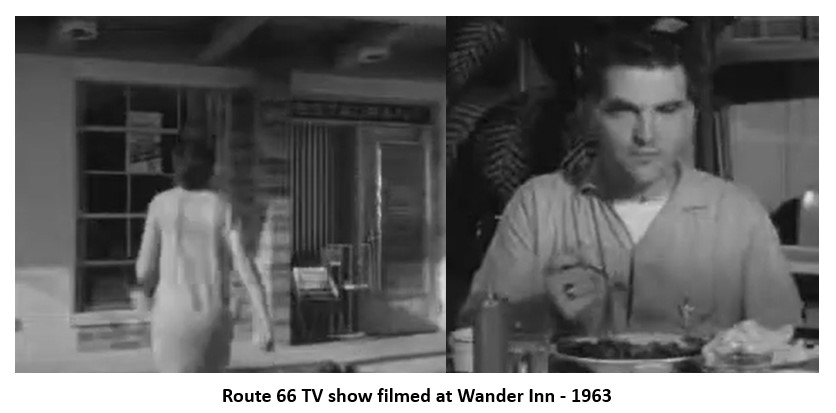
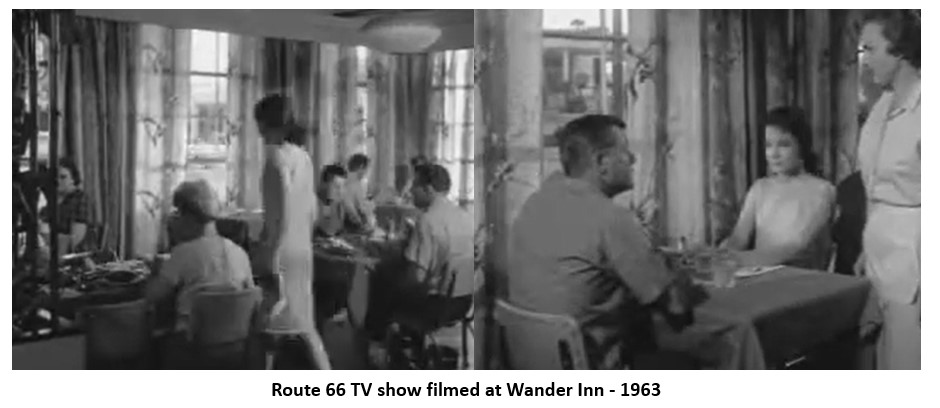
The Wander Inn achieved some measure of national fame when the Route 66 TV show rolled through town in 1963. The exterior and interior of the restaurant were used for some of the scenes in the show. Local bystanders were given a chance to briefly appear on screen as extras. While the excitement didn’t reach the level of Elvis Presley’s visit a few years ago, the downtown area was thronged with curious locals watching the proceedings.
Fire took another Citrus County landmark on February 12, 1967. Two fishermen were returning from a late-night excursion when they noticed flames licking at the interior of the building. They immediately alerted the local fire department, but little could be done to save the Wander Inn. While the town had recently purchased a new fire truck, it was not ready for service and could not respond to the blaze. However, by the time alarm was sounded, even the most modern pumper could not have changed the outcome.
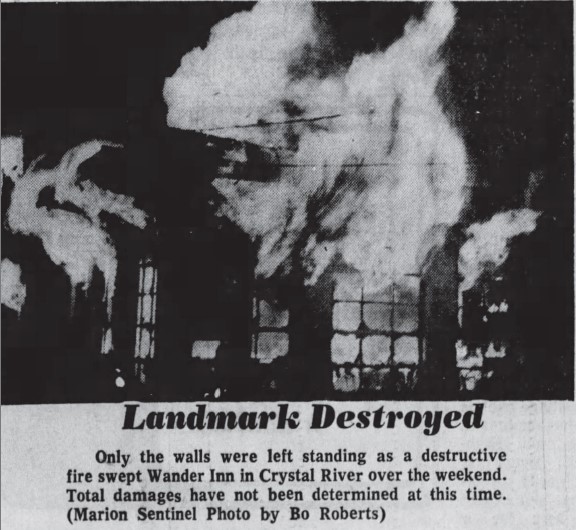
The charred walls remained until the following December, when the city decided to purchase the property so that the residual hulk could be finally torn down. The Chamber of Commerce offered to demolish and remove all debris at no charge as part of their effort to clean-up the city and improve business. The city saw an opportunity to consolidate their downtown holdings which included a city park, library and Chamber of Commerce building – and possibly use to construct a new City Hall.