
Citrus County: World War II On the Homefront
By Ken Marotte, Citrus County Historical Society
The advent of World War II meant that Citrus County residents would have to make unprecedented sacrifices to achieve total victory. Many men and women were called to military service and some did not return. Their names are carved on memorials in downtown Inverness so their ultimate sacrifice will never be forgotten. Those left behind in the county did whatever they could to support their friends and relatives in the military. They endured severe rationing, loss of privacy and changes to their “normal” way of life in the name of defending our country. This is the story of the impacts of the war on every person in Citrus County and the circumstances they experienced.
Pre-War Preparations
There is a feeling that America was unaware of the possibility of impending war in 1941. While life was good in Citrus County, preparations were clearly underway for American’s entry into the War. The American Legion began building a database of residents who served in World War I and could potentially be called to augment our military forces. County Extension Agent Ben Gittings was showing movies (provided by the Federal government) in the Citrus County Courthouse about how ordinary citizens “…must make plans to grow our own food and feed crops for several years ahead of our fight for democracy…”
The draft was instituted and all eligible men were obliged to register. C.D. Schultz headed County Selective Service Board, which ensured that a mechanism for enrolling new soldiers and sailors was in place in advance of our anticipated involvement. Within a week after the attack on Pearl Harbor, twenty-one Citrus County men were scheduled for induction.
Once war was declared, county residents gradually began to realize the hardships that they’d be expected to undergo so that vital resources could be allocated to the military.
War Bonds
The government realized that the war would be expensive and issued a series of war bonds to defray the costs. Citizens were urged to reach deep into their pockets and purchase bonds. Children in Citrus County schools could not afford to buy a full war bond (about $350 in today’s dollars) so they were encouraged to purchase smaller war bond stamps that could eventually be converted to bonds.
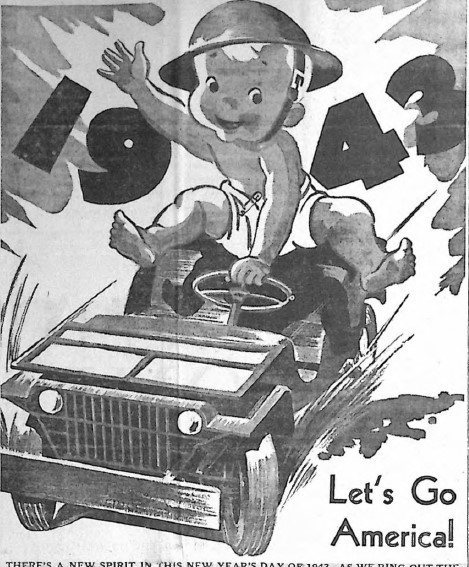
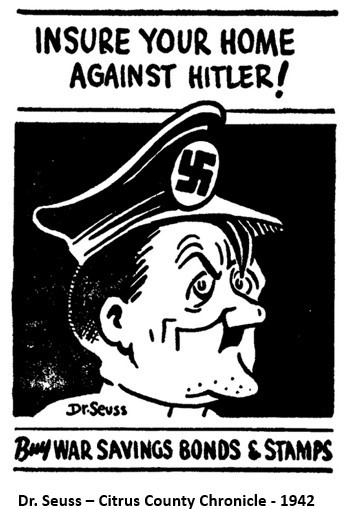
The Citrus County Chronicle carried weekly advertisements for bond programs that reminded readers of the urgent need for their participation. The series of ads usually featured a soldier with the message “I’m doing my part, are you?” Even cartoons from Dr. Seuss were printed in the Chronicle to urge people to donate toward securing America’s future. Merchants would include messages about purchasing bonds in their newspaper advertisements. Every county was given a sales quota and Citrus County residents were noted for exceeding their goal on every bond drive
Scrap Drives
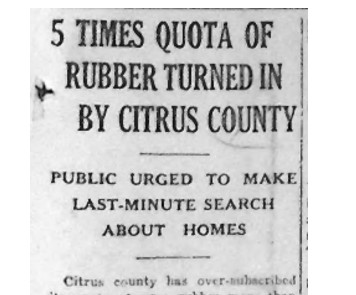
The war effort needed materials for conversion into planes, tanks, guns and ships. Since rubber was a key component of America’s mechanized Army, a call was issued for residents to turn in any old or damaged ties and inner tubes. Citrus County inhabitants scoured their houses and fields for any precious rubber products that can be donated. When the final number was tallied, the county had collected five times more rubber than their quota.
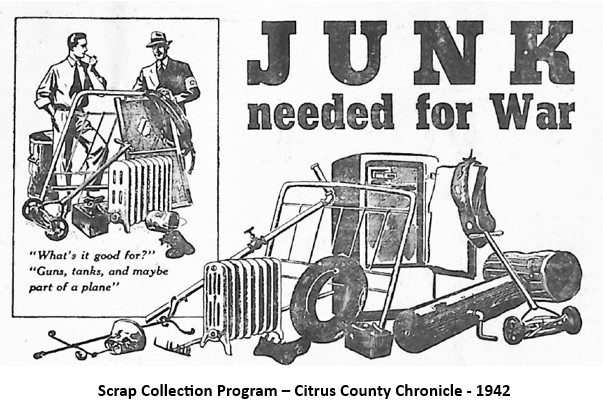
As the scope of needed war materials expanded items such as scrap metals, newspapers, pulp wood, and even excess cooking fats were solicited. The Valerie Theatre offered discount movie tickets for scrap donations – a ten-cent discount for 15 metal coat hangers and five cents for 15 pounds of old newspapers – to help the war effort. One of Citrus County’s most enthusiastic restaurant owners, “Jut” Williams, offered to pay for scrap rubber donations in excess of government guidelines, absorbing the difference from his own pocket.
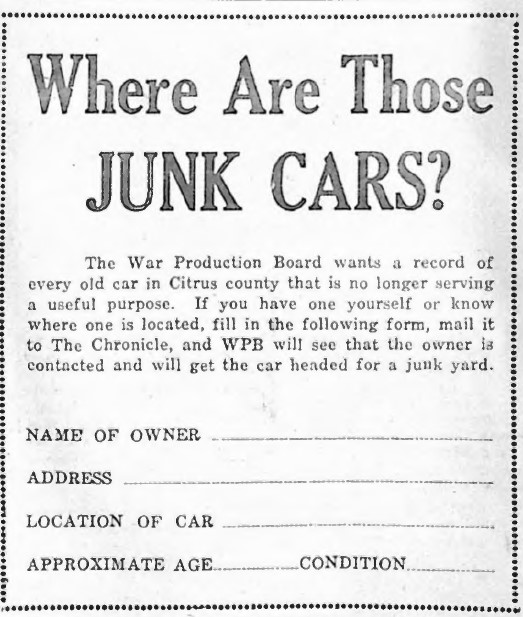
Children from Citrus County schools were urged to observe backyards and field in their neighborhood for any unused and rusting cars or trucks that could be salvaged. In addition, Citrus County developed a form that could be completed by owners of old cars (or their neighbors) that could be donated to the war effort.
Automotive Sacrifices
Private vehicle production was halted as America’s manufacturers turned their attention to building ships and tanks. Citrus County residents had no choice but to rely on their existing vehicles until the war was over. The availability of tires for passenger cars was the first item to be rationed. Tires were mainly produced from rubber during that period. Rubber trees were grown in regions that were either under direct enemy control or locked behind a German submarine embargo. The use of new tires on non-military vehicles was severely limited. For example, Citrus County motorists were told that an allotment of only four passenger tires could be sold in the entire county for the month of February 1942. The local Ration Board would consider applications from the public and decide who had the greatest need for the four precious tires. Only three inner tubes were allocated for sale that month. Law enforcement anticipated that there would be an outbreak of tire theft and officials urged everyone in the county to record the serial numbers of their tires to help combat theft.
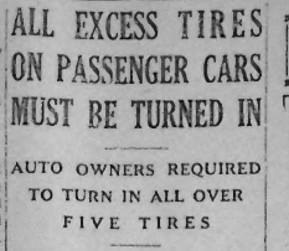
Control over personal vehicle tires tightened as the war progressed. Residents were required to provide county government with a detailed inventory of the tires in their possession (including the serial numbers on each tire). Any tires that exceeded five per vehicle were to be turned in for either scrapping or government reuse.
Fuel for vehicles was also rationed. Information about all vehicles in the county was collected and a usage classification was given to each car. While the program was plagued with constant changes during the early stages of the war, the nation settled on a classification system that deemed the vehicle as being used for pleasure, business or essential war-related functions. As “Jut” Williams noted, gas supply was also reduced for filling stations which effectively resulted in extended rationing. The typical “pleasure” driver would receive gasoline ration stamps allowing purchase of about 21 gallons during a 45-day period. When a driver used their allocation, they were obliged to park their cars and find other transportation until the next set of ration stamps were issued.
Citrus County hunters relied on gasoline to travel to their favorite fields in the countryside. They petitioned the Ration Board for additional gas stamps, arguing that the meat they harvested was assisting the war effort. Their argument fell on deaf ears. Sheriff Charlie Dean Sr. owned hunting property in the outskirts of the county that he frequently invited others to use. Since the gasoline shortage impacted travel for hunting, he published a story in the Chronicle inviting anyone in the county to meet him outside the County Jail on any day during deer hunting season and he would find a way for everyone to pool resources and join him for the hunt.
Food Rationing
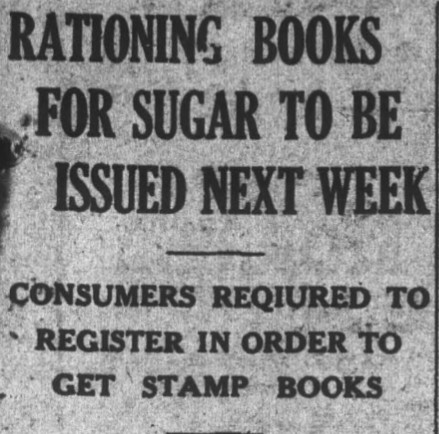
The Citrus County Rationing Board was established in January 1942. At the dawn of 1942, officials indicated that there was no sugar shortage at that time. They prepared citizens that they “…may be forced to forego that third spoonful in coffee”. By the end of the year, sugar topped the list as one of the food items that would be tightly rationed and managed.
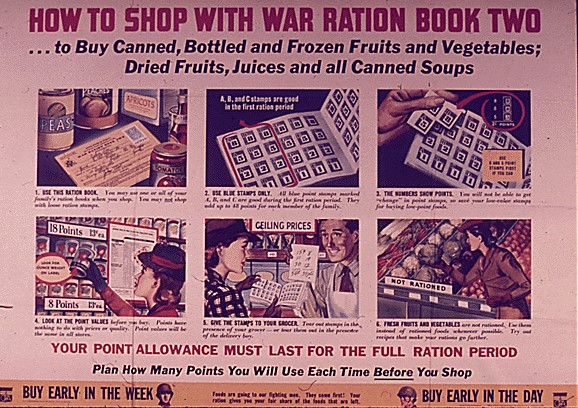
A series of Ration Books were issued to each family. The book contained stamps which allowed the holder to purchase food items. As the war progressed, the list of rationed items was expanded to include other items such meat and canned vegetables. At the store the proper stamp needed to be removed and given to the merchant in addition to payment. To obtain the Ration Book, each family had to complete an application listing detailed information about everyone in the family. The application had to include the name, age, sex, weight, height, eye color and hair color for every family member. Each family was required to provide a detailed inventory of food on hand and those items effectively reduced the family’s needs for that month. The amount of food ration stamps issued was determined based on the family’s needs. A special allotment of two pounds of sugar per month if the family could document that they used it for canning. Housewives became adept at providing meat alternatives and stretching their food allotment. Residents were encouraged to plant “Victory Gardens” to augment their food rations.
Always seeing the humorous side of things, “Jut” Williams offered his humorous take on the local egg shortage and the steps he was taking to alleviate the situation.

Even Kissing was Rationed
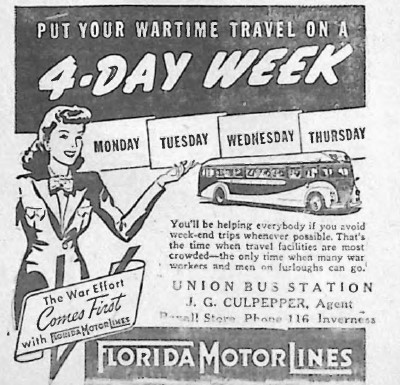
With the limitations placed on travel in private cars, the use of buses became a lifeline for people who wanted to journey outside the county. Since many military staff and war workers also relied on buses for travel to and from their assignments, bus companies urged ordinary riders to only travel on weekdays and avoid weekends when soldiers and sailors needed to return from their visits. If service members needed to ride the bus but it was full, companies would ask private citizens to delay their trip and give their seats to those who needed to travel to their posts.
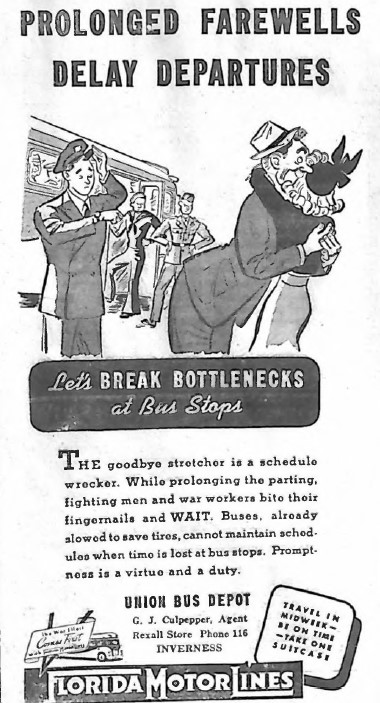
Sometimes long and passionate goodbyes would delay the bus from leaving on time. So citizens were urged to do their patriotic duty and keep their goodbye kisses to a minimum – to support the war effort, of course.
Ken Marotte writes for the Citrus County Historical Society. He can be reached via email at kenmarottejr@gmail.com if you have any comments, questions or suggestions.