Citrus County vs. “Demon Alcohol”
By: Ken Marotte, Citrus County Historical Society
Citrus County had a deeply ingrained small town and religious based lifestyle as the early 20th century approached. How did citizens react and support the nationwide war on alcohol – known as the “temperance movement”?
A National Problem
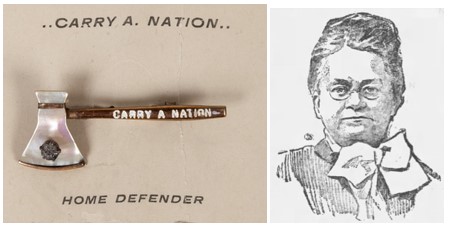
Alcohol abuse had become a severe problem across America in the 1800’s. Groups such as the “Anti-Saloon League” and “Women’s Christian Temperance Union” (WCTU) rose to combat the situation. Hatchet-wielding Carrie Nation made national headlines when she went on a rampage against saloons in Kansas. Her fame spread and soon she was leading “hatchetations” where she destroyed bar fixtures and whiskey bottles while her female supporters sang temperance songs and quoted bible verses. She sold symbolic hatchet pins and full-size memorial hatchets to her followers in a show of solidarity. She later expanded her lectures to include opposition to Masonic Lodges, Roman Catholics, Teddy Roosevelt, indecent pictures and tobacco users. Her inflammatory speeches fired up the temperance movement across the United States.
Early Prohibition in Citrus County
Many people associate Prohibition with the adoption of the 18th Amendment in 1918-1919. Led by Methodist and Presbyterian ministers, Citrus County had an active temperance movement since the birth of the county. On September 7, 1891 161 voters presented a petition to the Board of County Commissioners (BoCC) demanding a special election to decide if “spiritous liquors” should be sold within the boundaries of Citrus County. The BoCC initially set a date for the election, but later rescinded their decision based on some irregularities in the voter list. When the BoCC tried to let the matter quietly drop, newspaper publisher A.M. Williamson prodded the Commissioners to reschedule the vote in March 1892. On the question of “…for or against license to sell whiskey in the County of Citrus…”, the “drys” carried the day with 274 votes against 74 for the “wets”.
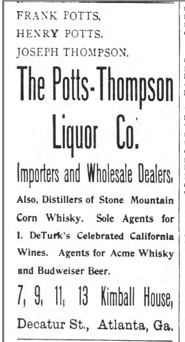
Note that the new law only addressed the sale – but not possession – of whiskey. By that time, liquor dealers had dealt with similar laws in other places by establishing storerooms in “wet” states and taking orders via US Mail, which was considered “interstate commerce” and exempt from local mandates. Frank Potts, president of the Atlanta-based Homosassa Fishing Club, made his fortune through mail order sales of alcohol. There was another gap in the Citrus County law. Since it only specifically prohibited the sale of whiskey – other liquors, beer and wine could still be sold in the county. Loopholes such of this would eventually be closed in subsequent legislation.
The Illusion of Temperance
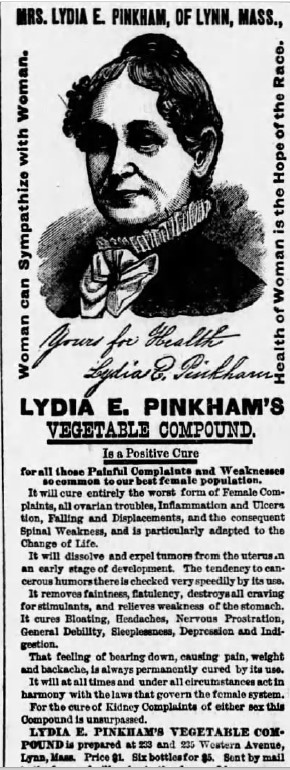
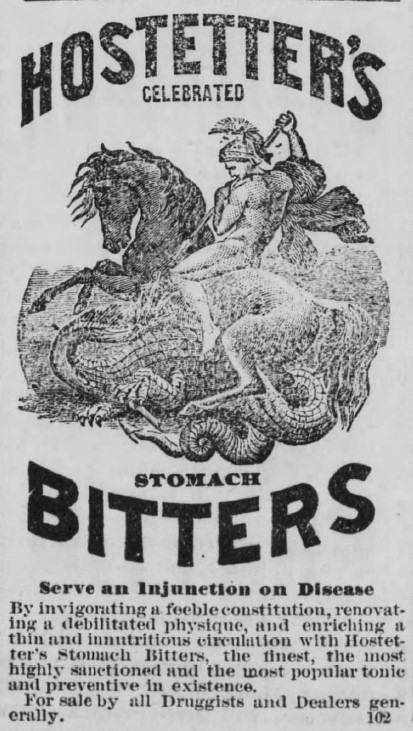
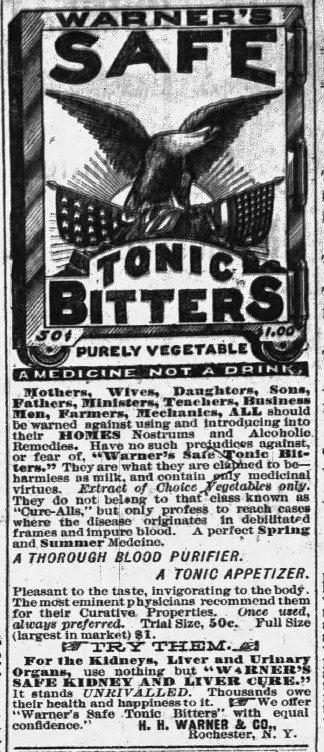
There was another source of alcohol that even the most ardent WCTU supporter inadvertently consumed. The manufacture of patent medicines and other beverages was largely unregulated during this time period. Coca-Cola famously had small amounts of a cocaine derivative in its original formula. Other “snake oil medicines” contained heroin, cocaine, morphine and considerable amounts of alcohol in their products. Anyone who digs antique bottles today is sure to come across “Lydia Pinkham’s Vegetable Compound”, “Hostetter’s Stomach Bitters” and a variety of bitters and sarsaparillas containers.
A number of studies conducted in 1903-04 found that Mrs. Pinkham’s ubiquitous compound was 21% percent alcohol (or 42 proof); Kaufman’s Sulphur Bitters – “Contains No Alcohol” was also 21% alcohol; Warner’s Safe Cure Bitters (23%); the popular Ayer’s Sarsaparilla (26%); Hostetter’s Bitters (more than 44%) and Richardson’s Concentrated Sherry Wine Bitters took top billing at 48% alcohol by volume. Compare these measurements to beer (about 5%), wine (about 12.5%), gin (about 40%), and whiskey (about 40%) and you can conclude that use of the patent medicines was stealth alcohol consumption and could even lead to addiction. The Pure Food and Drug Act of `1906 addressed the use of dangerous drugs and alcohol in medicines.
Temperance Expands in Citrus County
Some citizens were not satisfied with the results of the 1892 “wet vs dry” election since it only addressed the sale of whiskey. A petition was presented to the BoCC for another election by temperance advocates in 1898. The request was signed by 215 names, but the signatures of 56 people were invalidated by the BoCC and so the petition failed to gain the required 25% of the overall voting roll. The requested election was denied.
Another election to decide whether or not selling of liquors, beer and wines was held on August 29, 1901. After canvassing the citizens, 172 voters were against the sale of any type of alcohol (except found in medicines) while 83 people voted against the measure. Citrus County was firmly a “dry” county at that point.
There were some subsequent questions regarding the legality of the 1901 election. A petition was submitted to the BoCC in 1907 to further refine the language of the local prohibition ordinance and confirm the will of the people. Nic Barco of Crystal River was the leader of the temperance forces at that time. Accordingly, another election was held on October 19, 1907 to determine whether or not the sale of intoxicating liquors, wine and beers should be prohibited in the county. This time the “dry” mandate was overwhelmingly passed by a margin of 311 to 91. Citrus County Sheriff Carter stepped up his arrests of moonshiners, also known as “blind tigers”, across the county.
Temperance Spreads Across Florida
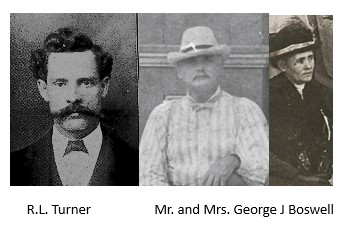
After their victory in 1907, the leaders of the Citrus County temperance effort worked in concert with statewide organizations to expand legislation. G.J. Boswell, R.L. Turner and G.E. Allen were some of the local leaders of this movement.
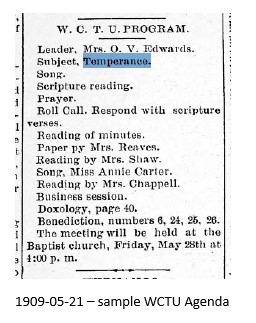
A chapter of the W.C.T.U was established in Citrus County and Hernando/Floral City became hotbeds of the prohibition movement. The group regularly held meetings that took the nature of a religious crusade against the evils of alcohol
The temperance groups were ready to push for a statewide referendum on prohibition. They had noted the loopholes in previous legislation and engaged legal scholars to make sure that the language of the amendment was strict and not ambiguous. The proposed Amendment to the Florida State Constitution would ban “…the manufacture and sale, barter or exchange of all intoxicating liquors and beverages whether spiritous, vinous or malt…”. Alcohol for medicinal, scientific, mechanical or sacramental purposes would be exempted, but regulated by law.
Voters across the state and county closely watched the election results on the night of November 10, 1910. W.C.T.U. and other temperance group held prayer vigils and parades throughout the day. When the final results were tabulated, the temperance cause lost by approximately 5,000 votes statewide. In Citrus County, the “dry” faction had won, but only by a margin of about 25 votes. Some counties that were locally “dry” actually voted against the statewide amendment. There was a strong preference for home rule and many voters who leaned toward local prohibition did not feel that they should be imposing their will on other counties across the state.
The Noble Experiment – 18th Amendment
Temperance advocates were depressed by the results of the 1910 election. Their defeat only strengthened their resolve to drive for prohibition at the national level. They realized that more coordination was needed among the various temperance groups to achieve that objective. As a result of their constant pressure, both houses of the US Congress passed a bill in 1917 authorizing the States to decide if they wanted to amend the US Constitution to ban alcohol. The vote for Florida was set on November 5, 1918. As the results flowed into the newsrooms, it was evident that Floridians had adopted the total prohibition on alcohol. Surprisingly, interest in Citrus County did not match the statewide enthusiasm. While the “dry” measure carried in our county, voter turnout was light and the measure was only approved by a slim margin. The results of the election meant that prohibition was in effect within the State of Florida as of January 1, 1919; the 18th amendment was officially adopted on a national level when Nebraska became the 36th state of ratify on January 16, 1919.
On June 2, 1919, the Citrus County BoCC unanimously voted to offer a $25 reward to anyone could provide information about the illegal sale of alcohol in the county. The Sheriff was joined by federal agents in his efforts against moonshining.
An Experiment That Failed – 21st Amendment
The Prohibition experience demonstrated how good intentions can lead to unintended consequences. Rum runners and gangsters found that demand for alcohol could not be simply legislated away and furnishing thirsty Americans with illicit alcohol could be very lucrative. Officials were being paid to look the other way which led to an increase in violence and corruption. State and federal financial officials found that prohibition had eliminated a significant source of income from taxes on alcohol sales. In 1933, federal officials estimated that they had lost about $3 billion in revenue in 13 years of prohibition. In the depths of the Great Depression, labor experts blamed prohibition for the loss of millions of jobs.
People across Florida were turning against prohibition. The Miami Daily News conducted a statewide survey in 1932 asking if the terms of the amendment should be loosened to allow beer and wine. Over 80% of respondents agreed with the proposal. The US Congress reversed course and left the matter of prohibition repeal to the states in 1933. Florida held a special election to decide the matter in November 1933. Citrus County had seen enough – the “wets” won the vote by an 8 to 1 margin. Florida agreed that Prohibition should be removed from the US Constitution.
The End of Prohibition in Florida?
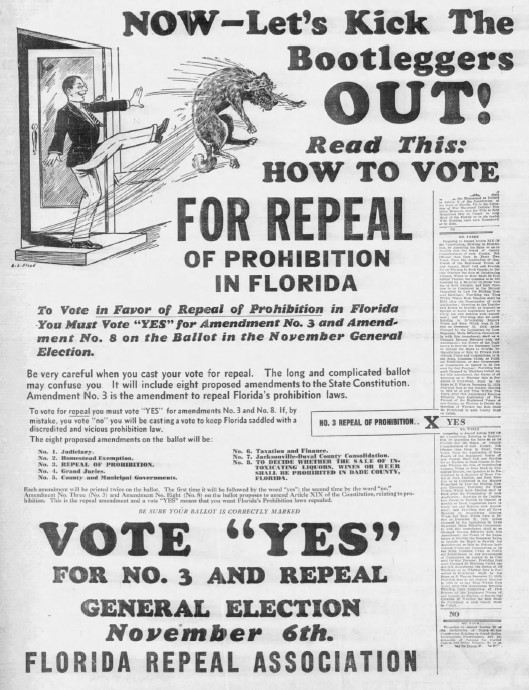
The repeal of the federal 18th amendment did not mean that alcohol sales were now legal in Florida. The State constitution still prohibited alcohol sales by virtue of the 1918 election. Another contest would be needed to amend the Florida law in 1934. Those advocating repeal rightfully targeted the moonshiners and bootleggers who were still profiting from illicit alcohol sales. On November 6, 1934, voters decided to end the mandate for statewide prohibition. Counties were still able to enact local ordinances the allow or restrict alcohol sales in their domains. Citrus County was designated as a “wet” county as a result of a BoCC vote that year. A flood of license requests and approvals resulted starting in 1935.
While the temperance movement had lofty goals, the practical application proved to be a misadventure for the country, state and county.