
All Roads Lead to Citrus County
By: Ken Marotte, Citrus County Historical Society
We drive, ride bikes and walk on them all the time. They’re called “traffic arteries” because they carry the lifeblood of our area’s commercial and personal needs. In the past, Citrus County’s roads have grown to meet the increasing traffic loads but anyone who drives through our towns probably wonders why some of the roads were configured on their current paths. This is a look back at the historical development of the roads and highways in Citrus County.
Sparse Population and Few Roads
Most readers are familiar with the story of Citrus County’s early years. Our area was a sparsely populated wilderness that featured small settlements containing individual farms and ranches. The US Post Office occasionally delivered mail via mules or stagecoach. Roadways were little more than winding paths through the hammocks, prairies and marshes.
The area known today as Inverness had no residents and a village named “Fort Izard” (named after Seminole War hero Lt. James F. Izard) was the closest town. The town of Melendez (later named Brooksville) lay to the South. Stagecoaches bumped along the dusty roads bringing passengers from Tampa to Palatka through “Benton” county (later renamed Hernando County).
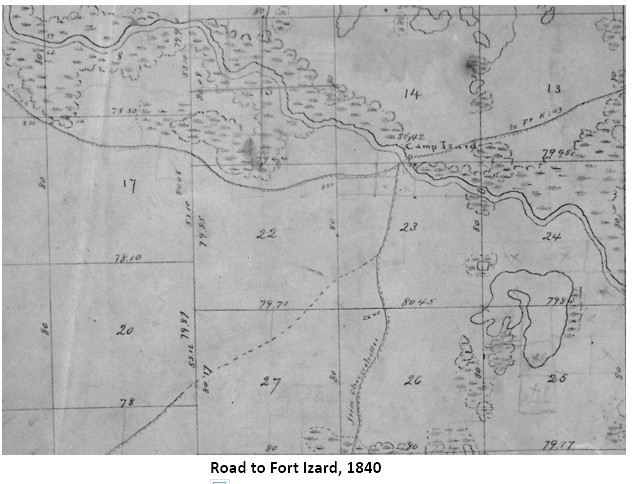
Crystal River and Homosassa were located on the western side of Benton County and were connected to the rest of the area through small wagon paths. Since they were situated on the Gulf Coast, many travelers relied on ships to reach these settlements. The first railroad line in the area would eventually be built to connect these fishing communities to larger markets.
There was little effort by the Hernando County commissioners to develop extensive roads through the northern part of the county. As the population of the county continued to grow, residents agitated to have the large county split into more manageable domains. Accordingly, the larger Hernando County was split into three parts and the northernmost area was designated as “Citrus County” by the Florida State Legislature in 1887.
The creation of Citrus County was hailed by the local residents as a step forward in controlling their own destiny. One of those newfound abilities was the creation of new roads that would allow better communication among the villages and improve trade with the outside world.
Road Construction Explodes in the New County
Tax revenue was divided into a number of budgetary categories, including road taxes. One of the first orders of business was to calculate Citrus County’s equitable share of the former large county’s accumulated road tax account. Once the funds were determined, the new Board of County Commissioners established five special “Road Districts” and that corresponded with the BoCC’s districts. They appointed special “Road Commissioners” to supervise road construction and maintenance in the district. Once a new roadway was approved by the BoCC, the Road Commissioners were empowered to construct (and maintain) the new road. Commissioners could only spend the amount of road tax that was collected in their district.
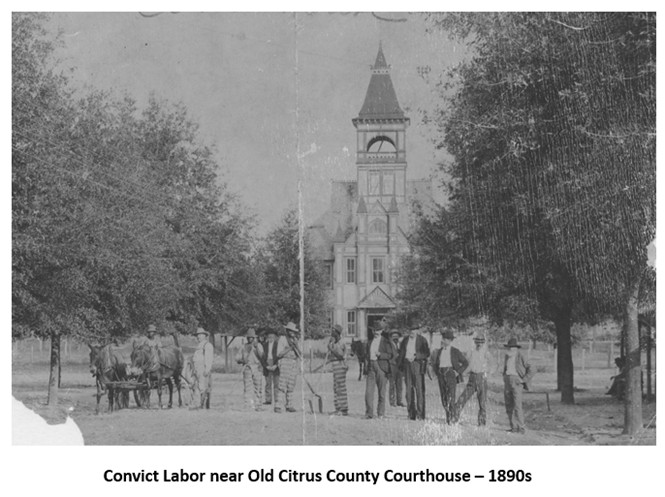
The BoCC opened the doors to a wave of new road requests. Under the rules a group of residents could petition the BoCC for a road between two points in their district. The BoCC would evaluate and approve the request and appointed “blazers” – usually local residents with extensive direct knowledge of the area – to determine the best path and actually cut the trail through the forest.
It became evident that there was a pent-up demand for new roadways. The BoCC reviewed and approved petitions for over twenty new roads and bridges in the first six months of operation.
The Origins of Today’s Roads
The specific requests were included in the Official Minutes of the BoCC and remain on file today on Clerk of Court Traci Perry’s web site (https://www.citrusclerk.org/728/BOCC-Meeting-Portal).
The first request was for a new road named the “St. Martins River Road” in Crystal River on September 7, 1887. The request is included below but may be hard for some to understand W.C. Zimmerman’s cursive penmanship. The specifications also refer to landmarks that may have been clearly understood in 1887 but may be lost on a 21st century audience. Here’s a brief translation:
“ …commencing at J.F. Head’s on the North and South Island Road thence running East to Moses Greenleaf’s Point on Salt River, twice crossing and North East through the marsh to Black Island thence easterly through the hammock and intersect at Crystal River and Homosassa Road by the most practical route”. E. Morton, E.F. Wheeler and J. Sharp were appointed as blazers.
St. Martins River Road still exists today. The reader is invited to match a map of the current road with the original specifications from 1877.
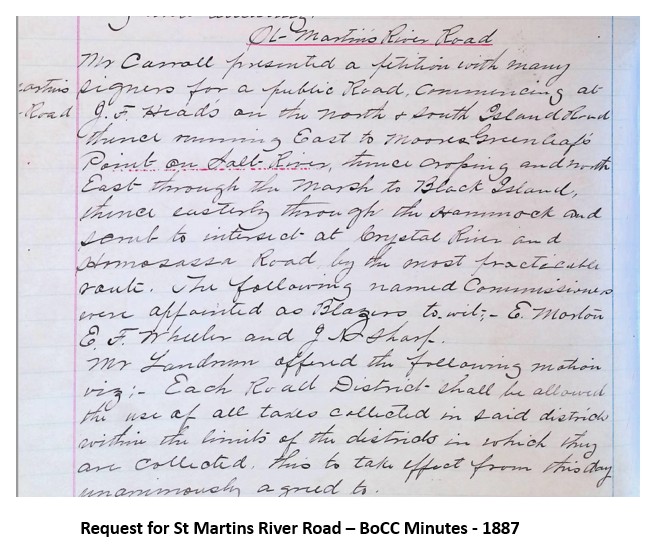
Other proposed roads used the usual specific township, range and section references but most specify landmarks that would confound a contemporary researcher. In addition, BoCC Minutes were posted using cursive (hence not able to be searched using a keyword) until the advent of typewritten documents in 1903.
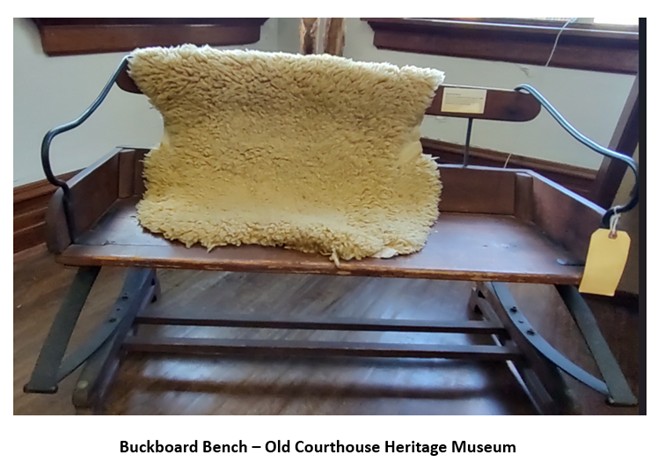
The early roads were essentially graded paths and the rider contended with numerous holes and bumps on their journey. Some people coped by purchasing a special seat for their wagons that were equipped with shock-absorbing leaf springs and layers of cushioning in the seating area. An example is on display at the Old Courthouse Heritage Museum in Inverness. Visitors are invited to actually sit on the seat and usually remark on its unexpected comfort.
Citrus County Mechanizes Road Construction
A number of companies developed specialized tools for road construction. The initial machines used in Citrus County were usually drawn by mules or horses. The county owned a team of mules and also leased mules from local ranchers as needed. Mules were sought for road work due to their strength and endurance. The BoCC minutes from 1904 report that the county staff sold two mules to the Bradley Phosphate Company for a tidy profit of $390 (over $14,000 in 2026 dollars).
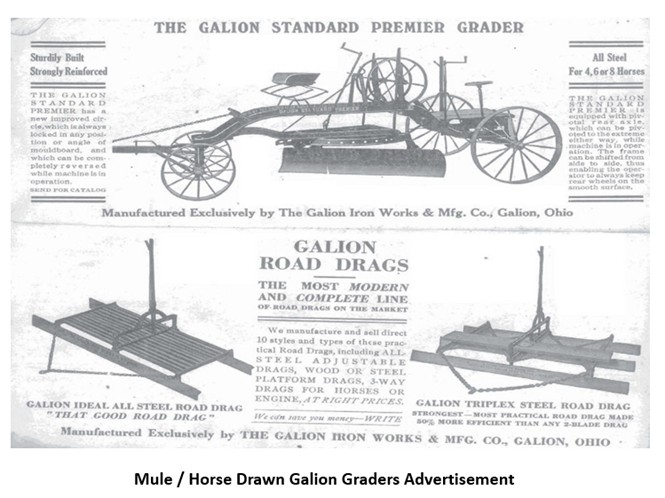
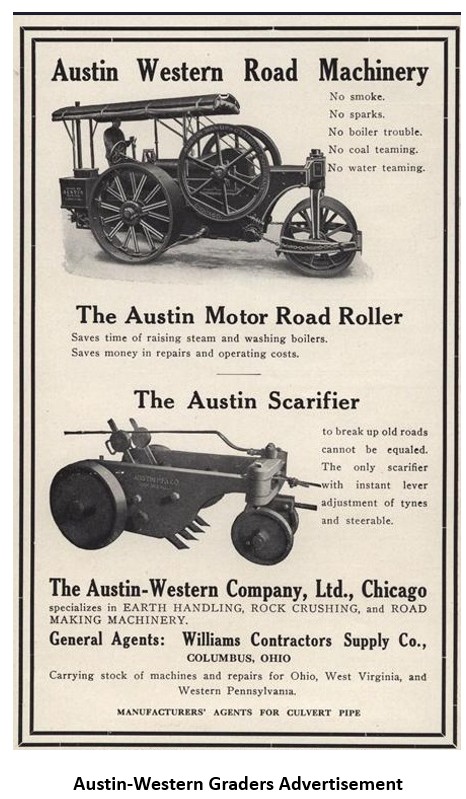
The sale of the mules coincided with the purchase of new mechanized graders from the “Good Roads Machinery Co”, which was one of the leading merchants of road equipment in the country. The county later augmented their inventory with equipment from the Austin Western Road Machinery Co.
The Florida “Good Road Movement”
Florida leaders became aware that the future of the state depended on building quality roads. The existing patchwork of dirt roads needed to be upgraded with hardened materials, such as limestone sold by the Crystal River Limestone Co. They became intrigued by a plan inaugurated in Missouri deemed the “Good Roads Movement”.
In addition to the usual construction teams of county workers and convicts, citizens were given the opportunity to take direct action to improve their local roads. Commissioners in Putnam and Marion Counties instituted “Good Roads” programs in their areas. Residents were strongly urged to take a designated day from their jobs and work with others in their community to build or fix local roads. The idea was wildly popular in those areas. Over 5,000 people turned out in Marion County on October 13, 1913 to build 18 miles of new roads.
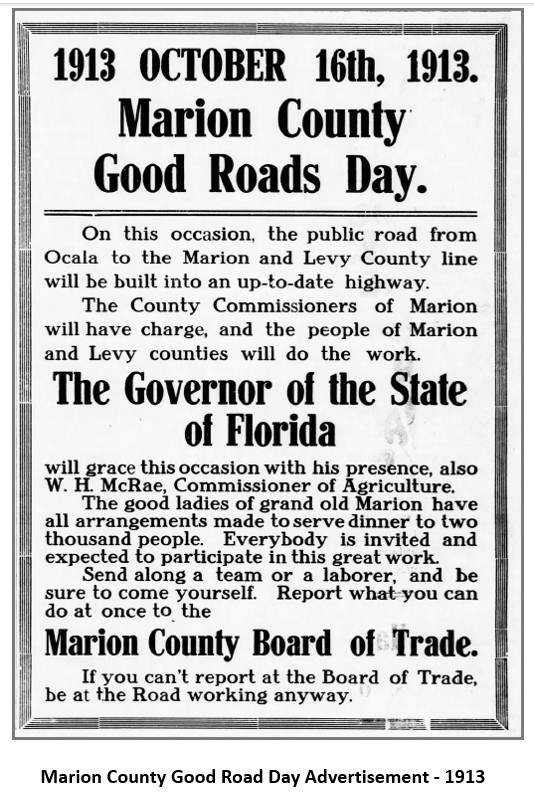
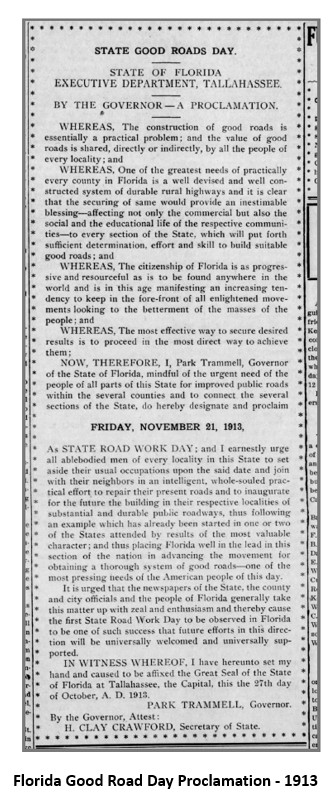
Governor Park Tramell was so impressed by the effort that he designated November 21, 1913 as State Good Roads Day. Citizens across the state were encouraged to pause their regular jobs on that day and work on the roads in their cities and towns.
The editor of the Citrus County Chronicle stated: “Let every man in Florida report on that day for work, or send a substitute, or the money to pay one and thus add to the already fair roads here in Citrus county. You will do well to begin right now to make that day road working day in Citrus county.”
Our Changing Roads
The roadways in Citrus County have shifted over the years. The original roads that were developed around Mannfield are still there, except that they are used mostly for recreation instead of the original intention of supporting traffic around the county seat of government.
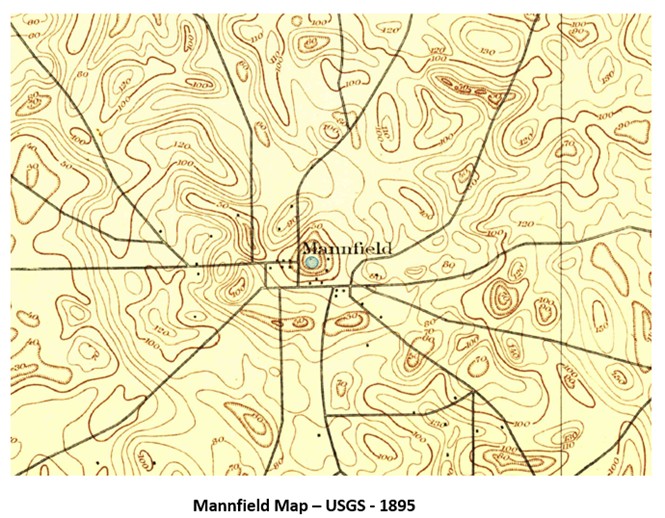
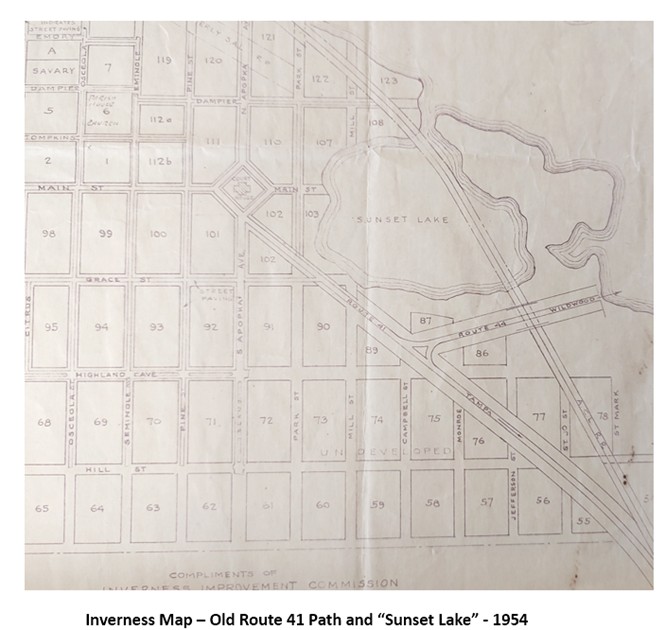
Route 41 in Inverness formerly ran directly in front of the Courthouse but was rerouted to better accommodate commerce and traffic.
See if you can find these streets in a current map of Crystal River.
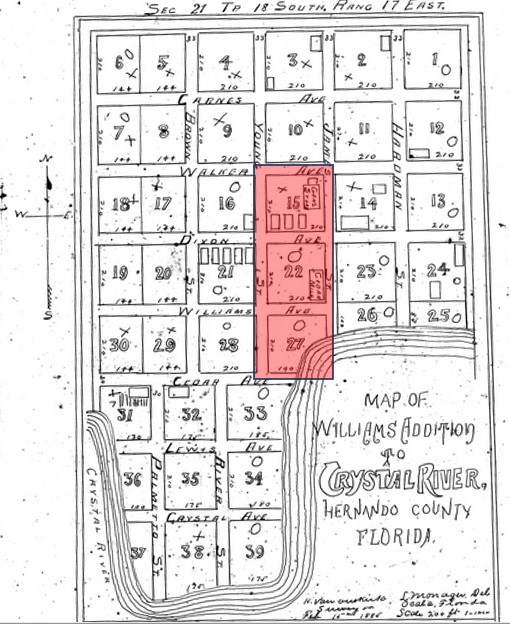
Roads that were listed on maps in Inverness and Crystal River have disappeared and have been replaced by new streets supporting contemporary developments. One thing is certain: our roads will continue to evolve and change in response to Citrus County’s growing needs,
Ken Marotte writes for the Citrus County Historical Society. He can be reached via email at kenmarottejr@gmail.com if you have any comments, questions or suggestions.