
A Trip Back to 1925
By: Ken Marotte, Citrus County Historical Society
Exactly 100 years ago, events in Citrus County occurred that still impact us today. To celebrate my 100th article, let’s set the way-back machine to 1925 and time-travel to a pivotal year in our history.
The Birth of the Valerie Theater
Many people believe that today’s Valerie Theater was always located across from the Old Courthouse and was always named the “Valerie”. Neither of those statements are true. The original name of the theater was the “Maddox Theater” and it was housed in another landmark location.
Pearl Groves Maddox was certainly a woman of many talents. In addition to serving as the Bookkeeper for the successful family manufacturing business, she also found time to write a novel titled “The Precipice”. In 1919. The book was well-received by critics.
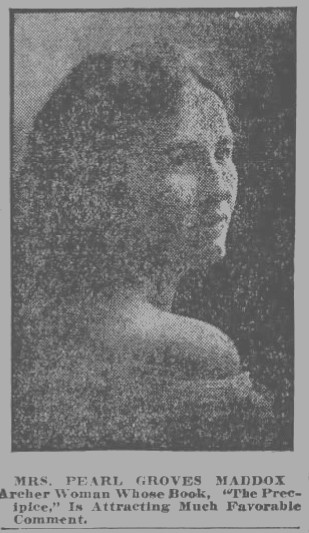
She turned her attention to politics in 1921 and was elected to the post of Mayor in Archer, Florida. While there were a few other women previously elected to head local government across Florida, Maddox was the first female to be elected mayor in a Florida city after the passage of the 19th amendment.
Mrs. Maddox saw potential in the entertainment industry. She purchased four small movie theaters in Central Florida. She contracted the rights to show first-run Hollywood movies at each of her theaters which meant that she could rotate the films and offer fresh offerings to her customers every few days.
She rented space in the Masonic Building in Inverness and opened the “Maddox Theater”. It was a comparatively small venue. There was no marquee but rather relied on sandwich boards placed outside the building to attract passing citizens. She was also a prominent advertiser in the Citrus County Chronicle.
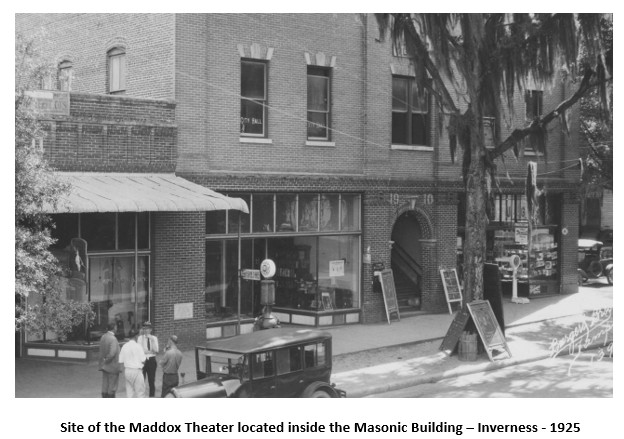
Maddox lost her lease at the Masonic Building in 1925. At the same time, a new upstart theater – “The Avalon” – opened a few blocks away on Apopka Avenue. She determined that a new theater had to be built with ample amenities to compete with the Avalon. (The Coca-Cola company later purchased the former Avalon’s building in 1960 and the property is now owned by Citrus County).
Maddox purchased a downtown lot from Mrs. Ida Sasser in April 1925. Centrally located across the street from the Citrus County Courthouse, Maddox promised to spend over $25,000 (about $500,000 in today’s money) to construct a building that featured fireproof brick, seating for over 400 customers, and separate stage / dressing rooms for traveling acts. She planned to offer both films and vaudeville acts at the new location. Enhanced musical facilities and state-of-the-art comfort facilities (i.e. heaters and fans) were installed.
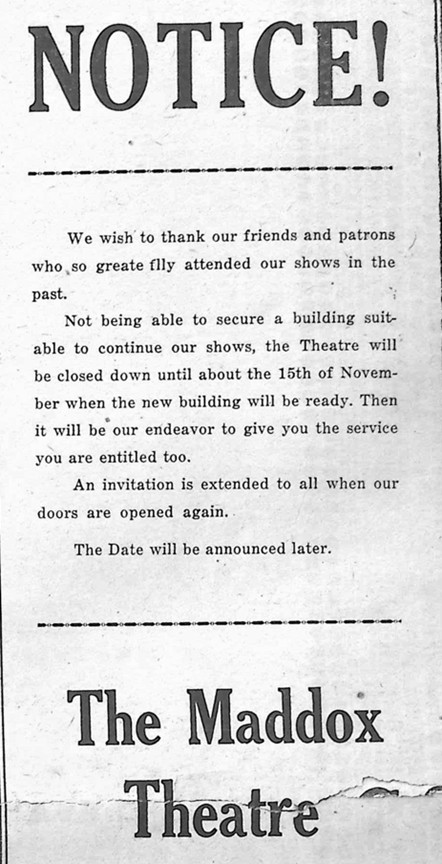
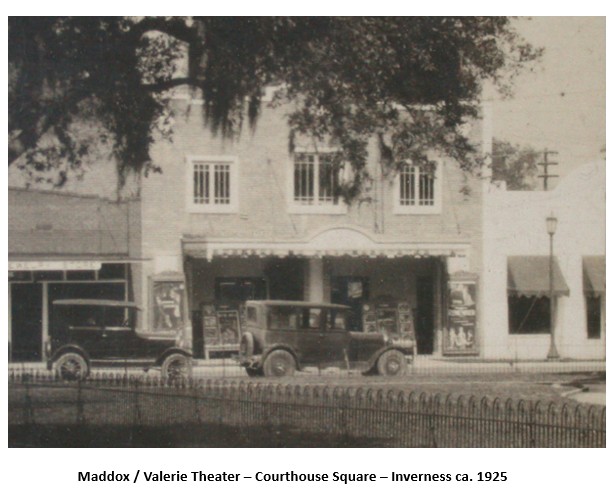
When the new theater opened in late 1925, Mrs. Maddox decided to rename the venue after her youngest child – 12-year-old Valerie Maddox. While there have been a number of name changes over the years, today’s historic movie house continues to memorialize Mrs. Maddox’s daughter.
Pearl Groves Maddox continued to live in Archer/Gainesville until her death in 1969. She had one of the largest collections of antique Stanley Steamer automobiles in the county during her later years.
Valerie Maddox married Clarence Scarborough in 1929 and gave birth to a daughter before her death in 1933. She was only 20 years-old when she passed away.
The Great Land Boom
Citrus County was no stranger to land speculation during its early years. In particular, Homosassa was a frequent locale for land sale schemes. The Homosassa Company, headed by Joshua Lawrence Chamberlain, tried and failed to create a new development in the town during the 1890s.
The promise of an exciting new development in Homosassa was hatched by a group of Chicago investors in 1925. The West Coast Development Company, headed by Bruce Hoover, spent millions of dollars in advertising to entice Northerners to migrate to their new community. Plans were made for baseball fields, bowling alleys, movie theaters and numerous stores within the village. As noted in a previous article, the Brooklyn Dodgers signed a contract to make Homosassa their Spring Training camp headquarters (https://cccourthouse.org/the-homosassa-dodgers/)
The West Coast Development staff created a fictious story that President Grover Cleveland frequently fished in the area and even designated Homosassa’s Rendezvous Lodge as his “Winter White House”. While this story may have appealed to sporting enthusiasts, there was no basis in fact for that claim. There is no evidence that President Cleveland ever visited the area.
As is the case with most land speculation schemes, the West Coast Development Company could not deliver on their promises. The company was forced to halt their sales and liquidate their assets. They reneged on their agreement with the Brooklyn Dodgers, so local hopes for a Spring Training facility were dashed. Citrus County still has “Grover Cleveland Boulevard” running through Homosassa as a reminder of that land boom sales hoax created by the development company (although long-time residents still refer to that street as “Chicken Farm Road”).
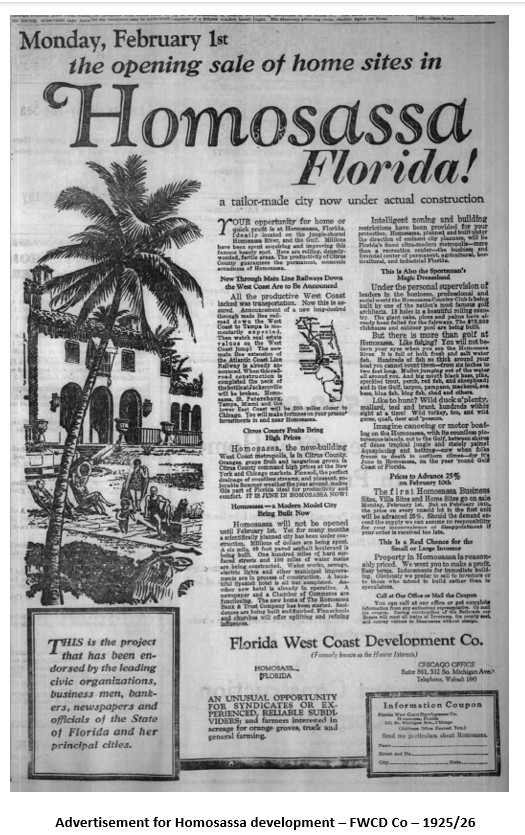
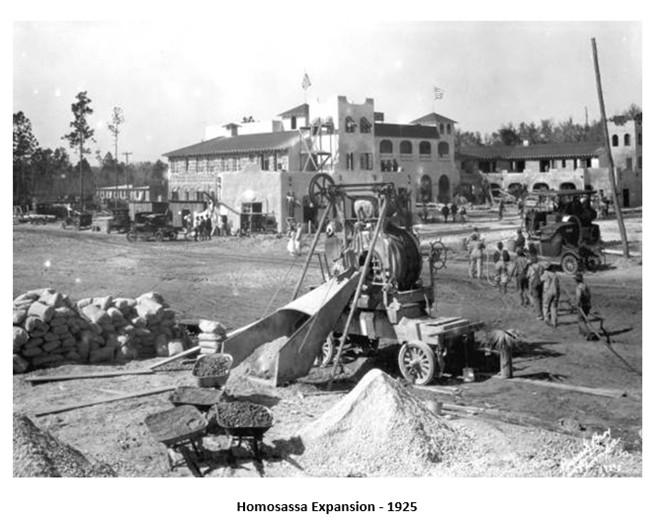
Homosassa wasn’t the only Citrus County area to participate in the Land Boom of 1925. Hernando was being touted as a sportsman’s paradise with excellent fishing and hunting. New subdivisions, such as Fairview Heights, sprung up all over the county as business leaders welcomes throngs of new citizens.
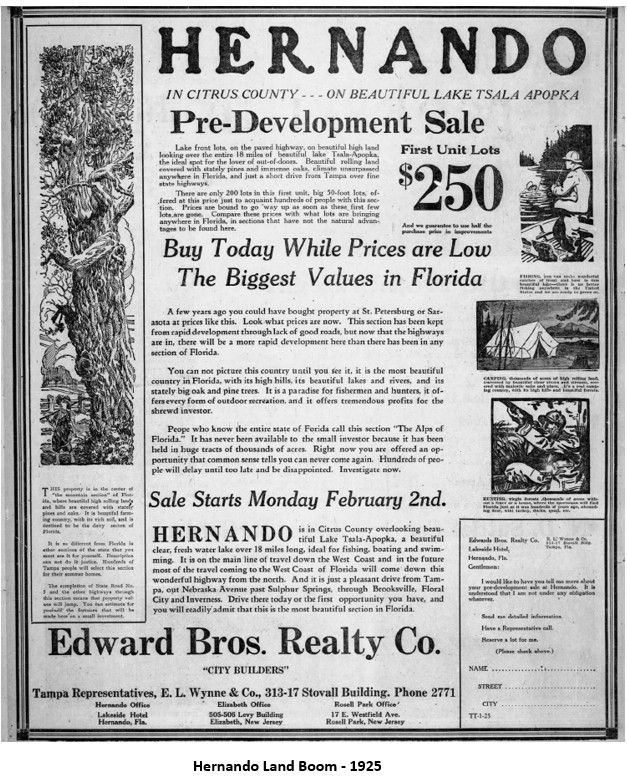
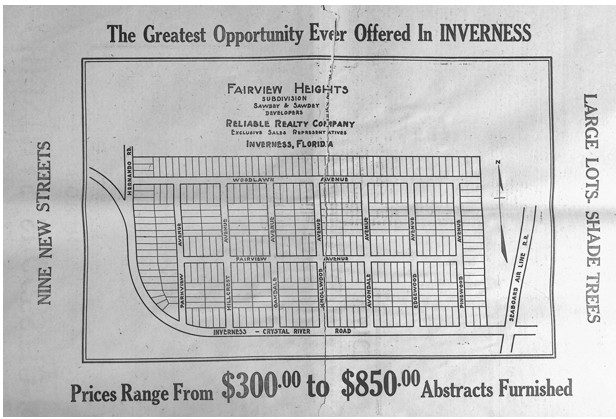
Everyone wanted to make their fortunes selling land to Northerners. Future Judge E.C. May and future Sheriff Frank Morris joined the local Real Estate Agent army. The County Clerk of Courts had to enlist additional help to process the piles of deeds that flooded their office.
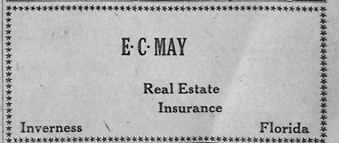
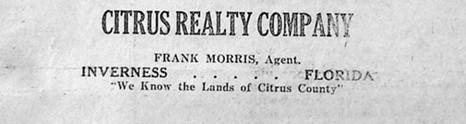
As the saying goes “what goes up, must come down”. A few short years later the developers had disappeared under a cloud of bankruptcy filings and many investors defaulted on the mortgage and tax payments. The County Clerk who had been deluged with real estate sales documents was later obliged to deal with a mountain of land forfeitures.
Lecanto becomes a City
Lecanto was primarily an agricultural village in the center of Citrus County in 1925. A group of capitalists from New York, Washington D.C. and the Carolinas met with local citizens and presented a vision of a new Lecanto as the leading city in Citrus County. They saw Lecanto as a powerful hub for the turpentine industry. The company promised assistance with the construction of a railroad and hotel. Residents foresaw steady income from the new industrial plants.
Residents enlisted local attorney George W. Scofield to lead the effort to petition the Florida State Legislature for a new city charter. After agreement by both legislative houses and Governor, the City of Lecanto was chartered in May 1925.
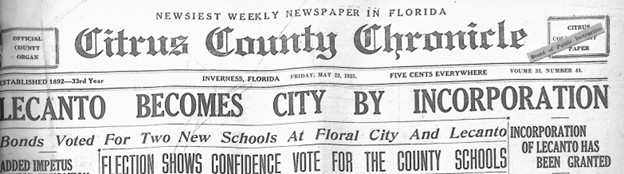
The leading citizens of Lecanto immediately began work to create all of the trappings of city government. John E, King was designated as Mayor. C.E. Allen was elected President Pro Tem of the City Council. John E. King, Austin Allen and A.A. Marshall were tasked to work with Attorney Scofield regarding the creation of new city ordinances.
In the wake of the Great Depression, the promises and dreams of the original developers faded away. The citizens of Lecanto decided that the benefits of remaining organized as a city were not worth the administrative overhead of maintaining a separate governmental entity. Lecanto was disincorporated in 1933.
Seaboard Air Line (SAL) comes to Citrus County
Citrus County was served by a single major railroad – the Atlantic Coast Line (ACL) – since the days of the Phosphate Boom. Even though the demands of the phosphate industry had diminished by 1925, the ACL was not able to keep up with the growth of freight and passenger traffic.
The rival Seaboard Air Line railroad made plans to exploit this business opportunity. The Seaboard Air’s President S. Davies Warfield personally visited Inverness in April 1925 and told the gathered crowd that his railroad was going to be building a second line through the city.

The Federal government was anxious to resolve rail bottlenecks and expedited permission for the SAL to begin grading and construction. The first spike in the new line was driven in October 1925. Within a few months a new SAL Depot was constructed in Inverness and the first locomotives passed by on December 5, 1925.
The Seaboard Air Line railroad served to alleviate freight backlogs. However, the days of the railroads had passed by the 1960’s. The SAL merged with the rival ACL in 1967 to create the Seaboard Coast Line Railroad. Eventually the new company could not remain profitable and ceased operations.
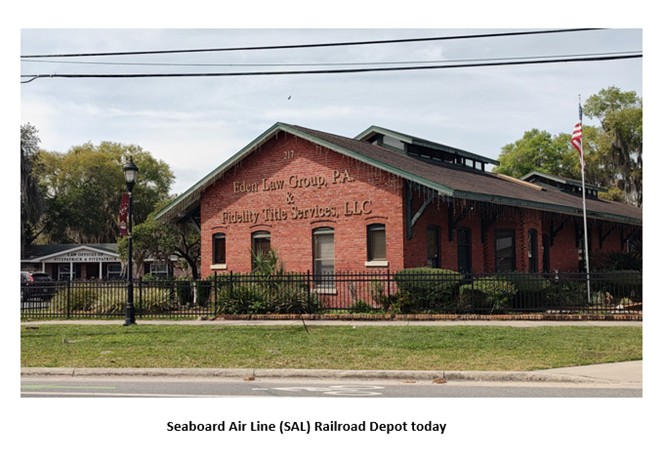
The legacy of the SAL lives on today. For example, the former SAL depot still stands and has been refurbished into an attractive office building.
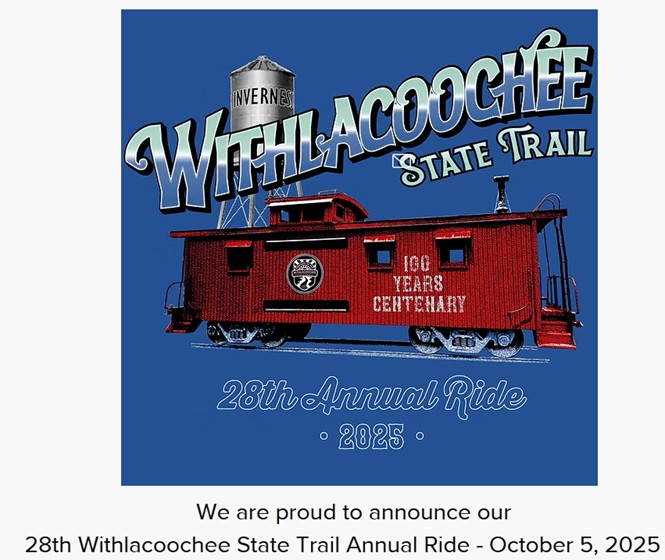
The iron rails and wooden ties have been removed and thousands of bikers and walkers enjoy the Withlacoochee State Trail every year. This rails-to-trails conversion has been one of the most popular attractions in Citrus County today.
Other Events from 1925
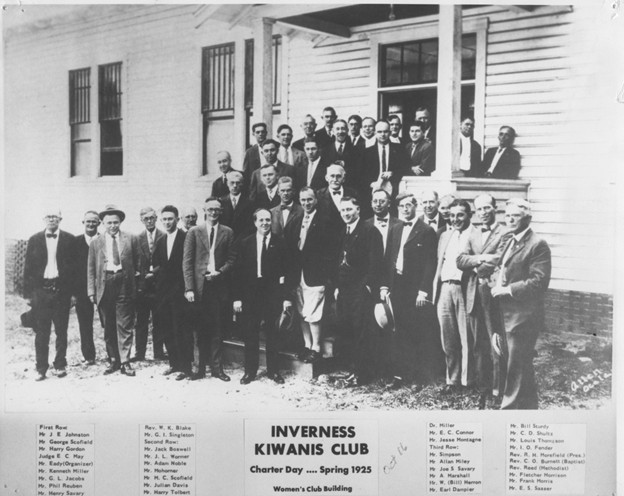
There were a number of other noteworthy Citrus County events in 1925. A new chapter of the Kiwanis Club was formed in Inverness. Leading citizens rushed to join this group.
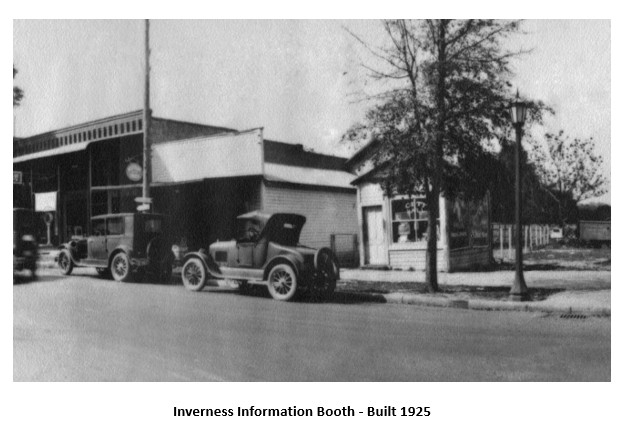
Inverness constructed an Information Booth outside the Courthouse to welcome tourists and direct them to local attractions.
Only in Florida
No look back into local history would be complete without an “Only in Florida” story. Little Dorothy L. Holt was playing outside in September 1925 and wondered how a sandspur tasted. After swallowing the spiny seed, the sandspur became lodged in her throat and she experienced breathing difficulties. Her parents rushed her to a Tampa hospital. At the very moment that the physician had the sandspur in his tweezers, Dorothy coughed and the seed disappeared. After a period of observation, the doctor decided that the sandspur must have been absorbed and she was sent home.
A week later, young Miss Holt was continually gasping for air. Her parents made another frantic trip to Tampa where the doctors determined that the sandspur had lodged in her lungs. After an emergency surgery, the offending pricker was extracted and Dorothy was on the road to recovery.
Hopefully this experience “spurred” her to be more careful with her food choices.
Ken Marotte writes for the Citrus County Historical Society. He can be reached via email at kenmarottejr@gmail.com if you have any comments, questions or suggestions.