
A Look at the Floral City Water Association
By: Ken Marotte, Citrus County Historical Society
There is an old saying that “Water is Life”. The early pioneers of Citrus County needed ample supplies of clear freshwater for their families, farms and ranches. Naturally, settlers gravitated to areas near the lakes and ponds to supply their water. Others dug or drilled wells to tap into the aquifer. This story focuses on the incremental progress that Floral City has made in building a quality water source today.
Floral City School Water Supply
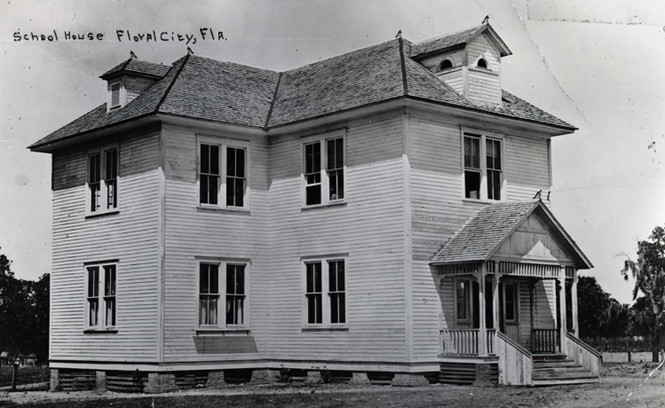
The story began with the Citrus County Board of Instruction (known today as the School Board). When Citrus County built a school house in Floral City, leaders found that they needed a water source for students and teachers. Accordingly, they drilled well that met their needs. In approximately 1930 a few Floral City residents approached the Board and asked to attach to the school water system.
As time went by, more and more local customers asked to join the system. The infrastructure aged and exceeded the capacity of the machinery to provide the growing need of customers.
By 1951, there were 20 customers on school water system. The Board of Public Instruction was forced to raise usage rates to cover the cost of replacing some of the aging pumps that had failed due to a lightning strike earlier that year.
In 1952 the school board decided that they wanted to get out of the water supply business. Not only had the expenses of maintaining the wells exceeded income, but filling a role as a water supply was outside the core mission of the school department. They gave the customers one year to find other sources of drinking water before termination in 1953.
The Quest for Clean Water
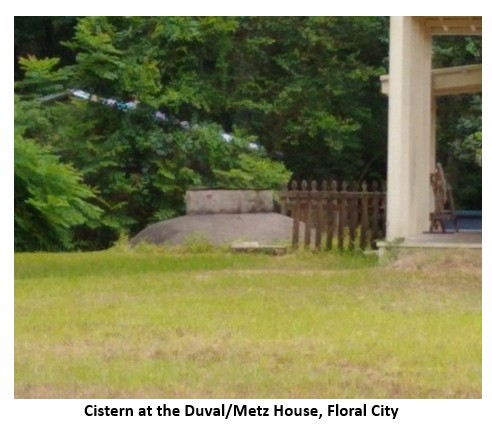
Former customers of the school board’s water supply eventually found other sources of water. In addition, there were new housing developments being constructed in the area. Some families installed cisterns on their property to collect and store rainwater. Private wells were the order of the day.
Untreated shallow wells were relatively easy to dig but were more susceptible to pollutants in the ground water and could be dependent on the surface water levels. It was not uncommon for users of shallow wells to discover that their water source had run dry during periods of drought.
Deeper wells, generally drilled to depths of 100- 150 feet, tapped into the aquifer and had access to a more plentiful supply of clean water. Ground water was filtered through Florida’s ample limestone rock and was less likely to be impacted by external pollution. On the other hand, deeper wells were more expensive to drill and could hit pockets of iron or Sulfur which impacted the water’s taste.
Birth of the Floral City Water Association
Community residents began discussing a more comprehensive approach to obtaining drinking water. A group of local volunteers held a series of meetings to explore the possibility of forming a community water district that would be open to Floral City property owners. Captain Raymond Ives served as President of the association’s interim leadership.
The first organizational meeting of the Floral City Water Association (FCWAI) was held on March 15, 1969. A set of bylaws, incorporation filings and regulation documents had been prepared and were presented to the attendees. The leadership also proposed financing new facilities through a federal loan of $245,000. The terms of the grant required charter members to commit membership for at least two years so the government would be assured of a steady stream of repayments. A total of 251 potential customers, including 10 businesses, had signed up to receive more information.
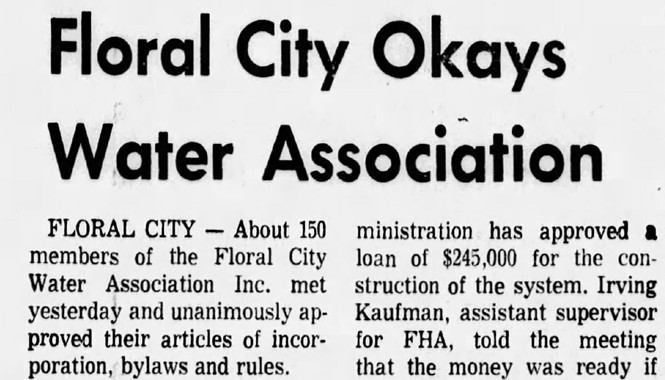
After a unanimous vote, the organization was formally approved by the membership. A representative of the Federal Housing Administration (FHA) assured the group that the loan was ready to be disbursed assuming that enough customers committed to the long-term usage and the application was filed in a timely manner.
Raymond Ives, L.M. Black, Brooks Ellison and Joseph Ferrante were chosen to represent Floral City on the Board of Directors. Since service was also being extended to the With-La-Popka development, Arthur Beakman was elected to the Board as representation for that area.
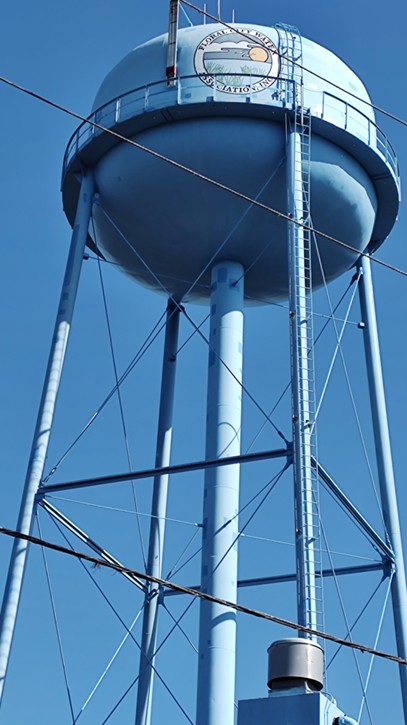
The association unveiled plans to drill two wells, building a pumping station, constructing a 100,000-gallon water tower and laying 20 miles of pipe. They planned to accommodate almost 300 customers during the initial implementation and could expand services if more people decided to join. Over 35 people would be employed during the various facets of the project. Once complete the service would have the capacity to provide over 450,000 gallons per day.
The positive impact on the Floral City community was substantial. According to news reports, there would be more than 1,400 people served – including restaurants, service stations, restaurants, churches, and the volunteer fire department. In an ironic twist, the association would provide water to 125 students at the Floral City Elementary School, repaying the school district for their willingness to share water in years past.
The members voted to request a 10% increase in the FHA loan in 1970 when it appeared that some potential customers in outlying areas would be excluded.
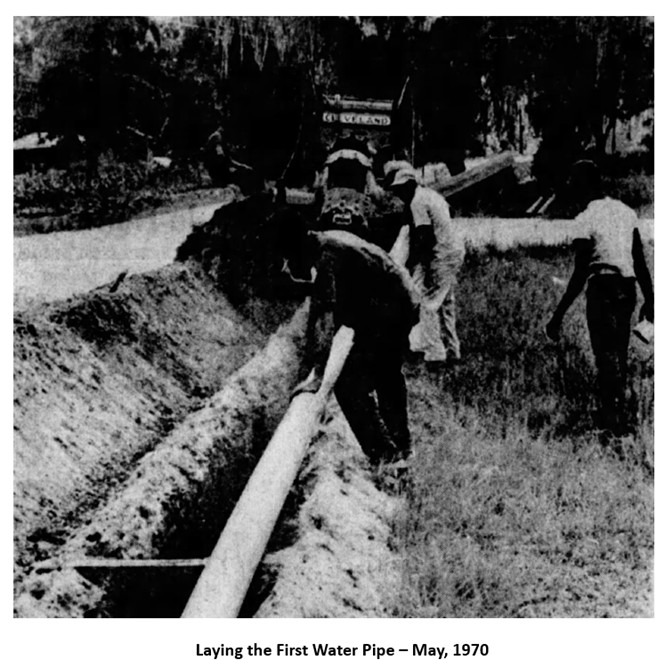
There was no legal requirement for homeowners to join the FCWAI line. However, the association offered a reduced hookup price while pipes were being laid in front of the owner’s property. After construction crews covered the pipes and moved forward, there would be a substantial increase in hookup fees for anyone who did not take advantage of that offer.
Ribbon Cutting
After years of planning and loan submissions, public water service was initiated for Floral City customers on January 15, 1971. FCWAI also announced that ten fire hydrants were made available for the volunteer fire department.
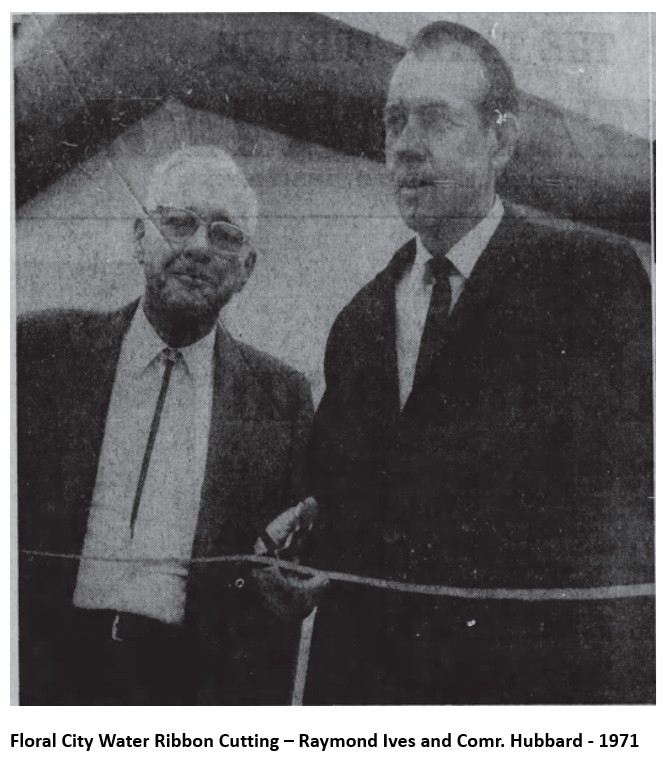
Within two years, the FCWAI customer base grew to almost 500 members. A long line of new customers was waiting for services to be extended to their homes. Accordingly, the infrastructure was expanded through another federal loan of $114,000. A second deep well was drilled and lines extended to address the backlog of new customers.
The membership voted for the organization to obtain non-profit status in 1974.
Growing Pains
The customer list continued to grow at an unexpected pace. In addition, Citrus County experienced a drought in the mid-1970’s. FCWAI President John Crowder asked the members to conserve water until they could add new wells. He said “we are working our pumps to death” and asked that people curtail lawn sprinkling and household usage until a new eight-inch well could be brought online.
In spite of conservation efforts, there were instances when the water lines could not deliver enough pressure to fight fires and the volunteer firemen had to pump water from nearby lakes or let the structure continue to burn. Any case of low pressure was investigated by FCWAI management and usually resulted in an equipment upgrade.
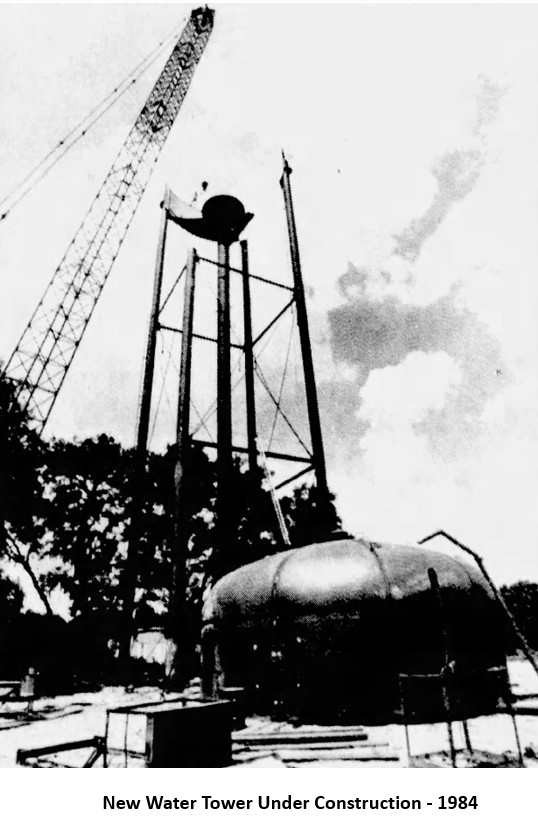
In spite of increased overall customer demand, there were still some residents who decided to forego joining the water system and continued to rely on their private wells. By 1989 there were 1,100 members and an annual gross revenue of $250,000. The association leadership was considering a request for an additional $800,000 federal loan to provide for future expansion and water quality improvements. They were concerned that the further growth of housing developments in the area may lead to issues maintaining adequate service levels. Enlisting private well owners to join the water supply was a key part of their loan request strategy,
The issue was eventually addressed by the Florida State legislature. Since public water was generally considered safer than untreated well water by the legislators, a law was passed mandating homeowners to join a public water system, if available.
A Redemption Story
Floral City residents were shocked by breaking news in June, 2003. An audit discovered that one of the FCWAI employees had embezzled over $106,000 (according to court records). The former employee eventually pled guilty and received a suspended prison sentence. She was required to reimburse the association all of the money that she had stolen.
It took years, but she eventually repaid the entire amount. Moreover, she finished her college certificate program and obtained a job in the medical field. She performed her job so well that she was promoted into a supervisory position at her laboratory.
Floral County Water Association Today
Tim Wilson currently serves as CEO & GM for the Association. He is a native son of Citrus County who has lived in Floral City his entire life. He attended Floral City Elementary school, Inverness Middle, and is a graduate of Citrus High School. Tim started at FCWAII in 2009, and has worked his way up the ladder taking advantage of all schooling opportunities that he could to advance to where he is now.
Wilson notes that FCWAII has 4 active wells to serve the community. The association has over 70 miles of water main in our distribution system and FCWAII has 2360 connections/customers.
Wilson proudly recounts that Floral City water has won state awards for clarity and purity over the past few years.
He summarizes: “Our mission here at Floral City Water Association is to deliver the safest, best tasting, and most affordable water we possibly can to our Customers taps every single day!”
They continue to provide drinking water to the Floral City Elementary School.
Special thanks to Tim Wilson and Janie Stewart for their information and assistance on this article. Visit their web site at https://www.fcwater.com for more information.
Ken Marotte writes for the Citrus County Historical Society. He can be reached via email at kenmarottejr@gmail.com if you have any comments, questions or suggestions. Contact him if you’d like to participate in the ongoing CCHS Oral History Project.